 Then drew near unto him all the publicans and sinners for to hear him. And the Pharisees and scribes murmured, saying, This man receiveth sinners, and eateth with them. And he spake this parable unto them, saying, What man of you, having an hundred sheep, if he lose one of them, doth not leave the ninety and nine in the wilderness, and go after that which is lost, until he find it? And when he hath found it, he layeth it on his shoulders, rejoicing. And when he cometh home, he calleth together his friends and neighbours, saying unto them, Rejoice with me; for I have found my sheep which was lost. I say unto you, that likewise joy shall be in heaven over one sinner that repenteth, more than over ninety and nine just persons, which need no repentance. Either what woman having ten pieces of silver, if she lose one piece, doth not light a candle, and sweep the house, and seek diligently till she find it? And when she hath found it, she calleth her friends and her neighbours together, saying, Rejoice with me; for I have found the piece which I had lost. Likewise, I say unto you, there is joy in the presence of the angels of God over one sinner that repenteth. Luke 15:1-10
Luke 15 begins with the religious leaders noticing something—that Jesus seems to attract and befriend “tax collectors and sinners,” moral outcasts of respectable society.
In the Lord of the Rings we find a weird creature named Gollum. He is always offering riddles for the Hobbit Bilbo Baggins to solve. One of them I will offer for you:
Voiceless it Cries
Wingless it flutters
Toothless it bites
Mouthless it muttters
(Answer – the Wind)
We read in verse 2 that they “murmur” to one another about this. “to mutter, murmur, grumble, say anything in a low tone” The air was stirring with their murmurings! We can almost hear them saying: “He welcomes sinners! This kind of person never comes to our meetings. This must be because he is telling them what they want to hear. He is not calling them to repent or change.”
This murmuring prompts Jesus to tell the three parables of Luke 15.
- Parables of the Lost Sheep
- Lost Coin
- the Lost Sons.
 By listening carefully to all three parables, and especially to the last one, traditionally called The Parable of the Prodigal Son, Jesus challenges his listeners’ fundamental assumptions about God, sin, and salvation. He gives them an entirely new way of thinking about God, themselves, and the whole world.
Most people think of religion as “humanity’s search for God.” We like to think of ourselves as spiritual seekers, as honest inquirers. We look at the religions of the world and, while giving somewhat different directions about how to do so, they all seem to agree that if we sincerely search for God we will find him. Millions of people the world over believe that by believing and obeying God’s law in the Bible, they can find God.
The problem is that anyone who feels they have searched for and found God will naturally disdain those who seem to be making no effort at all. They will look at “sinners” and say, “I found God! If you try, you can. I did.”
And here is the first great blow to the “religious” people of the world. Religion and religious behavior is NOT the way to God! Jesus is telling us that God had to come down into the world to seek and save us. Salvation must be by His grace, not our achievement.
The end of each parable challenges not just the categories of the Pharisees but their heart and attitude. A theme through all three parables is the joy of finding the lost. God does not look at spiritually lost people the way the Pharisees do. Because the Pharisees do not see themselves as lost sinners saved by grace, they disdain “sinners”. They feel superior to them. But heaven rejoices when “sinners” are reached and found.
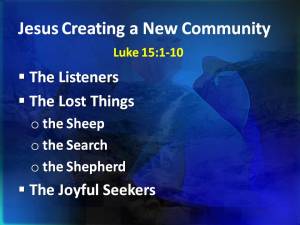 Jesus is declaring to the religious establishment that He is creating a New Community of People. A Community of People bonded together by the experience of Death & Life. To Understand this New Community, we will look closely at the first two parables. In the next four weeks following we will examine the Parable of the Lost Sons.
This week we look at the first two of these parables. Let’s notice three sets of characters:
- the listeners
- the lost things
- the joyful seekers.
1. The listeners—verses 1-3.
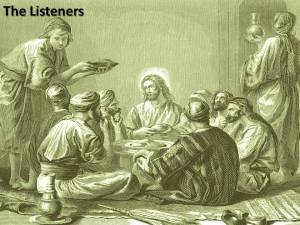 There are two groups of people around Jesus—“tax collectors and ‘sinners’”, and “Pharisees and the teachers of the law.” The ‘religious’ group is especially offended that Jesus eats with sinners. In the Middle East an offer of a meal is an offer of Friendship. It is an offer of Community. Table fellowship was considered a sign of acceptance and friendship. How, they thought, can he be so open to them? Doesn’t he realize that they are the “bad people”— who are the real trouble with the world? (And, therefore, that we are the “good guys”?)
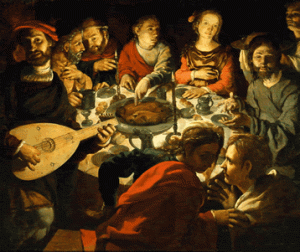 Jesus does not give a direct, compact answer. Instead, he responds with three stories or parables.It is important to realize that these parables were not spoken in a vacuum. The purpose of all three parables was to challenge the “Religious Peoples Point of View” of what Jesus was wanting to do.
When we get to the final parable, we will realize that BOTH groups of people—“sinners” and “religious people”—are actually in the parable. That is why the last story, the story of the prodigal son, is Jesus’ final answer. But that is to come later. For now, let’s notice how he begins to challenge our attitudes and categories of thought in the first two parables.
2. The lost things—verses 4-5, 8.
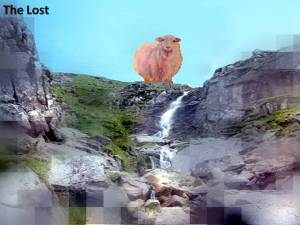 Jesus uses these “Lost” things to teach us religious types what He is all about. Why He came to this planet, and what He is accomplishing. The impact of these parables is lost on us because we do not look at them from a Middle Eastern viewpoint. These teach us about the community that Jesus want to build within His body – the church.
In order to understand and grasp the meaning of parables, I find it helpful to meditate on the visual images Jesus uses. People of the middle east are very visual in their thinking. It comes from a long line of oral history. That is why God painted very visual images of His miracles in the hearts of His people. That is why all the Jewish feasts and Holy Days are very visual.
The Sheep, the Search, & the Shepherd.
First, Jesus confronts their View of themselves and their Righteousness. The Pharisees thought they had it made. They were children of Abraham. They were children of the Covenant. They were chosen. They followed the Law. But Jesus says none of that is important to him. If we are to be important to Jesus, we must realize we are sheep.
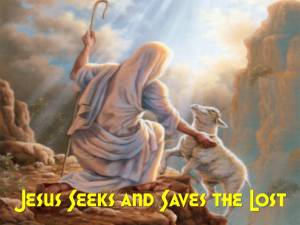
In the parable of the lost sheep, the shepherd leaves the 99 sheep to go looking for the one lost sheep. We think that being a sheep is a warm fuzzy huggy type of description. We think of Mary and her little lamb, or Little Bo Peep. Being called a Sheep is an INSULT!
 A Sheep is a stupid animal. It loses its direction constantly, in a way a cat or dog never does. Even when you find a lost sheep, the sheep will rush to and fro, but will not follow you home like a dog or cat might. So when you find it, you must seize it, throw it to the ground, tie its feet together and carry it over your shoulders.A sheep is a stupid animal that is completely helpless when lost. We need to view sheep like these people did.
- Sheep will go after grass no matter how impossible the place is.
- They will go onto the most dangerous place to eat grass.
- They will need to be rescued, or they will fall to their death.
- In the second parable the lost object is a coin, even more incapable of finding its way home.
The three lost “objects”—the sheep, the coin, and (in vv. 11-32) the son—all represent people who are spiritually lost, far from God. This is Jesus characterizing the people the Pharisees view as “sinners.” They are lost, yet they are lost in quite different ways. The sheep is lost through foolishness, the coin through thoughtlessness, and the son through willfulness.
But no matter the ‘Lostness’, they are each valued by Jesus, because of their condition.To have value to Jesus, we must realize to the depths of our soul that we are LOST, with NO HOPE of ever being saved.
The Sheep Teaches us We Need to be rescued
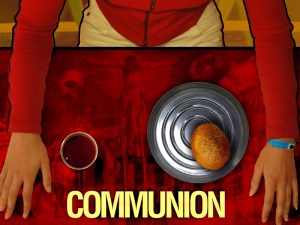 In liturgical churches sometimes the Pastor will administer the Lord’s Supper by saying this:
May the body of our Lord Jesus Christ, which was given for you, preserve your body and soul to eternal life. Take and eat this in remembrance that Christ died for you and feed on him in your heart by faith with thanksgiving.
It implies that your soul is feeding on something. And of course, this is true, no matter your spiritual condition. We all cling to something.The deepest hopes of your heart for security and love are resting on something. It can be image, status, wealth, career, position, family, Mr X or Miss Y.
If you are feeding on anything but Jesus for your peace, well being, satisfaction; You are like a sheep feeding on the ledge of a mountain. Say you are dating Mr. X, and decide he is the “one”. You rest your hearts deepest hopes on that person or that relationship. You believe you are valuable because this person loves me.
The truth is that if you are relying on anything or any person other than Jesus, you are in danger of an emotional and spiritual plunge off the mountain side.
You are like a stupid sheep, searching for sustenance in dangerous places, without any sense of your impending doom. You are headed for a spiritual and emotional plunge.
You will have no self worth, no hope left, for you have fed your soul on the wrong person, the wrong things.
We are all like sheep, we have all gone astray
 We all need to be rescued. We can contribute nothing to our salvation. The shepherd has to walk the sheep all the way home. We are utterly lost in sin. We must be saved totally by the grace of God.
Salvation is not a process of cooperation. Our shepherd is not telling us how to live, not giving us self-help pointers. Being a Christian is not trying to live like Jesus. Not wearing a wrist band “What Would Jesus Do?” We must be asking ourselves What is Jesus Doing for Me at this very moment? Jesus must be our life!
We try to be a dog or a cat, but we are sheep. A Teacher is not enough, we need a Savior. We need someone who is able to do everything that we have to do, but are unable to do. He lives the life we should have lived, He dies the death we should have died. Everyone is utterly lost in sin.
The Search Teaches Us:
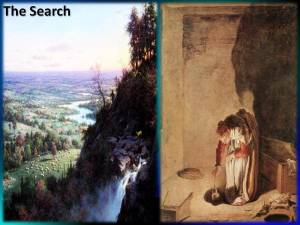 Jesus is friends with those who need rescuing. The community of Jesus is with the broken, the lost, the sinners, the failures of society. Jesus is building a faith community with these people in it. Normally these people are excluded-they can’t be included.
The Pharisees shake their fingers at them and say “These are the type of people we are NOT supposed to be like! But Jesus says these are the very people I want in my community. Jesus is creating a new faith community that includes publicans and tax collectors.
No Matter the Source of your sin, You Must realize your Lostness.
Here’s an example. Mr. Smith has a problem with abusive anger—he often flies off the handle and is verbally abusive and sometimes physically so. Why? Is his problem genetic? Is it a matter of brain chemistry? Is it just part of his inborn nature, as in the example of the sheep? Or is his problem the result of a bad environment? Perhaps the result of poor parenting and family life? Was he, like the coin, mismanaged by his “supervisors”? Or does his problem stem from selfishness and pride, as with the prodigal son?
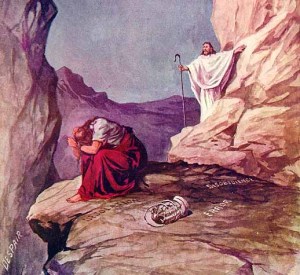 The answer is that usually, in varying degrees, it is all of the above.
Sin is deeply complex. It is inborn in you, it is magnified by sinful treatment, and it is deepened and shaped by your own choices. Jesus’ view of sin is more comprehensive and multi-dimensional than that of many psychologists, sociologists, and many religious leaders. It is certainly more comprehensive than the view held by the Pharisees listening to him.
Jesus’ view is that no matter your sin, you must realize it is sin, that you are lost and you need saving, or you will die out on a ledge somewhere.
The Shepherd Teaches us
He is the only one who can rescue the lost. The lost are worth rescuing. The coin was the woman’s dowry, livelihood. The shepherd is not complete til he finds all of his sheep.
3. The Joyful Seekers—verses 6-7, 9-10.
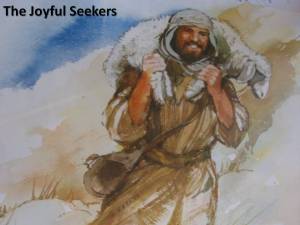 Jesus confronts their categories about salvation. He reveals that He comes from a community in heaven that is this way. “I come from a community in heaven that celebrates sinners saved by grace” It does not celebrate righteous people who don’t realize their lostness. I am creating a community like this here.
Community – bonded into a body through an intense common experience.
The more intense the experience, the stronger the bond. The Karen People are being brought into the United States by our State Dept. They have suffered persecution and death at the hands of the Myanmar Military Junta. No matter where they are placed in the United States, they quickly form a close-knit community with fellow Karen. What is the bond-it is their shared death and life experience. The persecution and killing has created an intense bond amonst the Karen in the US.
We all have “identity” factors that create bonds with other people. Black, white, College, No, Good school, acheivements, all come to represent our identity in the world. This identy is our self worth, self image. It is hat makes us distinctive. It is the foundation of who we are.
Christians should have an intense bond that forms the basis of our identity and how we relate to one another. Ephesians 2 begins with Christians who are dead in trespasses and sin, but who share the bond of being made alive by Jesus. Ephesians 2 ends stating we are all like living stones that are fitted together to build a temple in which God’s spirit will dwell.
Other religions aspire to make you better so that you might be like God. In otherwords they treat you like a dog or a cat. Take you to the groomers, to obedience school. You’ll be fine.
The Gospel is for sheep-we must realize we can do nothing to be saved.It is a life and death experience. I am infinitely lost, but I am infinitely loved and infinitely treasured. I am infinitely valued. The Shepherd will do anything to bring me home. It blows your complete identity factor away.
WHO I THINK I AM DOESN’T MATTER
I can be from an IVY league college, be moral, come from a big family. I can derive joy from these things and even feel superior to others. Certain things automatically make us feel better than other people. That joy excludes people who are worse off than we are. It excludes publicans and tax collectors.
Jesus declares that these things don’t matter, that TRUE JOY comes when these Lost people are FOUND! His community doesn’t look down on people, but welcomes all with open arms!
This community has the common bond of death and lostness, but now we are found and saved!
THE QUARRY
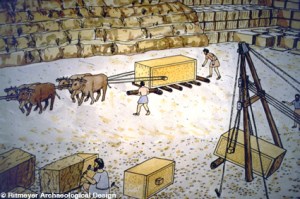 This is the Community of “1 Kings 6”. When building the Temple, the Quarry masons worked so well preparing the monstrous stones for the Temple that on the Temple Mount the stones needed no further hammering, the stones fit together perfectly. So the temple went up in silence-no need for hammering, no need for mortar!
If you have been to the quarry, if you have been through life and death, nothing matters, not your pedigree, your accomplishments, your wealth, nothing matters. You have a bond – a Life and death bond.
Jesus knocks down all barriers to seek those that are lost.
Shepherds aren’t consultants, they aren’t trying to improve the sheep. Sheep are absolutely dependent upon the shepherd.Sheep should give themselves to the Shepherd COMPLETELY!
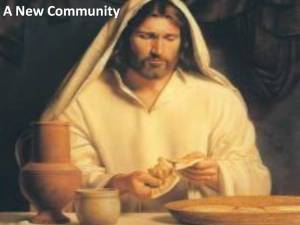 Jesus desires to do two things with His Church:
- Build a community that is filled with His beautiful, unified difference – acceptance for sinners!
- Provide a place where sinners are free to admit they are sinners.
Christians need to stop eating their wounded. We need to be able to confess our faults one to another without fear of condemnation. Religiousity permits no one to be a sinner, but Jesus welcomes all sinners. Masks will do no good before Jesus. He knows, so we all should know. We are all sinners.We are all lowly sheep who have been rescued by our loving shepherd.
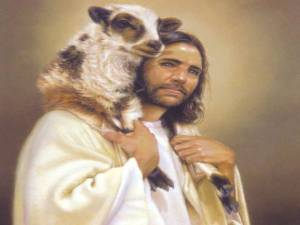 Jesus is the Great Shepherd, even more intent and joyful than the shepherd of the parable. For Jesus knew that he would have to die to bring the lost home, but “for the joy set before him endured the cross, scorning its shame” (Heb. 12:2). The joy he had in doing his Father’s will, and the joy he had in finding us, was so great that he was willing to endure the cross.


 he Elder Son kept his focus on the things and the tasks around him. He was still working in the field while the whole village was inside feasting with the younger brother. Even after he discovered the cause for the feast, his focus remained on the expense and upon himself.
 All Paul knew was that he was a citizen of heaven, and from HEAVEN he awaited His Savior! Could that mean that wherever Paul was he saw it as heaven? But when he was writing Philippians he was in a Roman prison! That certainly wasn’t heaven!
 Are you an Elder Brother type? Change your focus. Instead of working so hard to organize your world, realize (if Christ lives in you), that you are in heaven! See heaven in your surroundings, in your circumstances, in your despair, in your hurts, in your loneliness. If Christ lives in you, you are in heaven right now, wherever you are. Look, down the road, is that the Savior coming to you?






 Loving the Word with the MudPreacher