Archive for the ‘David Discipleship’ Category


David Discipleship…

  • Begins with a Heart Decision
  • Grows from knowing the ways of God
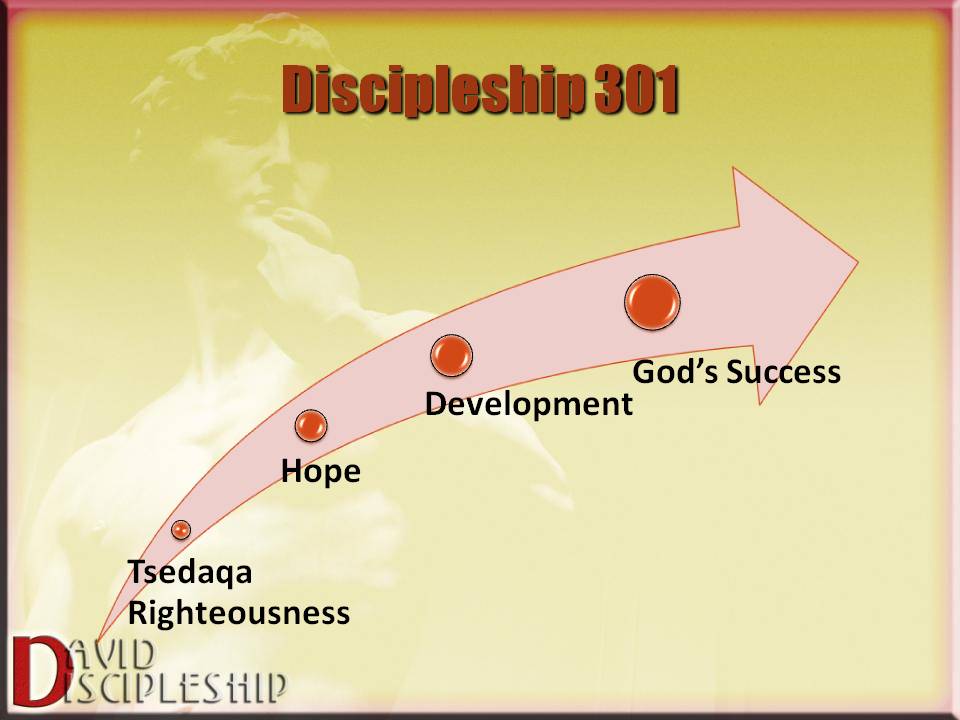
  • Develops as we practice mercy, justice and righteousness

In a short period of time, David faced Goliath, King Saul, Doeg and Achish. God had David on a fast-track course of discipleship. It began with his decision to give God his whole heart, and seek to know God’s heart. It grew as he diligently applied himself to knowing the ways of God. But through his trials with Saul, Doeg and Achish, David developed into a Mighty Man of God. David developed because David paid attention and learned.

The lessons that God wanted David to learn and live he recorded in three Psalms that David wrote after those experiences.

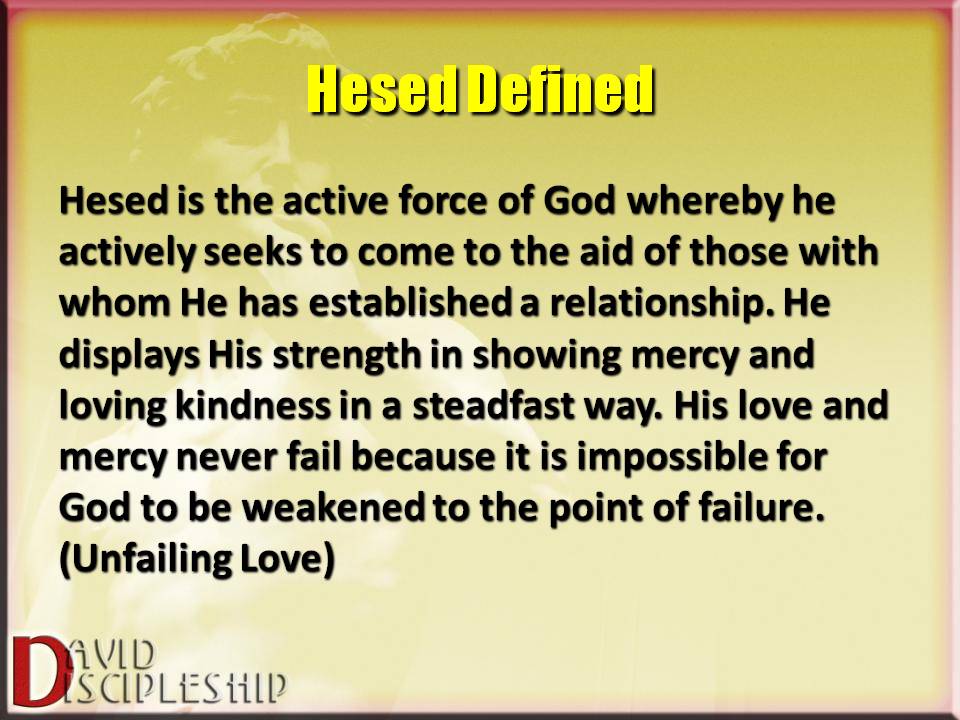
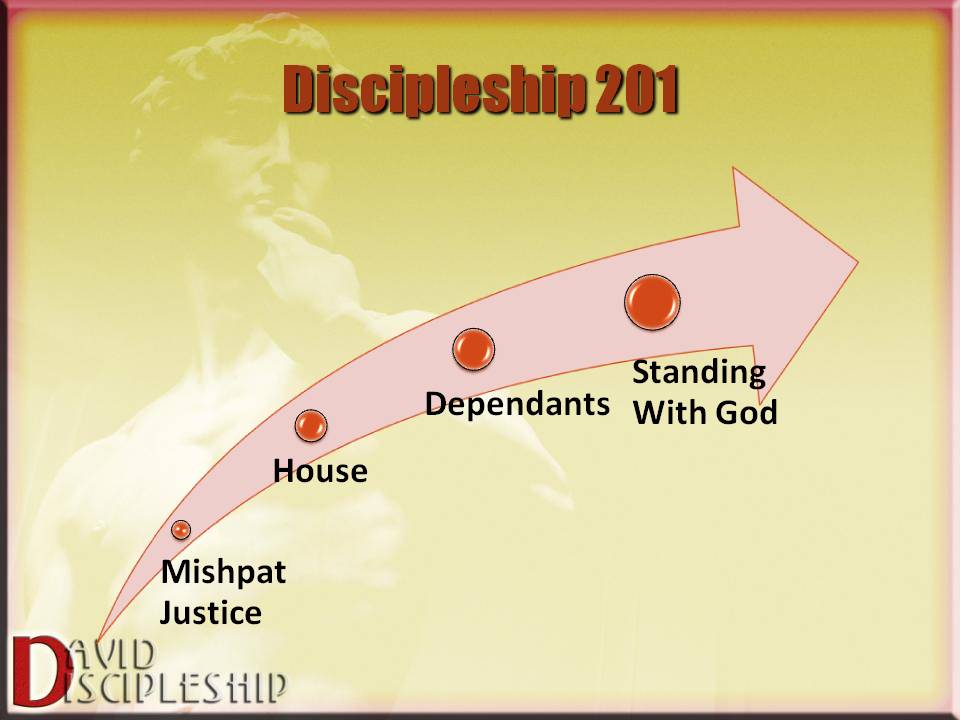
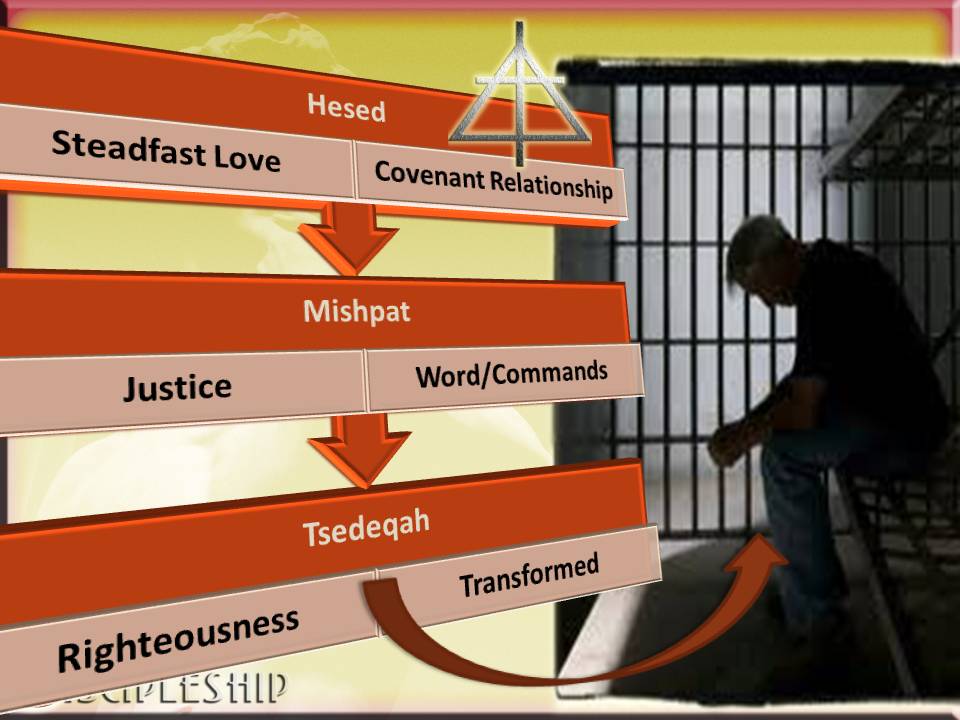
I believe one of the greatest gifts you can leave your children and grand-children is a record of the discipleship lessons God has taught you. Do you keep a record of what God is teaching you? Do you take notes? If you are not paying attention to what God is teaching you, He will stop teaching you. Thank God David paid attention. The three lessons David learned after Saul, Doeg and Achish were recorded in Psalms 34, 52 and 56. Those three lessons parallel the three things God most delights in and wants His disciples to know and understand – hesed, mishpat and tsedeqah.

1. Fear God Above All
David realized that he must fear God above man. His heart was firmly fixed upon God. His heart feared God when everyone around him feared man. David knew the hesed (unfailing Love) of  God would keep Him in God’s care.

Psalm 34:9-11 Fear the LORD, you his saints, for those who fear him lack nothing. The lions may grow weak and hungry, but those who seek the LORD lack no good thing. Come, my children, listen to me; I will teach you the fear of the LORD.

2. Depend Upon God Above All

Early in his youth David learned that God’s House is a special place, and saw how God designed His house to be a certain way. David desired the justice of God’s house to be in his life, and to be in his house. To know God’s justice, David learned to depend upon God above anyone or anything in this world, including himself.

Psalm 56:3-4 When I am afraid, I will trust in you. In God, whose word I praise, in God I trust; I will not be afraid. What can mortal man do to me?

Psalm 52:8 But I am like an olive tree, thriving in the house of God. I will always trust in God’s unfailing love.

3. Magnify God Before Everyone

David learned that God would provide His righteousness for Him. David learned that God was His hope and his righteousness, and that he must exalt Him before everyone, that they might know the hope of his heart.

Psalm 34:3 Oh, magnify the LORD with me, and let us exalt his name together!

Psalm 52:9 I will praise you forever for what you have done; in your name I will hope, for your name is good. I will praise you in the presence of your saints.

Let’s see how these lessons are demonstrated in I Samuel 22 & 23.
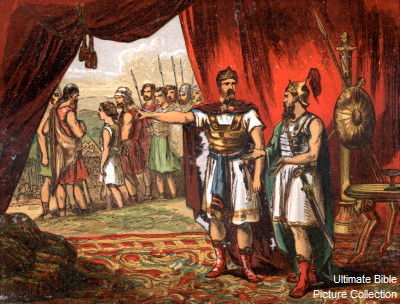
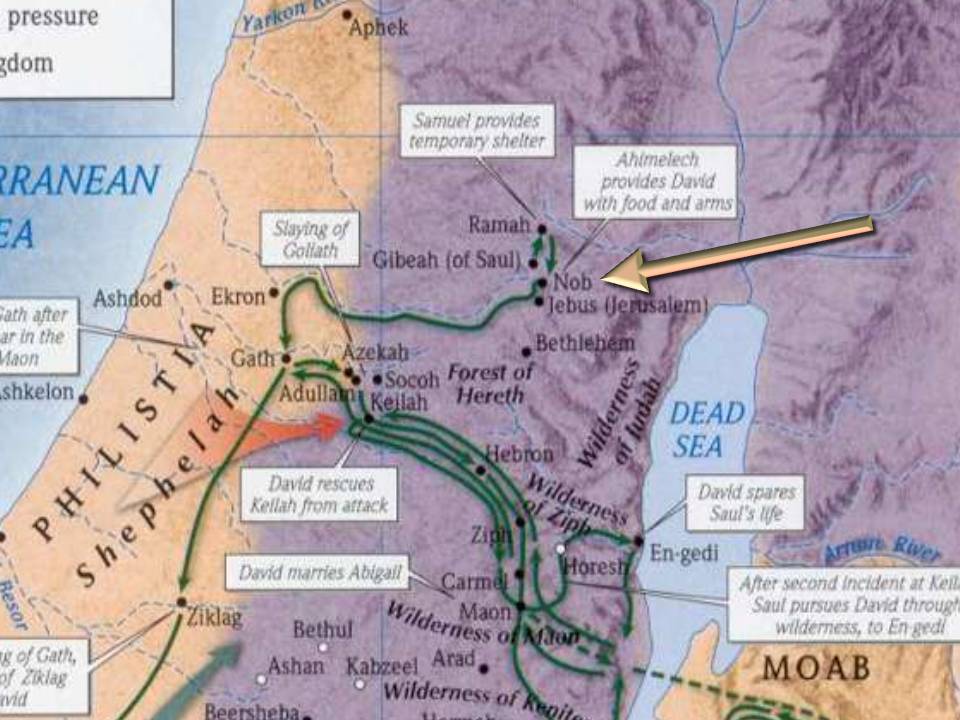
Last week we left David at Nob, where Ahimelech gave him the Holy Bread and the sword of Goliath. After enquiring of the Lord, the Lord said to go to Gath and seek help from Achish, King of Gath. I assume God told him, because God wanted David to learn not to fear. David may have thought he might get some respect from Saul’s enemy, especially since David had killed their great warrior. Instead, King Achish seized David, and would have killed him, but David started acting like he was insane.

1 Samuel 21:12-13 And David took these words to heart and was much afraid of Achish the king of Gath. So he changed his behavior before them and pretended to be insane in their hands and made marks on the doors of the gate and let his spittle run down his beard.

Jewish tradition says that Achish had a wife and daughter who were both ‘crazy’ and that is why he reacted the way he did:

1 Samuel 21:15 Don’t you think I have enough crazy people to put up with as it is without adding another? Get him out of here!”(MSG)

David’s House Grows
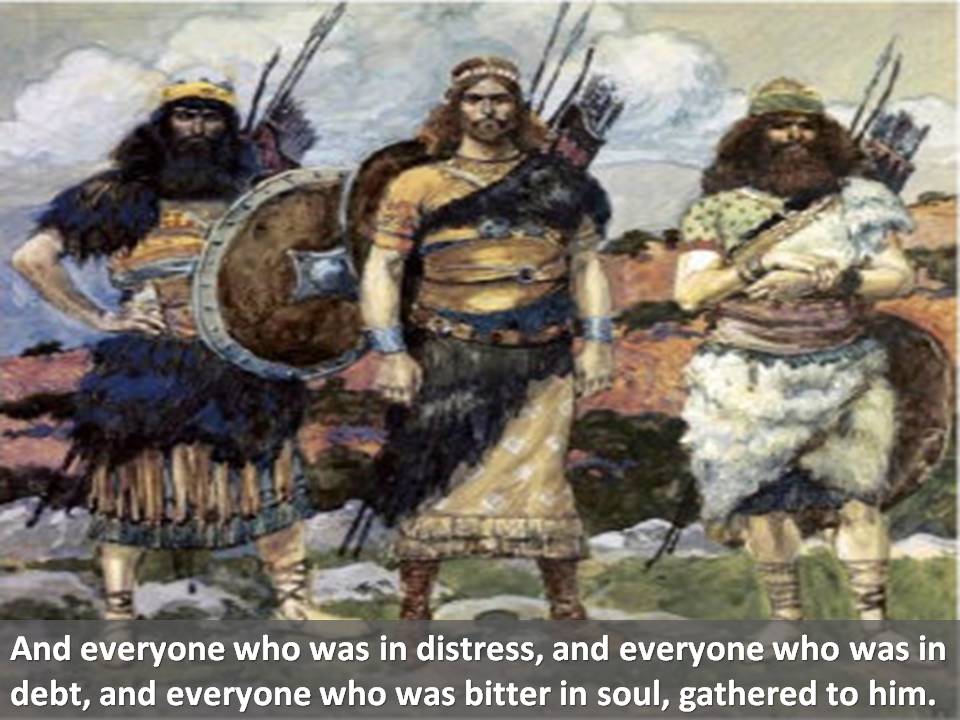
A few miles away David sought a hiding place in the caves of Adullam. It was close to his home in Bethlehem, and so his family came to see him. Word got out about David, and around 400 men sought him out.

1 Samuel 22:1-2 David departed from there and escaped to the cave of Adullam. And when his brothers and all his father’s house heard it, they went down there to him. And everyone who was in distress (māṣôq), and everyone who was in debt נָשָׁא‎ (nāshâ), and everyone who was bitter in soul (mar nephesh), gathered to him. And he became captain over them. And there were with him about four hundred men.

  • māṣôq: A masculine noun meaning distress, anguish. It refers to hardships and anxiety (Deut. 28:53, 55, 57; Jer. 19:9); especially brought on from disobeying the Lord but also from general social and political conditions (1 Sam. 22:2). The psalmist suffered anguish, relieved only by following the Lord’s delightful Law (Ps. 119:143)[1].

In four of those times, the King James translates it “straitness”, and in each of those four times, it is talking about the kind of distress a person will experience when they are in such a horrible time of famine that they would have to actually resort to eating their own children (Deut. 28:53,55,57; Jer. 19:9).  It describes people who are so desperate that they will do anything.

Psa 119:143  Trouble and anguish have taken hold on me: yet thy commandments are my delights.

Deuteronomy 28:53 And you shall eat the offspring of your own body, the flesh of your sons and daughters, whom the LORD your God has given you, in the siege and in the distress with which your enemies shall distress you.

  • נָשָׁא‎ (nāshâ) lend on interest or usury[2] – people who were in great debt, being charged high interest by fellow jews, which was contrary to the law.
  • mar-nephesh, “bitter of spirit,” used of Hannah, deprived of a child, in 1:10, and of David’s soldiers, whose women and children the Amalekites had seized (30:6). Cf. also 2 Sm 17:8. David becomes a hero for those who have endured loss or deprivation.

These men were bitter in their soul, feeling cut off from the mercy of God.

These men were overwhelmed with debt, that because of unlawful interest rates, made it impossible to repay. They had been taken advantage of by unjust men. Now they couldn’t provide for their ‘house’ – their families.

These men were in distress due to circumstances beyond their control. Their hopes had been dashed and they felt there was no place to go.

So these men needed to know mercy (hesed), they needed to experience justice (mishpat) and they needed to know the hope of righteousness (tsedeqah).

They needed a leader to restore the love of God to their heart, to restore justice to their house, and to bring rightness and hope back to their disillusioned lives.

“Herein David became a type of Christ, the Captain of our salvation, who cried, ‘Come unto me, all ye that are weary.’” (Trapp)

I believe God called these men to David, because God saw some great things in them. He saw what they could be, if they only had someone to show them. They needed a captain, a Captain that could teach them through his life. David was indeed a man on the run, but he was a man after God’s heart. And in so following and learning from David, these men were transformed into “Gibbor” – “Mighty Men”

Discipleship develops Kings, Priests and Mighty Men!

Jesus came to this earth to reach exactly the kind of men that flocked to David:

Luke 4:18 “THE SPIRIT OF THE LORD IS UPON ME, BECAUSE HE ANOINTED ME TO PREACH THE GOSPEL TO THE POOR. HE HAS SENT ME TO PROCLAIM RELEASE TO THE CAPTIVES, AND RECOVERY OF SIGHT TO THE BLIND, TO SET FREE THOSE WHO ARE OPPRESSED,

These men were poor, they would have been held captive because of debts, and they were oppressed by circumstances.

Remember These Men. We Will Draw Some Truths From Them, But First We Have To Get To The Rock!
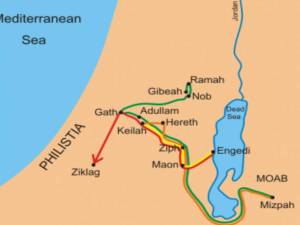
David took his family to safety in Moab:
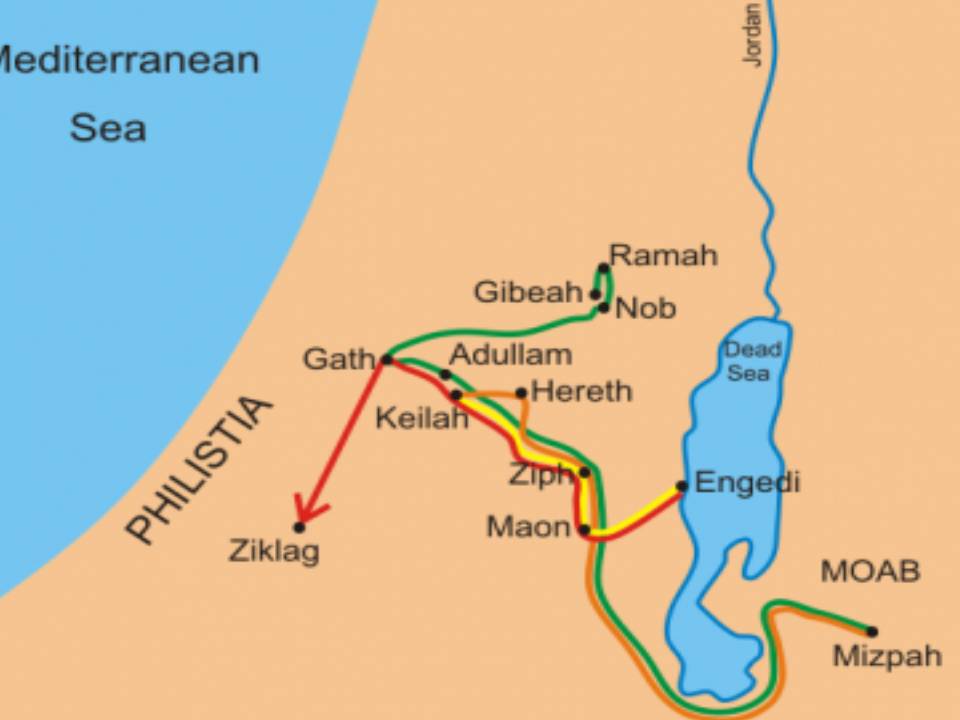
1 Samuel 22:3 And David went from there to Mizpeh of Moab. And he said to the king of Moab, “Please let my father and my mother stay with you, till I know what God will do for me.”

Verse 3. “Mizpeh” signifies a watchtower, and it is evident that it must be taken in this sense here, for it is called “the hold” or fort (1Sa 22:4). The king of Moab was an enemy of Saul (1Sa 14:47), and the great-grandson of Ruth, of course, was related to the family of Jesse.[3] 

Abiathar son of Ahimelech, Joins David

1 Samuel 22:20-23 But Abiathar, a son of Ahimelech son of Ahitub, escaped and fled to join David. He told David that Saul had killed the priests of the LORD. Then David said to Abiathar: “That day, when Doeg the Edomite was there, I knew he would be sure to tell Saul. I am responsible for the death of your father’s whole family. Stay with me; don’t be afraid; the man who is seeking your life is seeking mine also. You will be safe with me.”

With me, you are in a guarded place! I can see Him who is invisible, and as long as I fear Him more than man, He will guard me…If you are with me, He will guard you as well.

Psalm 34 “In my desperation I prayed, and the LORD listened; he saved me from all my troubles. For the angel of the LORD is a guard; he surrounds and defends all who fear him…Fear the LORD, you his godly people, for those who fear him will have all they need…Come, my children, and listen to me, and I will teach you to fear the LORD”.

Would anyone in their right mind believe they would be kept safe simply by staying with the most wanted man in Israel? David had such a trust in God that he could boldly profess God’s protection. His men began to trust David as they saw God work!

David Demonstrated That The Fear Of The Lord Keeps Us In Safety

David was settling down in Moab. God wanted these men to be pushed to the limit as far as trust in God was concerned. He wanted them to trust  Him even in the midst of evil and danger. So God sent a prophet to tell David to leave Moab and return to Judah.

1 Samuel 22:5 Then the prophet Gad said to David, “Do not remain in the stronghold; depart, and go into the land of Judah.” So David departed and went into the forest of Hereth.

God did not want David to remain outside the country of Judah. God wanted to demonstrate His power to David and to the men who were with him. God knew that all of Israel would be watching. God wanted them to see His power! God was telling David, “it is too easy to protect you so far away from Saul. That’s not much of a testimony of my Greatness! Come on back to Judah, where Saul has thousands of spies to tell him where you are at. This will give me a great opportunity to show you how I can protect you and keep you”.

In fact, 1 Samuel 23:3 reveals that David’s men really needed to learn this: They told him, “we are afraid here in Judah”. They were not worthy of being called “Mighty” yet!

David Demonstrates His Total Dependence Upon God

David did so by always inquiring of the Lord!

Verse 2:  Therefore David inquired of the LORD,

Verse 4: Then David inquired of the LORD again.

Verses 10, 11 & 12  Then said David, “O LORD, the God of Israel, your servant has surely heard that Saul seeks to come to Keilah, to destroy the city on my account.  Will the men of Keilah surrender me into his hand? Will Saul come down, as your servant has heard? O LORD, the God of Israel, please tell your servant.” And the LORD said, “He will come down.”  Then David said, “Will the men of Keilah surrender me and my men into the hand of Saul?” And the LORD said, “They will surrender you.”

Finally, when things got really heated, and Saul was close on his heels, David did what we all must do, he went to the Rock!

Verse 25:  And Saul and his men went to seek him. And David was told, so he went down to the rock and lived in the wilderness of Maon.

Every time David needed direction, he inquired of the Lord. His fear of the Lord was so great, that he did  not want to do anything counter to His will. His dependence upon the Lord was such that He would not make a move without clear direction from God.

To those men who said “we are afraid here in Judah”, what kind of testimony did that provide them?

Here is a man of obvious cunning and skill, and yet he is always asking God what to do! David demonstrated that he trusted God in everything, trusted enough to ask God what God wanted before he did it!

A Visit from Jonathan Strengthens David

Even David’s need Jonathan’s!

1Sa 23:16  And Jonathan, Saul’s son, rose and went to David at Horesh, and strengthened his hand in God. And he said to him, “Do not fear, for the hand of Saul my father shall not find you. You shall be king over Israel, and I shall be next to you. Saul my father also knows this.”
Strengthened – chazaq – to strengthen, prevail, harden, be strong, become strong, be courageous, be firm, grow firm, be resolute, be sore.  The form in Hebrew is a “Piel” stem, meaning an “intensive” form.  He really, really strengthened David.

The Writer of Hebrews used similar words to strengthen the heart of the Jewish Christian in Rome. He said: Hebrews 13:5 Keep your life free from love of money, and be content with what you have, for he has said, I will never leave you nor forsake you.”

It is a reference to the promise God gave Joshua just before he crossed over the Jordan to enter the Promised Land:

“as I was with Moses, so I will be with thee: I will not fail thee, nor forsake thee. Be strong and of a good courage…Only be thou strong and very courageous, that thou mayest observe to do according to all the law, which Moses my servant commanded thee: turn not from it to the right hand or to the left, that thou mayest prosper whithersoever thou goest. This book of the law shall not depart out of thy mouth; but thou shalt meditate therein day and night, that thou mayest observe to do according to all that is written therein: for then thou shalt make thy way prosperous, and then thou shalt have good success. Have not I commanded thee? Be strong and of a good courage; be not afraid, neither be thou dismayed: for the LORD thy God is with thee whithersoever thou goest. (Jos 1:5-9)

When things get scary, even overwhelming, cry out to Jesus Christ. He promised to never leave you nor forsake you. Be strong and of good courage. Do not be afraid. David, the man who feared God rather than man, sent a message loud and clear to his men – as long as we depend upon and follow God, we will be safe. We have nothing to fear.

  • God is greater than King Saul.
  • God is greater than his armies,
  • God is greater than all the spies.
  • God is a Rock that is higher than anyone

So we find 1 Sam 23:25: “When David heard that Saul and his men were searching for him, he went even farther into the wilderness to the great rock”.(NLT)

I’m sure David had this in mind when he wrote Ps 61:2 “From the end of the earth will I cry unto thee, when my heart is overwhelmed: lead me to the rock that is higher than I“.

David Declares His Hope and Magnifies God
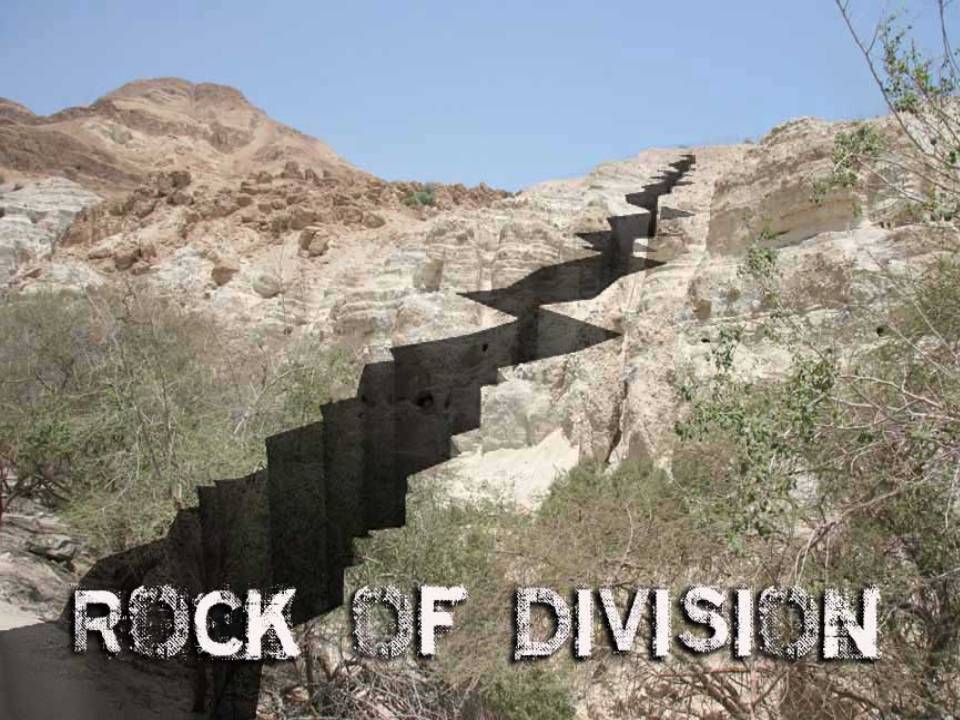
1 Samuel 23:26-28 tells us what happens next:

Saul and David were now on opposite sides of a mountain. Just as Saul and his men began to close in on David and his men, an urgent message reached Saul that the Philistines were raiding Israel again. So Saul quit chasing David and returned to fight the Philistines. Ever since that time, the place where David was camped has been called the Rock of Escape. (NLT)

You can see David there, his men all frightened, and David looking heavenward and praying out loud: “Bow down thine ear to me; deliver me speedily: be thou my strong rock, for an house of defense to save me. For thou art my rock and my fortress; therefore for thy name’s sake lead me, and guide me”. Psalm 31:2-3

When they hear Saul’s army leave, the men heard David shout:

 The LORD lives, and blessed be my rock, and exalted be the God of my salvation! Psa 18:46 

The Rock of Escape is the Hebrew word: Sela-hammahlekoth which is the combination of two words. Joined, they are actually translated “Rock of divisions”

Jesus is our Rock.

Paul declared that Jesus is our Rock, and He is typified by the rock from which water flowed after Moses struck it. 1 Cor 10:4  “And did all drink the same spiritual drink: for they drank of that spiritual Rock that followed them: and that Rock was Christ”.

Peter declares that Jesus is a rock, but a rock of offence: 1 Pet 2:8  And a stone of stumbling, and a rock of offence, even to them which stumble at the word, being disobedient: whereunto also they were appointed.
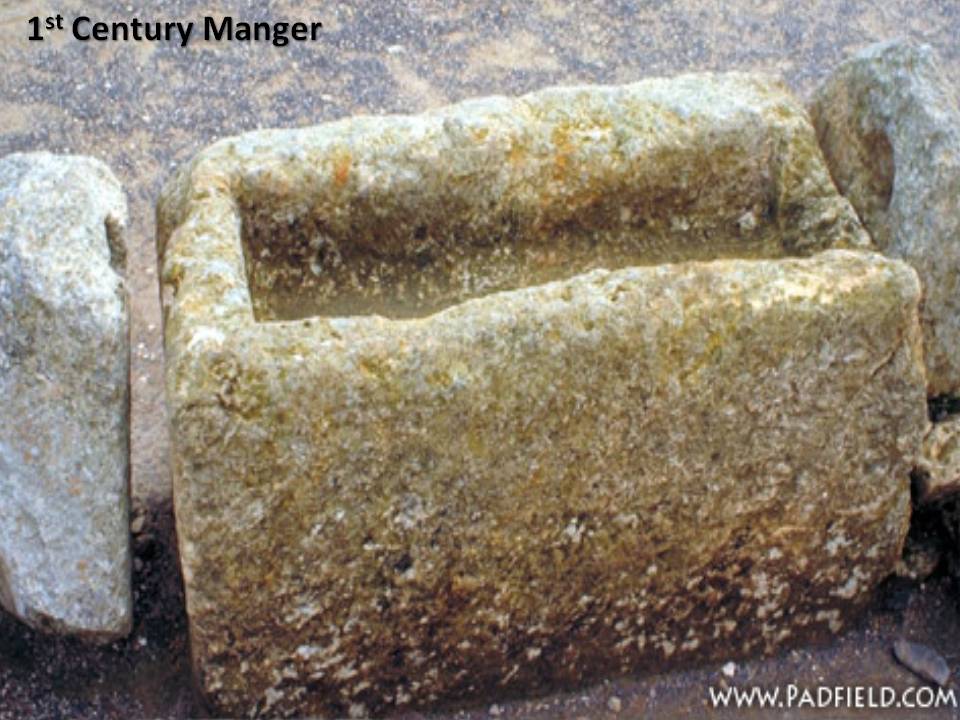
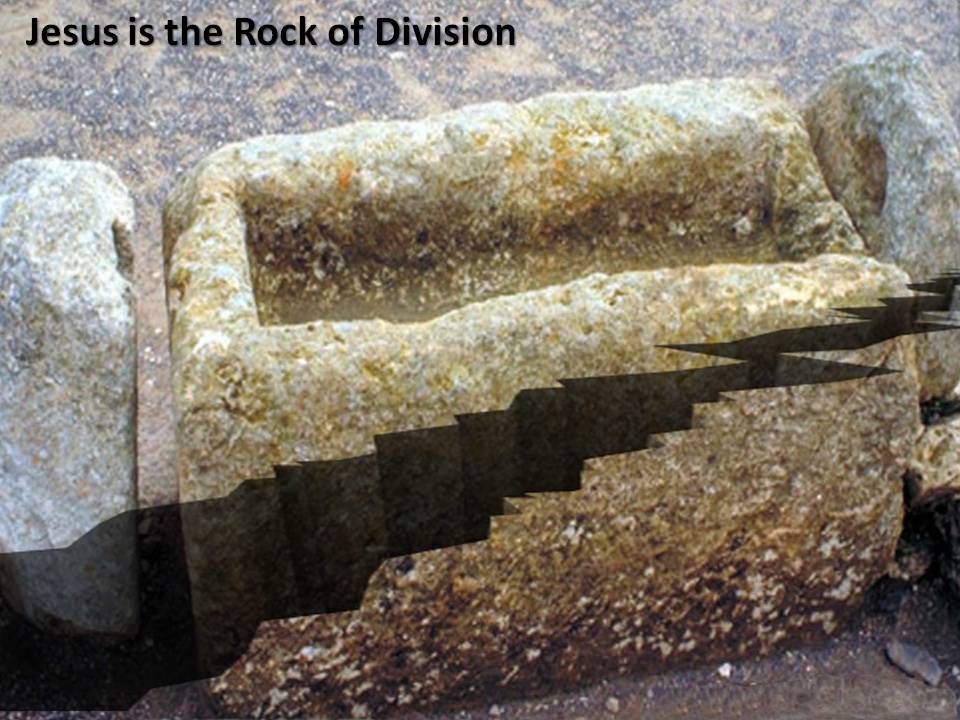
Most pictures of Jesus birth have him in a wooden manger. Archaeologist have discovered many stone mangers (or feeding troughs) from the time of Christ. Due to the abundance of stone and scarcity of trees around Bethlehem, it is most likely the manger Mary placed Jesus in was made from stone. It would be God’s doing if that rock came from Sela-hammahlekoth. For truly the manger represents the “Rock of Division”. Even our Calendar is divided by the manger. The very year we are in (AD 2011) means this is the 2011th year since the birth of Jesus “anno domini”. The day before was BC or “before Christ”.

I believe the manger was made of rock, whether in a cave or the lower level of a home, or a corral behind a home. I believe the manger represents this “rock of Division” that God used to rescue his beloved on.

Rock of Division

There is a Rock of Division that runs throughout the Old and New Testaments.
  • There is the Rock that Abraham climbed with his son Isaac. The rock that divided Abraham from trusting in God or trusting in himself. The rock upon which he placed Isaac in obedience to God.
  • There is the Rock on which Moses stood to receive the Law from the hand of God. The rock that divided his people from the world and separated them unto God.
  • There was a rock, a cornerstone, that the builders rejected and hung upon a cross, on the rock called Golgotha. That rock divided two men, one died in his sins and is burning in Hell even today. The other man trusted in the rock, and joined Him that day in Paradise!
  • There is a rock that was rolled away and a Triumphant Jesus Christ stepped forth. That rolling rock meant that Satan had been conquered, and sin and death could hold us no longer.  That rolling rock meant that no grave will hold us, no demon of hell will grab us, for we have trusted in this Risen Savior!
One day there will be a mighty stone cast upon the earth, and it will destroy the great whore Babylon, and all those who worshipped her. He that judges will cast Satan and all those who rejected the cornerstone into the lake of Fire for all eternity.

One Day a building made of precious stones will descend rom Heaven, and all those who have trusted in the Chief Cornerstone will find a mansion to live in for all eternity.

Yes Jesus was placed on a rock of division. He was not just a baby. He was not just “the reason for the season”.

Jesus Christ is the very Rock of Division. He is the Divider of Mankind.

John 14:6 Jesus said to him, “I am the way, and the truth, and the life; no one comes to the Father, but by me.

This Christmas, everyone you meet, every family member you hug, is on one side or the other of the Rock of DIvision. They are either clinging to the Rock, or they are clinging to something else, or trying to make it on their own. They either trust the Rock for their salvation, or they are lost and on their way to Hell. There is no in between, no purgatory, no second chance. We all face the rock of division. We either see the Rock of Jesus Christ as our only Hope, our only righteousness, and our only salvation, or we have no protection, we are trying to walk on sifting sand, sand that is slowly sifting to Hell.

Hurting Men became Mighty Men

David had a group of men whom the world had rejected. They were hopelessly beaten down, drowning in debt, and broken in soul. They came to David, a man whose Heart was given totally to following God. A Man building a House whose Foundation was God’s Word, and a Man whose Hope was in the Righteousness of God. As these men followed David, there lives were changed, they became alive to God, to trusting in God, and David called them his Gibborim, his Mighty Men!

They became followers of  El-Gibbor – The mighty God.

Mighty Men:

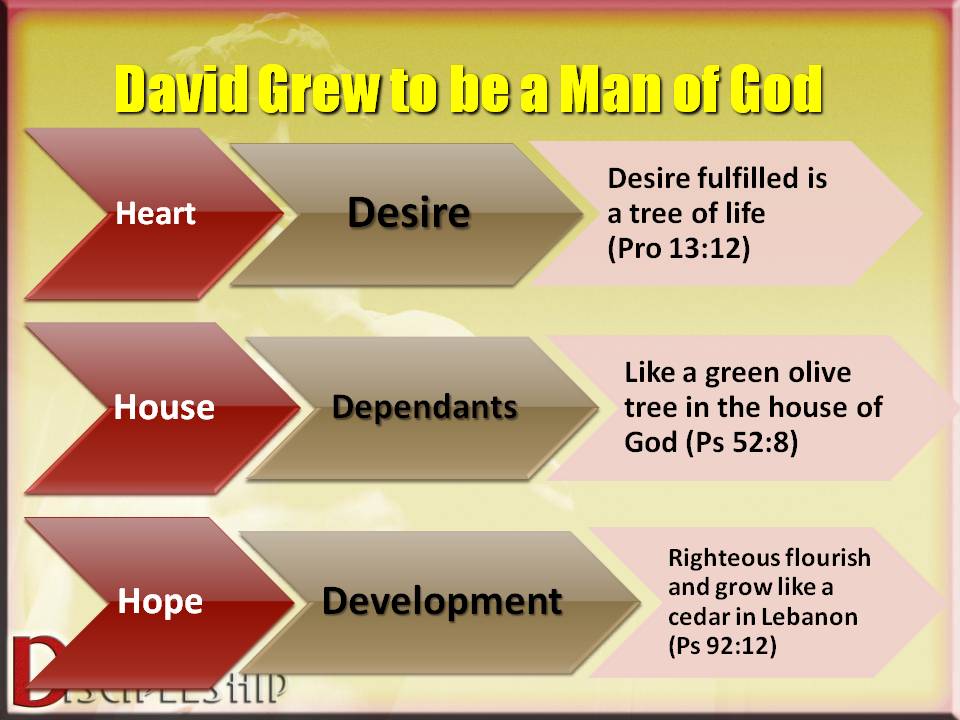
Fear God Above All – Heart

David taught them to fear the Lord above all I will teach you the fear of the LORD.

Depend Upon God Above All – House

David built his house with men who became mighty because their strength came from Mighty God

Magnify God Before Everyone – Hope

Psalm 52:9 I will praise you forever for what you have done; in your name I will hope, for your name is good. I will praise you in the presence of your saints.

Do You want to be a Mighty Man or Woman? Do you want to get on the winning side of the Rock? Do you see your need for a Savior?

1. Come as you are.

  • Are you in distress over this life?
  • Do you realize you owe a debt you can never repay? Jesus died for your sins, sins that meant you deserve condemnation in Hell. He redeemed you, paid the price to free you from your sins. You owe Him a debt you can never repay. Come to Him.
  • Are you carrying a heavy weight in your soul. Has life been so unjust that you ache.

2. Come to the Son of David, Jesus Christ

3. Come and bring your Sword!

  • Jesus is building an army of mighty men and women willing to take on the world! Discipleship is never passive, but always offensive!

[1] Warren Baker and Eugene Carpenter, The Complete Word Study Dictionary – Old Testament, (Chattanooga, TN: AMG Publishers, 2003), WORDsearch CROSS e-book, 654.

[2] R. Laird Harris, Gleason L. Archer, Bruce K. Waltke, ed., “1424: ‏נָשָׁא‎,” in Theological Wordbook of the Old Testament, (Chicago: Moody Press, 1980), WORDsearch CROSS e-book, Under: ” nāshâ“.

[3] Robert Jamieson, A.R. Fausset, David Brown, A Commentary: Critical, Experimental, and Practical on the Old and New Testaments, (Toledo, OH: Jerome B. Names & Co., 1884), WORDsearch CROSS e-book, Under: “1 SAMUEL”.


I am not against dogs. I love dogs. My only use of ‘dog’ when it comes to “Doeg” is for ease of remembering and to gain an understanding of how David felt as he realized he was now a wanted man, being pursued by “Doeg’s”. Everyone who desires to be a Disciple of Jesus Christ, must realize there are “Doeg’s” that will work to cause us to stumble from the “way of a disciple”. David encountered Doeg in 1 Samuel 21. Let’s see what lessons on Discipleship can we learn.

The very first lesson God taught fleeing David took place at Nob. He had an encounter with a ‘Dog’ (Doeg). (This is not to condemn “Dog the Bounty Hunter“). He is a just a scary looking “Dog” and he pursues relentlessly.

After David left Jonathan at Gibeah, he fled to Nob, the place of the Tabernacle, the city of Priests. Thus began his ‘life as a fugitive’ from Saul, a period of ten years during which he was ‘public enemy number one’ in all of Israel! (1 Sam 21:1-29:11).

God used this time of forced exile to develop David into the Disciple worthy of the Kingdom, in fact, a Disciple worthy of leading the Kingdom. God wanted David to face various tests of his faith, trust and hope. God wanted David to lay the foundation of a Kingdom that one day His very Son would rule over. So that foundation must not be in anything of man, or man’s working. The Foundation of the Kingdom of Christ must be in His Justice and His Righteousness. Therefore David had lessons that God wanted him to learn, lessons that would develop David into the Disciple worthy of establishing the Kingdom of His Son!

The Psalms that David wrote during these 10 years offer insight into David’s Discipleship. While it’s difficult to determine the background of every psalm, it’s likely that David’s fugitive years are reflected in Psalms 7, 11-13, 16-17, 22, 25, 31, 34-35, 52-54, 56-59, 63-64, 142-143[1].

God Wanted David to Rely Solely on Him

Psalm 18 is the Psalm he wrote when the LORD delivered him from the hand of all his enemies and from the hand of Saul. It reveals the Diploma David earned after 10 years of extreme Graduate School!

He began his Psalm of praise with a strange statement coming from a “mighty warrior” who had eluded Saul’s vast army for 10 years. This is not the kind of thing you would hear today from a WWE champion like ” Triple H” aka “The King of Kings”.

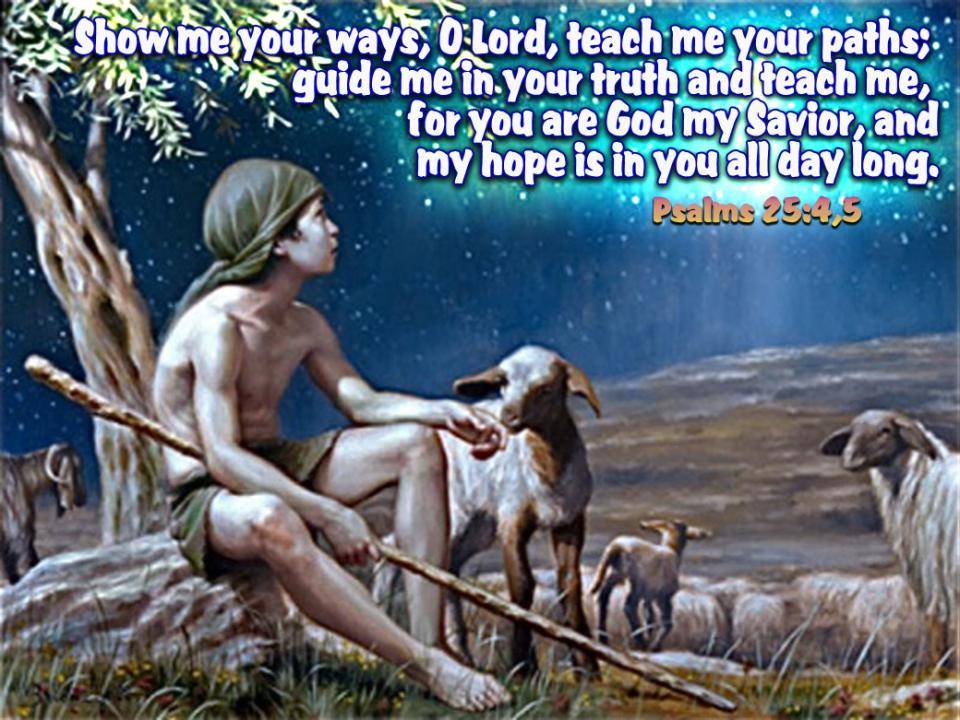
 “I love you, O LORD, my strength. The LORD is my rock and my fortress and my deliverer, my God, my rock, in whom I take refuge, my shield, and the horn of my salvation, my stronghold. I call upon the LORD, who is worthy to be praised, and I am saved from my enemies”. Psalm 18:1-3 (ESV)

Becoming a Disciple is about learning not to rely on your own strength, but to rely on the one who is greater than everything!

David’s Experience with Doeg

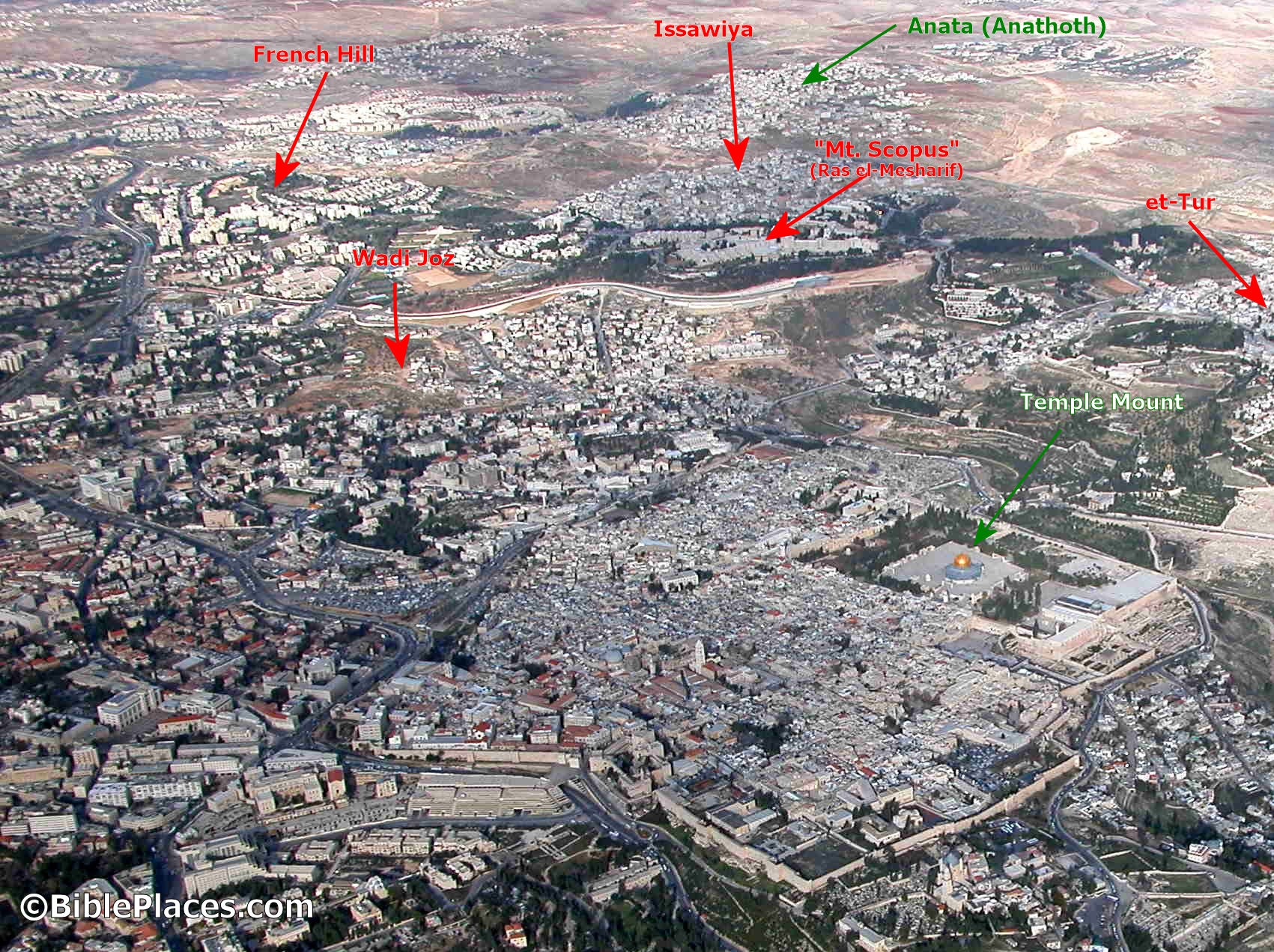
 Then David came to Nob <means fruit[2]; Nob was in the neighborhood of Jerusalem, near the Mount of Olives >[3]. to Ahimelech <means ‘my brother is King’ [4]>, the priest. And Ahimelech came to meet David trembling and said to him, “Why are you alone, and no one with you?”

Nob was known as the town of Priests. The Tabernacle was here and because of David’s relationship with Samuel, he thought he would be welcome here. It was also the responsibility of the Priests to keep provisions on hand for those in need. It was an hour and half walk from Gibeah. It probably took David longer for he had to travel at night, without light, to escape those seeking him. It was the morning of a Sabbath when he suddenly presented himself, alone, unarmed, weary, and faint with hunger before the high-priest.

Ahimelech was frightened to see David looking so, without his usual delegation.

And David said to Ahimelech the priest, “The king has charged me with a matter and said to me, ‘Let no one know anything of the matter about which I send you, and with which I have charged you.’ I have made an appointment with the young men for such and such a place.

He may or may not have been aware of the conflict between David and Saul. But certainly he thought something was up. However, David had reasonable answer’s for all of his questions. The King’s business had been so pressing and secretive that David was forced to leave without adequate provisions and weapons.

David Needed Mercy in the Form of Provisions

Now then, what do you have on hand? Give me five loaves of bread, or whatever is here.” And the priest answered David, “I have no common bread on hand, but there is Holy bread— if the young men have kept themselves from women.” And David answered the priest, “Truly women have been kept from us as always when I go on an expedition. The vessels of the young men are holy even when it is an ordinary journey. How much more today will their vessels be holy?” So the priest gave him the holy bread, for there was no bread there but the bread of the Presence, which is removed from before the LORD, to be replaced by hot bread on the day it is taken away.

David was on the run, homeless, penniless, and had likely been three days without food. He came to the place where he had prayed to so many times. He needed mercy from God. He didn’t need a lecture or a sermon. He needed God’s mercy!

This little incident allows us to evidence the decay into which the priesthood and offerings of the people had fallen. The fact that there was nothing to offer David except the shewbread reveals the poverty of the priesthood, and the neglect of such by the people. If people would have been offering sacrifices, there would be plenty of food.

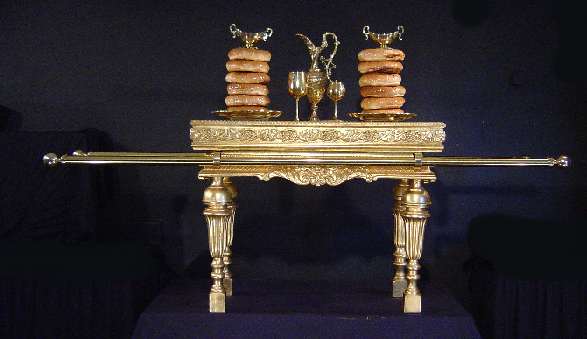
The Table of Shewbread

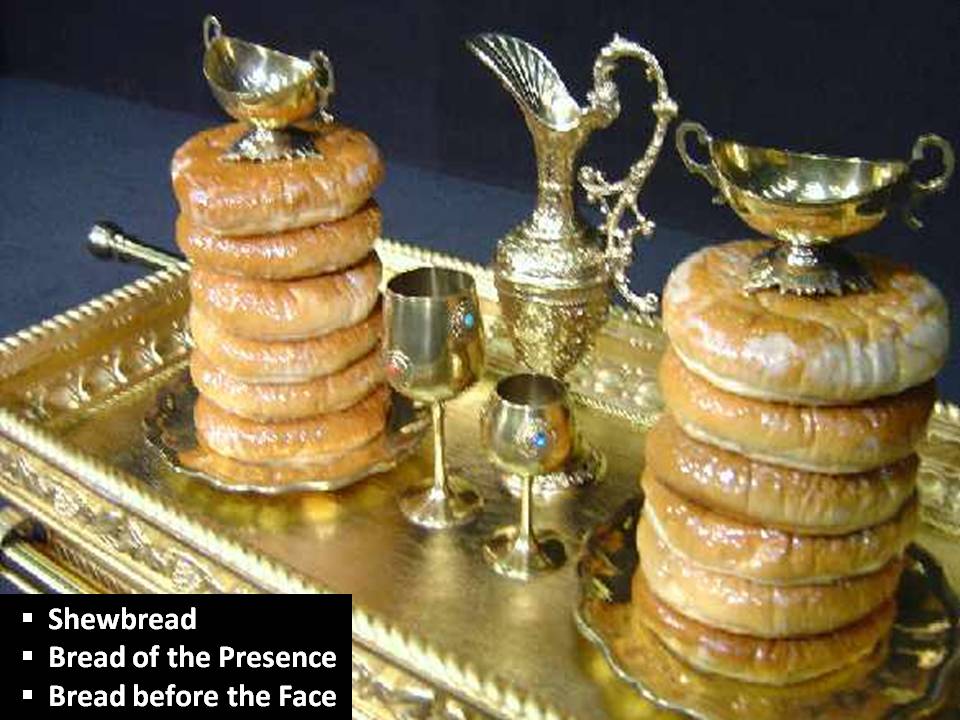
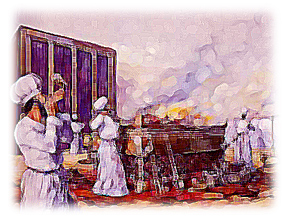
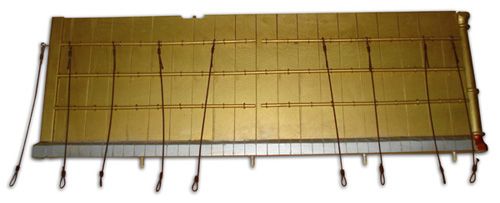
When you walk into the tabernacle you enter a door that leads to the holy place. The priest had at his right hand the table of shewbread or also referred to as the table of the presence. It was made of acacia wood overlaid with pure gold. Its size was 2 cubits (3 feet) in length by one cubit (1 1/2 feet) in breadth and a height of 1 1/2 cubits (2 1/4 feet). Around the table was a border of gold and then a little further in, on the table top, an additional border which would hold the contents in place. The table had four legs, and two gold-plated poles were inserted through golden rings attached to the legs for transporting.

  • “And you shall set the showbread on the table before Me always.”

The purpose of the golden table was to hold 12 cakes of bread made of fine flour. They were placed there in two stacks (or rows) of six, each loaf representing one of the tribes of Israel (Lev. 24:8).

  • Lev 24:5-9 And you shall put pure frankincense on each row, that it may be on the bread for a memorial, an offering made by fire to the LORD. Every Sabbath he shall set it in order before the LORD continually, being taken from the children of Israel by an everlasting covenant. And it shall be for Aaron and his sons, and they shall eat it in a holy place; for it is most holy to him from the offerings of the LORD made by fire, by a perpetual statute.”

Significance of the Bread of Presence

  • Fine Flour (from the earth)
  • Baked (agony and suffering)
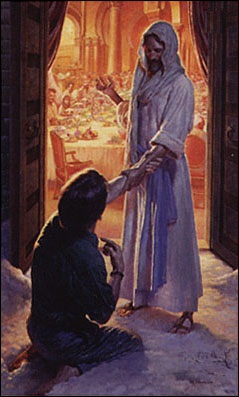
  • Unleavened (nothing artificial)

  • Sprinkled with pure frankincense[5]

Bread Sprinkled with Pure Frankincense

Frankincense was given to Baby Jesus, and symbolizes His office as High Priest, offering prayers of intercession before the Father for us. Here, sprinkled upon the bread that is to be always before the face of God, it illustrates the truth of what Jesus declared in John 6.

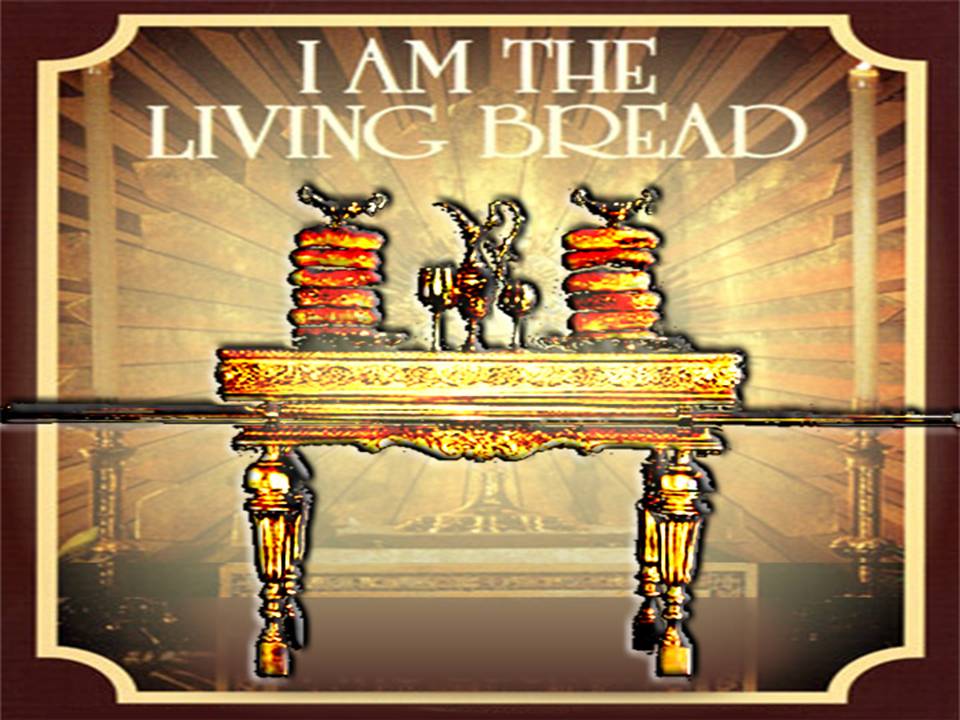
I AM the Living Bread

John 6:51-58 “I am the living bread which came down from heaven. If anyone eats of this bread, he will live forever; and the bread that I shall give is My flesh, which I shall give for the life of the world. As the living Father sent Me, and I live because of the Father, so he who feeds on Me will live because of Me. This is the bread which came down from heaven– not as your fathers ate the manna, and are dead. He who eats this bread will live forever.”

When David ate the Shewbread, he was prophetically eating a symbol of the Savior that he hoped in, and who offered his body a broken sacrifice for him. That broken body is ever before the face of God, offering prayers on our behalf! This is a picture of how our Hope is not in our own strength, but the strength that comes from the Bread of Life!

Recent studies by an international team of scientists, including researchers from Johns Hopkins University and the Hebrew University in Jerusalem, have indicated that burning frankincense resin helps to alleviate anxiety and depression. The University of Munich found the anti-inflammatory properties of frankincense very effective as a treatment for joint pain and arthritis[6]

 2000 Years Later, Jesus faced a similar situation:

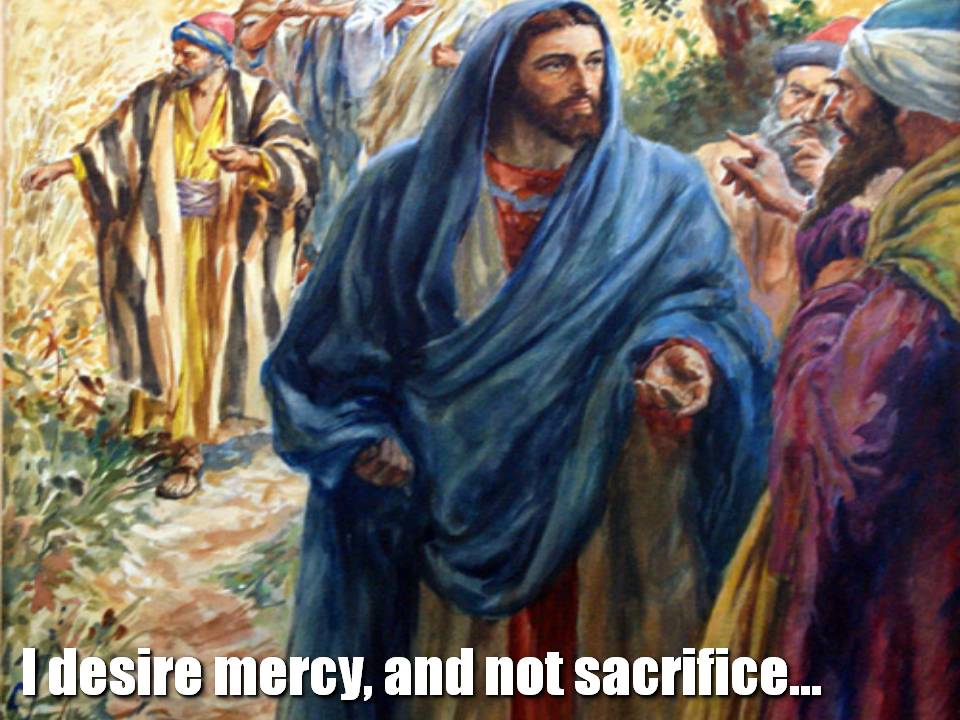
Jesus is walking with his disciples through a corn/wheat field. It was on a Sabbath, and they were very hungry. So they plucked the grain and ate it. (I’ve eaten freshly plucked wheat, so I know they must have been very hungry to eat it). Some Pharisees watched and immediately cried “law breakers’!

According to the Pharisees, the disciples reaped a crop. They threshed it by rubbing the berries in their hands and breaking the hulls off. Then they winnowed it by blowing the hulls away. By doing so, they were guilty of preparing a meal.

Jesus said to them, “Have you not read what David did when he was hungry, and those who were with him: (4) how he entered the house of God and ate the bread of the Presence, which it was not lawful for him to eat nor for those who were with him, but only for the priests? (5) Or have you not read in the Law how on the Sabbath the priests in the temple profane the Sabbath and are guiltless? (6) I tell you, something greater than the temple is here. (7) And if you had known what this means, ‘I desire mercy, and not sacrifice,’ you would not have condemned the guiltless. (8) For the Son of Man is lord of the Sabbath.” Matthew 12:1-8 (ESV)

Jesus deliberately drew attention to one of the Sabbath’s main purposes: It is a day of mercy and not a day of sacrifice.

Christ’s referred to 1 Samuel 21-when David ate the showbread. He wanted the Pharisees to understand that the Sabbath is to benefit a mercy needing man. David benefited from the Mercy of Ahimelech in giving him the showbread at a time when he was starving and weak. Mercy for the weak and hurting trumped the Law. Christ is always about Life, not Death.

The Pharisees didn’t understand Jesus. They did not see the Life He offered.

The Sabbath is a Day of Mercy for it is a Day of Hope!

David was about to learn the need for Hope!

The Doeg

Now a certain man of the servants of Saul was there that day, detained before the LORD. His name was Doeg the Edomite, the chief of Saul’s herdsmen.

It so happened in the Providence of God, that on this special Sabbath, one of Saul’s principal officials, the “chief over the herdsmen,” was in Nob, “detained before Jehovah.” The expression implies that Doeg was obliged to remain in the sanctuary in consequence of some religious ceremony—whether connected with his admission as a proselyte, for he was by birth an Edomite, or with a vow, or with some legal purification. (22:22)[7].

Doeg’s presence at the tabernacle is a mystery. He was an Edomite and whose presence would not normally be welcomed. He was “detained before the Lord” at the sanctuary (1 Sam. 21:7). Perhaps he had become a Jewish proselyte and was following the Hebrew faith in order to hold his job. As Saul’s chief shepherd, Doeg could easily have become defiled so that he had to bring a sacrifice to the Lord.

David knew that Doeg would report to Saul what he had seen at Nob and that this would mean trouble.Perhaps that is why he was not being honest with Ahimelech, so as to insulate him from the wrath of Saul.

Doeg Tells Saul

1 Samuel 22:6-19 reveals the Destructiveness of Doeg

(6) Now Saul heard that David was discovered, and the men who were with him. Saul was sitting at Gibeah under the tamarisk tree on the height with his spear in his hand, and all his servants were standing about him. (7) And Saul said to his servants who stood about him, “Hear now, people of Benjamin; will the son of Jesse give every one of you fields and vineyards, will he make you all commanders of thousands and commanders of hundreds, (8) that all of you have conspired against me? No one discloses to me when my son makes a covenant with the son of Jesse. None of you is sorry for me or discloses to me that my son has stirred up my servant against me, to lie in wait, as at this day.” (9) Then answered Doeg the Edomite, who stood by the servants of Saul, “I saw the son of Jesse coming to Nob, to Ahimelech the son of Ahitub, (10) and he inquired of the LORD for him and gave him provisions and gave him the sword of Goliath the Philistine.” (11) Then the king sent to summon Ahimelech the priest, the son of Ahitub, and all his father’s house, the priests who were at Nob, and all of them came to the king. (12) And Saul said, “Hear now, son of Ahitub.” And he answered, “Here I am, my lord.” (13) And Saul said to him, “Why have you conspired against me, you and the son of Jesse, in that you have given him bread and a sword and have inquired of God for him, so that he has risen against me, to lie in wait, as at this day?” (14) Then Ahimelech answered the king, “And who among all your servants is so faithful as David, who is the king’s son-in-law, and captain over your bodyguard, and honored in your house? (15) Is today the first time that I have inquired of God for him? No! Let not the king impute anything to his servant or to all the house of my father, for your servant has known nothing of all this, much or little.” (16) And the king said, “You shall surely die, Ahimelech, you and all your father’s house.” (17) And the king said to the guard who stood about him, “Turn and kill the priests of the LORD, because their hand also is with David, and they knew that he fled and did not disclose it to me.” But the servants of the king would not put out their hand to strike the priests of the LORD. (18) Then the king said to Doeg, “You turn and strike the priests.” And Doeg the Edomite turned and struck down the priests, and he killed on that day eighty-five persons who wore the linen ephod. (19) And Nob, the city of the priests, he put to the sword; both man and woman, child and infant, ox, donkey and sheep, he put to the sword. 1 Samuel 22:6-19 (ESV)

Doeg, wanting to gain from Saul, (Saul had just mentioned what he could give people), told about David being offered help by the Priests in Nob. He did not reveal that David had gained the help by misleading Ahimelech. He knew his information would better him at the expense of the Priests.

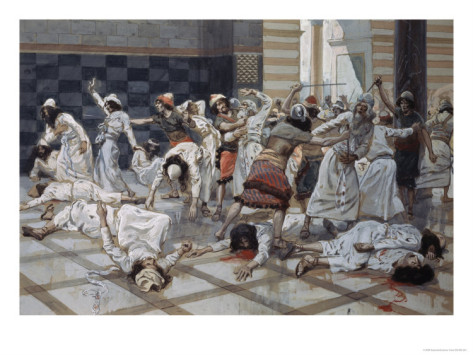
When all of Saul’s servants refused to go against the Priests, Saul turned to Doeg, and he not only killed all the priests, but he went to Nob and killed everyone there, boys, girls, mothers, even infants. He totally wiped the city of Nob from the face of the earth. Doeg was not only a Doeg, but he was a Destroyer.

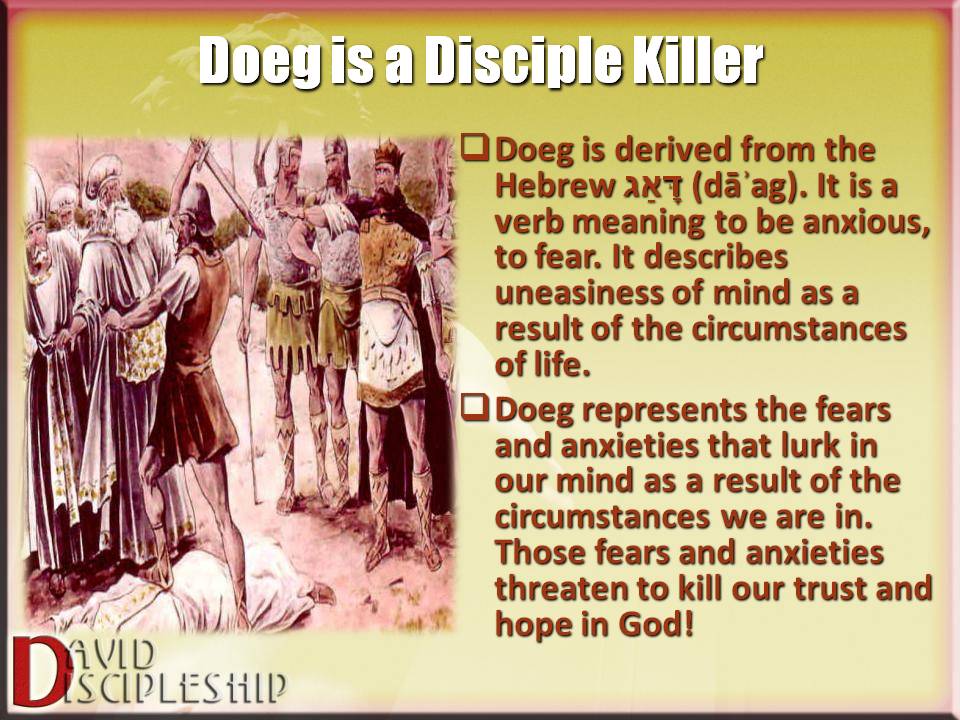
Doeg is a Disciple killer

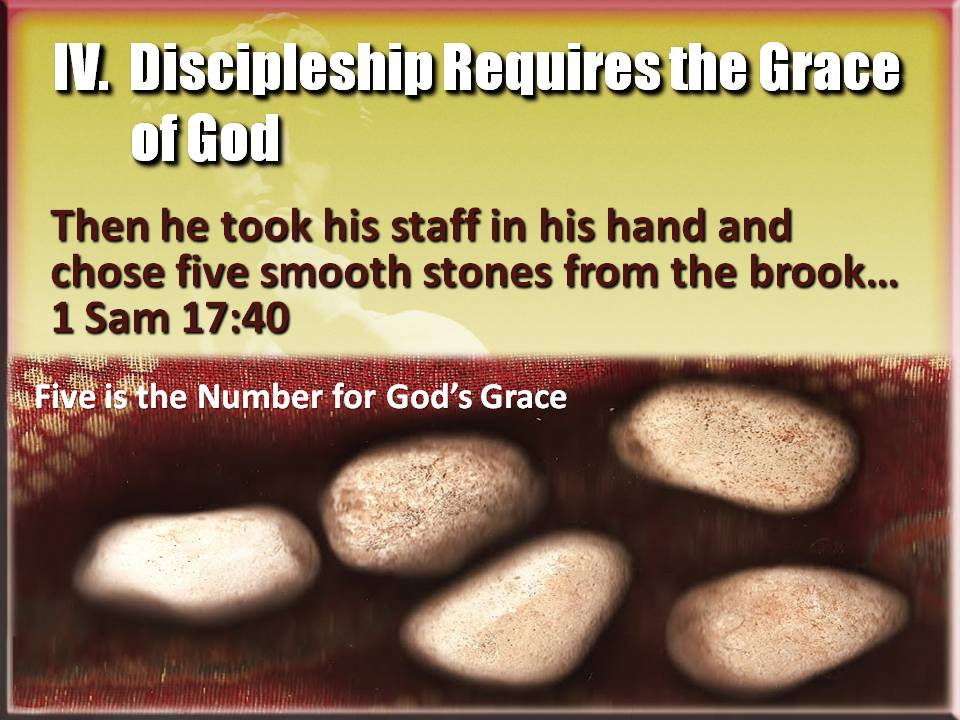
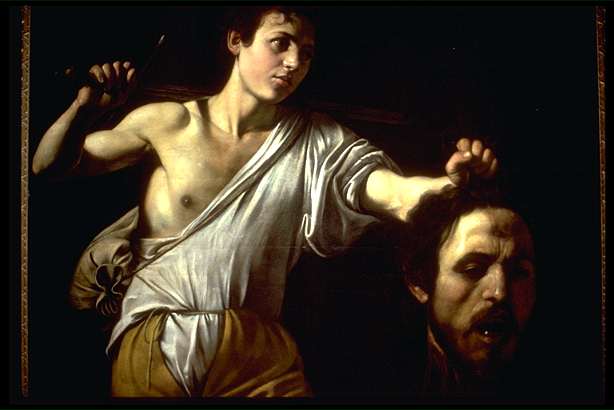
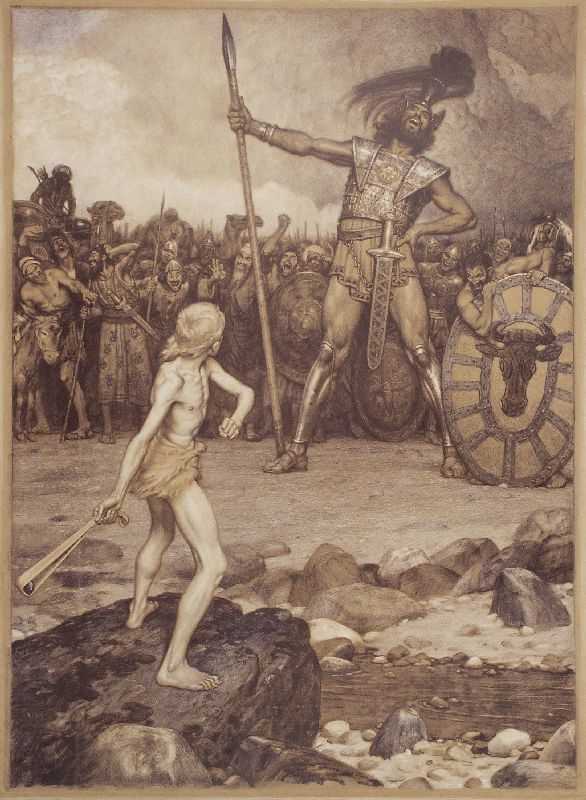
David had faced Goliath, and defeated him with a single stone. David’s heart was so united with God’s that there was nothing of this world that could defeat him. Now David was on the run from his authority, the anointed King of Israel. David had the love of Jonathan, and a few servants, but no one else to aid him, except God. So he came to the Tabernacle for food, provisions, and to inquire of the Lord for guidance. There he encountered Doeg, and David knew he was evil, but he had no idea what would happen. Perhaps he had an inkling, and that is why he did not tell Ahimelech the truth.

As a David Disciple you will encounter Goliath’s, you will encounter Saul’s, and you will encounter Doegs.

Doegs are very dangerous to Disciples, for they lurk in the shadows. They don’t come directly at you. Often they are an unseen enemy. But Doegs are very deadly. Doeg is derived from the Hebrew ‏דָּאַג‎ (dāʾag). It is a verb meaning to be anxious, to fear. This word describes uneasiness of mind as a result of the circumstances of life[8].

Doeg represents the fears and anxieties that lurk in our mind as a result of the circumstances we are in. Those fears and anxieties threaten to kill our trust and hope in God!

David described how his sin made him ‘dāʾag

I confess my iniquity; I am troubled (dāʾag) by my sin. Psalm 38:18 (NIV)

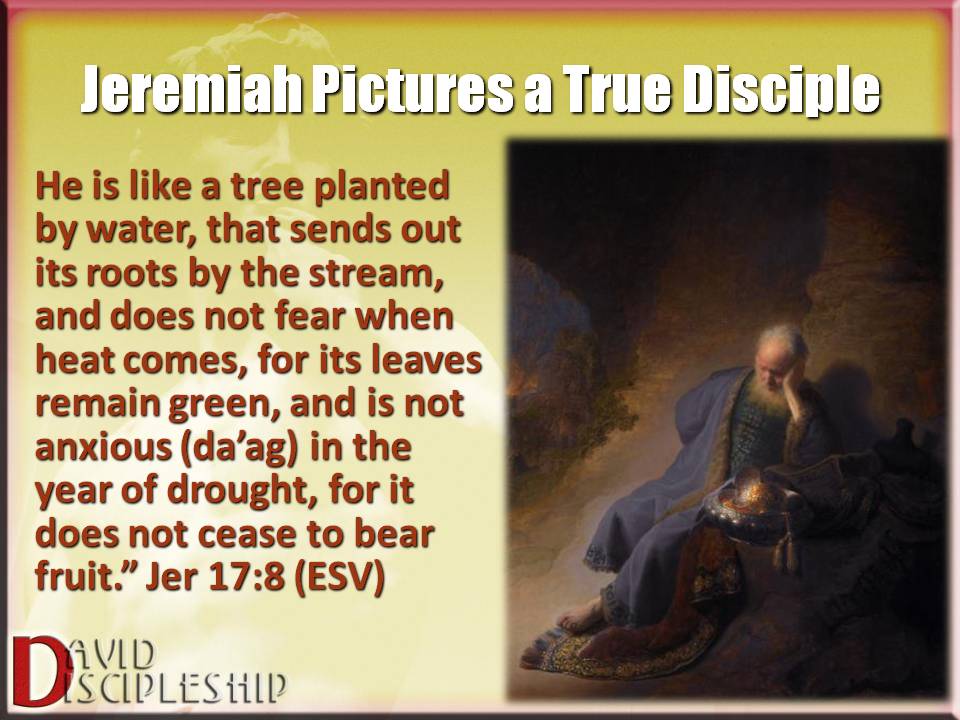
 Jeremiah used the word ‘dāʾag’ to illustrate how Disciples are to be:

He is like a tree planted by water, that sends out its roots by the stream, and does not fear when heat comes, for its leaves remain green, and is not anxious (dāʾag) in the year of drought, for it does not cease to bear fruit.” Jeremiah 17:8 (ESV)

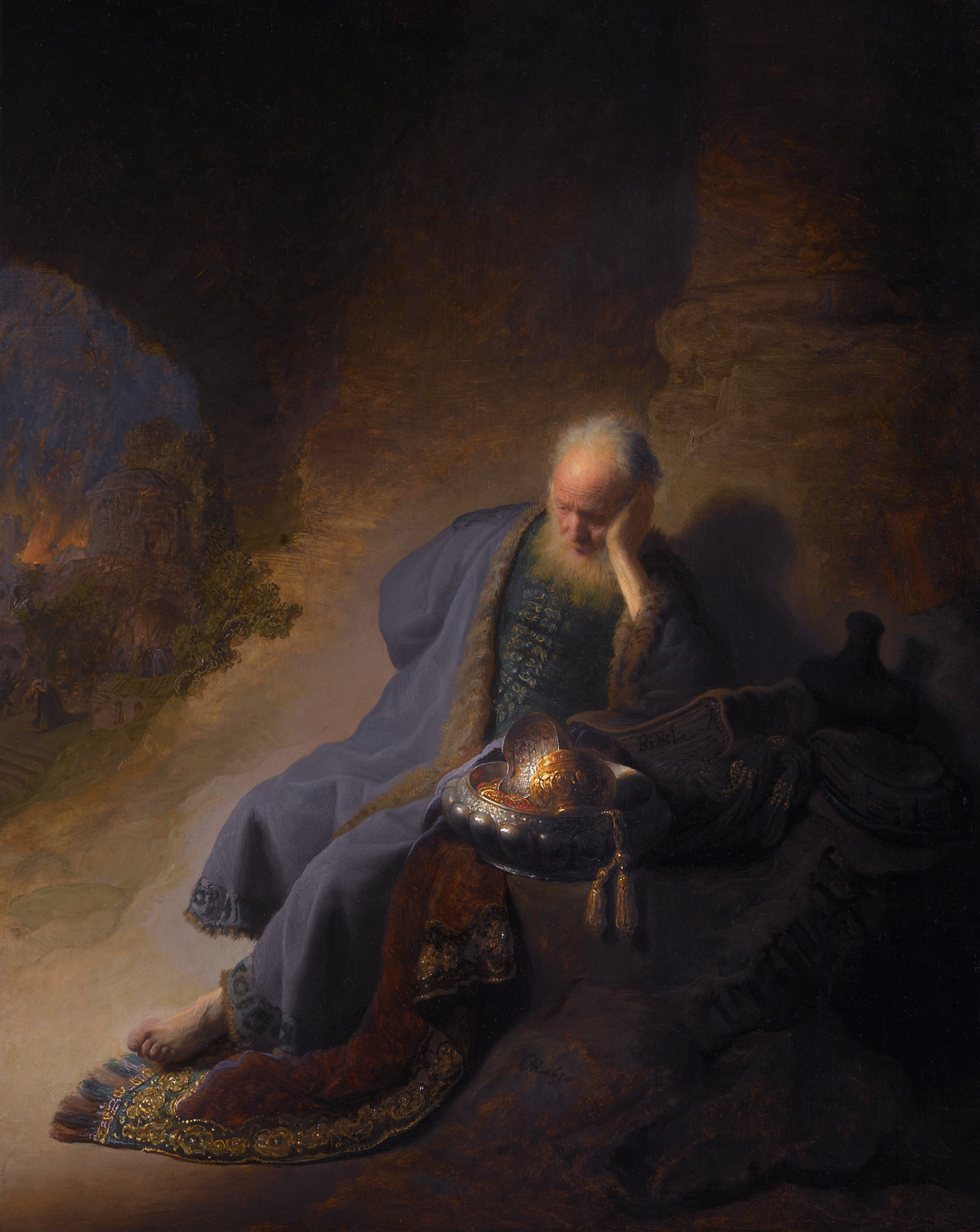
Jeremiah was called the weeping prophet. One poignant moment immortalized by Rembrandt depicts Jeremiah grieving over the destruction of Jerusalem and the First Temple by Nebuchadnezzar. Tradition has him in a grotto just outside the North Wall of Jerusalem. It is under the hill called Golgotha. He wrote the five poems of Lamentations near the  place where our Savior was crucified.

Jeremiah’s sermons and prophecies were ignored and scoffed at by the leaders of Jerusalem. Jeremiah (in a message from God) encouraged the soldiers to surrender to Nebuchadnezzar to save the city. They threw him into an empty cistern in the King’s palace prison and he sank in mud up to his armpits. They left him there to starve to death, hoping to silence him. Still he kept on preaching the Word of the Lord. Fortunately an Ethiopian man, a court official, persuaded the King to release Jeremiah. It took thirty men with ropes to pull Jeremiah out of that mud.

As much as Jeremiah was despised. As grief-stricken as he was when he wrote this:

How lonely sits the city that was full of people! How like a widow has she become, she who was great among the nations! She who was a princess among the provinces has become a slave. Lamentations 1:1 (ESV)

Jeremiah did something totally crazy:

While he was imprisoned, Jeremiah received a visit from his cousin Hanamel. Hanamel wanted to sell Jeremiah a piece of land in their hometown of Anathoth. It was a foolish request, for the land was already in control of the Chaldeans and Nebuchadnezzar. Furthermore, Jeremiah was in prison for treason, and unable to use the land. Jeremiah bought the land in front of many witnesses, saying:

‘Thus says the LORD of hosts, the God of Israel: Take these deeds, both this sealed deed of purchase and this open deed, and put them in an earthenware vessel, that they may last for a long time. For thus says the LORD of hosts, the God of Israel: Houses and fields and vineyards shall again be bought in this land.’ Jeremiah 32:14-15 (ESV)

In spite of his grief and despair over the circumstances he was in, Jeremiah never lost his Hope in God.

Jeremiah discovered a Hope that is greater than all our fears:

  •  The steadfast love of the LORD never ceases; his mercies never come to an end; they are new every morning; great is your faithfulness. “The LORD is my portion,” says my soul, “therefore I will hope in him.”  The LORD is good to those who wait for him, to the soul who seeks him. Lamentations 3:22-25 (ESV)
  • There is hope for your future,” says the LORD. “Your children will come again to their own land. Jeremiah 31:17 (NLT)

Jer 14:8 Calls out to the Hope of Israel – its Savior. Then He reveals the coming Hope:

Jeremiah’s Hope – The Lord our Righteousness

“For the time is coming,” says the LORD, “when I will raise up a righteous descendant from King David’s line. He will be a King who rules with wisdom. He will do what is just and right throughout the land. And this will be his name: ‘The LORD Our Righteousness.’ yehōwāh tṣid̠qēnû (from tsedaqah) Jeremiah 23:5-6 (NLT)

 Fear versus Hope (Doeg vs the Lord)

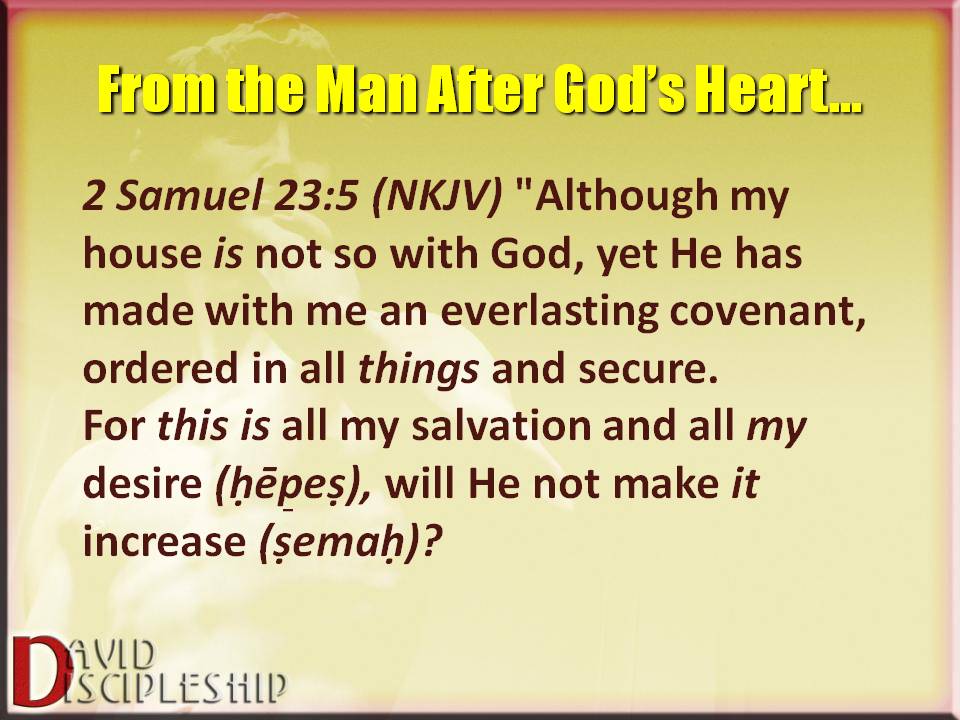
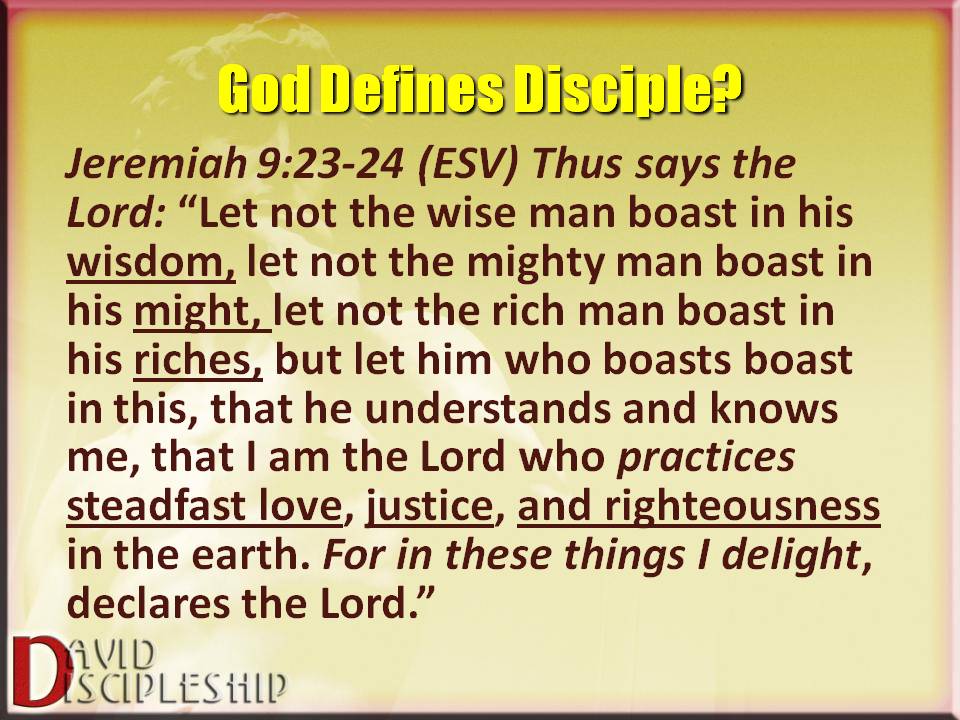
Discipleship is all about knowing the ways of God, embracing and understanding all that He delights in. He delights in hesed, mishpat and tsedaqah. (Jer 9:24)

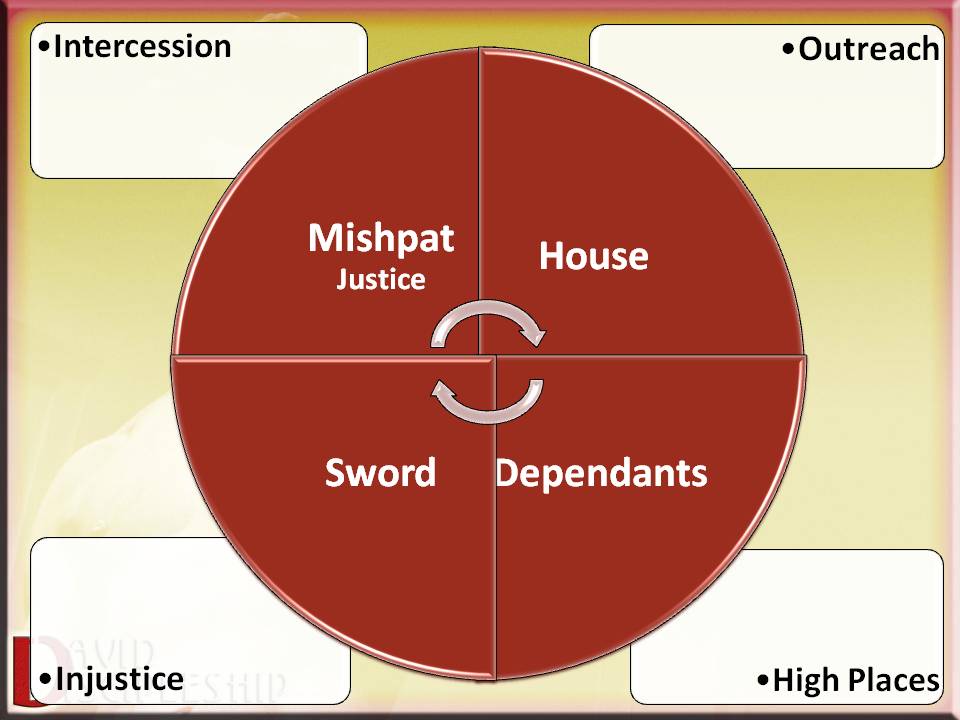
The hesed of God strengthens our heart to defeat Goliath. The mishpat of God enables us to endure the injustice of Saul, as we focus on our responsibility to build our house by reaching out to the lame and lost.

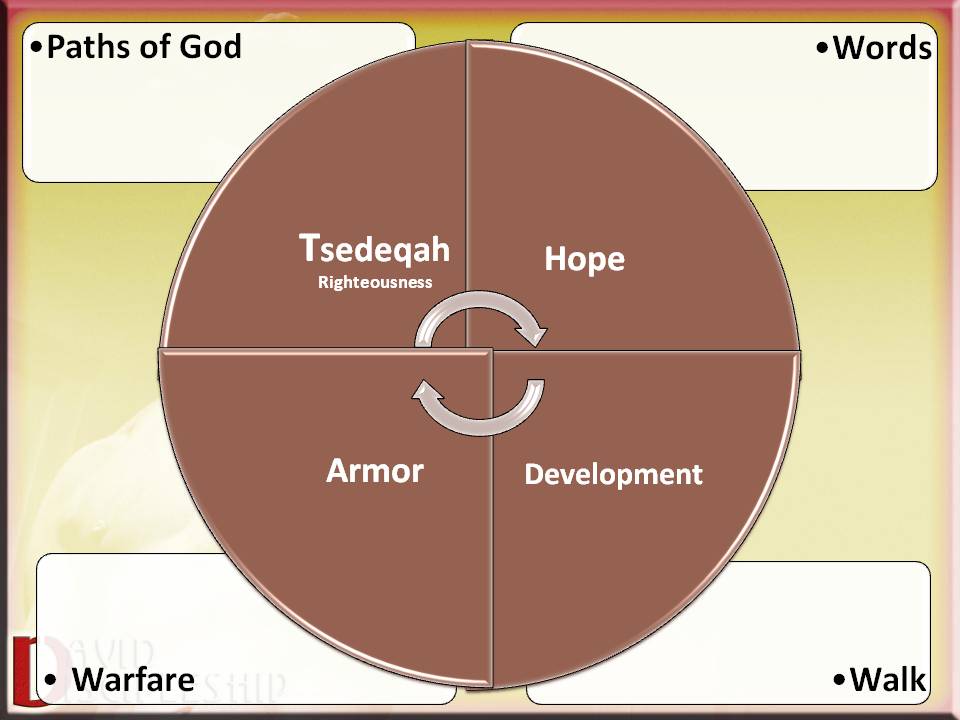
The Tsedaqah of God allows us to conquer the Doegs of life by focusing on the Hope we have in Christ, and His righteousness.

The Psalms that David wrote after these encounters reveal that David learned this exact lesson:

David wrote Psalm 52 when he learned of Doeg’s murderous actions

The Steadfast Love (hesed) of God Endures: To the choirmaster. A Maskil of David, when Doeg, the Edomite, came and told Saul, “David has come to the house of Ahimelech.”

(5) But God will break you down forever; he will snatch and tear you from your tent; he will uproot you from the land of the living. Selah (6) The righteous shall see and fear, and shall laugh at him, saying, (7) “See the man who would not make God his refuge, but trusted in the abundance of his riches and sought refuge in his own destruction!” (8) But I am like a green olive tree in the house of God. I trust in the steadfast love of God forever and ever. (9) I will thank you forever, because you have done it. I will wait for your name, for it is good, in the presence of the godly. Psalm 52:5-9 (ESV)

God told David to go to Gath (when he inquired of Ahimelech), for God wanted David doubly learn this lesson. God wanted David to never forget!

After Being Seized in Gath

Psalm 34: “Of David, when he pretended to be insane in front of Abimelech, who sent him away”.

I prayed to the LORD, and he answered me. He freed me from all my fears…In my desperation I prayed, and the LORD listened; he saved me from all my troubles…For the angel of the LORD is a guard; he surrounds and defends all who fear him. Taste and see that the LORD is good. Oh, the joys of those who take refuge in him! Fear the LORD, you his godly people, for those who fear him will have all they need…Come, my children, and listen to me, and I will teach you to fear the LORD. Psalm 34:4-11 (NLT)

Psalm 56: In God I Trust “To the choirmaster:. A Miktam of David, when the Philistines seized him in Gath”.

When I am afraid, I put my trust in you. In God, whose word I praise, in God I trust; I shall not be afraid. What can flesh do to me? Psalm 56:3-4 (ESV)

David learned that the fear of the Lord conquers every other fear (vv. 9-16). When you walk in fear of the Lord, you walk in His Righteousness. When you walk in His righteousness, you are no longer walking in fear or anxiety. Doeg can never push you from the discipleship path!

How are you handling the Doegs of Life? Are circumstances getting to you? Is fear lurking in the corners of your mind? Have you been hoping in something that has let you down? Perhaps it is time to follow David, and learn the fear of the Lord, learn that Jesus is your Righteousness! Life is never meant to be up to us. There are too many “Doeg’s” that lurk in the shadows. Fear is a discipleship killer. There is no fear of man when we walk in fear of the Lord, when we walk in the Righteousness of Christ!


[1] Warren W. Wiersbe, The Bible Exposition Commentary – History, (Colorado Springs, CO: Victor, 2003), WORDsearch CROSS e-book, 264.

[2] James Strong, Strong’s Talking Greek & Hebrew Dictionary, (Austin, TX: WORDsearch Corp., 2007), WORDsearch CROSS e-book, Under: “5011”.

[3] Robert Jamieson, A.R. Fausset, David Brown, A Commentary: Critical, Experimental, and Practical on the Old and New Testaments, (Toledo, OH: Jerome B. Names & Co., 1884), WORDsearch CROSS e-book, Under: “1 SAMUEL”.

[4]Warren Baker and Eugene Carpenter, The Complete Word Study Dictionary – Old Testament, (Chattanooga, TN: AMG Publishers, 2003), WORDsearch CROSS e-book, Under:  “אֲחִימֶלֶךְ ’aḥiymelek̠”.

[7] Alfred Edersheim, Bible History Old Testament, (London: Religious Tract Society, 1890), WORDsearch CROSS e-book, Under: “CHAPTER 12”.

[8] R. Laird Harris, Gleason L. Archer, Bruce K. Waltke, ed., “393: ‏דָּאַג‎,” in Theological Wordbook of the Old Testament, (Chicago: Moody Press, 1980), WORDsearch CROSS e-book, Under: “‏דָּאַג‎”.


I intend to build a house for the name of the LORD my God… 1 Kings 5:5 (ESV)
Unless the LORD builds the house, those who build it labor in vain.  Psalm 127:1 (RSV) 

I Samuel 16-20 reads better than any soap opera on television. Imagine this script for the Young and the Restless…

Our show is set in beautiful Jerusa City, where Victor Saul has established himself as the King of the enormous Newman Cosmetics Empire. He is losing his mind slowly, and his son Jonathan is questioning his authority openly among the staff. Victor Saul sees a promising young man in Jack David Abbot, and takes him under his wing. Immediately Jack David lands Goliath Industries, the largest cosmetics account in the company’s history. Everyone is buzzing about the heir apparent to Newman Cosmetics.

Victor Saul, his mind turning inward, starts to question everything Jack David does. He even gives him impossible tasks to try to humiliate him. However, every time young Jack David accomplishes the tasks in spades, and his fame within Newman Cosmetics grows. Indeed, people throughout Jerusa City are singing his praises.

Victor Saul becomes more jealous, and his twisted mind begins to see Jack David as his worst enemy.

Jonathan, oldest son of Victor Saul, sees what is happening to his father, and his heart goes out to Jack David. The two become best friends. Jonathan gives Jack David his office and a key to the executive bathroom. He assures Jack David he will always have his support, and he will always have a top management place at Newman Cosmetics.

Meanwhile Victor Saul’s mind is getting more confused and paranoid. The medicine fails to work. He tries to kill Jack David not once but twice. Jack David, the trusting loyal employee that he is, refuses to see what is happening. Victor Saul even tries to kill his own son, Jonathan. Finally, Jack David realizes his only option is to flee Jerusa City and hide among the vagabums of Sin City. But before he goes, Jonathan and Jack David make a pact to always have each other’s back, and Jonathan, knowing that Jack David will someday become President of Newman Cosmetics, makes Jack David promise to always care for his children and grand-children.

Far from being a story line for a soap opera, this actually happened in the life of David. Before we examine the Scriptural account in detail, we must clear a hurdle of understanding about the ways of God.

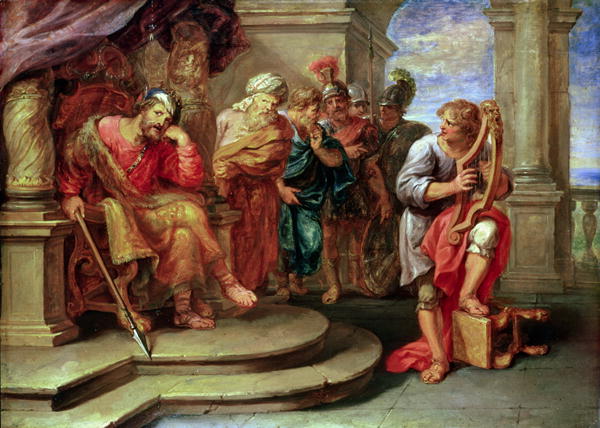
Now the Spirit of the LORD had left Saul, and an evil spirit ⌊sent⌋ from the LORD began to torment him, 1 Samuel 16:14 (HCSB)

Most people stop here. They do not understand how God could send an evil spirit. That isn’t what God is supposed to be about, is it?

Understanding comes when we examine the Hebrew meanings.

(14) Now the Spirit <rûah – breath> of the LORD departed from Saul, and a harmful spirit <raʿ rûah, ‘bad breath’> from the LORD tormented him. (15) And Saul’s servants said to him, “Behold now, a harmful spirit from God is tormenting you. <bāʿat(h), makes you afraid (wake up bathed in sweat)>…(23) And whenever the harmful spirit from God was upon Saul, David took the lyre and played it with his hand. So Saul was refreshed <rāwah – A verb meaning to breathe freely> and was well, and the harmful spirit departed from him. 1 Samuel 16:14-23 (ESV)

King Saul had been cut off from God because of his sin, pride and presumption. Samuel told Saul that God departed from him, just as Saul had turned his back on God. God still uses our conscience to communicate with us, and Saul’s conscience was troubled. His sleep was haunted by fears, regrets, and pressures. The breath of God that is normally sweet to one who lovingly listens, becomes toxic and troubling to one who has turned away. God has “bad breath” and as such Saul was tormented as he would try to sleep. I believe Saul was having ‘panic attacks’ and may have suffered from “Panic Disorders”.

Saul Suffered from Panic Disorder

God assures us in His word, that when we consciously turn away from Him to do evil, He will bring our fears upon us:

I also will choose harsh treatment for them and bring their fears upon them, because when I called, no one answered, when I spoke, they did not listen; but they did what was evil in my eyes and chose that in which I did not delight.” Isaiah 66:4 (ESV)

Saul, when confronted with his disobedience by Samuel, admitted that he had fears:

“I have transgressed the commandment of the LORD and your words, because I feared the people and obeyed their voice. 1 Samuel 15:24 (ESV)

Saul confessed he was given to fears. Without God’s Spirit in our lives, we lose our peace of God. We are then left with our fears. All God has to do is whisper in our ears, revive guilt, revive hurt, and our fears start to overtake us. We have troubled sleep. We have panic attacks. Those attacks can develop into panic disorder. Our fears grow more intense. We are more withdrawn. We retreat from the outside. We drive away those who seem to trigger the fears. I believe this is what happened to King Saul.

I have talked with people who have suffered through panic attacks. They are not fun. You cannot breathe; you think you are going to die. I believe the evil Spirit was just the whisper of God to an evil conscience, a conscience racked with fears. The sweet breath of God became bad breath, for the peace of God had left Saul.

Somehow, the playing of David would quiet Saul, and he could breathe freely. Therefore, he could sleep.

Modern Medicine can be the Spirit of Babylon

One way that the Spirit of Babylon (modern medicine) has worked against God is by allowing people to cope with their guilt and sin through drugs. If God troubles our sleep, we just go to a Doctor and get a drug. There is no need to repent and humble ourselves before God. There is no need to go to someone we have offended. There is no need to heal a family rift. We simply take pills to sooth our conscience and mask the bad breath of God.

I realize that many Christians take sleeping pills or something to help them sleep at night. However, I firmly believe in the power of the Word of God.

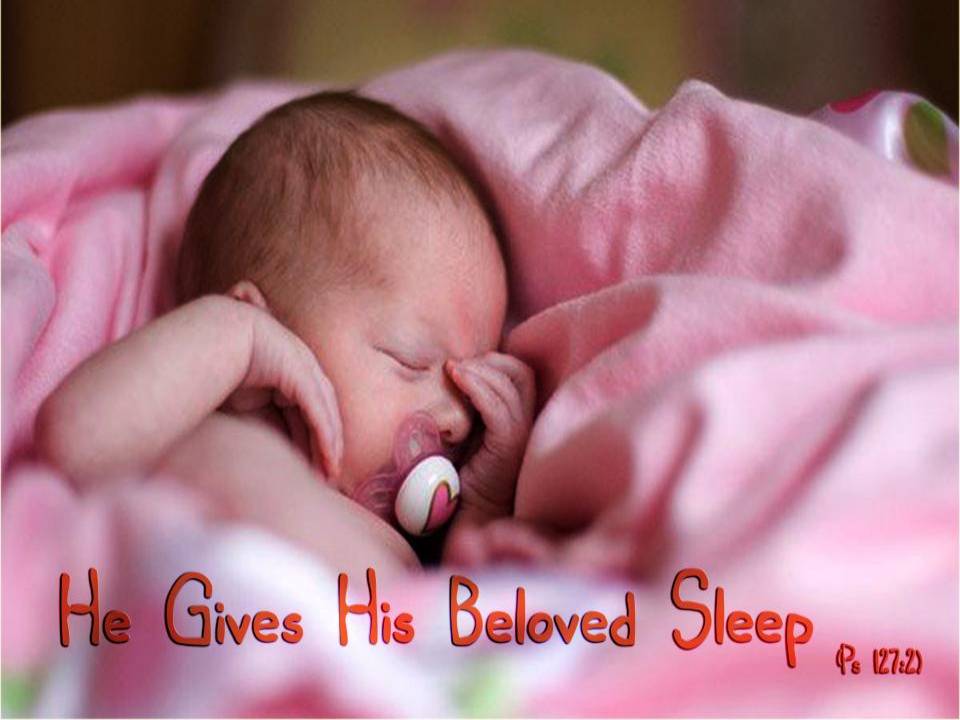
  • … He gives His beloved sleep. Psalm 127:2 (NKJV)
  • Psalm 4:8 In peace I will both lie down and sleep; for you alone, O LORD, make me dwell in safety.
  • (31) Therefore do not be anxious, saying, ‘What shall we eat?’ or ‘What shall we drink?’ or ‘What shall we wear?’ (32) For the Gentiles seek after all these things, and your heavenly Father knows that you need them all. (33) But seek first the kingdom of God and his righteousness, and all these things will be added to you. Matthew 6:31-33 (ESV)

Instead of first seeking a medicinal solution to your troubled sleep, seek God and the sleep He gives to those He loves. Perhaps there is something between you and someone else that is blocking this love. Relationships with people cause us to sleep outside the love of God, and open our hearts to fears.

If anyone says, “I love God”, and hates his brother, he is a liar; for he who does not love his brother whom he has seen cannot love God whom he has not seen. And this commandment we have from him: whoever loves God must also love his brother. 1 John 4:20-21 (ESV)

Restless Sleep is often a signal that there is a strained relationship, a secret sin, a lack of trust that is causing a rift in your fellowship with God. Instead of going to the Doctor, and popping a pill, James gives us this advice:

… Confess your sins to one another and pray for one another, that you may be healed. The prayer of a righteous person has great power as it is working. James 5:16 (ESV)

 Sweet Breath vs Bad Breath

Without the Holy Spirit in your life bringing the sweetness of God to your heart, God has bad breath <raʿ rûah>. His breath upon you brings your fears to mind. He awakens our conscience to torment us. Only when we LOVE Him does His breath turn good and sweet! Romans 8:28 is a conditional promise. The condition required for all things to work together for god is that you LOVE God!

And we know that for those who love God all things work together for good, for those who are called according to his purpose. Romans 8:28 (ESV)

Romans 8:28 is a promise to those who love and submit to God. If you view the events of your life without Scriptural Glasses, things will not make sense. You will live a hurt and bitter life. God’s Glasses given to those who love Him will allow you to see how He is working things for your good!

I do think Saul had some serious problems. His mind was scrambled to the point he forgot who David was. Even though Saul knew who David’s father was (read I Samuel 16:18-23) King Saul had to ask:

As soon as Saul saw David go out against the Philistine, he said to Abner, the commander of the army, “Abner, whose son is this youth?” And Abner said, “As your soul lives, O king, I do not know.”  And the king said, “Inquire whose son the boy is.” And as soon as David returned from the striking down of the Philistine, Abner took him, and brought him before Saul with the head of the Philistine in his hand. And Saul said to him, “Whose son are you, young man?” And David answered, “I am the son of your servant Jesse the Bethlehemite.” 1 Samuel 17:55-58 (ESV)

For some reason King Saul could not remember who David was, even though in Chapter 16 he had sent to Jesse for permission to have David stay with him. Saul failed to recognize David. So he asked him, whose son are you?

David’s Humble Response

David, with blood still on his hands, the head of Goliath over against the wall, holding the giant sword, could have done a goal line dance and said, It don’t matter whose son I am, because Samuel anointed me the next King of Israel! I am coming for your throne! But no, that was not David, for he was after the heart of God. He simply, humbly and proudly declared himself the son of Jesse, Saul’s servant.

As we looked at David’s battle with Goliath, we saw a young man zealous for God. A young man whose very heart was bound up with the reputation of God. He simply could not tolerate Goliath treating His God that way.

Right away, we understand that we must plan to face Goliath’s if we are to be disciples for Jesus. Goliath is the World, the Flesh. Goliath is Babylon… Goliath is Satan condemning us, trying to humiliate us and render us defeated. Goliath represents everything this world will use to try to defeat you, or to turn you away from discipleship. Fame, Money, Strength, Status…Goliath wants to destroy your heart’s desire for God. Goliath wants you to fear, distrust, and doubt the power of God.

To conquer Goliath, we must be armed with the Unfailing Love of God. We must be so in love with God that His desires strengthen our desires.

David defeated the Giant of the world, and proved that his heart remained bound to the heart of God. David never saw the next Battle coming…

Saul is Coming

The Next Discipleship Hurdle we encounter is the one you never see coming. Goliath, sure, but Saul? God knew that things were going to get worse for his young disciple. He knew that David would need something more to get him though his troubles with King Saul.

We Need Jonathan to Face Saul

Yehônātān- from (Yehovah) and (nathan); Jehovah-given[1] Jonathon was Jehovah-Given.

David was about to experience the worst imaginable betrayal. He was going to experience the gross injustice. Most men would crumble in the face of what David was to experience.

But for now, God gave to David Jonathon…

The Justice of God is about building His House, His Temple. One day Christ will reign on earth, and mishpat will be known throughout the world. The house of the righteous will flourish.

But for now, God gave to David Jonathan…

Injustice reigns in this world. The cries of orphans, of persecuted, of enslaved ascend to heaven. The house of the righteous is crumbling. The kings of this world have lifted their fist at God and said we do not need you. Justice is corrupt and only for the favored. Who will reach out to the oppressed, the forgotten?

But for now, God gave to David Jonathan…

I want to look at the Scriptural accounts of David and Jonathan, and perhaps we can discover how God used this relationship to effect mishpat, and in so doing build David’s House. From 1 Samuel:

1.   Jonathon’s Soul was knit to David

18:1 The soul of Jonathan was knit to the soul of David, and Jonathan loved him as his own soul.

2.   David was placed under the Authority of Saul’s House

18:2 And Saul took him that day and would not let him return to his father’s house.

3.   Jonathon made a covenant with David

18:3 Then Jonathan made a covenant with David, because he loved him as his own soul.

4.   Jonathon stripped himself and gave everything to David

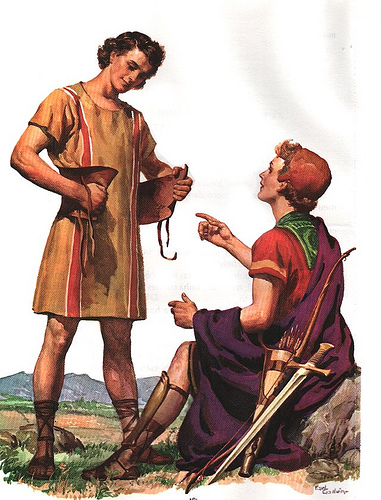
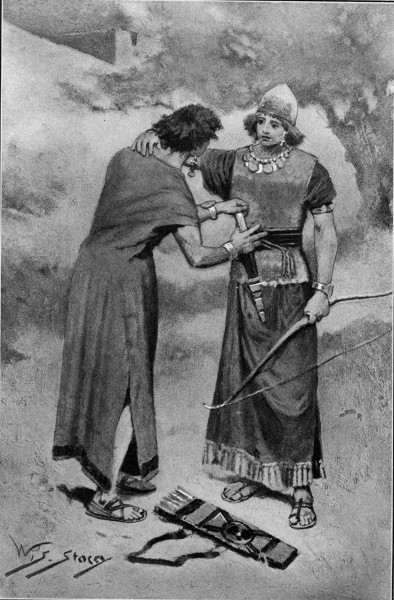
18:4 And Jonathan stripped himself of the robe that was on him and gave it to David, and his armor, and even his sword and his bow and his belt.

  • Jonathon was commander of Saul’s army. (13:2) By giving his ‘robe’ to David, he was making David the commander of the Army.

5.   David had success in battle

18:5 And David went out and was successful wherever Saul sent him, so that Saul set him over the men of war. And this was good in the sight of all the people and also in the sight of Saul’s servants.

6.   Saul began to eye David and treat him badly

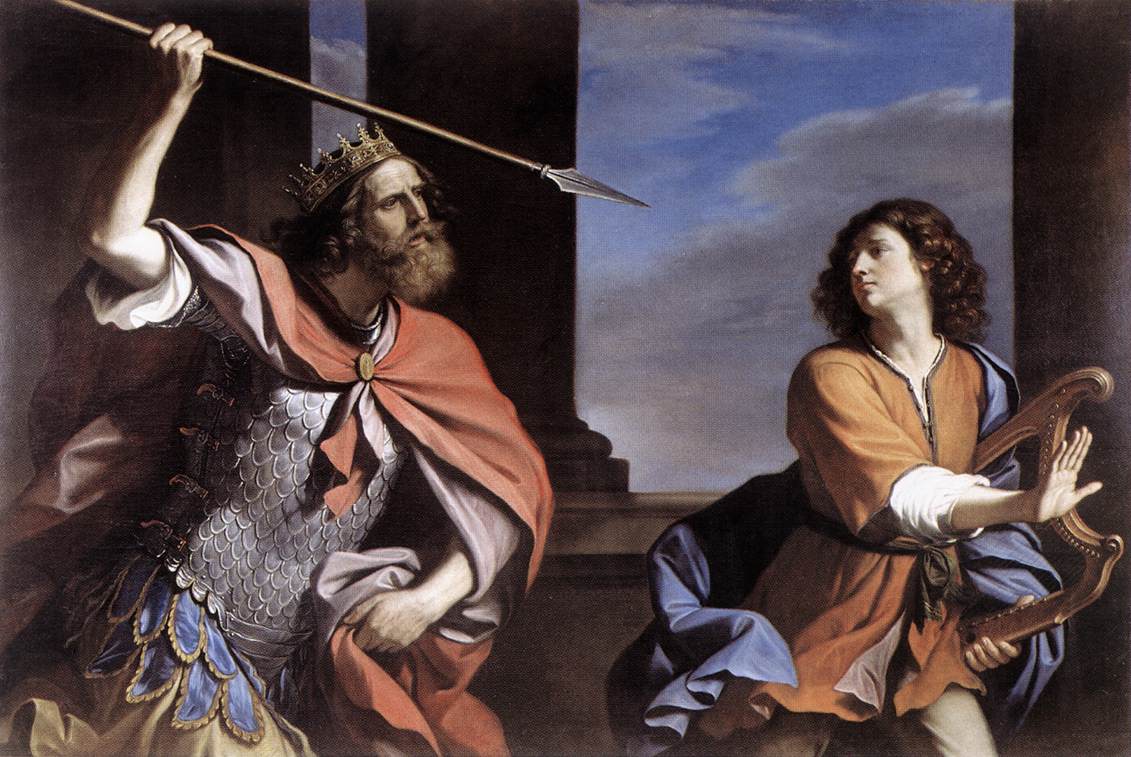
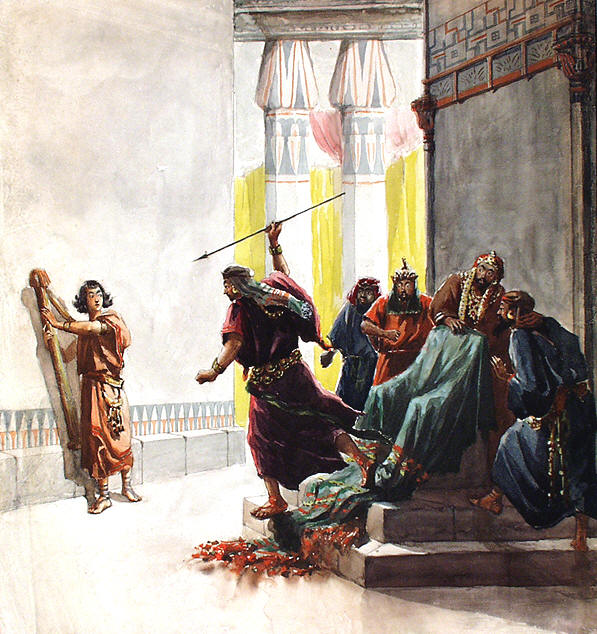
18:9 And Saul eyed David from that day on. (10) The next day a harmful spirit from God rushed upon Saul, and he raved within his house while David was playing the lyre, as he did day by day. Saul had his spear in his hand. (11) And Saul hurled the spear, for he thought, “I will pin David to the wall.” But David evaded him twice. 1 Samuel 18:9-11 (ESV)

7.   Saul retreated into his own jealous world

18:15 And when Saul saw that he had great success, he stood in fearful awe of him. (16) But all Israel and Judah loved David, for he went out and came in before them. 1 Samuel 18:15-16 (ESV)

8.   Saul devises a plot to do evil to David

18:21: Saul thought, “Let me give her to him, that she may be a snare for him and that the hand of the Philistines may be against him.” Therefore Saul said to David a second time, “You shall now be my son-in-law”. 1 Samuel 18:21 (ESV)

9.   David responds

18:27 David arose and went, along with his men, and killed two hundred of the Philistines. And David brought their foreskins, which were given in full number to the king that he might become the king’s son-in-law. And Saul gave him his daughter Michal for a wife.

10.  Saul makes David his enemy

 18:28 But when Saul saw and knew that the LORD was with David, and that Michal, Saul’s daughter, loved him, (29) Saul was even more afraid of David. So Saul was David’s enemy continually. 1 Samuel 18:27-29 (ESV)

11.  Saul decides to Kill David

19:1 And Saul spoke to Jonathan his son and to all his servants, that they should kill David. But Jonathan, Saul’s son, delighted much in David. 1 Samuel 19:1 (ESV)

12.  David finally flees to the Priest.

19:18 Now David fled and escaped, and he came to Samuel at Ramah and told him all that Saul had done to him. And he and Samuel went and lived at Naioth. (19) And it was told Saul, “Behold, David is at Naioth in Ramah.” 1 Samuel 19:18-19 (ESV)

13.  David flees to Jonathon

20:1 Then David fled from Naioth in Ramah and came and said before Jonathan, “What have I done? What is my guilt? And what is my sin before your father, that he seeks my life?” 1 Samuel 20:1 (ESV)

14.  David seeks Jonathan’s Help

20:3 But David vowed again, saying, “Your father knows well that I have found favor in your eyes, and he thinks, ‘Do not let Jonathan know this, lest he be grieved.’ But truly, as the LORD lives and as your soul lives, there is but a step between me and death.” (4) Then Jonathan said to David, “Whatever you say, I will do for you.” 1 Samuel 20:3-4 (ESV)

15.  Jonathan & David Covenant Together

20:13 But should it please my father to do you harm, the LORD do so to Jonathan and more also if I do not disclose it to you and send you away, that you may go in safety. May the LORD be with you, as he has been with my father. (14) If I am still alive, show me the steadfast love of the LORD, that I may not die; (15) and do not cut off your steadfast love from my house forever, when the LORD cuts off every one of the enemies of David from the face of the earth.” (16) And Jonathan made a covenant with the house of David, saying, “May the LORD take vengeance on David’s enemies.” (17) And Jonathan made David swear again by his love for him, for he loved him as he loved his own soul. 1 Samuel 20:13-17 (ESV)

16.  Saul Makes his Deadly Intentions Known

20:32 Then Jonathan answered Saul his father, “Why should he be put to death? What has he done?” (33) But Saul hurled his spear at him to strike him. So Jonathan knew that his father was determined to put David to death. (34) And Jonathan rose from the table in fierce anger and ate no food the second day of the month, for he was grieved for David, because his father had disgraced him. 1 Samuel 20:32-34 (ESV)

17.  David and Jonathan say Farewell

20:41 And as soon as the boy had gone, David rose from beside the stone heap and fell on his face to the ground and bowed three times. And they kissed one another and wept with one another, David weeping the most. (42) Then Jonathan said to David, “Go in peace, because we have sworn both of us in the name of the LORD, saying, ‘The LORD shall be between me and you, and between my offspring and your offspring, forever.’ ” And he rose and departed, and Jonathan went into the city. 1 Samuel 20:41-42 (ESV)

Application for Disciples

Who Does Saul Represent?

Saul was the King, but a King under the curse of sin. Therefore, Saul represents all those people we will encounter, who because of their position and their actions, would cause us to doubt the power and provision of God. Saul represents the Injustices of the World!

One day Jesus Christ will reign and justice will be throughout the world. But until that day, we are faced with living in a world that is under the curse of sin. That curse means that we will encounter injustice, even from people in authority over us.

You will be hurt by parents, by teachers, by administrators, by employers, by family, by Pastors. Injustice will try to kill your love for God. Injustice will depress, will defeat, will trip you up to the point of giving up.

Imagine young David, a hero in the mind of most of his brothers, anointed by Samuel to be the next King, having to flee Jerusalem to save his very life. The one trying to kill him is his King, the Lord’s anointed. He flees to Samuel, and Samuel cannot do anything.

Saul represents the injustices a young disciple will encounter as he sets out to follow God. Saul was protected in his position by God’s word. David, fearing God, could do nothing but run.

Along into this Injustice came Jonathan. He was Given to David by God.

Who Does Jonathan Represent?

Jonathan was a gift of God. He knit his soul to David; He gave up his robe, his reputation, his everything for the sake of David. He gifts to David. Those five gifts are a picture of grace, grace given to endure the injustice David was about to experience.

So who do you think Jonathan represents? Yes, Jesus Christ.

Jonathan is the friend who sticks closer than a brother.

Greater love has no one than this, that he lay down his life for his friends. John 15:13 (NIV)

Sometimes the trials of life become so great that we begin to doubt the power of God. We wonder if He really cares about what we are going through. When the ones who are causing the pain are one who are supposedly Christians, or parents, or children, or relatives, we want to give up on this God who obviously doesn’t care to set things right.

Jonathan’s Covenant

If I am still alive, show me the steadfast love of the LORD, that I may not die; and do not cut off your steadfast love from my house forever, when the LORD cuts off every one of the enemies of David from the face of the earth.” And Jonathan made a covenant with the house of David, saying, “May the LORD take vengeance on David’s enemies”. And Jonathan made David swear again by his love for him, for he loved him as he loved his own soul. 1 Samuel 20:14-17 (ESV)

Then Jonathan said to David, “Go in peace, because we have sworn both of us in the name of the LORD, saying, ‘The LORD shall be between me and you, and between my offspring and your offspring, forever.’ ” And he rose and departed, and Jonathan went into the city. 1 Samuel 20:42 (ESV)

What Discipleship Lessons Does David Teach Us?

1. Don’t Turn Away

Psalm 44:15-19 provides insight into David’s character

(15)  My confusion is continually before me, and the shame of my face hath covered me, (16)  For the voice of him that reproacheth and blasphemeth; by reason of the enemy and avenger. (17)  All this is come upon us; yet have we not forgotten thee, neither have we dealt falsely in thy covenant. (18)  Our heart is not turned back, neither have our steps declined from thy way; (19)  Though thou hast sore broken us in the place of dragons, and covered us with the shadow of death.

Though David was sore broken in the place of dragons, he never forgot God, he never turned back, he always kept his feet on the path God had for him! How many modern day Christians can say the same!

2. Build Your House With the Forsaken

David did not allow the injustices of Saul to turn him away from God’s love and promises. The love of his friend Jonathan was a constant encouragement during the dark time of his flight from Saul. The words of David’s Covenant were never forgotten, and provided motivation to endure until God fulfilled His promises. Once justice was restored to David’s life, he immediately returned to building his house and honoring his word!

And David said, “Is there still anyone left of the house of Saul, that I may show him kindness for Jonathan’s sake?” 2 Samuel 9:1 (ESV)

“ …Is there no one still left…to whom I can show God’s kindness?” – 2 Samuel 9: 3

  • Ziba, the servant of Saul’s household, is brought before David and asked who is left of Saul’s family. He replies that there is someone, a man by the name of Mephibosheth.
  • He was born “Mireb Baal” meaning “opponent of Baal.”
  • Now his name was different. Mephibosheth meant “Son of Shame” all because that one day when everything changed.

“He was five years old when the news about Saul and Jonathan [‘s death] came from Jezreel”. His nurse picked him up and fled, but as she hurried to leave, he fell and became crippled. His name was Mephibosheth” – 2 Samuel 4:4

There are a great many people like Mephibosheth. They have been injured by someone else’s stumbling. They have been injured by injustice, by a Saul.

(The lameness we inflict may not be physical. It may be spiritual or emotional. Sometimes we injure without knowing what we have done to someone else.)

Ziba tells David that Mephibosheth is living in Lo Debar (literally “Place of no pasture”), far beyond the River Jordan.

David shows HESED MISHPAT & TSEDAQAH

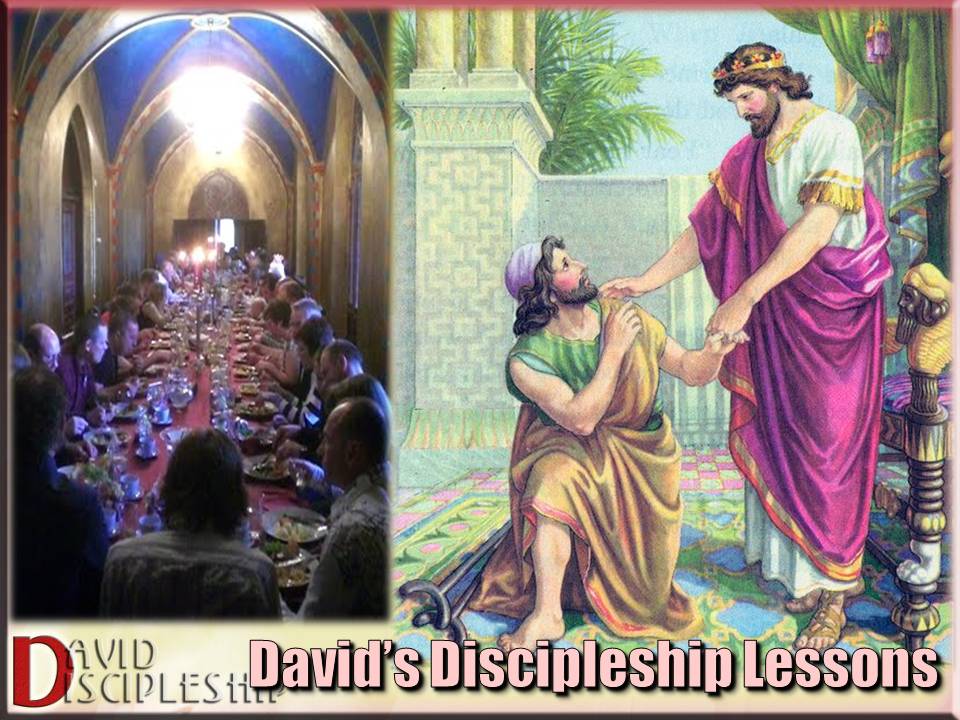
David has Mephibosheth brought before him and then begins one of the most beautiful exchanges of the Old Testament:

When Mephibosheth son of Jonathan, the son of Saul, came to David, he bowed down to pay him honour.

David said “Mephibosheth!”

“Your servant,” he replied.

“Do not be afraid,” David said to him, “for I will surely show you kindness for the sake of your father Jonathan. I will restore to you all the land that belonged to your grandfather Saul, and you will always eat at my table”

Mephibosheth bowed down and said, “What is your servant, that you should notice a dead dog like me?”

So Mephibosheth ate at David’s table like one of the king’s sons.

DAVID: He says, “Do not fear…” (Ever heard that phrase before?) The three promises include the man, the land, and the clan. When David did so, he was practicing the three things in which God delights (Jer 9:24)

  • HESED: The Man: David will show loving-kindness (unmerited favor) to Mephibosheth because of David’s relationship with Jonathan.
  • MISHPAT: The Land: David will restore to him all the land that Saul’s house owned.
  • TSEDAQAH: The Clan: David will treat him like his own son, including him in his family and allowing him to eat at his table.

These were all unconditional promises. Mephibosheth did not ask for them; they all came out of the goodness of David’s heart.

Conquering Saul is Done by Building Your House

Consider the Poor, David says.

Psa 41:1-2 Blessed is he that considereth the poor: the LORD will deliver him in time of trouble.  The LORD will preserve him, and keep him alive; and he shall be blessed upon the earth: and thou wilt not deliver him unto the will of his enemies.

Consider Your Children

Psa 37:28  For the LORD loves justice; he will not forsake his saints. They are preserved forever, but the children of the wicked shall be cut off.

Don’t Let Saul Give You An Excuse to Turn Away

Psa 119:121  I have done justice and righteousness: Leave me not to mine oppressors.

Discipleship Insight

Understanding that God provided a friend who has brought you into his house, so that he might help to make things right in a messed up world. Then, when you are made right through His love, it is your job to bring someone unfortunate into your house, and make things right for them.

Jesus came into this sin-sick world and called out: Is there anyone left to whom I can show the kindness of God?

Then He sought out the poor, the broken, the blind, the lame, and the needy. He brought them into His house and showered His love upon them through His death upon the Cross. Now He is in Heaven, building many mansions, calling to us: Is there anyone left who can show the Kindness of God to a lost and dying world?

Covenant Love

  • Comfort in time of Confusion and Uncertainty
  • Encouragement when things are going against us
  • Refuge in the midst of a Storm

Covenant Love

  • Sees us through the injustices of Life
  • The bridge to a forgiving heart
  • Enables us to Endure

Covenant Love

  • Seeks to provide Justice where there is injustice
  • Opens our Heart to the Lame and Undeserving
  • Enlarges its House with the poor and needy.

Jesus knit His Soul with ours. He wants us to reach out for His Lost Children

A trucker was yawning as he passed through rural North Carolina on Interstate 95. Only two more hours of driving, and then a good meal, some TV, a call home, and a warm bed. Most days on the road were like that–not quite as glamorous as some  Country-western singers suggest. A brown sedan entered the highway just ahead and began weaving back and forth between lanes, causing the trucker to throw his rig into a lower gear. At first he thought it was a drunk, but as the trucker came closer, he saw it was an older man shaking uncontrollably. The trucker was wide awake now. The car swerved violently, whipping its CB antenna like a fishing rod. “That’s it,” thought the trucker, “the CB.” So he called in, “You in the brown Chevy, if you can hear me, pull over. Pull off the road!” Amazingly, the car slowed down and pulled to a stop alongside the road. The trucker pulled up behind him and jumped out of his cab. The elderly man staggered from his car and fell into the trucker’s hands. On a rock on the side of Interstate 95, the older man poured out his story of months of fear and pain that accompanied the illness of his only daughter. He was returning now from the hospital where she had revealed that she had decided to cease any further treatment. In the hospital, each put on a face of stoic strength. But out on the road, it had suddenly come over him, and waves of tears and grief overwhelmed him. The encounter was over in less than an hour. Wrenching sobs gave way to serenity, to a warm embrace, and to a new resolve to share pain rather than deny it.

 The trucker offered a simple prayer and they resumed their journeys. For 50 miles they traveled in tandem, the young trucker using the CB to voice words of encouragement to his new friend. Finally, the trucker announced his exit was next. The trucker said farewell, and asked if his friend could make it the rest of the way. Suddenly, a third voice could be heard across the airwaves. “Breaker 19, don’t worry, good buddy. Go your way. I’ll see him home!” Glancing in his rearview mirror, the trucker saw a livestock truck move into the exit lane behind the brown sedan. –From a sermon by Norm Lawson[2]

Remember the Forgotten Children of Eritrea living in the Mai Ayni Refugee Camp.


[1] James Strong, Strong’s Talking Greek & Hebrew Dictionary, (Austin, TX: WORDsearch Corp., 2007), WORDsearch CROSS e-book, Under: “3083”


Discipleship Leads to the Battlefield

Former president Ronald Reagan once had an aunt who took him to a cobbler for a pair of new shoes. The cobbler asked young Reagan, “Do you want square toes or round toes?” Unable to decide, Reagan didn’t answer, so the cobbler gave him a few days. Several days later the cobbler saw Reagan on the street and asked him again what kind of toes he wanted on his shoes. Reagan still couldn’t decide, so the shoemaker replied, “Well, come by in a couple of days. Your shoes will be ready.” When the future president did so, he found one square-toed and one round-toed shoe! “This will teach you to never let people make decisions for you,” the cobbler said to young Ronald. “I learned right then and there,” Reagan said later, “if you don’t make your own decisions, someone else will.” Today in the Word, MBI, August, 1991, p. 16.

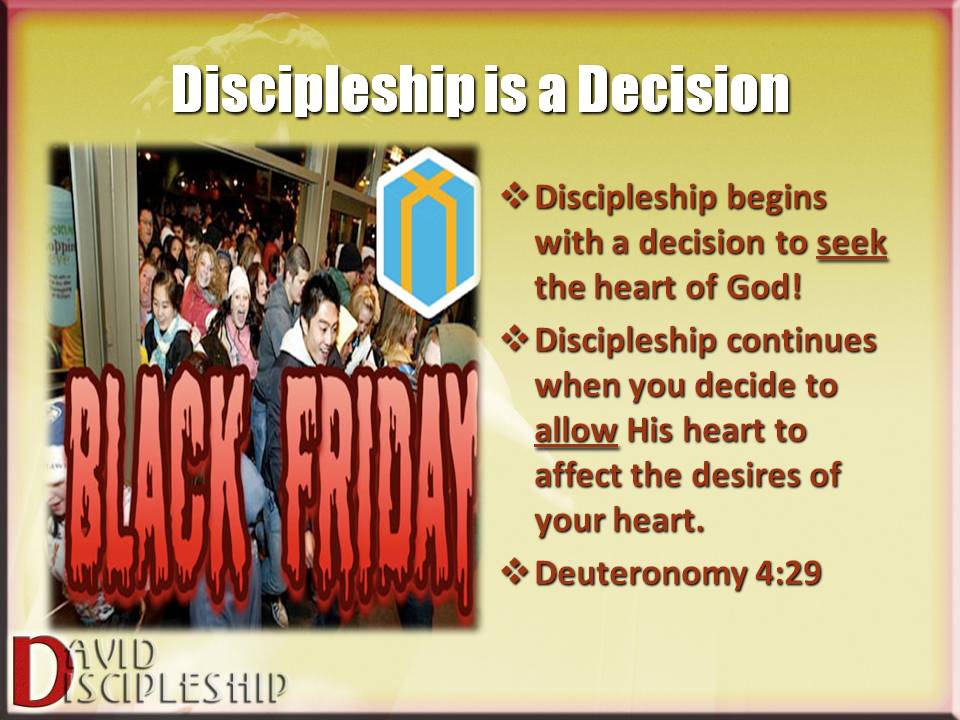
Discipleship begins with a decision. Discipleship continues with that same daily decision. If you fail to make that decision, this world makes it for you, and you will find yourself far from the Discipleship path.

The decision you must make and continue to make is, “what is the most important thing in my life?” Ask yourself, What am I building my life around? What is so important to me that I want to learn and understand everything about it? You may answer, “many things”. But at each of our lives there are some core values that are more important than anything else.

Millions of people went shopping the past couple of days. Most of them studied the adds, went on-line to find out where the best deals were. The media says we wait all year for this time, as if our Christmas depended upon it.

That is the influence of the world, of Babylon. Christmas is no longer about Jesus Christ, about salvation, about a supernatural life that He gives. Christmas is about getting the best deals on stuff that most people will throw away in a few years.

The elevation of “Black Friday” required a decision on the part of a small number of people, and because the rest of us were silent, the decision was made for us. We allowed ourselves to be influenced and so now many Christians are our Thanksgiving Day looking for bargains. And while Thanksgiving is not an official “Biblical” Holiday, it is in danger of becoming a non-day, overtaken by the commercialism of Christmas.

The same thing happened with the blue laws (stores not open on Sunday-to honor the Lord’s Day) a few years back. A small group of people decided the blue laws were archaic, and because Christians did not object, people no longer see the harm of shopping and eating on Sunday. Now we even have school and sports activities on Sunday. The disrespect for the Lord’s Day has continued to the extent that we now have a generation of children growing up who know nothing about the Gospel of Jesus Christ. We now have to remind people of the real reason for Christmas.

Discipleship indeed begins with a decision, but failure to maintain that decision can disqualify you from the discipleship path. You must decide that God is more important than anything and everything in your life. He is so important that you want to learn everything about Him. You want to even understand Him, what He delights in, how He works.  Everyday you must choose to make God the most important person in your life. So important that He changes the way you do life.

  • Discipleship begins with a decision to seek the heart of God!
  • Discipleship continues when you decide to allow His heart to affect the desires of your heart.

But from there you will seek the LORD your God and you will find him, if you search after him with all your heart and with all your soul. Deuteronomy 4:29 (ESV)

An Insight into “seek”

Yet the LORD set (hasaq) his heart in love on your fathers and chose their offspring after them, you above all peoples, as you are this day. Deuteronomy 10:15 (ESV)

Set (& Seek) is the word hasaq. It literally means to bind oneself to. It pictures a man who has become attracted to a captive woman or slave and now he wants to bind himself to her in marriage. It is a binding of the heart to one whom is the object of your desires.

God chose Abraham and set His heart on him. God delighted in him to the point he bound Himself to him in a covenant that could not be altered. That covenant bound God to Abraham, Isaac and Jacob. His delight progressed from one of God/subject to husband/wife, bound by covenant.

hāšaq: A verb meaning to be attached to, to love, to delight in, to bind. Laws in Deuteronomy described the procedure for taking a slave woman to whom one has become attached as a wife (Deut. 21:11). God’s binding love for Israel is described as unmerited love (Deut. 7:7)[1]

David made Decisions

  1. David wanted his life to matter so he chose to be a tree planted besides (God’s) living waters. (Ps 1)
  2. David did not want to live a life as worthless thorns, or worthless chaff. (Ps 1, 2 Sam 23:1)
  3. David wanted to live a life that mattered now and for the future.
  4. David decided to bind himself to this Yahweh in whom he trusted and loved. (Ps 25:5)
  5. Because of his decision, David found himself smack dab in the middle of a battle, and so will you.

David v. Goliath

This battle is a favorite Bible story for little children.  The story has been familiarized to the point that it loses its impact. It has become a cartoon. The significance of David finding himself on the battlefield as a young man, so soon after his decision to follow God, is that we will all face ‘giants’ on the battlefield as soon as we decide to become a disciple in the true sense!

Our Heart is  the Battlefield

“The heart is deceitful above all things, And desperately wicked; Who can know it? Jeremiah 17:9 (NKJV)

David understood this and instructed his son Solomon:

Now devote (give-from נתן (nathan) your heart and soul to seeking the LORD your God. Begin to build the sanctuary of the LORD God, so that you may bring the ark of the covenant of the LORD and the sacred articles belonging to God into the temple that will be built for the Name of the LORD.” 1 Chronicles 22:19 (NIV)

Nāthan נתן: A verb meaning to give, to place. This verb is used approximately two thousand times in the Old Testament; therefore, it is understandable that it should have a broad semantic range[2].

Discipleship begins with the Decision to ‘Give’ your Heart to God

Solomon likewise said, “Give me your heart”. Give (nathan) me your heart, my son, And let your eyes delight in my ways.  Proverbs 23:26 (NASB)

As a young man, David did just that, and God took notice.

But now your kingdom shall not continue. The LORD has sought out a man after his own heart, and the LORD has commanded him to be prince over his people, because you have not kept what the LORD commanded you.” 1 Samuel 13:14 (ESV)

King Saul

Saul was the people’s choice for King. He had all the outward appearances of a King. He was tall, dark and handsome. He was strong and a forceful leader. Yet there was something wrong with his heart. His heart is described in 1 Sam 15:22:

1 Samuel 15:22-23 (ESV) And Samuel said, “Has the Lord as great delight in burnt offerings and sacrifices, as in obeying the voice of the Lord? Behold, to obey is better than sacrifice, and to listen than the fat of rams. For rebellion (meriy) is as the sin of divination (witchcraft-qesem-lumped with child sacrifice in Deut 18:10), and presumption (pāsar) is as iniquity and idolatry. Because you have rejected the word of the Lord, he has also rejected you from being king.”

Even though Saul was a King of Israel, even though he was a “Christian” so to speak, his discipleship took a wrong turn somewhere, and Samuel reveals those decisions that disqualified Saul .

Three Decisions Disqualify from Discipleship

1. We Stop Listening to God

  • “But my people did not listen to my voice; Israel would not submit to me. So I gave them over to their stubborn hearts, to follow their own counsels. Oh, that my people would listen to me, that Israel would walk in my ways! Psalm 81:11-13 (ESV)
  • Guard your steps when you go to the house of God. To draw near to listen is better than to offer the sacrifice of fools, for they do not know that they are doing evil. Ecclesiastes 5:1 (ESV)
  • I also will choose harsh treatment for them and bring their fears upon them, because when I called, no one answered, when I spoke, they did not listen; but they did what was evil in my eyes and chose that in which I did not delight.” Isaiah 66:4 (ESV)
Who we listen to gets us into trouble

And to Adam he said, “Because you have listened to the voice of your wife and have eaten of the tree of which I commanded you, ‘You shall not eat of it,’ cursed is the ground because of you; in pain you shall eat of it all the days of your life;
Genesis 3:17 (ESV)

Who has your ear? Who do you spend the most time listening to? How much time do you spend in the Word, or in prayer? To listen often leads to obey. Are you most influenced by what the world teaches? Are you listening to what God says?

We are influenced by what we listen to and watch. What else would drive a sane person to camp out for Black Friday specials? 25 years ago something like that would be considered insane!

2. We Tolerate a Rebellious Spirit

King Saul: For rebellion (meriy) is as the sin of divination (witchcraft-qesem-lumped with child sacrifice in Deut 18:10),

Moses to the Israelites: For I know how rebellious and stiff-necked you are. If you have been rebellious against the LORD while I am still alive and with you, how much more will you rebel after I die! Deuteronomy 31:27 (NIV)

meriy: A masculine noun meaning obstinacy, stubbornness, rebelliousness. The term consistently stays within this tight semantic range and most often describes the Israelites’ determined refusal to obey the precepts laid down by the Lord in His Law or Torah. This characteristic attitude was a visible manifestation of their hard hearts[3].

Qesem is generally forbidden[4] (Deuteronomy 18:10 (ESV) There shall not be found among you anyone who burns his son or his daughter as an offering, anyone who practices divination or tells fortunes or interprets omens, or a sorcerer),

We associate rebellion with out and out disobedience. We excuse some behavior as excusable. I don’t have time, I have so much stress, I have to have some me time or I’ll go crazy. We don’t classify selfishness as rebellion. In fact, we accept selfish behavior as normal. But God calls selfishness rebellion. It is no different from the sin of witchcraft, or the sin of child sacrifice. King Saul simply made a decision based upon what he thought was best. It was a rational, understandable decision. He even had God in mind when he made it. But God calls it rebellion, for it was a self-motivated decision.

  • Do the actions of your life reveal a rebellious spirit in your heart?

3. We Presume Upon God

Samuel said to King Saul: “presumption (pāsar) is as iniquity and idolatry”.

pāsar: A verb meaning to peck at, to press, to push. It indicates a literal physical push against someone (Gen. 19:9); In a negative sense, it refers to rebellion against someone, arrogance (1 Sam. 15:23)[5].

Presumption pushes God out of the way and does what it wants. Or worse yet, it presumes that God is not watching, or God does not care, and then goes its own way. Or worse yet, it presumes since you are of Abraham, or a Jew, (or a Christian) that you have a lock on God, and He will excuse your actions.

Christians presume upon God when they think God automatically excuses their sin or their laziness or their lack of prayer or whatever simply because he knows ‘I’m human’. Or simply because Jesus died for me on the cross. That is such pride and arrogance. With an attitude like that I would be concerned about the true state of my soul. How can God live in me, and I steal from Him by ignoring him or excusing my fleshly actions. I am no better than the money changers who presumed they could steal from the people because they were doing it in God’s Temple!

  • Are the presumptions of your daily life pushing God away?

When King Saul pushed God aside, God pushed him aside. He found a young man who had made a decision to set his heart upon God, to incline his heart on those things that God delighted in.

And the next thing you know, this young man is in the midst of a battlefield. He has another decision to make. There is a Giant facing the armies of Israel, and they are all afraid. For 40 days this Giant has been taunting them, and the men of Israel were losng their resolve for God. Onto this battlefield in the Valley of Elah steps a young disciple, and he provides us insight into beginning our discipleship journey with God, insight that will insure victory!

I.  Discipleship Requires Confidence in Who You Are!

A.  Experience The Daily Rush Of The Spirit Of God

1 Samuel 16:12-13 (ESV) Then Samuel took the horn of oil and anointed him in the midst of his brothers. And the Spirit of the Lord rushed upon David from that day forward. And Samuel rose up and went to Ramah.

  • David was very aware that the Spirit of God was within him!

Even throughout his sin with Bathsheba, the Holy Spirit was with him. David desired the rush of the Holy Spirit so much that he dreaded its departure.

Cast me not away from your presence, and take not your Holy Spirit from me. Psalm 51:11 (ESV)

B. Experience The Daily Affection Of God For You.

And it is God who establishes us with you in Christ, and has anointed us, and who has also put his seal on us and given us his Spirit in our hearts as a guarantee. 2 Corinthians 1:21-22 (ESV)

God has anointed us and put His seal upon us-the Holy Spirit is the proof of His covenant with us. Because of that covenant sealed by the Blood of Christ, we know that God has set his heart and eyes upon us, that His love is steadfast and unfailing, that His love is renewed to us each and every morning!

C. Experience What God Desires for You

God has an intentional plan for our lives with Him, and He wants us to realize what it is. He never sets His heart upon someone capriciously.

To Him who loved us and washed us from our sins in His own blood, (6) and has made us kings and priests to His God and Father, to Him be glory and dominion forever and ever. Amen. Revelation 1:5-6 (NKJV)

God is grooming us to be Priests and Kings. We have a higher calling, one which places responsibility upon us. Everything we experience is designed by God to train us to be a King or a Priest. But it is not dependent upon our ability, but upon the covenant which Jesus Christ has bound Himself to us.

His covenant means that we have confidence in Him and His provision whenever we face a giant…

(14) Since then we have a great high priest who has passed through the heavens, Jesus, the Son of God, let us hold fast our confession. (15) For we do not have a high priest who is unable to sympathize with our weaknesses, but one who in every respect has been tempted as we are, yet without sin. (16) Let us then with confidence draw near to the throne of grace, that we may receive mercy and find grace to help in time of need. Hebrews 4:14-16 (ESV)

II. Discipleship Requires Confidence in Who God is!

A. There Is Always A Goliath Between You And God

We all know about Goliath. He was Big, Bad and Bronze! Oh, you never noticed the bronze part? You should, for therein lies the understanding of this battlefield.

Then he stood and cried out to the armies of Israel, and said to them, “Why have you come out to line up for battle? 1 Samuel 17:8 (NKJV)
And the Philistine said, “I defy the armies of Israel this day; give me a man, that we may fight together.” When Saul and all Israel heard these words of the Philistine, they were dismayed and greatly afraid.  1 Samuel 17:10-11 (NKJV)

Bronze speaks of judgment.

In Numbers 21:9, Moses puts a model of a snake, made from brass (or bronze?) on a pole, and when the people looked at it they were delivered from the poisonous bites of the snakes that had infested their camp as a result of their own sin.

In the blueprints for the Tabernacle of Moses, the altar on which sacrifices were burnt was made of bronze. Bronze is the place in which your sacrifice meets the heat of fire  (judgment) and is consumed by it.

The giant Goliath, whose height was 6 cubits, and he had 6 pieces of armor; his spear’s head weighed 600 shekels of iron. If you thought it was related to 666, you are kind of right. Now, let’s look at the armor.

  • Helmet of bronze: His mentality was of judgment.
  • Breastplate of Bronze : a heart of judgment.
  • Leg Armor of bronze : Standing in judgment.
  • Coat of bronze mail : Surrounded by judgment.
  • Spear shaft of bronze : Weapon of judgment.

Goliath is a picture of Satan and all of his judgments against man. Our sins, our lusts, our failures, our weaknesses. These are all that Satan uses to condemn us and prevent us from seeing that we are indwelt by the Spirit of God. Fear is the great disciple killer!

  • Fear keeps us mired in the mud of our human weakness and sin.

The Tabernacle

There is not a single bronze item in the innermost part of the Tabernacle. Sure there is the bronze altar, the bronze water dish, etc, but all of that is outside, in the court.

Inside the Holy of Holies, everything is made of Gold. Gold speaks of divinity, of purity. Christians are forever covered with gold. Where? look at the walls. The bible says to have wooden boards with “hands” at the bottom, which fit perfectly into the silver bases and are made to stand upright (Ex. 26:15-18; 36:21-22). The silver is a picture of Jesus Christ, our Savior. See the beauty of it?

  • The way for humanity to stand upright in God’s presence is to be placed in redemption.

There were also five (cross-members) bars for each side of the Tabernacle (Ex. 26:26,27; 36:31,32). The middle bar of the five was to pass through the centre of the boards from one end to the other (Ex. 26:28; 36:33). All the bars and rings were overlaid with gold (Ex. 26:29; 36:34). The number 5 speaks of Grace. The middle bar, passes through the board. and the bible says that the wood is also covered with gold, every inch is covered.

Here is the picture: You (wood), covered with Holiness( Gold) inside and outside, made to stand in Redemption ( silver), and as a result, not a single bit of your sin (wood) can be seen in God’s presence.

We MUST have Confidence in Who God is and What He has provided for us in order to defeat these Giants!

David, A Man Who Knew Who He Was, And Who He Followed.

Then David said to Saul, “Let no man’s heart fail because of him; your servant will go and fight with this Philistine.” 1 Samuel 17:32 (NKJV)

David knew the value of a strong heart. Soldiers weak in heart are of no use on the battlefield. They are of no value to the King, or to God. Disciples are strong of heart for they seek the heart of God!

B. True Disciples Know The Battle Has Already Been Won

1 Samuel 17:45 (ESV) Then David said to the Philistine, “You come to me with a sword and with a spear and with a javelin, but I come to you in the name of the Lord of hosts, the God of the armies of Israel, whom you have defied.

  1. For 40 days Saul had taunted the soldiers of Israel. (1 Sam 17:16)
  2. Jesus fasted for 40 days…

…Until his flesh was totally weak, and beginning to consume itself. It was only then that He faced Satan, for he wanted nothing ot the flesh to present in defeating Satan. No, Jesus would defeat Him by the power of the Word of God, with no tainting of the flesh.

(4) For everyone who has been born of God overcomes the world. And this is the victory that has overcome the world— our faith. (5) Who is it that overcomes the world except the one who believes that Jesus is the Son of God? 1 John 5:4-5 (ESV)

III. Discipleship requires tested armor!

So Saul clothed David with his armor, and he put a bronze helmet on his head; he also clothed him with a coat of mail. David fastened his sword to his armor and tried to walk, for he had not tested them. And David said to Saul, “I cannot walk with these, for I have not tested them.” So David took them off. 1 Samuel 17:38-39 (NKJV)

1. No Pretend Disciples.

You don’t go to battle by pretending to be a mighty armored warrior. You must begin winning little battles with the weapons you have and can use.

David had faced lions and bears out in the field. He fought against them with weapons he was familiar with. Disciples don’t come to church with their super Christian armor on. Disciples don’t try to impress one another. Disciples are schooled in battle where you work, where you live.

2. Only Real Disciples

You face Goliath’s at work. He may be a she, and tell you what to do. He may be a fellow worker who wants to influence you to do this or that. You face Goliath’s at home. He may be a loved one that battles your emotions, that hurls those darts that get so personal. There is no pretend on the battlefield. Pretenders are casualties of war. Disciples must learn to slay Goliath with the weapons and armor that they are familiar with. We battle the flesh at home, work, play, and most of all in the desires of our heart.

But since we belong to the day, let us be sober, having put on the breastplate of faith and love, and for a helmet the hope of salvation. (For God has not destined us for wrath, but to obtain salvation through our Lord Jesus Christ, who died for us so that whether we are awake or asleep we might live with him. Therefore encourage one another and build one another up, just as you are doing. 1 Thessalonians 5:8-11 (ESV)

IV. Discipleship Requires the Grace of God

David picked up 5 stones

Then he took his staff in his hand and chose five smooth stones from the brook and put them in his shepherd’s pouch. His sling was in his hand, and he approached the Philistine. 1 Samuel 17:40 (ESV)

Five is the Number for God’s Grace

God changed Abram’s name to Abraham. This is very significant. Not because God chose Abram or because God endowed upon him his grace, but, the change was made by inserting in between his name the fifth letter of the alphabet h (Hey).

Back to the Tabernacle:

The brazen altar in the Court of the tabernacle was FIVE cubits long, FIVE cubits wide, and it had FIVE vessels connected with it (Exodus 27:1-3).  The COURT which was FIVE cubits high, “The LENGTH of the court shall be a HUNDRED cubits, and the BREADTH  FIFTY everywhere, and the HEIGHT  FIVE cubits of fine twined linen” (Ex.27:18).  Grace shuts in the believer on every side.

David Killed the Giant

When David went to fight with the Goliath, he chose five smooth stones. These five stones pictured God’s grace, as David needed only one, the one with Divine Power.

How is Your Heart?

For the weapons of our warfare are not of the flesh but have divine power to destroy strongholds. We destroy arguments and every lofty opinion raised against the knowledge of God, and take every thought captive to obey Christ, being ready to punish every disobedience, when your obedience is complete. 2 Corinthians 10:4-6 (ESV)

Discipleship begins with a decision to bind your heart to God’s Heart. Discipleship takes place when God’s Heart affects the desires of your heart. We only have access to the divine power as we seek to listen and obey, and when our obedience matures.

ONGOING BATTLE

There will be an ongoing battle for your heart. Goliath is lurking out there, and he wants to bring fear and distrust into your heart. If he does, he will ruin you for the battlefield. He’ll either distract you, lead you to stop listening, tolerate rebellion, and even fool yurself into presuming upon God.

No matter what Goliath does, his end game is to disqualify you from being a Disciple of Jesus Christ. He wants to render you worthless and ineffective.

How is your heart? Do you desire to know this awesome invisible God? Do you live and breathe Jesus Christ? Or have you failed to defeat Goliath, and find your Christian walk ineffective? Have you even pushed Christ aside this week? Or have you slain a few Goliath’s through His grace?


[1] Warren Baker and Eugene Carpenter, The Complete Word Study Dictionary – Old Testament, (Chattanooga, TN: AMG Publishers, 2003), WORDsearch CROSS e-book, Under: ” ‏חָשַׁק‎”

[2] Warren Baker and Eugene Carpenter, The Complete Word Study Dictionary – Old Testament, (Chattanooga, TN: AMG Publishers, 2003), WORDsearch CROSS e-book, 761.

[3]Warren Baker and Eugene Carpenter, The Complete Word Study Dictionary – Old Testament, (Chattanooga, TN: AMG Publishers, 2003), WORDsearch CROSS e-book, .

[4] R. Laird Harris, Gleason L. Archer, Bruce K. Waltke, ed., “2044: ‏קָסַם‎,” in Theological Wordbook of the Old Testament, (Chicago: Moody Press, 1980), WORDsearch CROSS e-book, 805.

[5] Warren Baker and Eugene Carpenter, The Complete Word Study Dictionary – Old Testament, (Chattanooga, TN: AMG Publishers, 2003), WORDsearch CROSS e-book,


As a young boy, David prayed to the unseen, invisible God who met with him out in the fields near Bethlehem, as David kept watch over his father’s herds of goat and sheep. It was an important job, but a dirty job nonetheless. David would not be able to worship at Jerusalem, for most of the time he would be unclean due to the bloody and dirty duties of a shepherd. Most families hired out this job, but David volunteered. His older brothers said, sure, go ahead and be a dirty shepherd. We will go off to fight a war with the Philistines.

It was there, in the loneliness of the fields, that David grew to know this awesome, invisible God.

One day he got into trouble. Perhaps it was wild animals, perhaps it was thieves, but he found himself in danger. In that foxhole of danger, this young boy looked up to heaven and cried out:

Psalms 25:1-5 (NIV) 1 To you, O Lord, I lift up my soul; 2 in you I trust, O my God. Do not let me be put to shame, nor let my enemies triumph over me. 3 No one whose hope is in you will ever be put to shame, but they will be put to shame who are treacherous without excuse. 4 Show me your ways, O Lord, teach me your paths; 5 guide me in your truth and teach me, for you are God my Savior, and my hope is in you all day long.

David declared His trust and hope in this invisible God. He declared that this invisible God was his Savior. However, David wanted much more than salvation, much more than deliverance from a treacherous situation. David declared his lifelong devotion to know and understand this awesome invisible God.

He cried, “Show me your ways O Lord, and teach me your paths”.

David said, “I not only need saving right now, I need to know your paths for my life. I want to understand your ways O Lord, so that I can walk in your paths”.

I have often said that the decisions you make as a young man or woman will determine where you will end up when you are in your 50’s. Those decisions have life altering effect.

Here is this message in video:

Little did David realize what he was asking for, how much trouble and pain he was going to endure to know the ways of God. God showed this young man His ways. Moreover, David records a summary of what he had learned, something that I have been talking about the last couple of weeks.

Psalms 33:5 (ESV) He loves righteousness and justice; the earth is full of the steadfast love of the Lord.

Psalms 89:14 (ESV) Righteousness and justice are the foundation of your throne; steadfast love and faithfulness go before you.

David saw that the ways of God center upon hesed, mishpat and tsedaqah. Little did that young boy know that by asking to know the ways of God, and to walk in his paths, that those paths would lead to the Throne over all Israel. Moreover, because of that one little decision that David made as a young boy, this is what God’s Word says about David’s reign:

2 Samuel 8:15 (HCSB) So David reigned over all Israel, administering justice and righteousness for all his people.

In addition, because of that young boy’s decision, he would one day lead his “House” in declaring:

Psalms 106:1-3 (ESV) 1 Praise the Lord! Oh give thanks to the Lord, for he is good, for his steadfast love endures forever! 2 Who can utter the mighty deeds of the Lord, or declare all his praise? 3 Blessed are they who observe justice, who do righteousness at all times!

From David’s Last Words

2 Samuel 23:5 (NKJV) “Although my house is not so with God, yet He has made with me an everlasting covenant, ordered in all things and secure. For this is all my salvation and all my desire (ḥēp̠eṣ), will He not make it increase (ṣemaḥ)?

  1. Heart (For all my desire)
  2. House (A Covenant with me and my House)
  3. Hope (He will make it Grow)

Discipleship MUST FOCUS on three areas of your life:

  1. Your Desire. (For this is all my salvation and all my desire)
  2. Your Dependants. (Responsible for your House)
  3. Your Development. (Will He not make it grow?)

God’s Plan for Discipleship…

Jeremiah 9:23-24 (ESV) 23 Thus says the Lord: “Let not the wise man boast in his wisdom, let not the mighty man boast in his might, let not the rich man boast in his riches, 24 but let him who boasts boast in this, that he understands and knows me, that I am the Lord who practices steadfast love, justice, and righteousness in the earth. For in these things I delight, declares the Lord.”

Discipleship requires a Choice…

The spirit of Babylon is diametrically opposed to being a disciple. The spirit of Babylon will trip you up on your journey to gain Christ!

Wise Man – Boasts in Wisdom – Splendor (God employed wisdom as His master craftsman to create all things[1] (Psalms 104:24 (ESV) O Lord, how manifold are your works! In wisdom have you made them all; the earth is full of your creatures.)

Mighty Man – Boasts in Might – Status

Rich Man – Boasts in Riches – Success

Here God takes direct aim at the spirit of Babylon and says it has no place among His people. These cannot be any part of His Discipleship plan! Then He says, if you are going to boast, boast in this, that you understand and know me, that you know what I delight in!

Discipleship should lead us to delight in what God Delights in, to knowing and understanding God!

David’s First Words

He Desires to be a Mighty Tree

Psalms 1:1-6 (ESV) 1 Blessed is the man who walks not in the counsel of the wicked, nor stands in the way of sinners, nor sits in the seat of scoffers; 2 but his delight is in the law of the Lord, and on his law he meditates day and night. 3 He is like a tree planted by streams of water that yields its fruit in its season, and its leaf does not wither. In all that he does, he prospers. 4 The wicked are not so, but are like chaff that the wind drives away. 5 Therefore the wicked will not stand in the judgment, nor sinners in the congregation of the righteous; 6 for the Lord knows the way of the righteous, but the way of the wicked will perish.

Walk not in the counsel of sinner – Do not get seduced by the ‘splendor of this world and its wisdom and beauty’. They will infect your heart and your desires.

Do not stand in the way of sinners – do not be caught up in what they think brings status and worth; do not hang around them and what they go after. You may think that it is just a little fun, that no one will get hurt, or you deserve it. But do you want that in your HOUSE? Will it bring your HOUSE closer to God?

Do not sit in the seat of the scorners-do not think because you have success that you can scoff at God. When you sit in the seat of the scorners you no longer develop the virtue of Christ, you no longer have Christ as your Hope. You become worthless to God!

Like a REDWOOD TREE

The root system of the redwood tree is surprisingly shallow, especially given the great height the mature tree attains. There is no taproot and the other roots may reach no deeper than 6-12 feet. The major roots are about 1 inch in diameter. And they typically spread 50 to 80 feet. One way in which the trees are able to remain upright for millennia is by growing close together with other redwood trees, intermingling root systems. In the picture below, a number of redwoods crowd together in a typical grove.[2]

Chose to be Disciple or become Worthless to God

2 Samuel 23:6 (NASB) “But the worthless (belîya‘al), every one of them will be thrust away like thorns, because they cannot be taken in hand;

Belîya‘al. Worthlessness. Belial from belî and yaʿal: “not, without” and “to be of use, worth, or profit”. This concept of Belial became a proper name for the prince of evil, Satan, in the pseudepigraphal literature, the Zadokite Document, and the War Scroll of the Dead Sea Scrolls. See also 2 Cor. 6:15 and 2 Thes. 2:3[3].

What Does God Delight in?

  • Lovingkindness – Hesed
  • Justice – Mishpat
  • Righteousness – Tsedaqah

‏These are God’s Covenant Virtues

חֶסֶד‎ HESED

Hesed is the active force of God whereby he actively seeks to come to the aid of those with whom He has established a relationship. He displays His strength in showing mercy and loving kindness in a steadfast way. His love and mercy never fail because it is impossible for God to be weakened to the point of failure. (Unfailing Love)  

This word is used 240 times in the Old Testament, and is especially frequent in the Psalms. Is that any surprise since the Psalms were written by a man after God’s Heart.

Hesed has three components working together: “strength”, “steadfastness”, and “love”. Take one away and His hesed is not complete. Any understanding of the word that fails to suggest all three inevitably loses some of its richness.

Ḥesed implies personal involvement and commitment in a relationship beyond the rule of law.

Marital love is often related to hesed. The prophet Hosea applies the analogy to Yahweh’s hesed to Israel within the covenant (e.g., Hosea 2:21). Hence, “devotion” is sometimes the single English word best capable of capturing the nuance of the original. The RSV attempts to bring this out by its translation, “steadfast love”.[4]

However, ḥesed is not only a matter of obligation; it is also of generosity. It is not only a matter of loyalty, but also of mercy. Hesed describes God’s devotion to those He has a relationship with. It is an active, seeking love that is based upon strength and resolve. It is devotion of the heart. Hesed comes from the very heart of God! It is His desire for His people!

Hesed is the Active force of God whereby he actively seeks to come to the aid of those whom He has established a relationship. He displays His strength in showing mercy and loving-kindness in a steadfast way. His love and mercy never fail because it is impossible for God to be weakened to the point of failure. (Jim Tompkins)

Hesed is the Heart & Desire of God

Jesus Christ on the Cross is the visible expression of the Heart and Desire of God! Discipleship begins with our Heart and our Desires committed to following God’s Heart and God’s Desires!

The Spirit of Babylon (Satan) seeks to steal your devotion away from God by corrupting your heart by the foolish wisdom of man and the corrupted splendor of the world. He wants you to desire what this world has to offer! He wants you to think your desires are OK and actually wise!

When Satan tempted Christ to turn the stones into bread so He could eat, Satan was using the most simple, basic splendor of this world to cause our Savior to sin. However, Jesus demonstrated the hesed of God when He refused, Matthew 4:4 (ESV) But he answered, “It is written, “‘Man shall not live by bread alone, but by every word that comes from the mouth of God.’ ”  Our Life is not in the Splendor of the things that this world has, even basic splendor like Bread.

Our Life is in the Splendor of God and His Word, for it expresses the Hesed of His heart! So when your Heart and your desires desire God’s hesed above all, you will begin your discipleship journey!

‏מִשְׁפָּט‎ mishpāṭ

Mishpat is God’s Kingdom design in place within man through the reign of Christ in our hearts. His Kingdom design must grow to encompass our life, our family, our church –  our ‘House’. (Justice)

Mishpat begins in the external and transforms the internal (Describes the design and function of the Tabernacle)

God has a Kingdom in His heart, a kingdom of justice, of order, a kingdom that is at work in heaven and his desire is for it to be so on earth.

The Tabernacle was an earthly type of the Justice that God seeks on the earth. (Exodus 26:30; 1 Kings 6:38; and Ezekiel 42:11 this word is used in reference to the design of the tabernacle, the temple of Solomon, and the future temple prophesied by Ezekiel, respectively. Significantly, in all these passages it refers to the design or arrangement of God’s dwelling place.)

When His Son came to earth, He did what was necessary to empower this justice on earth. One day He will claim this inheritance and establish God’s Justice on earth. Until that day, we as His children, have an earthly tabernacle in which the Holy Spirit dwells. God can establish His justice in our lives. His Son can reign in our hearts and everywhere our foot trods. Mishpāṭ, as justice, i.e. rightness rooted in God’s character, ought to be an attribute of man in general and of judicial process among them (Psalm 106:37).

Mishpat expresses the nature of God and the demands of God. He desires His mishpat to reign on earth, and to reign in the hearts of mankind. His mishpat is what condemns us; His mishpat is what Jesus Christ satisfied upon the Cross. When God’s mishpat reigns in your heart through faith in Jesus Christ, you stand before God uncondemned. You have standing before God. You have the very ear of God because you delight in the mishpat of Jesus Christ!

Your standing in mishpat is for the benefit of your House, for your dependants. Jesus died to bring many sons to salvation. Jesus desired to bring mishpat to His House, this earth, and right now is building mansions for us to bring to the New Earth where He will rule over His House in mishpat!

mishpāṭ. This justice is primarily an attribute of God all true mishpāṭ finding its source in God himself and therefore carrying with it his demand. “When therefore the Scripture speaks of the mishpāṭ of God, as it frequently does, the word has a particular shade of meaning and that is not so much just statutes of God as the just claims of God. God, who is the Lord, can demand and He does demand” (Koehler, OT Theology, pp. 205-206). All the right (justice, authority, etc.) there is his, “because Jehovah is the God of justice” (Isaiah 30:18, cf. Genesis 18:2

Satan tempted Christ to throw himself from the tower overlooking Jerusalem. Certainly, God would honor His word and protect His own son, as Psalms said. Satan was saying, OK, if you live by the Word of God, let me see if you really believe. However, Jesus responded by quoting Deut 6:16, “You shall not put the Lord your God to the test”.

Jesus realized something that we need to embrace. God’s mishpat reigns! God desires to order this world according to His mishpat. It begins in our heart and our life. It is not to be scoffed at, questioned, and argued with. God is not someone you can trifle with and presume upon His mercy (hesed). God’s Justice is certain.

Even Jesus, the only son of God was not about to presume upon God’s mercy if He fell from the tower. Jesus knew that His Father was Just, and His Mishpat would reign.

You must understand that God delights in Justice. He delights in proper standing with Him. We have no proper standing with God. We have no special status with God. God’s justice is totally blind, even when it came to his son. So for you to seek after status and hope it will put you in better standing with God is ridiculous. You are tempting the Lord God. You have no concept of what He is about. You are doomed, and your house will be in shambles!

When the mishpat of God is the standing and status you seek for yourself and your house; your dependents will be established along with you in the House of God! When you desire Right Standing before God, this is the beginning of discipleship!

Tṣedāqâh

Because of our right relationship with God, we are free to embrace His righteousness. His righteousness transforms our lives and our environment. The righteousness of Christ within prevails and causes us to outwardly triumph!

Right Behavior and Attitudes that grow from a Right Relationship.

Conquering Righteousness In Action

Tsedaqa begins in the internal and transforms the external.(JT)

The difference between mishpat and tsedaqa is that mishpat begins in the external and transforms the internal. God’s justice becomes ingrained in our character. Tsedaqa begins in the internal and transforms the external. The justice of God in our heart becomes righteousness that transforms our lives and our environment. Inner righteousness prevails and causes us to outwardly triumph!

Tṣedāqâh implies relationship. A man is righteous when he meets certain claims which another has on him in virtue of relationship”. It is that which “triumphs and prospers” deliverance, salvation or triumph — tṣedāqâh (reaches, relates, rewards– delivers, saves and causes to triumph) The word describes the attitude and actions God had and expected His people to maintain. He is unequivocally righteous;

Satan’s third temptation was to show Jesus all the Kingdoms of the World and their glory. Satan would give all these to Jesus if He would fall down and worship him. Jesus. Matthew 4:8-10 (ESV) 8 Again, the devil took him to a very high mountain and showed him all the kingdoms of the world and their glory. 9 And he said to him, “All these I will give you, if you will fall down and worship me.” 10 Then Jesus said to him, “Be gone, Satan! For it is written, “You shall worship the Lord your God and him only shall you serve”.

Satan was offering Christ “SUCCESS” without the sacrifice of the Cross. God was going to give Jesus all the Nations, so why not go ahead with what Satan wanted.

Christ had a purpose, to worship His Father God with His life. Christ came to serve His Father in fulfilling His will. That was SUCCESS to Christ, serving His Father, whatever it cost, even his life. Success is in Development into what God desires for our life. Success is based upon being conformed to the Hope of Jesus Christ!

So let us build the Foundational Wall of David Discipleship.

A Disciple is one whose Heart is given to God, whose Status is in Christ, whose Life is Developing into Jesus Christ, and every aspect of his life is based upon the Hope of Jesus Christ.

The World says Seek Splendor, all the beauty and bling the world can offer. The world says to promote yourself, seek status even if it means the sacrifice of your family. The world says seek success and display it to the world, the more you have the more successful you are. You can be a Christian without being a disciple.

We find Jeremiah 9:24 in the New Testament as well.

Jer 9:24 is in SALVATION: Ephesians 2:8-10

Ephesians 2:8-10 (ESV) 8 For by grace you have been saved through faith. And this is not your own doing; it is the gift of God, 9 not a result of works, so that no one may boast. 10 For we are his workmanship, created in Christ Jesus for good works, which God prepared beforehand, that we should walk in them.  

‘By grace you have been saved’ is God’s hesed, ‘we are His workmanship’ is his mishpat, ‘good works…walk in them’ is His tsedaqah! These are the foundational virtues of His Covenant of Salvation through the Blood and Body of Jesus Christ!

Jesus Puts Discipleship in perspective:

Discipleship is a Feast that you must sacrifice to attend

Luke 14:12-33 (ESV) 12 He said also to the man who had invited him, “When you give a dinner or a banquet, do not invite your friends or your brothers or your relatives or rich neighbors, lest they also invite you in return and you be repaid. 13 But when you give a feast, invite the poor, the crippled, the lame, the blind, 14 and you will be blessed, because they cannot repay you. For you will be repaid at the resurrection of the just.” 15 When one of those who reclined at table with him heard these things, he said to him, “Blessed is everyone who will eat bread in the kingdom of God!” 16 But he said to him, “A man once gave a great banquet and invited many. 17 And at the time for the banquet he sent his servant to say to those who had been invited, ‘Come, for everything is now ready.’ 18 But they all alike began to make excuses. The first said to him,(Status) ‘I have bought a field, and I must go out and see it. Please have me excused.’ 19 And another said, (Success) ‘I have bought five yoke of oxen, and I go to examine them. Please have me excused.’ 20 And another said, (Splendor) ‘I have married a wife, and therefore I cannot come.’ 21 So the servant came and reported these things to his master. Then the master of the house became angry and said to his servant, ‘Go out quickly to the streets and lanes of the city, and bring in the poor (success/righteous) and crippled (standing/justice) and blind (splendor/singleness of desire) and lame.’ 22 And the servant said, ‘Sir, what you commanded has been done, and still there is room.’ 23 And the master said to the servant, ‘Go out to the highways and hedges and compel people to come in, that my house may be filled. 24 For I tell you, none of those men who were invited shall taste my banquet.’ ” 25 Now great crowds accompanied him, and he turned and said to them, 26 If anyone comes to me and does not hate his own father and mother and wife and children and brothers and sisters, yes, and even his own life, he cannot be my disciple. 27 Whoever does not bear his own cross and come after me cannot be my disciple. 28 For which of you, desiring to build a tower, does not first sit down and count the cost, whether he has enough to complete it? 29 Otherwise, when he has laid a foundation and is not able to finish, all who see it begin to mock him, 30 saying, ‘This man began to build and was not able to finish.’ 31 Or what king, going out to encounter another king in war, will not sit down first and deliberate whether he is able with ten thousand to meet him who comes against him with twenty thousand? 32 And if not, while the other is yet a great way off, he sends a delegation and asks for terms of peace. 33 So therefore, any one of you who does not renounce all that he has cannot be my disciple.

The ones that were initially invited to the feast gave excuses which corresponded to the three ‘Spirit of Babylon’ components. The three temptations of Christ focused on those very same things. In response to the declined invitations, the servants were told to go and seek poor people, for they are open to the success of God through His righteousness. They realize they have no righteousness of their own. They invited the crippled and lame, for they realize their need for God’s status, for they have no standing of their own. Then they invited the blind, for they would be most open to seeing the Splendor of God. They are not distracted by the splendor of man.

Many ask to be excused because they have been infected with the ‘spirit of Babylon’. Discipleship begins with a heart given totally to God and His desires. There can be no ‘hold backs’! There can be no hesitation. Discipleship begins with a need for Jesus Christ to be our life!

Discipleship begins with a Decision to Yoke and Learn

Matthew 11:25-30 (ESV) 25 At that time Jesus declared, “I thank you, Father, Lord of heaven and earth, that you have hidden these things from the wise and understanding and revealed them to little children; 26 yes, Father, for such was your gracious will. 27 All things have been handed over to me by my Father, and no one knows the Son except the Father, and no one knows the Father except the Son and anyone to whom the Son chooses to reveal him. 28 Come to me, all who labor and are heavy laden, and I will give you rest. 29 Take my yoke upon you, and learn from me, for I am gentle and lowly in heart, and you will find rest for your souls. 30 For my yoke is easy, and my burden is light.”

Rest which is given –  Rest which must be found

Discipleship is never given. It is granted only as you let go of those thorns of Babylon and take His yoke, and learn of Him!

If you try to put the yoke on and still have some thorns, that yoke will hurt. It will be so uncomfortable. You will not last. However, if those thorns are cast down, you will discover his burden is light, his yoke is easy.

Discipleship – “the intentional process of making the virtue of Christ my own, through submitting to His Lordship and Direction, and the daily Hope of Gaining Christ”

Discipleship is simply gaining by trading (diapragmateúomai)[5];

Do you want to trade your life, your comfort for Jesus?


[1] Warren Baker and Eugene Carpenter, The Complete Word Study Dictionary – Old Testament, (Chattanooga, TN: AMG Publishers, 2003), WORDsearch CROSS e-book, 337.

[3] R. Laird Harris, Gleason L. Archer, Bruce K. Waltke, ed., “246: ‏בָּלָה‎,” in Theological Wordbook of the Old Testament, (Chicago: Moody Press, 1980), WORDsearch CROSS e-book, 111.

[4] William E. Vine, Vine’s Expository Dictionary of Old Testament and New Testament Words, (Nashville, TN: Thomas Nelson, 1940), WORDsearch CROSS e-book, Under: “Loving-kindness”.

[5] Spiros Zodhiates, The Complete Word Study Dictionary – New Testament, (Chattanooga, TN: AMG Publishers, 1993), WORDsearch CROSS e-book, Under: “megauploaddiapragmateúomai”.