


 Some suggest we no longer call this the Parable of the Prodigal Son, but the Parable of the Lost Sons.
I suggest that we should call it the parable of the Lost Son and the Selfish Child.
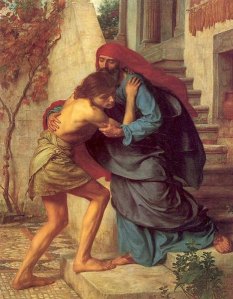
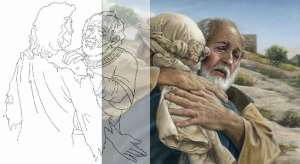
Jesus said the Father had two SONS, using the Greek word “huios” for both. Then the younger SON (huios) left, declaring his freedom, and in that culture became DEAD to his Father. When his Father saw him afar off, he leaped from his chair and ran to meet him. Rejoicing, he told everyone that this SON (huios) of mine was DEAD and is ALIVE again. (has come to life again – anadzah’o)
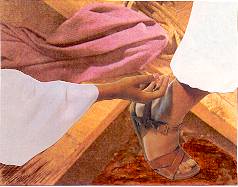
The younger brother was his SON again. This the Father demonstrated with the ring, the robe and the sandals. They meant the Father had RESTORED his RELATIONSHIP with his SON! WHY? Because our Father is is the Father of LIFE, of HOPE, of LIVING RELATIONSHIPS.
 Jesus declared this when he answered the Sadducees “He is not God of the dead, but of the living.” Matthew 22:32. The Word further declares:
Not only is God the God of the Living, but Paul declared this to the Romans: “Now the God of hope fill you with all joy and peace in believing, that ye may abound in hope, in the power of the Holy Spirit” (Rom. 15:13).
Peter further explained that this is a Living Hope by the Resurrection: “Blessed be the God and Father of our Lord Jesus Christ, who according to his great mercy begat us again unto a living hope by the resurrection of Jesus Christ from the dead” (1 Pet. 1:3).
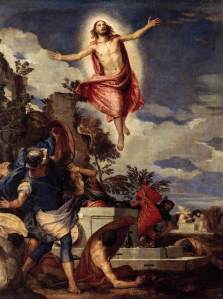 God is the God of Hope by the Resurrection — in other words, by the triumph of Life over death. This means that in every dark situation, God never despairs and never gives up. For our Father knows the tremendous power of Resurrection, of Life.
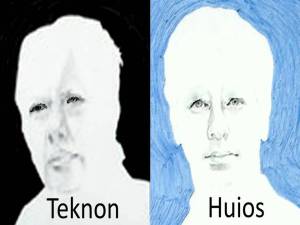 The Father had two SONS, but only one knew the power of RESURRECTION. In fact, when the Elder Brother argued with the Father, the Father called him my CHILD (teknon). Calling him a child was like saying “I know you are mine by birth, but you are not my SON, because we don’t have a REAL RELATIONSHIP!”
Jesus was never referred to as TEKNON of God. He was always called the HUIOS of God. We, on the other hand, are called the TEKNON of God by John to indicate we are BORN into the family of God:
But as many as received him, to them gave he power to become the sons of God, [even] to them that believe on his name. John 1:12.
The Elder Brother Refused to Go In
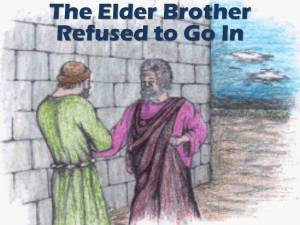
Both Younger and Elder Brothers were the children of the Father, but as our Parable ends, only one was the SON of the Father. The Younger was the Son because he had come back to life and had come into a LIVING RELATIONSHIP with his Father.
The Elder Brother was a child of the Father, but there was no RELATIONSHIP.
The shocking truth of this Parable is that only the younger son reflected the character of the LIVING FATHER. The sinner was more like his Father than the righteous Elder Brother. WHY? Because the Younger Son was ALIVE, while the Elder Brother was DEAD in his self-righteousness.
 Matthew 5:9 & 45 use the word huios and it refers to those who reflect the character of God. The Greek word for child or children is teknon. In contrast to huios, it means the fact of birth whereas huios stresses the dignity and character of the relationship. Another aspect of this Greek word, huios, involves “likeness.” The New Testament contains the concept expressed in the proverb, “Like father, like son” (Matt. 5:45,48). It was typical Hebrew usage to employ the word “son” to express likeness. For instance, those who are peacemakers will be called God’s sons because they are like God (Matt. 5:9). God’s likeness, His image, will be “stamped” upon those who have been brought to maturity and adopted as sons (Rom. 8:29; I John 3:2-3).
One way to understand the difference between the Elder and Younger is to understand another use of HUIOS with the addition of thesia or “huiosthesia” – “adopted or placed as sons”. In the Roman world, the father adopted as a son his own child. Birth made him a child (teknon); adoption made him a son (huios). Between the period of birth and adoption, there were stages of growth, education and discipline, until the maturity was reached for adoption into sonship. With adoption the son was recognized as one who could faithfully represent the father. He had arrived at the point of maturity, where the father could entrust him with the responsibility of overseeing the family business. The son becomes the “heir” of his father’s inheritance. Birth gives one the right to the inheritance, but adoption gives one the participation in the inheritance.
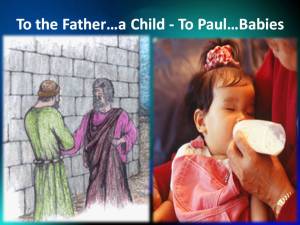 The Elder Brother assumed upon the FATHER’S Stuff because of his natural birth, because he was the first born child. But what the Father was declaring was the SONSHIP of the younger brother because of the RESURRECTION and their restored RELATIONSHIP.
Paul referred to the Corinthians as babies, still on milk. They had been born into the family of God, but had never matured, even though they had been enriched in speech and in knowledge of Jesus Christ (1 Cor 1:6). In fact, he said they were not lacking in any spiritual gift. The Corinthians probably saw themselves as the Elder Brother saw himself – the Mature Ones. But the Father called him a child, and Paul called the Corinthains babies!
 What makes the difference? How do we Elder Brother Types become SONS? Paul gives us the clue when he says “you are still of the flesh.” What does that mean to born again children of God?
It means we are still walking around in our stinking rotting corpses. And the flesh is abhorred by the Father. Paul shouts the secret of SONSHIP to all Elder Brothers:
And we have received God’s Spirit (not the world’s spirit), so we can know the wonderful things God has freely given us. 1 Corinthians 2:12 (NLT)
We have a LIVING RELATIONSHIP with the FATHER of the LIVING, but it is only through the Holy Spirit! We must walk after the Holy Spirit to enjoy this Living Relationship with our Father. It is not on the basis of our works that we have this living relationship. It is on the basis of the Holy Spirit being allowed to LIVE in us!
The Father went outside and pleaded with his Elder Child. The word for plead is paraclete, the same word we use for the Holy Spirit! Picture the Holy Spirit pleading with all us EBT’s to reckon our flesh and works dead, and to FOLLOW HIM, to Walk in the LIFE of the Holy Spirit! This is the only way we will enjoy any RELATIONSHIP with the FATHER!
He is the FATHER of the LIVING, the FATHER of those who have died to the flesh, and now walk in the Living Relationship of the Holy Spirit within us! The younger brother experienced that death and so was welcomed to LIFE. The Elder Brother saw no need to die, and so found no LIFE.
 Elder Brothers must realize they can be all righteous and moral but inwardly be walking corpses, dead to God! Our morality is worthless without a LIVING RELATIONSHIP with our LIVING FATHER!
God is all about the RESURRECTION! He is all about LIFE! And ther can be no SONSHIP without the RELATIONSHIP! The Resurrection will bring all Elder Brothers (and younger) into RELATIONSHIP with the Father!
Most people who read and study The Parable of the Prodigal Son concentrate completely on the character of the younger son, his repentance, and the father’s forgiveness. And yet look at the text. It doesn’t end with the return of the prodigal. Almost half of the story is about the older son. The story is about two sons, who are both alienated from the father, who are both assaulting the unity of the family. Jesus wants us to compare and contrast them. The younger son is “lost”—that is easy to see. We see him shaming his father, ruining his family, sleeping with prostitutes, and we say, “yes, there’s someone who is spiritually lost.” But Jesus’ point is that the older son is lost too. Let’s learn from the text:
-
-
- A new understanding of Lostness,
- Signs of being an Elder Brother
- What we can do to join the Feast?.
-
1. A startling new understanding of LOSTNESS—verse 28.
- The elder brother would have known that the day of the prodigal’s return was the greatest day in his father’s life.
- The father has “killed the fattened calf”, an enormously expensive extravagance in a culture where even having meat at meals was considered a delicacy.
- The older son realized his father was ecstatic with joy. Yet he refused to go into the biggest feast his father has ever put on. This was a remarkable, deliberate act of disrespect. It was his way of saying, “I won’t be part of this family nor respect your headship of it.
- And the father had to “go out” to plead with him. Just as he went out to bring his alienated younger son into the family, now he had to do the same for the older brother.
Do you realize what Jesus is saying to his listeners, and to us? The Elder Brother is lost ! At the Very Least He is Missing out on Fellowship with His Father and Brother.
- The father represents God himself, and the meal is the feast of salvation. In the end, then, the younger son, the immoral man, comes in and is saved, but the older son, the good son, refuses to go in and is lost
- The Pharisees who were listening to this parable knew what that meant. It was a complete reversal of everything they believed. You can almost hear them gasp as the story ends.
- And what is it that is keeping the elder brother out? It’s because: “All these years I’ve been slaving for you and never disobeyed…” (v.29). The good son is not lost in spite of his good behavior, but because of his good behavior. So it is not his sin keeping him out, but his righteousness.
- The gospel is neither religion nor is it irreligion; it is not morality nor is it immorality. This was completely astonishing and confusing to Jesus’ hearers at the time—and it may even be astonishing and confusing to you
Why is the older son lost?
 a) There is No Relationship.
b) There is No Companionship.
c) There is Only a Selfish Child.
The Father Parakaleo – came along side, is a picture of the Holy Spirit, pleading! Come in, Fellowship with me!
The younger brother wanted the father’s wealth, but not the father. So how did he get what he wanted? He left home. He broke the moral rules. But it becomes evident by the end that the elder brother also wanted selfish control of the father’s wealth. He was very unhappy with the father’s use of the possessions—the robe, the ring, the calf. But while the younger brother got control by taking his stuff and running away, we see that the elder brother got control by staying home and being very good. He felt that now he has the right to tell the father what to do with his possessions because he had obeyed him perfectly.
So there are two ways to be your own Savior and Lord.
- One is by breaking all the laws and being bad.
- One is by keeping all the laws and being good.
If I can be so good that God has to answer my prayer, give me a good life, and take me to heaven, then in all I do I may be looking to Jesus to be my helper and my rewarder—but he isn’t my Savior. I am then my own Savior.
The difference between a religious person and a true Christian is that the religious person obeys God to get control over God, and things from God, but the Christian obeys just to get God, just to love and please and draw closer to him.
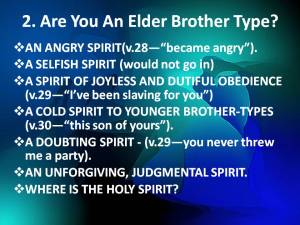
2. ARE YOU AN ELDER BROTHER TYPE?—verses 29-30.
 Some people are complete elder brothers. They go to church and obey the Bible—but out of expectation that then God owes them. They have never understood the Biblical gospel at all. But many Christians, who know the gospel, are nonetheless elder-brotherish. Despite the fact that they know the gospel of salvation by grace with their heads, their hearts go back to an elder-brotherish “default mode” of self-salvation.
Here is how to tell if you are infected with the Spirit of the ELDER BROTHER:
- AN ANGRY SPIRIT (v.28—“became angry”).
But he was angry (ōrgisthē). First aorist (ingressive) passive indicative. But he became angry, he flew into a rage (orgē). This was the explosion as the result of long resentment towards the wayward brother and suspicion of the father’s partiality for the erring son.
If you believe God owes you a good life…
You will be angry…Why does my buddy have a better life…Why is all this going wrong…
Anger is a characteristic-frustrated, hostile
Elder brothers believe that God owes them a comfortable and good life if they try hard and live up to standards—and they have! So they say: “my life ought to be going really well!” and when it doesn’t they get angry. But they are forgetting Jesus. He lived a better life than any of us—but suffered terribly.
- A Selfish SPIRIT (would not go in)
Would not go in (ouk ēthelen eiselthein). Imperfect tense (was not willing, refused) and aorist active (ingressive) infinitive. Selfish people are Fleshly People. They are Dead, but don’t realize it.
The Elder was dead and did not realize it. The Younger was dead, and realized it.
- A SPIRIT OF Joyless and Dutiful Obedience (v.29—“I’ve been slaving for you”).
Duty without beauty.
Younger son – I’m not worthy, make me a slave, Father makes him a Son.
Elder son – I’m your obedient son, so he becomes the obedient slave.
You go to college to study to make money
In the world you spend money because it is beauty.
Totally results oriented, becomes a grind, a duty
Elder Brothers pray but not adoring God.
Prayer is a duty, not a beauty.
I obey and obey but I don’t get anything out of it.
Everything went wrong becasue he was faithful and obedient.
Elder brothers obey God as a means to an end—as a way to get the things they really love. Of course, obedience to God is sometimes extremely hard. But elder brothers find obedience virtually always a joyless,
mechanical, slavish thing as a result.
- A SPIRIT OF Coldness to Younger Brother-types (v.30—“this son of yours”).
You Don’t Rejoice in what the Father Rejoices in. You have Religious and class superiority. If you ground your value in success or hard work, you have to look down your nose at the poor, the perceived lazy. When you look at people of different races, classes, you look down at them or creeped out at them you are an elder brother. The older son will not even “own” his brother. Elder brothers are too disdainful of others unlike themselves to be effective in evangelism. Elder brothers, who pride themselves on their doctrinal and moral purity, unavoidably feel superior to those who do not have these things. If you hate other cultural styles and customs, you are an elder brother.
You don’t grow in love in sweetness. Do evidences of the joy and presence of the Holy Spirit.
Jesus doesn’t lash out at them, condemn the Parisees, the ones who will kill him. You are alienated from the Father’s heart, my child, While we were yet enemies, Christ died for us.
The Cross is the greatest challenge to us. We are so messed up that nothing short of the cross will save you. See the humiliation of the Cross, and the Affirmation of His Love for You.
- A DOUBTING SPIRIT – Lacking Assurance of the Father’s Love (v.29—you never threw me a party).
As long as you are trying to earn your salvation by controlling God through your goodness, you will never be sure you have been good enough. What are the signs of this? Every time something goes wrong in your life you wonder if it’s a punishment. Another sign is irresolvable guilt. You can’t be sure you’ve repented deeply enough, so you beat yourself up over what you did. Lastly, there is a lack of any sense of intimacy with God in your prayer life. You may pray a lot of prayers asking for things, but not sense his love.
- An Unforgiving, Judgmental Spirit.
The elder brother does not want the father to forgive the younger brother. It is impossible to forgive someone if you feel “I would never do anything that bad!” You have to be something of an elder brother to refuse to forgive.
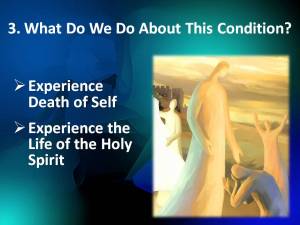
3. What we can do about this spiritual condition?
 And he said to him, ‘Son, you are always with me, and all that is mine is yours. It was fitting to celebrate and be glad, for this your brother was dead, and is alive; he was lost, and is found.’ ” Luke 15:31-32
First, we have to EXPERIENCE DEATH TO SELF
- Jesus ends the parable with the lostness of the older brother in order to get across the point that it is a more dangerous spiritual condition. The younger brother knew he was alienated from the father, but the elder brother did not.
- If you tell moral, religious people who are trying to be good, trying to obey the Bible so God will bless them—that they are alienated from God, they will just be offended. If you know you are sick you may go to a doctor; if you don’t know you’re sick you won’t—you’ll just die.
- Moralistic religion works on the principle, “I obey, therefore God accepts me.” The gospel works on the principle, “I am accepted by God through Jesus Christ, therefore I obey.”
- These are two radically different, even opposite, dynamics. Yet both sets of people sit in church together, both pray, both obey the Ten Commandments, but for radically different reasons. And because they do these things for radically different reasons, they produce radically different results—different kinds of character. One produces anger, joyless compliance, superiority, insecurity, and a condemning spirit. The other slowly but inevitably produces contentment, joy, humility, poise, and a forgiving spirit.
- Unless a person and a congregation knows the difference between general religiosity and the true gospel, people will constantly fall into moralism and elder-brotherishness. And if you call younger brothers to receive Christ and live for him without making this distinction clear, they will automatically think you are inviting them to become elder brothers.
- Must learn to see yourself through the eyes of the Younger Brother.
Second, we HAVE TO EXPERIENCE LIFE OF THE HOLY SPIRIT.
The Father Entreated (parekalei). Imperfect tense, he kept on beseeching him. This is a picture of the Holy Spirit pleading for the Elder Brother to surrender to His Control, to allow Him to be in charge, and thereby experience the feasting of FULL FELLOWSHIP with the Father and the Son.
- Remember, again, whom Jesus is speaking to (vv.1-2). Jesus is speaking to his mortal enemies, the men he knows will kill him. On the one hand, this is an astonishingly bold challenge to them. He’s talking to those who want to kill him and telling them that they are lost, that they fundamentally misunderstand God’s salvation and purpose in the world, and that they are trampling on the heart of God.
- But at the same time, he is also being so loving and tender. When the father comes out to the older brother, that is Jesus pleading with his enemies. He is urging them to see their fatal error. Jesus does not scream at his enemies, or smite them, but lovingly urges them to repent and come into his love.
 And so we have a foreshadowing of that great moment on the cross when he says, “Father, forgive them, for they do not know what they are doing” (Luke 23:34). This love toward his enemies made him vulnerable and cost him his life. On the cross, instead of blasting his enemies, he lovingly took the penalty of their sins on himself. While we were his enemies, Christ died for us (Rom 5:10). Knowing what he did for us must drain us of our self-righteousness and our insecurity. We were so sinful he had to die for us. But we were so loved that he was glad to die for us. That takes away both the pride and the fear that makes us elder brothers.
We must stop trying to climb our own ladder to heaven. It is fruitless, it is hopeless. Only when we go to the cross and die to what we are and want and hope, and reach up and take the hand of Jesus – will we have the proper relationship with our Heavenly Father. We will be ALIVE, partakers of the Resurrection of Jesus Christ.
 With the 150 year anniversary of Darwin’s book comes the exciting revelation of a new skeleton discovered in 1992. It has taken this long to analyze her. (They do it in a matter of minutes on CSI).
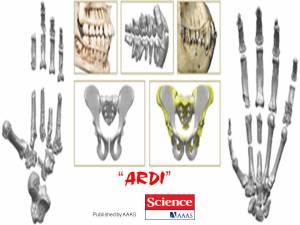 Referential models based on extant African apes have dominated reconstructions of early human evolution since Darwin’s time.
 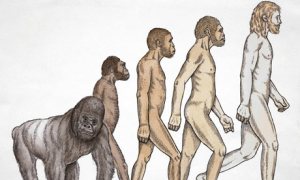 An essential goal of human evolutionary studies is to account for human uniqueness, most notably our bipedality, marked demographic success, unusual reproductive physiology, and unparalleled cerebral and technological abilities. During the past several decades, it has been routinely argued that these hominid characters have evolved by simple modifications of homologs shared with our nearest living relatives, the chimpanzee and bonobo…
 It seems to me that “ARDI” is telling us that we did not descend from African APES! They have to come up with a new evolutionary model for the origin of hominids (you and me).
 But what about the Evolution Theatre display at the the Smithsonian? I was just there meeting some of my monkey relatives! I hope ARDI sets them straight!









 Loving the Word with the MudPreacher