“But without faith it is impossible to please Him.” (Hebrews 11:6)

Faith is an absolute requirement for coming to God, for pleasing Him. What sort of faith allows us to please Him?

We quote Hebrews 11:1 as a general definition of faith, but Romans 4:3 sheds more pertinent light on what sort of faith it takes to please God.

Romans 4:3 “What does scripture say? ‘Abraham took God at his word, and that act of faith was accepted as putting him into a right relationship with God'” (The New Testament: A Translation by William Barclay).

Abraham’s “act of faith” was to believe the words of God. Simply, faith is believing what God says. That belief, that faith, is what pleases God, putting us in a position to have a right relationship with Him. Even in our human relationships, trust in what a person says is foundational.

Trust is never simply an intellectual agreement. It is visceral and intangible and always affects our emotions and actions. This is why it is so devastating when a spouse discovers the other has been unfaithful. That trust which had enveloped his or her soul has been destroyed. That trust which gave him or her life had suddenly been exposed to be based on a lie.

Abraham shows us that this belief, this faith is a deep conviction which resides in our core being, effecting our will and our mind, and even our emotions. His great love for his only son was laid aside to show his trust in this great invisible God. His core trust and faith resulted in obedient action. This is why James declared that faith that does not result in works is not true faith at all, for it is useless for LIFE!

(Jas 2:20) Do you want to be shown, you foolish person, that faith apart from works is useless?

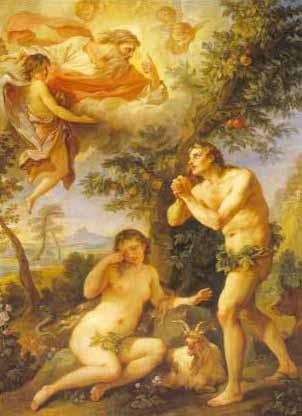
Adam and Eve were forced from the Garden because their trust and faith in God had been shallow, and void of works that demonstrated their trust in His Word. They decided to live by sight when they chose to disobey and eat the fruit. Their action demonstrated a faith that was not pleasing to God. They believed in God, certainly, just as Satan and his minions. However, when it came to trusting His WORDS and acting upon them, their faith fell short of pleasing God. In fact, their “faith” resulted in their death!

Adam and Eve became the first example of man choosing to walk by sight rather than by faith. Mankind has continued in the footsteps of the first Adam, proving that Adam and Eve’s faithlessness was not an aberration, but a trait inherent in every human heart.

Failure to trust the Word of God, failure to walk by faith resulted in a barrier between themselves and fellowship with God. That broken trust ruined their relationship just as it does a marriage.

Satan is the foremost example of faithlessness (faith that does not please God). Satan believes God exists, but his faith is dead because it does not lead to right actions.

James 2:19-20, from the New Living Translation (NLT), forcefully points out the futility and foolishness of Satan’s faith: “Do you still think it’s enough just to believe that there is one God? Well, even the demons believe this, and they tremble in terror! Fool! When will you ever learn that faith that does not result in good deeds is useless?”

“Pleasing Faith” Believes and Obeys the Word of God

When confronted with the choice to eat or not eat the fruit, what evidence did Adam and Eve have? All they had were the words of God. Notice the classic definition of faith found in Hebrews 11:1: “Now faith is the substance of things hoped for, the evidence of things not seen.” What is the “evidence of things not seen?” God’s words. The rest of the chapter provides examples of men and women who followed God based solely on His Words to them.

Hebrews 11:36-38 list various trials that they went through for their faith. Notice verse 39: “And all these, having obtained a good testimony through faith, did not receive the promise.” Even though they did not receive the promise of God, they still believed Him, followed Him, and gave their life for Him, trusting that the sovereign God could and would keep His promises even beyond the grave.

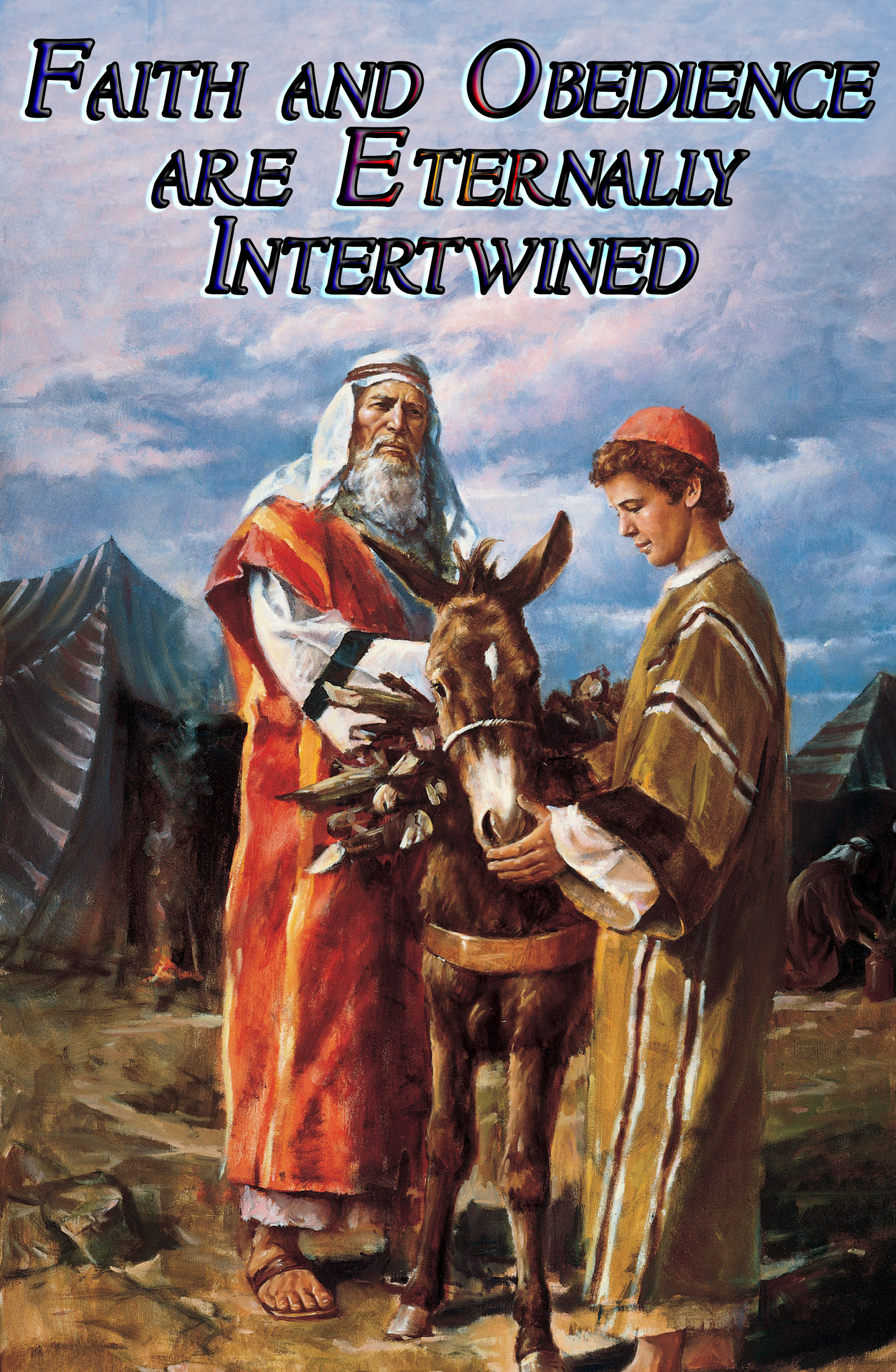
Consider closely Abraham’s decision to sacrifice his son, Isaac. When Abraham raised the knife to sacrifice his son, the only evidence things would work out was the word of an unseen God. Abraham could believe God—take Him at His word—or believe all the evidence he could see that the son of promise would die before God fulfilled His promises. Abraham could not “see” what God was going to do. As far as Abraham was concerned, Isaac was dead. The only “evidence” he had that it all would work out was God’s words—the promises God made to him.

God also needs evidence.

God wanted to know what was in Abraham’s heart. (Genesis 22:12) God said “Now I know what is in your heart.” He knew and recorded for all eternity the “evidence” that Abraham walked by faith, not by sight. Therefore, Abraham became the “Father of Faith” for all who would please God must have faith to believe that He is!

To walk requires action and effort. So even the phrase “walk by faith” demonstrates that living faith requires action and effort. As Hebrews 11:6 declares, “Pleasing Faith” believes that God rewards those who DILIGENTLY seek Him. Our evidence is God’s words. God’s evidence is our actions.

We are just like Abraham. So says Galatians 3:6: “You have exactly the same experience as Abraham. Abraham took God at his word, and that act of faith was accepted as putting him into a right relationship with God” (William Barclay). Just as Abraham had to choose between believing God and believing the circumstances he could see, God also has to put us into exactly the same position. He must find out what is the true intent of our hearts—the depth of our faith. God needs to “know” that we will trust Him, no matter what.

“Pleasing Faith’s” Source

Where do we get this “pleasing” faith? Ephesians 2:8 answers: “For by grace you have been saved through faith, and that not of yourselves; it is the gift of God.” We cannot work it up—that would be our effort, and Romans 8:8 says that we can never please God in our flesh. Further prove this faith comes from God is the correct application of Galatians 2:20:

(Gal 2:20) I am crucified with Christ: nevertheless I live; yet not I, but Christ liveth in me: and the life which I now live in the flesh I live by the faith of the Son of God, who loved me, and gave himself for me.

Paul exchanged his life for Christ’s life. Paul was dead, and Christ lived through him. This life of faith was only possible through the faith of Christ! Christ’s faith was Paul’s faith! This is truly an exchanged life!

Consider when God first started working on us. One year we were clueless, the next year things were making sense. We read the Bible and understood it, but more importantly, we believed it. Where did that belief come from? It was, as Ephesians 2:8 says, a gift from God. The real miracle is not that we understood, but rather that we now believed those words we understood. And this happened only because God made it possible.

What was the evidence that we believed those words? We began living by them. Our new works and actions were the evidence of our faith. Just like Abraham, our actions showed our desire to begin a right relationship with God motivated by His gift of faith. “Don’t you remember that our ancestor Abraham was declared right with God because of what he did when he offered his son Isaac on the altar? You see, he was trusting God so much that he was willing to do whatever God told him to do. His faith was made complete by what he did—by his actions” (James 2:21-22 NLT).

Are you willing to believe and obey God’s Word?

To test our faith, God’s pattern is to bring us to a point—a brick wall or a Red Sea—that seemingly allows no escape. That is where He can find out what is truly in our hearts—hearts of belief or evil unbelief.

(Heb 3:12)  Take care, brothers, lest there be in any of you an evil, unbelieving heart, leading you to fall away from the living God.

Paul had this experience and recorded it for us in II Corinthians 1:8-10:

We should like you, our brothers, to know something of the trouble we went through in Asia. At that time we were completely overwhelmed, the burden was more than we could bear, in fact we told ourselves that this was the end. Yet we believe now that we had this sense of impending disaster that we might learn to trust, not in ourselves, but in God who can raise the dead. It was God who preserved us from such deadly perils, and it is he who still preserves us. (Phillips translation)

Even though all human hope was lost, God came to the rescue to teach Paul—and us through Paul—that God can be trusted.

“I am God! I can be trusted. . . . I alone am the God who can be trusted” [Isaiah 65:16 (CEV)].

What areas of your life are not “pleasing” to God? What areas of your life are being lived by sight? Is your faith pleasing to God, or is it lifeless?


Meet the Person, the Holy Spirit

“Anyone who does not know the Holy Spirit as a person has not attained unto a complete and well rounded Christian experience. Any one who knows God the Father and God the Son and does not know God the Holy Spirit, has not attained unto the Christian conception of God, nor to a fully Christian experience.” R A Torrey

I want you to imagine you are one of the Disciples who followed Jesus faithfully as He ministered throughout Judea and Samaria. You were a believer in Him as the Messiah. You were willing to follow Him as He set up His Kingdom. He was your everything.

Then comes that horrible night when He is taken away. All you dreams are shattered as you watch as they crucify the one you thought was the Messiah of God.

You join the others in hiding as you wonder what to do with your life. For three days you are in a panic. Then you hear the news. Jesus is alive! You rush over to where He is, and you see you touch, you know He is alive!

But later, Jesus meets with you and tells you that He is going away. He is going to His Father. Here is what He says:

Luke 24:44-49 (ESV) Then he said to them, “These are my words that I spoke to you while I was still with you, that everything written about me in the Law of Moses and the Prophets and the Psalms must be fulfilled.” Then he opened their minds to understand the Scriptures, and said to them, “Thus it is written, that the Christ should suffer and on the third day rise from the dead, and that repentance and forgiveness of sins should be proclaimed in his name to all nations, beginning from Jerusalem. You are witnesses of these things. And behold, I am sending the promise of my Father upon you. But stay in the city until you are clothed with power from on high.”

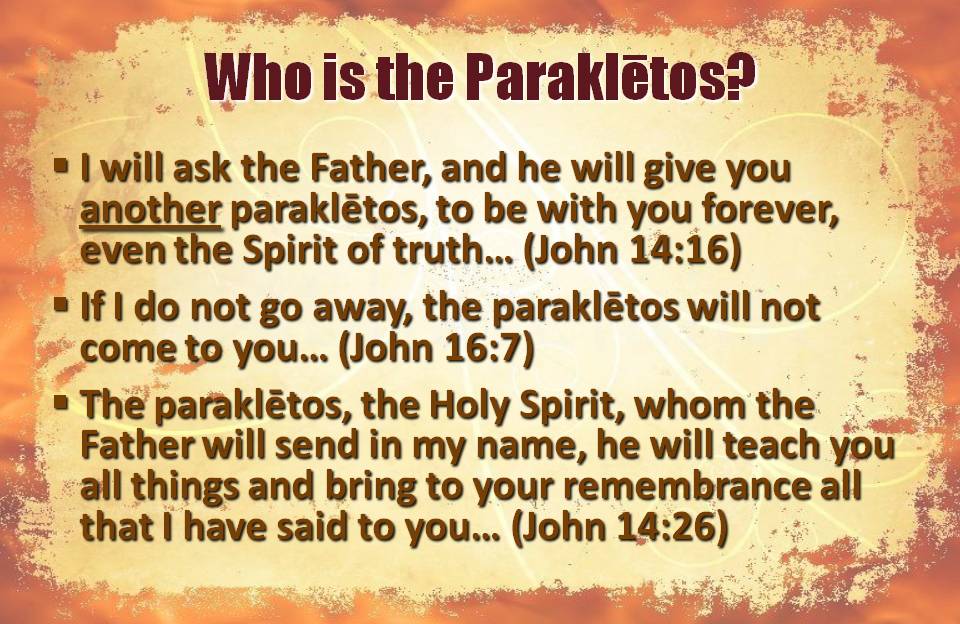
John 14:15-18 (ESV) “If you love me, you will keep my commandments. And I will ask the Father, and he will give you another paraklētos, to be with you forever, even the Spirit of truth, whom the world cannot receive, because it neither sees him nor knows him. You know him, for he dwells with you and will be in you. “I will not leave you as orphans; I will come to you.

John 15:26-27 (ESV) “But when the paraklētos comes, whom I will send to you from the Father, the Spirit of truth, who proceeds from the Father, he will bear witness about me. And you also will bear witness, because you have been with me from the beginning.

John 16:7-8 (ESV) Nevertheless, I tell you the truth: it is to your advantage that I go away, for if I do not go away, the paraklētos will not come to you. But if I go, I will send him to you. And when he comes, he will convict the world concerning sin and righteousness and judgment:

John 14:26 (ESV) But the paraklētos, the Holy Spirit, whom the Father will send in my name, he will teach you all things and bring to your remembrance all that I have said to you.

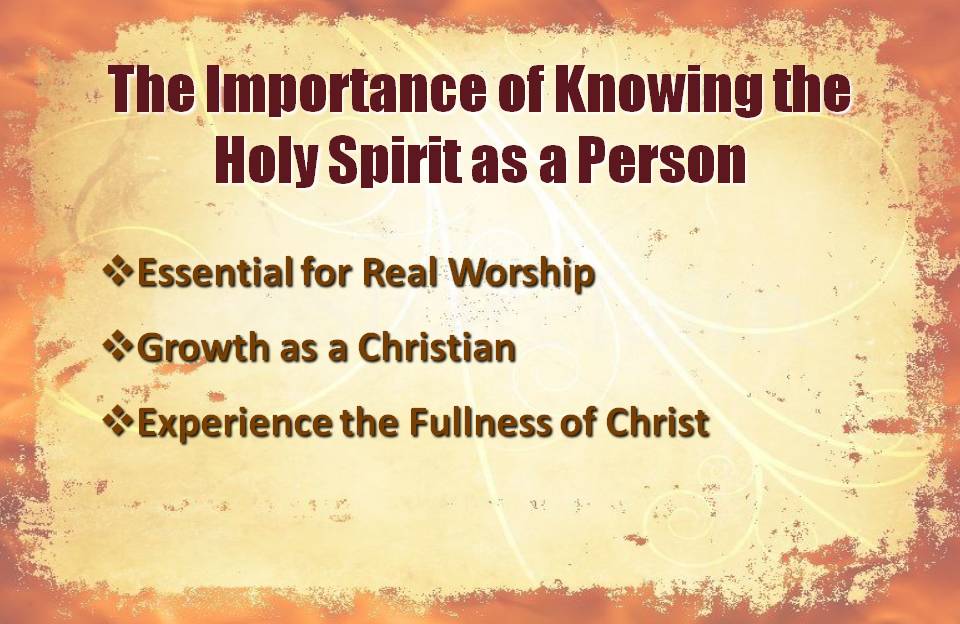
I. The Importance of Knowing the Holy Spirit as a Person.

Real Worship

  1. Worship is meant to be Personal and Transformational.
    • Theoretical worship vs. Experiential Worship
    • Influenced by your perception
  2. When we view the Holy Spirit as an ‘IT’, our worship is impersonal and  without life changing effect
    • Rob a Divine person of proper worship
    • Rob a Divine person of proper love and obedience
  3. We supposedly Worship the Holy Spirit every time we sing the Doxology:

Praise God from whom all blessings flow,
Praise Him all creatures here below,
Praise Him above, ye heavenly hosts,
Praise Father Son and Holy Ghost

Growth as a Christian

  1. If you see the Holy Spirit as an influence or power…
    • How can I get a hold of the Holy Spirit and use it?
    • How can I get More of the Holy Spirit?
  2. If we see the Holy Spirit as a person…
    • How can the Holy Spirit get hold of me and use me?
    • How can the Holy Spirit get more of me?
  3. Wrong attitudes of seeing the H.S. as an influence
    • Self Confidence
    • Self-exaltation
    • Act as though you are superior
  4. Right attitudes of Seeing the H.S. as a Divine Person Living in You
    • Self-renunciation
    • Self-humiliation
    • Act with a sense of being a vessel for the Divine.

To Experience the Fullness of Christ

  1. Life Changing Encounter
  2. The Point of Jesus in John 3

John 3:2-8 (ESV) This man came to Jesus by night and said to him, “Rabbi, we know that you are a teacher come from God, for no one can do these signs that you do unless God is with him.” Jesus answered him, “Truly, truly, I say to you, unless one is born again he cannot see the kingdom of God.” Nicodemus said to him, “How can a man be born when he is old? Can he enter a second time into his mother’s womb and be born?” Jesus answered, “Truly, truly, I say to you, unless one is born of water and the Spirit, he cannot enter the kingdom of God. That which is born of the flesh is flesh, and that which is born of the Spirit is spirit. Do not marvel that I said to you, ‘You must be born again.’ The wind blows where it wishes, and you hear its sound, but you do not know where it comes from or where it goes. So it is with everyone who is born of the Spirit.

We MUST EXPERIENCE God for ourselves!

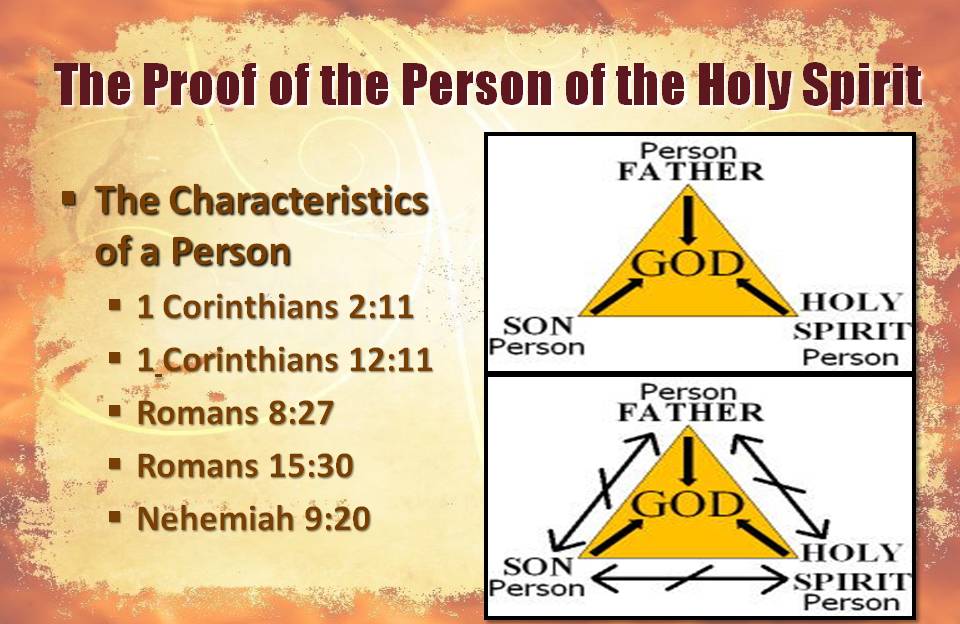
The Proof of the Person of the Holy Spirit.

  • All Characteristics of Personality are attributed to the Holy Spirit

What Makes a Person a Person?

  • Knowledge
  • Feeling
  • Will

A Person Does Not Need a Body

  • We will not have our fleshly body for a long time, but we will still be a unique person.
  • If you have knowledge, feelings and a will, you are a person whether you have a body or not.

The Bible Proves the Person of the Holy Spirit

  1. KNOWLEDGE
    1 Corinthians 2:11 (ESV) For who knows a person’s thoughts except the spirit of that person, which is in him? So also no one comprehends the thoughts of God except the Spirit of God.
  2. WILL
    1 Corinthians 12:11(ESV) All these are empowered by one and the same Spirit, who apportions to each one individually as he wills.

    • The Holy Spirit gets hold of us and uses us according to His Will!
    • You cannot get hold of Him!
  3. MIND WILL AND EMOTIONS 
    Romans 8:27(ESV) And he who searches hearts knows what is the mind of the Spirit, because the Spirit intercedes for the saints according to the will of God.

    • Mind is the Greek word “phronema” which has in it all three-knowledge, feeling and will.
    • Rom 8:7 – The mind of the flesh is enmity means that the whole moral and intellectual life of the flesh is enmity against God.
  4. LOVE OF THE SPIRIT.
    Romans 15:30 (ESV) I appeal to you, brothers, by our Lord Jesus Christ and by the love of the Spirit, to strive together with me in your prayers to God on my behalf

    1. Not a mere influence of power
    2. He is a divine person, loving us with the tenderest of love.
    3. Have you thanked the Holy Spirit for His Love?
  5. INTELLIGENCE AND GOODNESS
    Nehemiah 9:20 (ESV) You gave your good Spirit to instruct them and did not withhold your manna from their mouth and gave them water for their thirst.
  6. A PERSON WHO GRIEVES OVER OUR SINS 
    Ephesians 4:30 (ESV) And do not grieve the Holy Spirit of God, by whom you were sealed for the day of redemption.

    • He Goes with us wherever we go
    • He desires us to please Him with our lives.

The Holy Spirit is a Person of the Trinity

  1.  Genesis 1:26 (ESV) Then God said, “Let us make man in our image, after our likeness. And let them have dominion over the fish of the sea and over the birds of the heavens and over the livestock and over all the earth and over every creeping thing that creeps on the earth.”
  2.  Genesis 1:1-3 (ESV) In the beginning, God created the heavens and the earth. The earth was without form and void, and darkness was over the face of the deep. And the Spirit of God was hovering over the face of the waters. And God said (The Word of God-the Logos), “Let there be light,” and there was light.
  3. Elohim is plural for “Gods”
  4. THERE IS A PLURALITY OF PERSONS IN THE ONE GODHEAD
  • Read Deuteronomy 6:4. The word for God used in “The Lord (Jehovah) our God (elohim) is one Lord” should actually be translated Gods. Elohim is a masculine plural noun used 2,600 times in the Old Testament. Why would the Holy Spirit use a plural noun to describe the ONE TRUE GOD? .

Many Actions are attributed to the Holy Spirit that only a Person can perform.

  1. 1 Corinthians 2:10 (ESV) these things God has revealed to us through the Spirit. For the Spirit searches everything, even the depths of God.
    1. The Holy Spirit who Himself searches the deep things of God and then He reveals to us the things which He discovers.
  2. Romans 8:26 (ESV) Likewise the Spirit helps us in our weakness. For we do not know what to pray for as we ought, but the Spirit himself intercedes for us with groanings too deep for words.
    1. The Holy Spirit Prays for us here on Earth
    2. Jesus Christ Prays for us from Heaven
  3. John 14:26(ESV) But the Helper, the Holy Spirit, whom the Father will send in my name, he will teach you all things and bring to your remembrance all that I have said to you.
    1. He teaches us
    2. He reminds us. ______________________________________________________
  4. John 16:12-14(ESV) “I still have many things to say to you, but you cannot bear them now. When the Spirit of truth comes, he will guide you into all the truth, for he will not speak on his own authority, but whatever he hears he will speak, and he will declare to you the things that are to come. He will glorify me, for he will take what is mine and declare it to you.
    1. He is our personal Teacher
    2. He reveals to us what He hears!

The Holy Spirit holds an Office that only a person can hold.

John 14:16-17(ESV) And I will ask the Father, and he will give you another Helper, to be with you forever, even the Spirit of truth, whom the world cannot receive, because it neither sees him nor knows him. You know him, for he dwells with you and will be in you.

  1. He is ANOTHER Comforter, just like Christ
  2. Not an influence, but a PERSON, who makes His Home in our lives.
  3. Christ is a Divine Person, and He sent ANOTHER Divine Person to take His place!
  4. Comforter is ‘parakletos’, “one who stand’s alongside another”
  5. Same as Advocate in 1 John 2:1 (if anyone does sin, we have an advocate with the Father, Jesus Christ the righteous.)
  6. Jesus is the one who came alongside the Boat in the midst of the storm
  7. Comforter – Parakletos
    • Different from parakaleo (one you call upon for comfort)
    • Not someone who you call upon when you need Him.
    • It is His Purpose to be always at your side!
    • We are indwelt, we are sealed.
    • He is our Constant Companion!

 Would Your Life Change if You Knew the Holy Spirit as a Person?

  1. Insomnia
  2. Loneliness
  3. Communion of the Holy Spirit in times of loss
    • Heartache
    • No Fear

It was New Years Eve, and we had our whole family over at a friend’s house in Blue Springs. It was after mid night, and we started to take the hour trip home to Overland Park. The weather turned nasty, and the drizzle that was falling started to freeze. We were on I-70 close to Independence, when the highway became a sheet of ice. Cars where sliding everywhere. We were only going 30 miles an hour, and were in a big conversion van. I was scared out of my mind. My wife was yelling, some of the kids were crying. All of a sudden the van started sliding. I had lost control and nothing was working to stop the van. We started sliding sideways down the highway into the cars ahead of us. I just said Lord, we are in your hands. Just when it looked like we were going to crash into a car or a guard rail, the van came to a sudden stop. We had come to a place under an overpass that had not iced up. Hallelujah! I had a quick word of praise and prayer with our family, got the van headed the right way and we slowly made our way home. It took over two hours, but I was no longer afraid, for I knew the Holy Spirit was with us. I had remembered what RA Torrey had said about a time he had to hike along a river bluff for 4 miles after midnight with no moon.

 Do You Know the Communion of the Holy Spirit?

The point of this message has been one thing – to introduce you to my friend, the Holy Spirit!

The Characteristics of an Elder

Titus 1:6-9

6 if anyone is above reproach,

Blameless” is anegklētos, from egkaleō, “to call to account, to bring a charge against,” and Alpha prefixed, which negates the word and makes it mean, “not to call to account, etc.” Thus, a bishop must live such an exemplary life that there is no occasion to call him to account or bring a charge against him[1]

Colossians 1:22 22 he has now reconciled in his body of flesh by his death, in order to present you holy and blameless and above reproach before him,

the husband of one wife,

The Greek is mias (one) gunaikos (woman) andra (man). The word “man” is not anthrōpos, the generic term for man, but anēr, the term used of a male individual of the human race. The other two words are in the genitive case, while anēr is in the accusative. The literal translation is, “a man of one woman.” The words, when used of the marriage relation come to mean, “a husband of one wife.” The two nouns are without the definite article, which construction emphasizes character or nature. The entire context is one in which the character of the bishop is being discussed. Thus, one can translate, “a one-wife sort of a husband,” or “a one-woman sort of a man.” We speak of the Airedale as a one-man dog. We mean by that, that it is his nature to become attached to only one man, his master. Since character is emphasized by the Greek construction, the bishop should be a man who loves only one woman as his wife. It should be his nature to thus isolate and centralize his love.[2]

and his children are believers and not open to the charge of debauchery[3] or insubordination[4]. – with children brought up as Christians and not likely to be accused of loose living (as a prodigal) or law-breaking (not controllable).

7 For an overseer, as God’s steward, must be above reproach.

Steward is oikonomos, made up of oikos, “house,” and nomos, “law,” hence, the law whereby a household is administered or governed. The word refers to a manager of a household, a superintendent. Into such a person’s hands is entrusted the responsibility to properly administer the affairs of the household. The bishop is given the responsibility of properly administering the affairs of the local church[5]

He must not be arrogant (self-pleasing)[6] or quick-tempered[7] (inclined to anger) or a drunkard[8] or violent[9] or greedy for gain[10],

8 but hospitable[11], a lover of good[12], selfcontrolled[13], upright[14], holy[15], and disciplined[16].

9 He must hold firm to the trustworthy word as taught, so that he may be able to give instruction in sound doctrine and also to rebuke those who contradict it.

 JB Phillips:

Titus 1:5-9 I left you in Crete to set right matters which needed attention, and gave you instructions to appoint elders in every city. They were to be men of unquestioned integrity with only one wife, and. To exercise spiritual oversight a man must be of unimpeachable virtue, for he is God’s agent in the affairs of his household. He must not be aggressive or hot-tempered or over-fond of wine; nor must he be violent or greedy for financial gain. On the contrary, he must be hospitable, a genuine lover of what is good, a man who is discreet, fair-minded, holy and self-controlled: a man who takes his stand on the orthodox faith, so that he can by sound teaching both stimulate faith and confute opposition.


[1] Kenneth S. Wuest, Wuest’s Word Studies – Volume 2: Word Studies in the Greek New Testament, (Grand Rapids, MI: Wm. B. Eerdmans, 1973), WORDsearch CROSS e-book, 184.

[2] Kenneth S. Wuest, Wuest’s Word Studies – Volume 2: Word Studies in the Greek New Testament, (Grand Rapids, MI: Wm. B. Eerdmans, 1973), WORDsearch CROSS e-book, 53.

[3]“asōtía; gen. asōtías, fem. noun from ásōtos (n.f.), a prodigal, which is from the priv. a <G1>, and sózō <G4982>, to save. Having no hope of safety; extravagant squandering, dissoluteness, prodigality (Eph. 5:18; Titus 1:6; 1 Pet. 4:4; Sept.: Prov. 28:7). An ásōtos, a prodigal, is one who spends too much, who slides easily under the fatal influence of flatterers and the temptations with which he has surrounded himself into spending freely on his own lusts and appetites. Asōtía is a dissolute, debauched, profligate manner of living.” Spiros Zodhiates, The Complete Word Study Dictionary – New Testament, (Chattanooga, TN: AMG Publishers, 1993), WORDsearch CROSS e-book, Under: “asotia”.

[4] “that cannot be subjected to control, disobedient, unruly, refractory” J. H. Thayer, trans., Greek-English Lexicon of the New Testament, (New York: Harper & Brothers, 1889), s.v. “,” WORDsearch CROSS e-book.

[5]Kenneth S. Wuest, Wuest’s Word Studies – Volume 2: Word Studies in the Greek New Testament, (Grand Rapids, MI: Wm. B. Eerdmans, 1973), WORDsearch CROSS e-book, 184.

[6]One who is pleased with himself and despises others, insolent, surly, the contrast of courteous or affable. A person who obstinately maintains his own opinion or asserts his own rights but is reckless of the rights, feelings, and interests of others. He regulates his life with no respect to others (Titus 1:7; 2 Pet. 2:10;Spiros Zodhiates, The Complete Word Study Dictionary – New Testament, (Chattanooga, TN: AMG Publishers, 1993), WORDsearch CROSS e-book, 287.

[7]The orgilon person is one who does not have his passion of anger under control (Expositors).Kenneth S. Wuest, Wuest’s Word Studies – Volume 2: Word Studies in the Greek New Testament, (Grand Rapids, MI: Wm. B. Eerdmans, 1973), WORDsearch CROSS e-book, 184.

[8] The word does not include the responsible and temperate usage of alcohol, rather, it has in view the abuse or incessant use of it. The word-picture is that of an individual who always has a bottle (or wineskin) on the table and so signifies addiction (1 Tim. 3:3; Titus 1:7).Spiros Zodhiates, The Complete Word Study Dictionary – New Testament, (Chattanooga, TN: AMG Publishers, 1993), WORDsearch CROSS e-book, Under: “pároinos”.

[9] pléktēs; to strike. A striker, a violent person, figuratively a reviler, one who by reproachful and upbraiding language wounds the conscience of his brethren, a contentious person, a quarreler (1 Tim. 3:3; Titus 1:7). Spiros Zodhiates, The Complete Word Study Dictionary – New Testament, (Chattanooga, TN: AMG Publishers, 1993), WORDsearch CROSS e-book, Under: “plḗktēs”.

[10]aischrokerdés; from aischrós <G150>, indecent, dishonorable, and kérdos <G2771>, gain. A person who is eager to gain even if such gain degrades his moral character. Occurs only in 1 Tim. 3:3 (TR), 8; Titus 1:7. A bishop, elder, or deacon must not go after gain that would dishonor his character. Spiros Zodhiates, The Complete Word Study Dictionary – New Testament, (Chattanooga, TN: AMG Publishers, 1993), WORDsearch CROSS e-book, Under: “aischrokerdḗs”.

[11] The words, “given to hospitality,” are philoxenon. The word xenos meant first of all, “a stranger, a foreigner.” It was also used of a guest-friend, also of a host, one who receives and entertains hospitably. The word philos refers to one who has a liking for, is fond of something. Thus, the compound word means, “one who is fond of offering hospitality.” But the hospitality referred to here is not of the kind which says, “Come over for dinner and let us have a good time. Some day you will return the favor and I will enjoy your hospitality.” The hospitality spoken of here found its occasion in the fact that in the days of the great Roman persecutions, Christians were banished and persecuted, and rendered homeless. Or, in the case of travelling preachers and teachers, ministering from church to church, these servants of God were to be received and cared for by the bishop. Or, because in the early centuries, the local churches had no church edifice in which to worship, the church met in the home of an individual. The bishop should be glad to thus open his home for this purpose. “Kenneth S. Wuest, Wuest’s Word Studies – Volume 2: Word Studies in the Greek New Testament, (Grand Rapids, MI: Wm. B. Eerdmans, 1973), WORDsearch CROSS e-book, 55.

[12] A lover of good men” is philagathon, “a lover of goodness.” Loving and practicing what is good (Titus 1:8). It combines not only the liking to be kind but also the actual doing of good. Spiros Zodhiates, The Complete Word Study Dictionary – New Testament, (Chattanooga, TN: AMG Publishers, 1993), WORDsearch CROSS e-book, Under: ” philágathos”.

[13]sóphrōn; gen. sóphronos, masc.–fem., neut. sóphron, adj. from sóos (n.f.), sound, and phrén <G5424>, understanding. Discreet, sober, temperate, of a sound mind (1 Tim. 3:2; Titus 1:8; 2:2, 5); self-disciplined in one’s freedom, self-restrained in all passions and desires. Spiros Zodhiates, The Complete Word Study Dictionary – New Testament, (Chattanooga, TN: AMG Publishers, 1993), WORDsearch CROSS e-book, Under: “sṓphrōn”.

[14] díkaios; from díkē <G1349>, right, just. Righteous, just. When used in the masc. or fem. adjectivally of persons(as in Titus 1:8) it refers to the one who acts conformably to justice and right without any deficiency or failure. Spiros Zodhiates, The Complete Word Study Dictionary – New Testament, (Chattanooga, TN: AMG Publishers, 1993), WORDsearch CROSS e-book, 457.

[15] hósios; Holy, righteous, unpolluted with wickedness, right as conformed to God and His laws, thus distinguished from díkaios <G1342>, righteous, which refers to human laws and duties. Spiros Zodhiates, The Complete Word Study Dictionary – New Testament, (Chattanooga, TN: AMG Publishers, 1993), WORDsearch CROSS e-book, 1063.

[16]egkratés; from en <G1722>, in, and krátos <G2904>, power, dominion, strength, government. Having power over, being master of. Used metaphorically, meaning self-control, continence (Titus 1:8). Spiros Zodhiates, The Complete Word Study Dictionary – New Testament, (Chattanooga, TN: AMG Publishers, 1993), WORDsearch CROSS e-book, Under: “egkratḗs”.


Titus – a letter written with a fix for broken churches
Men whose lives display the power of the Living Word and the Presence of the Living Christ!

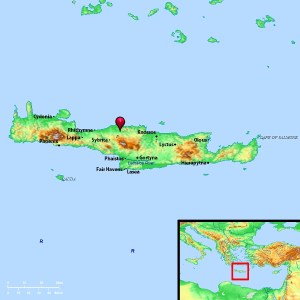
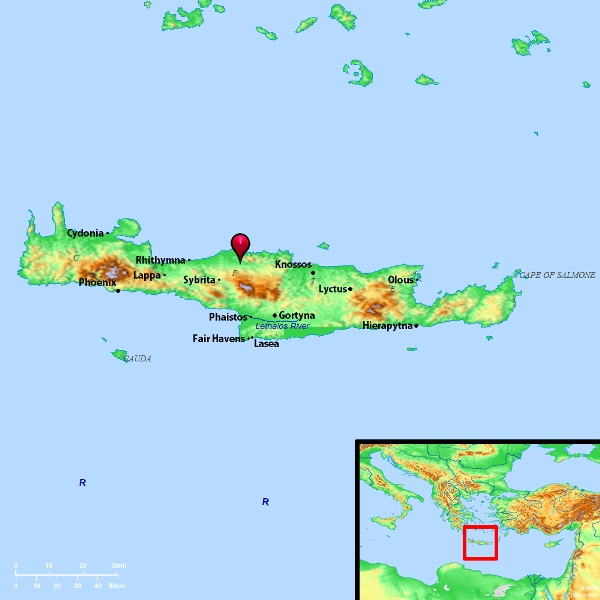
Paul had left Titus in Crete to shore up churches that were “broken” and had gone renegade.

What is a “renegade” church?

  • Church that has allowed self-focus and self-interests to negate the Power of the Word and the Presence of Jesus Christ
  • A self-focused Church is a deserter from the “Body of Christ”

Titus 1:5 This is why I left you in Crete, so that you might put what remained into order, and appoint elders in every town as I directed you—

These churches had not been started by Paul. A short two or three month stop before heading to Rome in Acts 27 was not sufficient to start churches. Besides, Paul was under guarded arrest, awaiting appeal before Caesar. This trip to Crete mentioned in Titus was probably after Paul was released for a couple years. Paul had seen a need among the churches on Crete, and made a point to return and work on fixing the problem. Paul and Titus probably visited Crete sometime between AD 63-67. They preached among the many cities, where churches were already established. What Paul saw led him to leave Titus there to straighten out the “renegade” churches. Paul went on to Greece and sent this short business-like memo to Titus via Zenas and Apollos (3:13). The Letter to Titus is meant to encourage Titus, and to reinforce his mission there on the island of Crete. This memo reveals Paul’s vision of the church, and is foundational for us as we begin GraceLife Community Church. There is no room for churches that do not show forth the power of two spiritual realities-The Power of the Word of God and the Presence of Jesus Christ in their lives. This is the test that Paul applied to healthy churches, and the churches on Crete had failed. They were not influencing the culture of Crete with the power of the Gospel. Rather, the churches were becoming infected with the Cretan way.

Paul charged Titus with an “Elder-Fix”

Two Forces were at Work on Crete

  • The Cretan Island Culture
  • The Gospel of Jesus Christ

These first churches started on Crete when those who were saved at Pentecost returned home. Acts 2:11 records that Cretans were in the audience when the tongues of fire fell upon the disciples. They heard the mighty rushing wind. They cried out “what must we do to be saved?” They repented, came to Christ and were baptized. They went home, told other Cretans, and churches were born.

Something happened to these churches. Instead of growing into Christ, and effecting the culture of the communities around them, the Cretan island culture crept into the churches. They became “broken” as far as demonstrating the power of Christ. Churches went renegade, and Paul wanted to correct the problem.

Crete was called the island of a thousand cities. Evidently they could not get along with each other, could not trust each other, and as a result, would get mad and move and start a city somewhere. This happened with the churches as well. People would get upset and leave to form their own church in a city nearby. Because the churches had become infected with the Cretan Island culture, they were benign when it came to changing people’s lives. The Gospel of Christ had become of no effect.

The character of Cretans was well known in Paul’s day. Just as saying to Corinthianize meant to prostitute, to call someone a Cretan was to say they were liars and not to be trusted. Putting labels on people is nothing new. There were no red-necks in Paul’s day, but there were Cretans.

God’s solution to confront godless culture has always been MEN! God used Noah to rescue His creation. God used Abraham to counter a society of idol-worship. God used Judges to restore order and worship to people who had forgotten the power of God. God used Elijah to stand against a godless nation. God used John the Baptist to prepare a nation for His Son. God

The Church combats Culture & Division with Christ-Led Elders

Set things in ORDER – things that are lacking, failing

„  Picture of a Physician setting broken bones.

Elders were needed because things were broken, things were lacking, things were absent and the churches were failing.

If you have ever broken a bone, you know how painful it can be. I was moving a concrete stop block that weighed over 80 pounds, and dropped it on my foot. It shattered my big toe. The ER Doctor showed me the X-Ray and said there was not much he could do, as it was shattered in several pieces. So he molded it back together as best he could. Now if it had been my arm or leg, you know they would have used as many pins and screws to get it back to normal.

These churches may have known something was wrong, but they needed Dr. Paul to set things right!

In Paul’s short stay on Crete, he saw that the churches were failing to present the true LIFE of Jesus Christ on the island. The churches were failing to impact the culture around them.

1. Christ-led Elders were the “fix” to broken churches.

Titus 1:5-9 indicates how “elders” are the fix to a broken/renegade church. More correctly, an elder team is the solution. But these elders should be of a certain mold. They must be cut from the same cloth. They must exhibit the LIFE of Christ that is within them. Elders are to be the spiritual “Father’s” of the church. They are to be examples of the Living Christ to their people. The Elders are to be the watchful father’s over the church family, fiercely loving and fiercely protective.

If you think of the church community as a flock of sheep, the elders are a team of pastors, shepherds who make sure those sheep are fed by day and protected by night.  They ensure the nourishment of the sheep.  They will kill any wolf that comes near.

Furthermore, the elders will serve as the vanguard for the invasion of Christianity on Crete! The Cretans had an ugly reputation, and it was showing in their churches. They were not influencing the culture, but the culture was impacting the churches.

Do your actions and personal habits, honesty at work bring curiosity to others about the God you worship?

2. Churches need Men who Live in Christ if they hope to manifest a Living Christ to those around them.

Paul described these men as “blameless” or “above reproach”.
The Greek word for without one single fault (above reproach) is: anégklētos, it means making legal charges against someone in a court of law, but the person is not convictable when a person is properly scrutinized.

Titus 1:6-7(ESV) if anyone is above reproach, the husband of one wife, and his children are believers and not open to the charge of debauchery or insubordination. For an overseer, as God’s steward, must be above reproach. He must not be arrogant or quick-tempered or a drunkard or violent or greedy for gain,

Titus 1:6-7 (KJV) If any be blameless, the husband of one wife, having faithful children not accused of riot or unruly. For a bishop must be blameless, as the steward of God; not selfwilled, not soon angry, not given to wine, no striker, not given to filthy lucre;

There are several Greek words for blameless

  • amémptōs <G274>, unblamed.
  • ámōmos <G299>, unblemished, unspotted.
  • áspilos <G784>, without spot;
  • anégklētos <G410>, legally irreproachable;
  • anepílēptos <G423>, irreprehensible, one who cannot be caught and accused[1]

Who is Blameless in the Bible?

„  Noah was blameless – Gen 6:9 (upright, perfect)

„  Abram was blameless – Gen 17:1

„  Jews were to be blameless when it came to following sorcery and fortune-tellers in the Promised land.

Deuteronomy 18:13-14 You shall be blameless before the LORD your God, for these nations, which you are about to dispossess, listen to fortune-tellers and to diviners. But as for you, the LORD your God has not allowed you to do this.

„  David described himself as blameless – 2 Sam 22:24-33

„  The Eyes of the Lord run to and fro looking for the man whose heart is blameless toward Him (2 Chron 16:9)

„  Job was a blameless man – Job 1:1

„  Satan was blameless before God, until sin was found in him – Ezekiel 28:15

„  Daniel was blameless – Dan 6:22

„  Zechariah and Elizabeth were blameless – Luke 1:6

„  The Corinthians were called blameless by Paul

1 Corinthians 1:8 Who shall also confirm you unto the end, that ye may be blameless in the day of our Lord Jesus Christ.

„  You and I are even called blameless

Ephesians 1:4 even as he chose us in him before the foundation of the world, that we should be holy and blameless before him.

Philippians 2:14-15 Do all things without grumbling or questioning, that you may be blameless and innocent, children of God without blemish in the midst of a crooked and twisted generation, among whom you shine as lights in the world,

Paul described himself as blameless under the righteousness of the law  (before he came to Christ) – Phil 3:6, yet described himself as the chief of sinners after he came to Christ.

From the list above, we can become confused about who is blameless. Clearly some of these people had serious character defects. Noah got drunk, Abram lied twice to protect himself, and had sex with Sara’s handmaid, David was an adulterer and a murderer, the Corinthians were divided and tolerating gross moral sin. The one man whom I would consider the most blameless, Paul, considered himself the worst sinner alive. Who then is blamless?

About Blamelessness
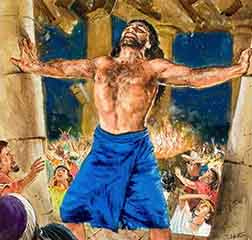
Hebrews 11 is a great chapter about blameless men, men who knew the Living God, men and women who saw Him by faith. Anyone of these men (or women) I would love to have as an elder in my church (except Samson, because he scares me).

Hebrews 11:13-16 These all died in faith, not having received the things promised, but having seen them and greeted them from afar, and having acknowledged that they were strangers and exiles on the earth. For people who speak thus make it clear that they are seeking a homeland. If they had been thinking of that land from which they had gone out, they would have had opportunity to return. But as it is, they desire a better country, that is, a heavenly one. Therefore God is not ashamed to be called their God, for he has prepared for them a city.

They are giants of the faith because they dared to see the invisible. They dared to believe the impossible. They set God before them in their life’s journey.

They were not perfect, they made their mistakes, but they were blameless because they lived by faith in God and they did not allow the godless culture around them to drag them down. In fact, their home was not of this world. They looked for the city of God! But something amazing and even unbelievable is written in Hebrews 11:39-40.

As blameless and upright as they were, they cannot be made perfect without you and me!

Hebrews 11:39-40 And all these, though commended through their faith, did not receive what was promised, since God had provided something better for us, that apart from us they should not be made perfect.

Why? Because none of us is blameless and perfect without Jesus Christ! He is the something “better”! We share in the heritage of these giants of the faith when we by faith walk and live in Jesus Christ. We are BLAMELESS in Christ!

Blameless Men are first and foremost Living in Jesus Christ!

Jesus was called amomos-no internal sin and aspilos-no external sin, but was never called amemptos (without accusation or reproach), because Jesus said in Luke 6:26 – “Woe unto you when all men shall speak well of you”

Although our Lord in 1 Pet. 1:19 is called ámōmos, without internal sinfulness and spot, and áspilos, without external sin or spot, He is never said to be ámemptos, without accusation or reproach, as He Himself taught in Luke 6:26: “Woe unto you, when all men shall speak well of you.” Although He Himself was without internal and external spot or blemish, yet there were those who spoke evil of Him or who brought momphé <G3437>, blame, against Him which led to His death.[2]

With regard to Titus, he was to ordain Elders who had exemplary lives as far as their civil obedience and family commitment. The Overseers of the Church are to be living examples of the blamelessness of Jesus Christ.

„ Any righteous man regardless of faith in Christ can pass an FBI ‘vetting’ process. „ But can you pass the GOD vetting process? Only if you are living in the power of the righteousness of Jesus Christ!

 1.  True Blamelessness is only in Jesus Christ (on the inside)

  • 1 Thessalonians 3:12-13 and may the Lord make you increase and abound in love for one another and for all, as we do for you, so that he may establish your hearts blameless (amemptos) in holiness before our God and Father, at the coming of our Lord Jesus with all his saints.

2.  True Blamelessness is only through Christ (on the outside)

  • Colossians 1:22 he has now reconciled in his body of flesh by his death, in order to present you holy and blameless (amomos) and above reproach (anenkletos) before him,

3.  True Blamelessness is to those who are diligent to abide in Christ (before men)

  • 2 Peter 3:13-14 Nevertheless we, according to his promise, look for new heavens and a new earth, wherein dwelleth righteousness. Wherefore, beloved, seeing that ye look for such things, be diligent that ye may be found of him in peace, without spot, and blameless.
  • Jude 1:24 Now to him who is able to keep you from stumbling and to present you blameless (amomos) before the presence of his glory with great joy,

Elders are diligent to abide in Christ

Five descriptors tell what blamelessness is not; while seven descriptors tell what blamelessness is.
  • „Blameless as a man, and blameless in his office (bishop is an office)

Paul puts these in the form of a list, because he’s talking to Greeks.  Paul’s list shows his awareness of how the Greeks communicated virtues.  Had he been talking to a predominately Hebrew culture, he would have communicated this in the form of a parable (as Jesus did in Luke 12:42, “Who is the faithful and wise manager?”).  Elders were to be upright, not liars; holy, not evil brutes; and disciplined, not addicted gluttons. They were to be examples of what the culture was not.

1.  MUST BE A GODLY LEADER OF HIS FAMILY

Titus 1:6-13 If any be blameless, the husband of one wife, having faithful children not accused of riot or unruly.

It may sound ironic, but when a leader puts his family first, the community benefits.  When a leader puts the local community or the church community first, both his family and the community suffer.  Titus 1:6 insists (along with 1 Timothy 3: 5) that starting at home is always the key to affecting others in a positive way.  Leading one’s household well gains credibility to lead the family of God.  You don’t need an MBA to manage God’s church; but you do need a mature marriage and strong parenting skills.  (Maxwell 2007, 30)

It is inaccurate to think of the elders primarily as a board of directors overseeing a 501(c)3 tax exempt non-profit organization; or some religious version of a for-profit corporation.  It is misguided to think of the eldership like the United States Senate, or some power-based body.  When we do that, we will inevitably get frustrated at the comparison because the church will seem so back-woods.  We read Titus 1 about the elder being the husband of one wife and children who must not be incorrigible.  We think, “What’s up with that?  What’s Paul got against women?   And what does parenting have to do with knowing how to run an organization?”

Fundamentally, the church is a family.  In Titus, local churches met—not in mortgaged facilities—but in homes!   Titus 2 lists the typical groups in a family structure!   So, the church is a family.  God’s plan for the organization and leadership of the local church family is derived from His plan for the organization and leadership of the nuclear family.  As husbands/fathers in marriage/family have been divinely called as servant-leaders to initiate in providing and protecting the family entrusted to them, so such godly husbands/fathers are divinely called to the stewardship of providing and protecting the spiritual church family.   The family and the church family are the only two places where God has called and expects godly, Cross-bearing, Christ-focused husbands/fathers to be the initiating servant-leaders.   Headship is not about “calling the shots” or being “bossy” or “getting the final say” or having the “final word”; headship is the divine calling to be the first to be nailed to the cross.  To be the first to feed the sheep, protect the sheep, and stay up all night to watch the sheep; and if need be, lay one’s life down for the sheep. Furthermore, a spiritually healthy eldership will ensure that all the gifts from all the believers—children, students, women, men—are being fully utilized for the building up of the entire church family! 

2.  MUST BE DILIGENT STEWARDS OF GOD

For a bishop must be blameless, as the steward of God;

a.  THE DON’TS:

    • „ not self-willed,
    • „ not soon angry,
    • „ not given to wine,
    • „ no striker,
    • „ not given to filthy lucre;

b.  THE DO’S

    • „ But a lover of hospitality,
    • „ a lover of good men,
    • „ sober,
    • „ just, (conformance to man’ laws)
    • „ holy, (conformance to God’s laws)
    • „ temperate;

3.  MUST BE A TEACHER & DEFENDER OF THE WORD

„ Holding fast the faithful word as he hath been taught, that he may be able by sound doctrine both to exhort and to convince the gainsayers.
Elders are to protect believers from false teaching by teaching sound doctrine and refuting inaccuracies about Christ and the Gospel. The Gospel that has transformed these elders!  They’d better master that which has mastered them!   Those who were once foolishly enslaved, and deceived (3:3) have been changed by the best news ever—the Grace of God has appeared!  Grace has come to prodigals and predators—and now some of them are elders!  Only Jesus can do that!  

4.  WHY ELDERS?

Only a transformed liar can reach other liars. Only one who stands against the culture can transform the culture.

For there are many unruly and vain talkers and deceivers, specially they of the circumcision: Whose mouths must be stopped, who subvert whole houses, teaching things which they ought not, for filthy lucre’s sake. One of themselves, even a prophet of their own, said, The Cretians are alway liars, evil beasts, slow bellies. This witness is true. Wherefore rebuke them sharply, that they may be sound in the faith;

Our culture needs rescuing. Our society is failing. We need men and women of faith, not afraid to see Him who is invisible, Not afraid to follow Him who the world mocks and jeers at. Not afraid to stand counter to their culture, to show them the way to Jesus Christ.

The people are going down a slippery slope, after money, after themselves. They need to see visible evidence of the power of Jesus Christ!
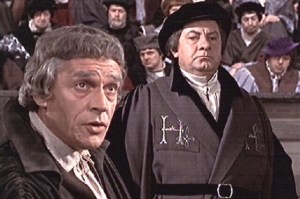
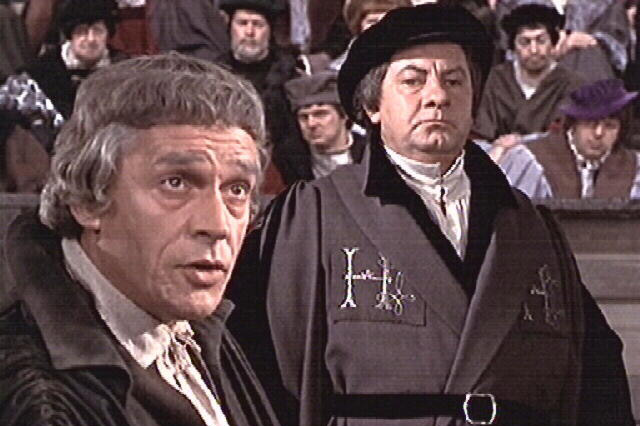
Sir Thomas More, Lord Chancellor of England in the early 1500’s was known as the man for all seasons, for he stood against King Henry VIII who made a mockery of the church and divorced Catharine of Aragon for Ann Boleyn. His stand cost him his head, but his influence upon the politics of England endured for centuries. He was called the man for all seasons!

Elders are men for all seasons! In season, out of season, they stand upon Jesus Christ. They hold fast to His Word. They follow Him who is invisible!

Reinhold Messner became famous as the first person to climb Mt Everest without supplemental oxygen. In fact, he has climbed all 14 mountains over 26,000 feet without oxygen.

Yet, one day between his conquests, he found himself locked out of his house, and was climbing his fence to reach an upstairs window when he fell, injuring his leg. I thought to myself, here was a man who could conquer mountains, but could not conquer his home. We need men of God who lead their homes in following God, and in so doing, they conquer the world with the Power of Christ!

What good does it do if he succeeds in the world but fails at home? God needs men of the Word who conquer at home, live Christ at Home, raise families devoted to God’s Word and change the godless culture of the world around them!


[1] Spiros Zodhiates, The Complete Word Study Dictionary – New Testament, (Chattanooga, TN: AMG Publishers, 1993), WORDsearch CROSS e-book, Under: “ámemptos”.

[2] Spiros Zodhiates, The Complete Word Study Dictionary – New Testament, (Chattanooga, TN: AMG Publishers, 1993), WORDsearch CROSS e-book, Under: “áspilos”.


God is a Life or Death choice…

God is the definition of life. God is all about life. When he created this world He placed life on it and said go forth and be fruitful and multiply. He set a tree of life at its center. Satan came along and struck at the very heart of God by setting death loose. Satan is all about death and decay. Sin is death and decay. When man lives without setting God before Him as God, man is apart from life. Whether you are Christian or not, Muslim or not, Mormon or not, the choice as far as God is concerned, is life or death. God’s way always leads to life. Man’s way always leads to death. LIFE IS A CHOICE!

Deuteronomy 30:19-20 I call heaven and earth to witness against you today, that I have set before you life and death, blessing and curse. Therefore choose life, that you and your offspring may live, loving the LORD your God, obeying his voice and holding fast to him, for he is your life and length of days, that you may dwell in the land that the LORD swore to your fathers, to Abraham, to Isaac, and to Jacob, to give them.” Joshua led the Israelites into the promised land.

Christ is the Life of man!

Jesus said that He is the life, that He is the only way to God the Father. While many of us have come to Jesus Christ to obtain eternal life, many of us have failed to take hold of the LIFE that Jesus wants us to live NOW! It is a life that is not dependent upon your sight, your flesh, your strength, or your wisdom. It is a LIFE that through faith and the Word sees Jesus Christ ever before you, living in you, living through you and living for you.

Galatians 5:25 says that if you have life by the Spirit, then walk by the Spirit!

I want to begin a study toward the end of the New Testament. Today we look at Titus. If the Lord leads we will spend the next two years walking toward Revelation. Wednesday’s we will begin in Genesis and walk through the Old Testament. From time to time we will join the two together, as I will this morning, as I tie Hosea 4:6 to Titus 1:1-4

Destroyed (silenced) for a lack of knowledge

Hosea 4:6 My people are destroyed for lack of knowledge[1],[2]; because you have rejected knowledge, I reject you from being a priest to me. And since you have forgotten the law of your God, I also will forget your children. 

Spoken to the PRIESTS! They were not making sure the Jews were experiencing God in the reality of everyday living! (This knowledge used is that which comes from an encounter and experience. They probably knew scriptures, participated in memory drills, had the scriptures hanging on their walls, but they had long ago stopped having a fresh encounter with the author of the Scriptures.)

The background of their sin was a lack of an encounter with God through His Word. “My friend, if you are a Christian, the minute you get away from the Word of God, you are doomed to failure in the Christian life. Regardless of the number of conferences or seminars you attend that tell you how to be a success in your home, in your business, and in your social life, you will be a failure”.[3]

Man’s way – failure and death

Proverbs 14:12 There is a way that seems right to a man, but its end is the way to death.

My people are silenced for lack of knowing me!
  • (knowledge and discernment which comes from an experience or encounter)
1. The people are lacking in their relationship with God.

Hosea 4:1 …There is no faithfulness or steadfast love, and no knowledge of God in the land;

  • „ Neglect, busyness, priorities, excuses, hurts.
  • „ God is ignored, forgotten, neglected and even spurned.
2. Neglect turns into rejection of God and His ways
  • „The pull of this world system is too powerful
  • Our hearts are too deceptive
  • Our heart gets cold, our faith is stale.
  • We go through our day without a fresh touch from God.
  • We barely hold on to believing faith
  • We live the majority of our lives without Him.
3. Rejection of God leads to Him rejecting you.
  • „ No longer a priest, able to go directly to Him
  • „ You have lost your standing, your voice.
  • „ Your heart has become a barrier to a living relationship with God.
  • „ Your pride has become a brick wall.
  • „ God is a jealous God. He must be first, or He will move on.
 4. You will be Silenced
  • „ Overcome, cut off, made to cease– silenced.
  • „ No longer have a voice
  • „ Doesn’t necessarily mean death-but rather you have lost your significance with God.
  • „ The Jews would lose their voice and blessing from God.
  • „ God left them to their own devices.
5. God will forget your children.
  • „ Through your forgetting of the Law of God in your life and home…
  • „ God will forget your children.
  • „ Your children will not matter with God.
  • „ His grace will not be at work in their lives.
  • „ They will not hear God’s voice.
  • „ They will not encounter God in their lives.

Hosea 4 indicates what happens when we forget Him. Our worship becomes comfortable and convenient. We worship other things. The family breaks down. There is great immorality among the youth. Wives become immoral. Marriage becomes a joke. The family breaks down.

Proverbs 1:29-31 Because they hated knowledge and did not choose the fear of the LORD, would have none of my counsel and despised all my reproof, therefore they shall eat the fruit of their way, and have their fill of their own devices.

What is God’s Way? – Success & Life!

The major thrust of Titus, while bearing on our relationships, is really upon  personal character and lifestyle which grow out of the truth. God’s Word is to be encountered, for it will change your character. Christ in you will result in a new Jim or Larry or Beth or Mary. God’s Word is never empty, but always leads to LIFE!

True LIFE is never apart from God, but in God!

Titus 1:1-4 Paul, a servant of God and an apostle of Jesus Christ, for the sake of the faith of God’s elect and their knowledge of the truth, which accords with godliness, in hope of eternal life, which God, who never lies, promised before the ages began and at the proper time manifested in his word through the preaching with which I have been entrusted by the command of God our Savior; To Titus, my true child in a common faith: Grace and peace from God the Father and Christ Jesus our Savior.

A. Paul-Focus on the Living Savior

Paul opens the veil of his life. He wants Titus to know the motivation of his life and ministry. He reminds Titus that he has the imprint of two indelible marks upon his life.

1. He is a bond-servant to God

2. He is an apostle of Jesus Christ, personally commissioned by Him.

Everything about Paul’s life bore those two marks. Everywhere he went, people knew that Paul belonged to God, and that he was representing a living Savior, whom Paul personally knew and spent time with. People could ignore the message, but they could never forget the man. Paul belonged to God, and Paul knew Jesus Christ. There was no denying that Paul was not his own. You had to be impressed with the effect that Jesus had on Paul’s life. This message to Titus is all about how the truth of Jesus Christ changes your life. The Life of Jesus impacts your life.

Paul once though he was alive. But he realized he was dead to God.

Eph 2:1 –you were dead in trespasses and sin.

Paul saw Jesus Christ on that road to Damascus. When he saw Jesus as the Christ, his life was forever changed.

B. Paul-with a Message of Life

1.    For the sake God’s elect

a)  For their faith

b)  For their knowledge of the truth

Paul desires us to see God, to see Him at work in our lives. This only grows through fresh encounters with the Word of truth.

What are you facing in your life that has you boxed in? Instead of your problem driving you to God’s word, you spend your time arguing, your sleeping time frustrated. There is no peace. Faith opens your eyes to see God in whatever situation you are struggling with. Without the Word of truth, your eyes will be shut.

2.    For the hope of Eternal Life

a)  Promised by God

b)  God never lies

God has always focused on LIFE God is jealous for me to experience life! Not a frustrated, defeated life, but a victorious, joy-filled life!

Look at God’s Love for LIFE!

  • In the Garden of Eden

„ God guarded against all that which of Life would destroy life.

„ After the fall, God had to guard life by casting man out

  • The Tree of Life will be in heaven-yielding fruit once a month

„ Sin has been dealt with

„ Only those who know life through Jesus will be allowed to eat.

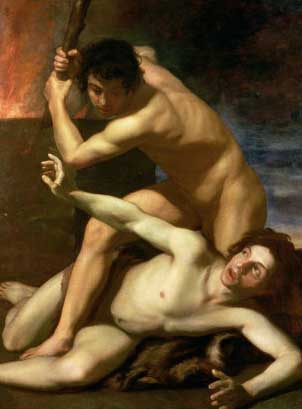
  • Cain and Able

„ Blood cries from the ground

„ Cursed Cain for taking life

  • Noah

„ Genesis 9:6 “Whoever sheds the blood of man, by man shall his blood be shed, for God made man in his own image.

„ You will never gain by taking a man’s life. You will lose

  • Enoch

„ Walked with God and had life

  • Abraham & Isaac

„ Isaac must come into death so death can be destroyed,

„ God’s purpose is that death is past, and not future.

„ God wants us to always have life without fear

„ In Christ, death is past, life is now and in the future

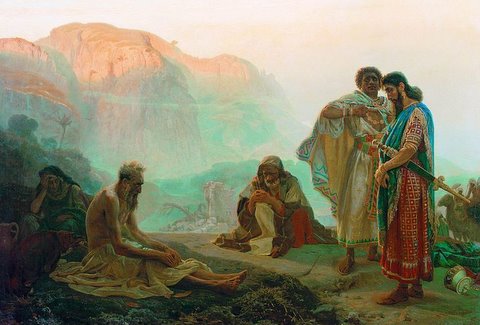
  • Job

„ Satan: “Skin for skin, yea, all that a man hath will he give for his life. But put forth thine hand now, and touch his bone and his flesh, and he will renounce thee to thy face.”

„ God: “… Only spare his life.”

„ Controversy for life is the theme of Job

„ Satan could only indirectly try to take Job’s life: Satan’s indirect method is to move Job to break with God by cursing Him, so that his life is forfeited and destroyed

„ With God is life, even from trials.

„ Trials with God always lead to increase!

„ Trials always lead to Revelation 22

Revelation 22:1-4 Then the angel showed me the river of the water of life, bright as crystal, flowing from the throne of God and of the Lamb through the middle of the street of the city; also, on either side of the river, the tree of life with its twelve kinds of fruit, yielding its fruit each month. The leaves of the tree were for the healing of the nations. No longer will there be anything accursed, but the throne of God and of the Lamb will be in it, and his servants will worship him. They will see his face, and his name will be on their foreheads.

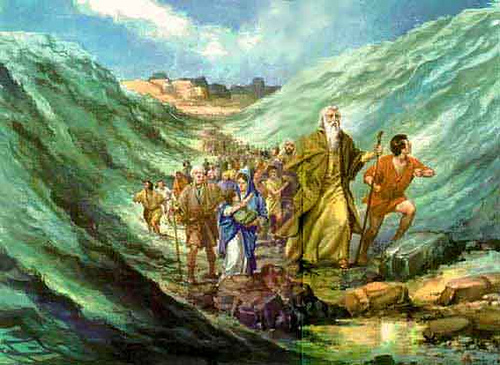
  • The Exodus

„ Life in the face of death

  • Levitical Laws of Life

„ Always about protecting life and health

„ Guarding the life of the family and nation.

„ Don’t drink blood…

Life Is Sacred To God, And He Is Intensely Jealous Over It.
God wants us to LIVE, but LIFE is in GOD! In order to know true LIFE, we must die to our self and LIVE to God through Jesus Christ! This way, death will be past. There is no more fear of death, for we will experience God’s LIFE forever!
Sin And Death Always Go Together Just As Righteousness And Life Go Together

There is a way that seems right to a man.

I was asked to go talk to a step-father-in-law by one of the gals at EBC. He was a KS Highway Patrol officer, close to retirement, whose job it was to investigate accidents. He had seen every imaginable thing-gory, bloody and horrendous. He was a functional alcoholic. It was 9:30 Saturday morning, and I could smell the alcohol on his breath. We started talking about God in his front yard, where he was doing some yard work. He very quickly turned the conversation to his standard answer-God is everywhere. God is in the trees, in the flowers. He felt close to God when he was working in his yard.

When asked about his relationship with God’s Son, he said that he has God and that is good enough. In reality, while he though God was all around him, God had forgotten him, and life was escaping him. Death was his life now, for he did not know God in reality. His sins had not been forgiven. The pain of his life was being drowned out by alcohol. He was fooling himself. His ways seemed right, but they were the ways of death. He had been deceived.

Genesis 3:13 Then the LORD God said to the woman, “What is this that you have done?” The woman said, “The serpent deceived me, and I ate.”

Satan is a deceiver. Eve ate because she wanted to be like god. Instead she became like the serpent, cursed and with a death sentence upon her.

Chose life or chose death. You may think you have life, even surround yourself with life, but you are deceived. You are facing death.

There is only one who faced death and conquered it. There is only one who defeated sin, and satisfied the righteous demands of our Holy God.

Jesus Christ, the way the truth and the life. No man comes to the Life of God but through Him!

If life is in Christ, don’t you want to know more of Him?

If you are not satisfied with your life, you need to know Jesus Christ in a living way! Christ is the Life of Man!

[1] daʿat̠: A feminine noun meaning knowledge, knowing, learning, discernment, insight, and notion. The word occurs forty of its ninety-one times in Proverbs as one of the many words associated with the biblical concept of wisdom. The root meaning of the term is knowledge or knowing. In Proverbs 24:3, 4, it is the third word in a chain of three words describing the building of a house by wisdom, the establishment of that house by understanding, and finally, the filling of the rooms of the house by knowledge.

The word is also used in the sense of knowing by experience, relationship, or encounter. For example, Balaam received knowledge from the Most High who met him in a vision (Num. 24:16); the knowledge gained by the suffering Servant of Isaiah justified many people (Isa. 53:11); and to truly know the Holy God leads to real understanding (Prov. 9:10). This moral, experiential knowledge of good and evil was forbidden to the human race in the Garden of Eden (Gen. 2:9, 17). Warren Baker and Eugene Carpenter, The Complete Word Study Dictionary – Old Testament, (Chattanooga, TN: AMG Publishers, 2003), WORDsearch CROSS e-book, 245.

[2] The word meaning “knowledge” in Hebrew is daʿat, a noun coming from the root of the verb yadaʿ, “to know,” “to experience,” “to acknowledge.” This key word in the Old Testament includes both intellectual and experiential knowledge. The noun for knowledge, daʿat, also has this range of meaning.. Carpenter Eugene E. and Comfort Philip W., Holman Treasury of Key Bible Words: 200 Greek and 200 Hebrew Words Defined and Explained, (Nashville, TN: Broadman & Holman, 2000), WORDsearch CROSS e-book, 106.

[3] J. Vernon McGee, Thru The Bible with J. Vernon McGee, (Nashville, TN: Thomas Nelson, 1983), WORDsearch CROSS e-book, Under: “Chapter 4”.