Posts Tagged ‘Jesus’


Total Health

is “the dynamic and harmonious interaction of spirit, soul and body in the absence of mental, emotional or physical sickness or disease”.

“Now may the God of peace himself sanctify you completely, and may your whole spirit and soul and body be kept blameless at the coming of our Lord Jesus Christ. He who calls you is faithful; he will surely do it”. 1 Thessalonians 5:23-24

To be sanctified is to withdraw your spirit, soul and body from the unhealthy entanglements of our corrupt culture and experience true fellowship with the God of peace.

We are made of three distinct parts: spirit, soul and body. Total Health involves an understanding of how these interact with each other.

We are made in God’s image, and that means we are like God who “is a Spirit, and they that worship Him must worship in spirit and truth”.

There are three different laws operating within us-law of the spirit, law of the mind (soul), and the law of sin in the body (Romans 7:22-8:1)

When these three laws are in conflict with one another, we will experience stress, disease and even premature death. When they are in harmony with one another, we will experience health, peace and life.

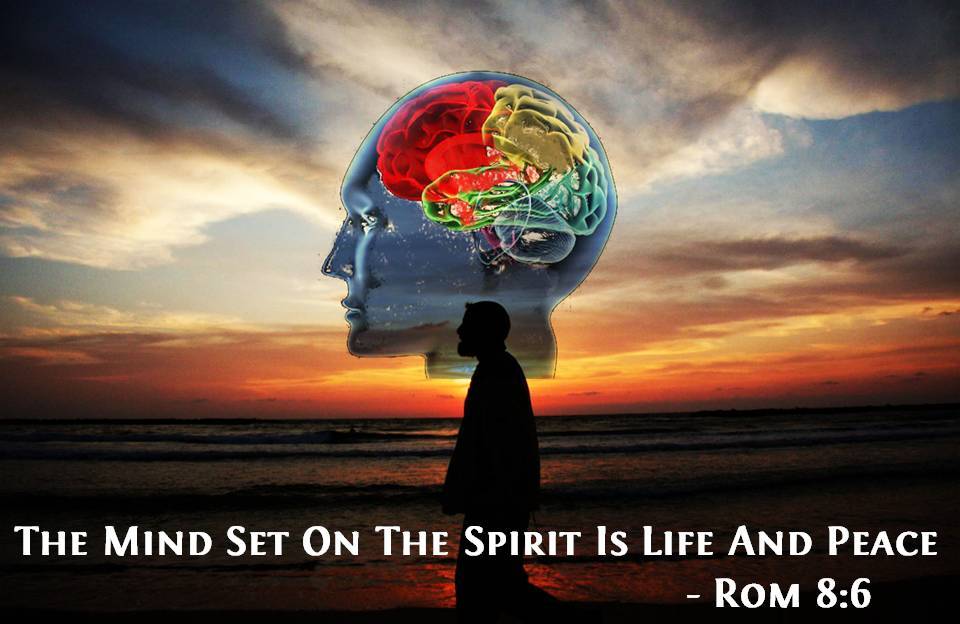
“For to set the mind on the flesh is death, but to set the mind on the Spirit is life and peace”. Romans 8:6

“Beloved, I pray that all may go well with you and that you may be in good health, as it goes well with your soul”. 3 John 1:2

The Goal of Total Health

Total Health is not perfect health. Perfect health is not possible for we are all in the process of dying physically.

Though our outer self is wasting away, our inner self is being renewed day by day. 2 Corinthians 4:16

Total Health is the ability to fulfill the purposes for which God created you. Before we were even born, God designed us to carry out great works.

For we are his workmanship, created in Christ Jesus for good works, which God prepared beforehand, that we should walk in them. Ephesians 2:10

Our identity and fulfillment in life is to carry out these great works. We do not want any sickness or disease to hinder us from carrying out our life purpose. We have a limited number of days in which to accomplish the great works for which God brought us into this world. Our focus should not be on having better health but on completing our life purpose.

We were designed before conception

“Before I formed you in the womb I knew you, and before you were born I consecrated you; I appointed you a prophet to the nations.” Jeremiah 1:5

For you formed my inward parts; you knitted me together in my mother’s womb. I praise you, for I am fearfully and wonderfully made. Wonderful are your works; my soul knows it very well. Psalms 139:13-14

God promised His people that if they would love Him and keep His commandments, He would bless them more than all the other peoples of the earth:

And the Lord commanded us to do all these statutes, to fear the Lord our God, for our good always, that he might preserve us alive, as we are this day. And it will be righteousness for us, if we are careful to do all this commandment before the Lord our God, as he has commanded us.’ Deuteronomy 6:24-25

You shall be blessed above all peoples. There shall not be male or female barren among you or among your livestock. And the Lord will take away from you all sickness, and none of the evil diseases of Egypt, which you knew, will he inflict on you, but he will lay them on all who hate you. Deuteronomy 7:14-15

“And if you faithfully obey the voice of the Lord your God, being careful to do all his commandments that I command you today, the Lord your God will set you high above all the nations of the earth. And all these blessings shall come upon you and overtake you, if you obey the voice of the Lord your God. Blessed shall you be in the city, and blessed shall you be in the field. Blessed shall be the fruit of your womb and the fruit of your ground and the fruit of your cattle, the increase of your herds and the young of your flock. Blessed shall be your basket and your kneading bowl. Blessed shall you be when you come in, and blessed shall you be when you go out. Deuteronomy 28:1-6

Total Health: Being Made “Whole”

On the way to Jerusalem, he was passing along between Samaria and Galilee. And as he entered a village, he was met by ten lepers, who stood at a distance and lifted up their voices, saying, “Jesus, Master, have mercy on us.” When he saw them, he said to them, “Go and show yourselves to the priests”. And as they went, they were cleansed (katharizo). Then one of them, when he saw that he was healed, turned back, praising God with a loud voice; and he fell on his face at Jesus’ feet, giving him thanks. Now he was a Samaritan. Then Jesus answered, “Were not ten cleansed? Where are the nine? Was no one found to return and give praise to God except this foreigner?” And he said to him, “Rise and go your way; your faith has made you well.” Luke 17:11-19

1. Cleansing the Blood
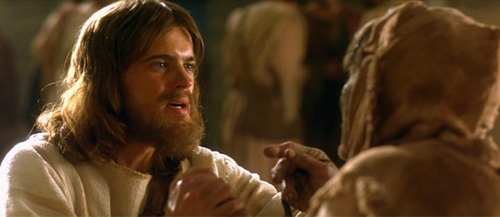
As they went, they were cleansed.

katharízō; from katharós , pure. To cleanse, free from filth[1]; “to cleanse, make clean”,[2]

In a physical sense, this would refer primarily to the circulatory system, because the “life of the flesh is in the blood” (Lev. 17:11)

In a spiritual sense, to purify from the pollution and guilt of sin (Acts 15:9; 2 Cor. 7:1; Eph. 5:26; Titus 2:14; Heb. 9:14; James 4:8; 1 John 1:7, 9;[3]

In a spiritual sense, ‘katharizo’ refers to the removal of the pollution and guilt of sin.

2. Healing the Flesh

One of the lepers looked at his flesh and saw that he was healed which is “iáomai”; to heal, cure, restore to bodily health.[4] The physical symptoms of the disease had disappeared.

When our blood is cleansed of its impurities, the flesh can be restored to health.

3. Achieving Wholeness

Simply removing the distressing condition of the disease is not total health. Total health involves a restored relationship with God and the accompanying signs of joy, freedom, and inward peace.

The leper who returned to give thanks was the only one that Jesus told, “Rise and go your way; your faith has made you well”. Well or whole is the word ‘sózō’.

Sózō; to save, deliver, make whole, preserve safe from danger, loss, destruction. Sózō occurs fifty-four times in the Gospels. Fourteen relate to deliverance from disease or demon possession. Twenty instances, the inference is to the rescue of physical life from some impending peril or instant death. The remaining twenty times, the reference is to spiritual salvation[5]

Three Aspects of Salvation

1. Salvation of the Spirit
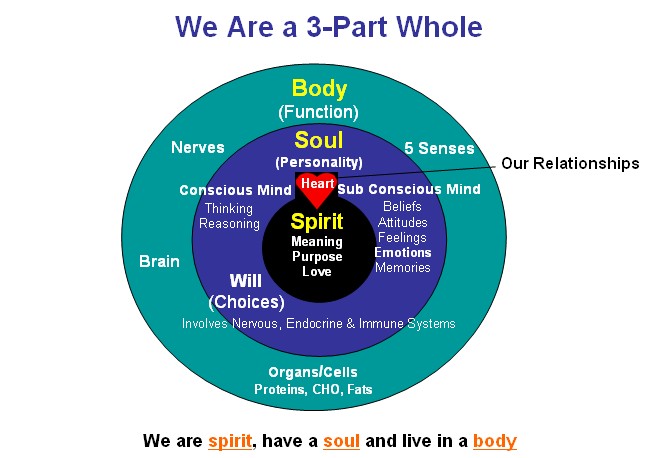
Eternal Salvation of our spirit. This is the New Birth spoken of in John 3. This is what Paul described in Romans 10:

Because, if you confess with your mouth that Jesus is Lord and believe in your heart that God raised him from the dead, you will be saved (sózō). For with the heart one believes and is justified, and with the mouth one confesses and is saved. For the Scripture says, “Everyone who believes in him will not be put to shame.” For there is no distinction between Jew and Greek; for the same Lord is Lord of all, bestowing his riches on all who call on him. For “everyone who calls on the name of the Lord will be saved (sózō)”. Romans 10:9-13

2. Salvation of the Soul

The regeneration and salvation of our spirit is instantaneous. The salvation of our soul (mind, will and emotions) is a continual process. It is accomplished through the control of the Holy Spirit in conjunction with the washing of the Word of God. As we read and meditate on God’s Word, we build a Biblical belief system. This is what James was writing about:

Therefore put away all filthiness and rampant wickedness and receive with meekness the implanted word, which is able to save (sózō) your souls. James 1:21

The wholeness, soundness and health of our soul has a direct effect upon our physical health. This is the meaning of John’s greeting:

“Beloved, I pray that all may go well with you and that you may be in good health, as it goes well with your soul”. 3 John 1:2

3. Salvation of the Body

The “wholeness” or “wellness” of our physical body is contingent upon obedience to God’s moral standards.

Do not be deceived: God is not mocked, for whatever one sows, that will he also reap. For the one who sows to his own flesh will from the flesh reap corruption, but the one who sows to the Spirit will from the Spirit reap eternal life. Galatians 6:7-8

When a member of the Corinthian church committed gross immorality, Paul commanded

When you are assembled in the name of the Lord Jesus and my spirit is present, with the power of our Lord Jesus, you are to deliver this man to Satan for the destruction of the flesh, so that his spirit may be saved in the day of the Lord. 1 Corinthians 5:4-5

Three Primary Factors that Contribute to Health

1. Genetic Tendencies

We all inherit tendencies toward certain diseases based on weaknesses in our genetic makeup. They do not have to become diseases if we follow God’s way of life.

The challenge of finding hereditary disease genes:

Our expectation is that the characterization of a disease- instigating gene will greatly assist our understanding of how and why it causes a malfunction in the body. It makes good sense to go to the root of the problem. But to learn a gene’s secret, first you must find it. And finding it is not so simple. It is much easier to locate the neighborhood in the genome where a gene resides than it is to determine its exact address.

Lilliput and Brobdingnag: Beyond Gulliver’s Travels. The magnitude of the challenge arises from the vast amount of DNA contained in the diploid human genome, which includes all of a person’s genetic material. If strung out, the DNA in a single human genome would stretch to about two meters, but the diameter of the strand would amount to only about two billionths of a meter, 20 angstroms, a span a hundred times smaller than a wavelength of light. If the DNA from a single cell from every human being on the planet — 6 billion people — were stitched end to end, the resulting string would girdle the earth about 300 times. If the genomes from every cell of the 6 billion people were laid out end to end, they would extend 700 billion, billion miles — enough to wrap around our galaxy more than 700 times.

To understand the enormous problem of finding a gene somewhere on an individual’s strand of DNA, imagine that a single human genome is long enough to circle the globe. On this scale, the amount of DNA in a chromosome would extend for a thousand miles. A gene would span just one twentieth of a mile, and a disease-causing defect — a point mutation, a change in only one DNA base pair — could run as short as one twentieth of an inch. What we are thus searching for is comparable to a fraction of an inch on the circumference of the globe! In this immense morass of DNA, finding the exact address of a gene and pinpointing its fault makes for extremely tough going, and it requires all of the creativity and ingenuity of everyone engaged in the quest.[6]

An example of genetic tendencies in one family:

We were looking for a large extended multigenerational family in which we could observe many instances of the Huntington’s disease gene or its normal counterpart being passed on — and we knew of just such a family. Members of the kindred live in Venezuela in three rural villages — San Luis, Barranquitas, and Laguneta — on the shores of Lake Maracaibo. Because it is situated in the northern region of Latin America and Lake Maracaibo is actually a huge ocean gulf, Venezuela has long communicated directly with Europe, and many European genes have appeared in the local population. Story has it that some sailor with Huntington’s disease came over to trade and left his legacy, but we do not know if this is apocryphal.

We have been able to trace the disease as far back as the early 1800s, to a woman appropriately named Maria ConcepciÛn. We know that Maria lived in the “pueblos de agua,” villages built on stilts in the water next to shores too marshy, jungly, and inhospitable to accommodate human life. Laguneta, where many of Maria’s descendants live, remains such a stilt village.

Maria was the founder of a kindred now numbering close to 11,000 people, living and deceased. In the pedigree, there are 371 persons with Huntington’s disease, 1,266 at 50 percent risk and 2,395 at 25 percent risk for the disease. Of the 11,000, 9,000 are living and the majority are under the age of forty. In these small and impoverished towns, we estimate that there are over 660 asymptomatic gene carriers who are too young to show symptoms, but as years pass — if no treatment is found — they will surely die. It is crushing to look at these exuberant children full of hope and expectation, despite poverty, despite illiteracy, despite dangerous and exhausting work for the boys fishing in small boats in the turbulent lake, or for even the tiny girls tending house and caring for ill parents, despite a brutalizing disease robbing them of parents, grandparents, aunts, uncles, and cousins — they are joyous and wild with life, until the disease attacks.[7]

2. Physical Constitution

We can inherit a strong physical constitution from our parents, yet through immoral or wild living pass along a weaker constitution to our children and grand children.
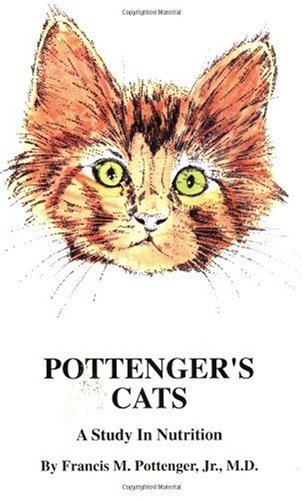
In the 1940’s Francis M. Pottenger (not Pottinger) M.D. began a ten year study using 900 cats to determine what effects processed foods have on the body, and to examine the genetic propensity of passing degenerative disease traits from generation to generation. The cats were divided into five groups with two of the groups fed raw whole foods and the other three groups cooked enzyme less foods. The cats were observed over a four generation period and the following results were documented by Doctor Pottenger:[8]

POTTENGER CAT EXPERIMENT SUMMARY

GROUP A B C D E
FOOD FED Raw meat Raw milk Pasteurized milk Evaporated milk Condensed milk
1st Generation Remained healthy Remained healthy Developed diseases and illnesses near end of life
2nd Generation Remained healthy Remained healthy Developed diseases and illnesses in middle of life
3rd Generation Remained healthy Remained healthy Developed diseases and illnesses in beginning of life; many died before six months of age;
4th Generation Remained healthy Remained healthy No fourth generation was produced: either third generation parents were sterile, or fourth generation cats were aborted before birth

Source: Pottenger’s Cats, a Study in Nutrition

3. Various Stresses

Whether our genetic tendencies and weak constitution will result in diseases will be determined primarily by stresses in our lives (because of what we say, think and do).

There can be many causes of stress, such as time constraints, having too much to do, and having too many bills and not enough funds.

However, the greatest stresses come from inward attitudes such as anger, guilt, lust, bitterness, greed, fear and envy. These destroy the immune system.

Is Total Health Healing?

Total healing is not possible on earth, because the sentence of death and the curse of sin have been placed on the physical body of every person.

Total Health refers to fulfilling the number of years for which God designed us to serve Him and the quality of life we need to carry out the work He has created us to accomplish.

There are three types of illnesses given in Scripture. When you develop an illness, discern which of these types you are experiencing. Then, carry out the appropriate Biblical responses.

1. Sickness unto Death

As a believer in the Lord, you are indestructible until your work on earth is done. As one preacher said: “you are bulletproof!” Once you finish your work, there is no point in staying around here. It is far more glorious to be in the presence of the Lord!

If a believer has what the doctors describe as a terminal illness, but he believes that his work is not yet done, he can appeal to God for healing-not just to extend his life but to accomplish the work that God has called him to do.

This was the basis for David’s prayer in his old age:

O God, from my youth you have taught me, and I still proclaim your wondrous deeds. So even to old age and gray hairs, O God, do not forsake me, until I proclaim your might to another generation, your power to all those to come. Psalms 71:17-18

In order to have this outlook on life and death, we must be good stewards of the time God has entrusted to us. We should be continually looking for better ways to redeem every hour by keeping it from going to waste and choosing the most profitable activities to advance God’s Kingdom.

If you were told today that you have a terminal disease, what reason would you give God for keeping you alive?

2. Sickness unto Chastisement

There are physical, emotional and spiritual consequences for violating God’s Laws. The most severe come to those who chose to violate His laws dealing with morality. If we cater to our fleshly wants, we shall reap the corruption of the flesh as Galatians 6:7 states.

The Bible also mentions specific consequences to those who dishonor their parents (Prov 30:17), violate God’s dietary restrictions (I Peter 1:15-16, Leviticus 11:44ff)

There are cause and effect health consequences when we violate God’s commands. In His mercy, God has established the communion table a place for thorough self-examination. Carry it out with the utmost care.

Careless Communion results in what Paul described:

“For anyone who eats and drinks without discerning the body eats and drinks judgment on himself. That is why many of you are weak and ill, and some have died. 1 Corinthians 11:29-30

If you are sick, ask yourself, is this God’s way of chastening me for not following His way of life? Consider the state of your soul as well:

  • Am I withholding forgiveness from someone who has hurt me deeply?
  • Am I resentful or regretful over something in my past, either because of someone else or my own actions?
  • Is there anything in my past for which I cannot bring myself to thank God for?
  • Are there any private sins that I cherish without confessing and repenting before Holy God?
  • Is there anything in my past that I have not found forgiveness for, and when reminded, I immediately jump on the Ferris wheel of regret?
  • Am I quick to get frustrated and even angry when certain situations arise?
  • Are there areas of my life I refuse to submit to God’s control?

3. Sickness unto the Glory of God.

God uses infirmities, sickness and disease to bring glory to Himself.

a) He Provides Supernatural Healing

As he passed by, he saw a man blind from birth. And his disciples asked him, “Rabbi, who sinned, this man or his parents, that he was born blind?” Jesus answered, “It was not that this man sinned, or his parents, but that the works of God might be displayed in him. John 9:1-3

This infirmity was designed years before Christ healed him. Therefore, we must never attribute sickness, disease or impairment as sin on his part or his parents fault.

b) God’s Glory is Manifested in our Weakness.

So to keep me from becoming conceited because of the surpassing greatness of the revelations, a thorn was given me in the flesh, a messenger of Satan to harass me, to keep me from becoming conceited. Three times I pleaded with the Lord about this, that it should leave me. But he said to me, “My grace is sufficient for you, for my power is made perfect in weakness.” Therefore I will boast all the more gladly of my weaknesses, so that the power of Christ may rest upon me. For the sake of Christ, then, I am content with weaknesses, insults, hardships, persecutions, and calamities. For when I am weak, then I am strong. 2 Corinthians 12:7-10

God often gives us physical and even mental weaknesses to prevent us from depending on our own strength or ability rather than the supernatural working of His power.

The Five Factors Which Determine our Total Health

Sickness and disease can be associated with one or more of the following five factors. When proper care is given regarding these factors, you have the optimal potential to avoid or clear up the related diseases. The first three are the most important, according to Scripture.

1. What We Think

Intellectual thoughts travel through the limbic system of the brain, directly effecting many bodily functions. Research has proven a connection between the limbic system and emotional memory, which includes positive thoughts such as love, joy and peace; and negative thoughts such as anger, guilt, lust, bitterness, greed, fear and envy.

But what comes out of the mouth proceeds from the heart, and this defiles a person. For out of the heart come evil thoughts, murder, adultery, sexual immorality, theft, false witness, slander. These are what defile a person. But to eat with unwashed hands does not defile anyone.” Matthew 15:18-20

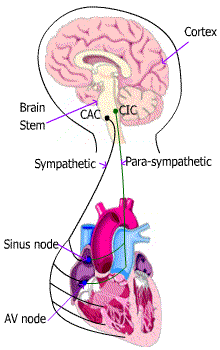
There are two parts of the nervous system that are especially significant: The limbic system and the autonomic nervous system. The Limbic System The limbic system is a complex set of structures that lies on both sides and underneath the thalamus, just under the cerebrum. It includes the hypothalamus, the hippocampus, the amygdala, and several other nearby areas. It appears to be primarily responsible for our emotional life, and has a lot to do with the formation of memories.[9]

All emotional memories are stored and can be consciously or subconsciously stimulated by the senses. The brain, the heart and the intestinal tract release neuro-transmitters that result in physiological changes. The thoughts of the heart prompt the greatest changes in the body, as it is stated in Scripture:

For as he thinketh in his heart, so is he: Eat and drink, saith he to thee; but his heart is not with thee. Proverbs 23:7

Neurotransmitters Receptors

Neurotransmitters exert their effect by binding to specific receptors on the neuronal postsynaptic membrane. A neurotransmitter can either ‘excite’ its neighbouring neuron so increasing its activity, or ‘inhibit’ its neighbouring neuron, suppressing its activity. In general, the activity of a neuron depends on the balance between the number of excitatory and inhibitory processes affecting it, and these can occur simultaneously. Most neurotransmitter receptors can be divided into two types – ligand-gated receptors and G-protein linked receptors.

Stimulation of a ligand-gated receptor  enables a channel in the receptor to open and permits the influx of chloride and potassium ions into the cell. The positive or negative charges that enter the cell either excite or inhibit the neuron. Ligands for these receptors include excitatory neurotransmitters, such as glutamate and, to a lesser extent, aspartate. Binding of these ligands to the receptor produces an excitatory postsynaptic potential (EPSP). Alternatively, binding of inhibitory neurotransmitter ligands, such as GABA and glycine, produces an inhibitory postsynaptic potential (IPSP). These ligand-gated receptors are also known as ionotropic or fast receptors.
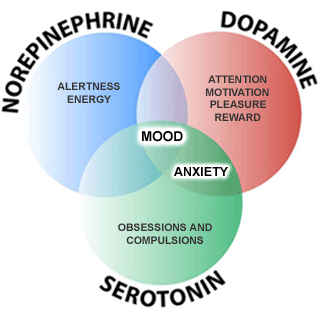
G-protein linked receptors are indirectly linked to ion channels, via a second messenger system involving G-proteins and adenylate cyclase. These receptors are neither precisely excitatory nor inhibitory and modulate the actions of the classic excitatory and inhibitory neurotransmitters such as glutamate and glycine. These receptors tend to have an inhibitory effect if they are linked to the Gi protein in the cell membrane, and a more excitatory effect if linked to the Gs protein. G-protein linked receptors are known as metabotropic or slow receptors and examples include GABA-B, glutamate, dopamine (D1 and D2), 5-HT1A, 5-HT1B, 5-HT1D, 5-HT2A,5-HT2C receptors.

Serotoning receptors

Type Distribution Postulated Roles
5-HT1 Brain, instetinal nerves Neuronal inhibition, behavioural effects, cerebral vasoconstriction
5-HT2 Brain, heart, lungs, smooth muscle control, GI system, blood vessels, platelets Neuronal excitation, vasoconstriction, behavioural effects,depression, anxiety
5-HT3 Limbic system, ANS Nausea, anxiety
5-HT4 CNS, smooth muscle Neuronal excitation, GI
5-HT5, 6, 7 Brain Not known

Noradrenaline receptors

Type Distribution Postulated Roles
Alpha1 Brain, heart, smooth muscle Vasoconstriction, smooth muscle control
Alpha2 Brain, pancreas, smooth muscle Vasoconstriction, presynaptic effect in GI (relaxant)
Beta1 Heart, brain Heart rate (increase)
Beta2 Lungs, brain, skeletal muscle Bronchial relaxation, vasodilatation
Beta3 Postsynaptic effector cells Stimulation of effector cells

Dopamine receptors

Type Distribution Postulated Roles
D1, 5-like Brain, smooth muscle Stimulatory, role in schizophrenia?
D2, 3, 4-like Brain, cardiovascular system, presynaptic nerve terminals Inhibitory, role in schizphrenia?

Acetylcholine receptors

Type Distribution Postulated Roles
M1 Nerves CNS excitation, gastric acid secretion
M2 Heart, nerves, smooth muscle Cardiac inhibition, neural inhibition
M3 Glands, smooth muscle, endothelium Smooth, muscle contraction, vasodilation
M4 ?CNS? Not known
M5 ?CNS? Not known
NM Skeletal muscles neuromuscular junction Neuromuscular transmission
NN Postganglionic cell body dendrites Ganglionic transmission[10]

[11]

The heart and brain

However, following several years of  research, it was observed that, the heart communicates with the brain in ways that significantly affect how we perceive and react to the world. It was found that, the heart seemed to have its own peculiar logic that frequently diverged from the direction of the autonomic nervous system. The heart appeared to be sending meaningful messages to the brain that it not  only understood, but also obeyed (Lacey and Lacey, 1978).

Later, neurophysiologists discovered a neural pathway and mechanism whereby input from the heart to the brain could inhibit or facilitate the brain’s electrical activity (McCraty, 2002)

The brain in the heart:

After extensive research, Armour (1994) introduced the concept of functional ‘heart brain’. His work revealed that the heart has a complex intrinsic nervous system that is sufficiently sophisticated to qualify as a ‘little brain’ in its own right. The heart’s brain is an intricate network of several types of neurons, neurotransmitters, proteins and support cells similar to those found in the brain proper. Its elaborate circuitry enables it to act independently of the cranial brain – to learn, remember, and even feel  and sense. The heart’s nervous system contains around 40,000 neurons, called sensory neurites (Armour, 1991).
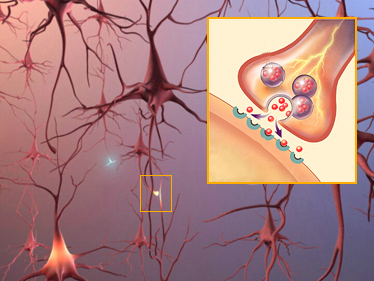
Information from the heart – including feeling sensations – is sent to the brain through several afferents. These afferent nerve pathways enter the brain at the area of the medulla, and cascade up into the higher centres of the brain, where they may influence perception, decision making and other cognitive processes (Armour, 2004).

Thus, it was revealed that the heart has its own intrinsic nervous system that operates and processes information  independently of the brain or nervous system. This is what allows a heart transplant to work. Normally, the heart communicates with the brain via nerve fibres running through the vagus nerve and the spinal column. In a heart transplant, these nerve connections do not reconnect for an extended period of time; in the meantime, the transplanted heart is able to function in its new host only through the capacity of its intact, intrinsic nervous system (Murphy, et al, 2000)

The heart’s magnetic field:

Research has also revealed that the heart communicates information to the brain and throughout the body via electromagnetic field interactions. The heart generates the body’s  most powerful and most extensive rhythmic electromagnetic field. The heart’s magnetic component is about 500 times stronger than the brain’s magnetic field and can be detected several feet away from the body. It was proposed that, this  heart field acts as a carrier wave for information that provides a global synchronizing signal for the entire body (McCraty, Bradley & Tomasino, 2004)

Heart field interactions between individuals

There is now evidence that a subtle yet influential electromagnetic or ‘energetic’ communication system operates just below our conscious awareness. Energetic interactions possibly contribute to the ‘magnetic’ attractions or repulsions that occur between individuals, and also affect social relationships. It was also found that one person’s brain waves can synchronize to another person’s heart (McCraty, 2004).

Communication via hormones: the heart as a hormonal gland

Another component of the heart-brain communication system was provided by researchers studying  the hormonal system. The heart was reclassified as an endocrine gland when, in 1983, a hormone produced and released by the heart called atrial natriuretic factor (ANF) was isolated. This hormone exerts its effect on the blood vessels, on the kidneys, the adrenal glands, and on a large number of regulatory regions in the brain. It was also found that the heart contains a cell type known as ‘intrinsic cardiac adrenergic’’ (ICA) cells. Theses cells release noradrenaline and dopamine neurotransmitters,  once thought to be produced only by neurons in the CNS. More recently, it was discovered that the heart also secretes  oxytocin, commonly referred to as the ‘love’ or bonding hormone. In addition to its functions in childbirth and lactation, recent evidence indicates that this hormone is also involved in cognition, tolerance, adaptation, complex sexual and maternal behaviours, learning social cues and the establishment of enduring pair bonds. Concentrations of oxytocin in the heart were found to be as high as those found in the brain (Cantin & Genest, 1986).[12]

2. What We Say

God states, “Death and Life are in the power of the tongue”[13]. Positive words produce energy for health and peace, whereas negative words result in confusion and disease.

Positive words can be expressed in praise, verbal blessings, audible prayers and cries to God. The Words of God are alive and powerful:

For the word of God is living and active, sharper than any two-edged sword, piercing to the division of soul and of spirit, of joints and of marrow, and discerning the thoughts and intentions of the heart. Hebrews 4:12

We are also instructed:

My son, be attentive to my words; incline your ear to my sayings. Let them not escape from your sight; keep them within your heart. For they are life to those who find them, and healing to all their flesh. Keep your heart with all vigilance, for from it flow the springs of life. Proverbs 4:20-23

Negative words are expressed by such things as curses, ridicule, mocking, gossip and false accusations. God compares such words to poison, fire , venom and arrows because of the effect they have on the physical body.

A man who bears false witness against his neighbor is like a war club, or a sword, or a sharp arrow. Proverbs 25:18

So also the tongue is a small member, yet it boasts of great things. How great a forest is set ablaze by such a small fire! And the tongue is a fire, a world of unrighteousness. The tongue is set among our members, staining the whole body, setting on fire the entire course of life, and set on fire by hell. For every kind of beast and bird, of reptile and sea creature, can be tamed and has been tamed by mankind, but no human being can tame the tongue. It is a restless evil, full of deadly poison. James 3:5-8

who whet their tongues like swords, who aim bitter words like arrows, Psalms 64:3

“Their throat is an open grave; they use their tongues to deceive.” “The venom of asps is under their lips.” Romans 3:13

Negative words must be neutralized with verbal blessings, or they will do greater damage to our health. We are told by Christ and Paul:

“But I say to you who hear, Love your enemies, do good to those who hate you, bless those who curse you, pray for those who abuse you”. Luke 6:27-28

“Bless those who persecute you; bless and do not curse them”. Romans 12:14

3. What We Do

God designed man to function in intricate cause and effect sequences. He prescribed a way of life that is consistent with His holy standards. If these standards are violated by our lifestyle or behavior, we will experience corresponding consequences in our health and length of life.

Many times a lifestyle of promiscuity destroys the immune system and introduces destructive viruses to the body with the result of fatal diseases.

4. What We Eat

Our body needs proper nutrition. Note: your ability to digest food and assimilate its nutritional value is determined by what you think, say and do.

5. What We Inherit

Each of us inherits a genetic predisposition to death through Adam’s transgression. We each have genetic tendencies toward certain diseases. We also have in our body opportunistic agents that are ready to spring into action just as soon as our immune systems are too weak to stop them. These disease factors include Bacteria, Viruses, Parasites and Fungi.

When the stresses of anger, guilt, lust, bitterness, greed, fear and envy are resolved by obeying the commands of Christ, the sickness or disease they caused often clears up.

Then shall your light break forth like the dawn, and your healing shall spring up speedily; your righteousness shall go before you; the glory of the Lord shall be your rear guard. Isaiah 58:8


[1] Spiros Zodhiates, The Complete Word Study Dictionary – New Testament, (Chattanooga, TN: AMG Publishers, 1993), WORDsearch CROSS e-book, 793.

[2] William E. Vine, Vine’s Expository Dictionary of Old Testament and New Testament Words, (Nashville, TN: Thomas Nelson, 1940), WORDsearch CROSS e-book, Under: “Purge”. See Hebrews 9:14 & 9:22

[3] Spiros Zodhiates, The Complete Word Study Dictionary – New Testament, (Chattanooga, TN: AMG Publishers, 1993), WORDsearch CROSS e-book, 793.

[4] Ibid, under “iáomai”.

[5] Ibid, p. 1353.

[6] Nancy S. Wexler, Clairvoyance and Caution: Repercussions from the Human Genome Project. The Code of Codes: Scientific and Social Issues in the Human Genome Project. D.J. Kevles and L. Hood (Eds) Harvard University Press, 1992, 211-243 at http://www.hdfoundation.org/html/clair.php

[7] Ibid.

[9] Boeree, C. George, Ph.D. “General Psychology”. Epublication, 4/21/2008 found at: http://www.scribd.com/doc/6004602/general-psychology-etext

[13] Proverbs 18:21a

For more information get “How to Resolve 7 Deadly Stresses” published by the Institute in Basic Life Principles, Inc, 2008. www.iblp.org
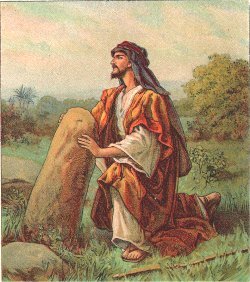
Jacob had left Beersheba and was on his way to meet Esau. He had sent his family on ahead, so that perhaps Esau would soften and his heart and not kill him as he had threatened years ago. Tired, he picked out a nice rock to lay his head on and get some sleep. He had a dream about a ladder that stretched from earth all the way to heaven. And on this ladder, angels were descending and ascending. At the top of the ladder was the Lord God. In his dream, he heard the voice of God:

“I am the Lord, the God of Abraham your father and the God of Isaac. The land on which you lie I will give to you and to your offspring. Your offspring shall be like the dust of the earth, and you shall spread abroad to the west and to the east and to the north and to the south, and in you and your offspring shall all the families of the earth be blessed. Behold, I am with you and will keep you wherever you go, and will bring you back to this land. For I will not leave you until I have done what I have promised you.”

Then Jacob awoke from his sleep and said,

“Surely the Lord is in this place, and I did not know it.” (Have you ever gone through some trial and thought, Surely God was in this place and I did not know it?)

And he was afraid and said, “How awesome is this place! This is none other than the house of God, and this is the gate of heaven.” So early in the morning

Jacob took the stone that he had put under his head and set it up for a pillar and poured oil on the top of it. He called the name of that place Bethel, but the name of the city was Luz at the first. Then Jacob made a vow, saying, “If God will be with me and will keep me in this way that I go, and will give me bread to eat and clothing to wear, so that I come again to my father’s house in peace, then the Lord shall be my God, and this stone, which I have set up for a pillar, shall be God’s house. And of all that you give me I will give a full tenth to you.” Genesis 28:10-22

STEADFAST LOVE

As we peer closely at the Real Jesus, the Jesus of Revelations One, we see another aspect of Divine Love expressed in His appearance.

John saw his golden sash (Agape love that sacrifices all), his white hair (enduring love that lasts through the tests of life), his eyes of fire (discerning love that sets boundaries), his feet of bronze (uncompromising love that desires the strength of His righteousness), and his voice of many waters (distinguishing love).

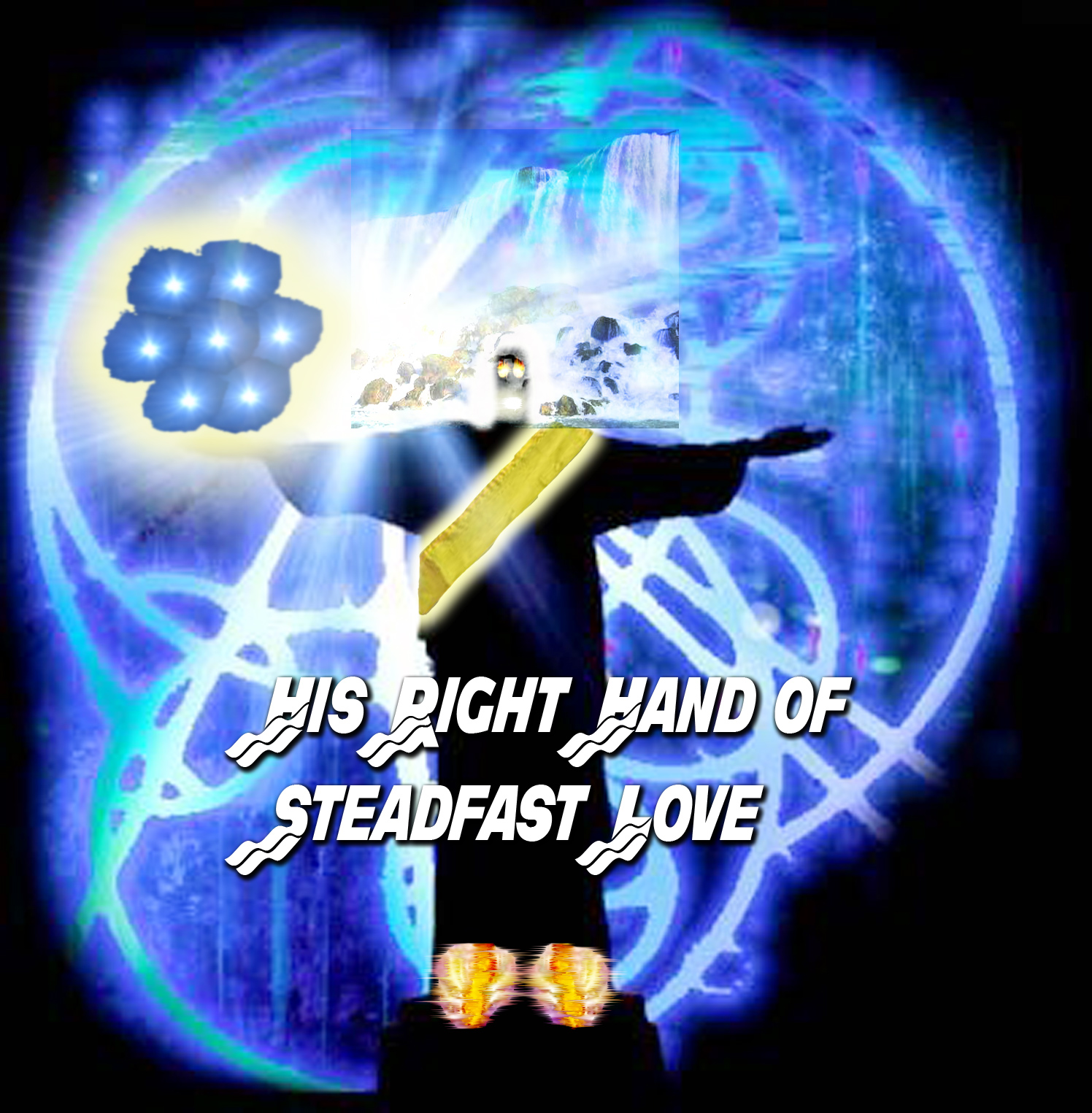
Now we see his right hand, and in his right hand are seven stars. The stars are the messengers to the churches, which could be angels but more likely represent the Pastors, or those responsible for God’s messages to the churches.

Specifically, the seven stars in His right hand means that Christ holds the power of the churches in His hand. The church age is His age; it is when He is at work among the nations. His kingdom is at work through the church.

His right hand is the hand of power, and the church is to know His power!

  • Ex 15:6 your right hand, O Lord, glorious in power, you right hand, O Lord, shatters the enemy
  • Ps 17:7 Wondrously show your steadfast love, O Savior of those who seek refuge from their adversaries at your right hand.
  • Ps 48:10 Your right hand is filled with righteousness.
  • Ps 63:8 My soul clings to you; your right hand upholds me.
  • Ps 139:10 your right hand shall hold me.
  • Isa 41:13 For I the Lord your God hold your right hand; it is I who say to you, “Fear not, I am the one who helps you”.

The Question we must ask ourselves as we examine our Love for the Lord,

  • Do we hold His Right Hand?
  • Do we hold it with steadfast love?
  • Or do we reach for him only when we are in trouble?

Ps 16:8 “I have set the Lord always before me; because He is at my right hand, I shall not be shaken”. To have steadfast love is to have a love for Christ that is fixed in intensity and direction; it is steady, unwavering, marked by determination.

The right hand represents strength, it represents steadfastness. When you hold His hand, you will never be shaken.

Jesus commends the steadfast love of the Philadelphians in verse 10: “Because you have kept my word about patient endurance”

Patient endurance is hupomoné; to persevere, remain under. A bearing up under, patience, endurance as to things or circumstances. It refers to that quality of character which does not allow one to surrender to circumstances or succumb under trial[1].

Christ is writing to a church that has a steadfast love that is determined and fixed upon Him, and because of that steadfast love, they are enduring; they have not let go, they have not turned aside, they continue to lift up His name with everything they have, even if Jesus says it is little.

First love is steadfast love, and Jesus Christ demonstrated that:

  • John 13: 1 …”he loved them to the end”
  • Jeremiah 31:3 … “I have loved you with an everlasting love”

Divine Love is triumphant love, love that is steadfast and sure, love that holds on no matter what it encounters or suffers through.

God calls to us in Isaiah 55:

Incline your ear, and come to me; hear, that your soul may live; and I will make with you an everlasting covenant, my steadfast, sure love for David. Isaiah 55:3

Jesus is before the Church of Philadelphia, and in his hand is no rebuke, no call for repentance, only the reminder of His promises for them.

This church was not a big church. It would be considered a rural church in a small farming town on the edge of a fertile valley. There is still a farming town there today. Although just a church in the country, and not a big city church with prestige, the church in Philadelphia was special to Jesus. Therefore, He reminds them of His Promises.

Steadfast Love is always based upon promise

Marriage is always begun with a promise. Marriage is to be a display of God’s steadfast love, yet we all know the tragedy of marriages in America. Steadfast love has been re-defined to mean 5 years, 10 years, or until I find someone better. Well, with God, Steadfast Love is to be for a Lifetime!

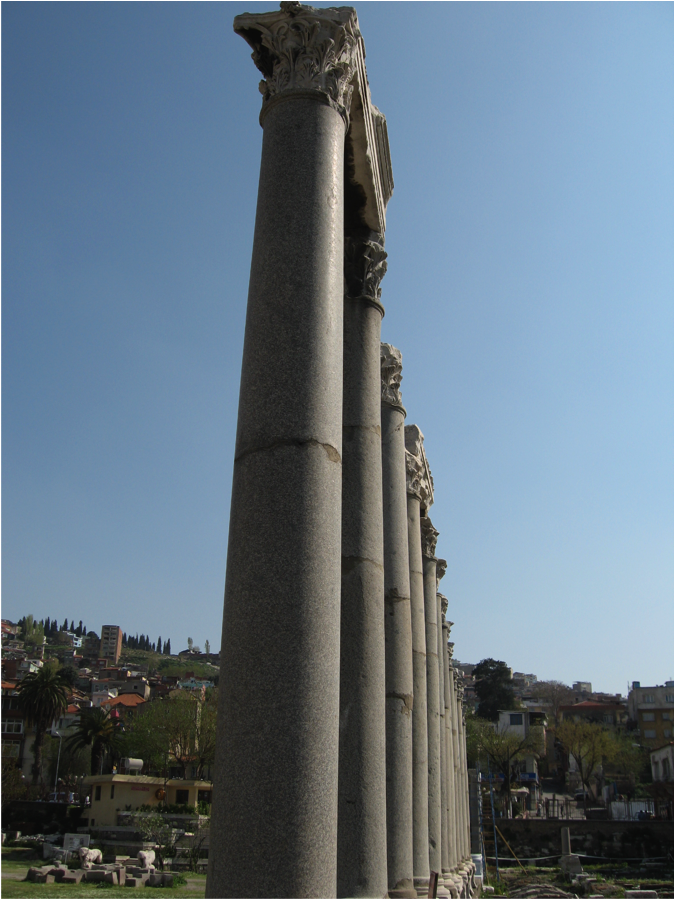
Marriage to me is like the word to Philadelphia – He that overcomes I will make a pillar in the temple of My God.

My Mom and Dad - Jim and Clare Tompkins

I am proud of my Mom and Dad for the example of being a pillar of steadfast love. They were far from perfect, and their marriage was very strained at times, but underneath it all was a steadfast love that withstood the trials and tests of time. I am so proud that we have in our church such pillars of steadfast love. I hope and pray that each of you will see the need to be pillars in this society of ours, to hold forth an example to your children of steadfast love. America is only as strong as our commitments to our families and our spouses.

The Promise to Philadelphia, and the Promise to you and me

“The one who conquers, I will make him a pillar in the temple of my God. Never shall he go out of it, and I will write on him the name of my God, and the name of the city of my God, the new Jerusalem, which comes down from my God out of heaven, and my own new name. Revelation 3:12

Yet, we read in Revelation 21:  “And I saw no temple therein: for the Lord God the Almighty, and the Lamb are the temple thereof” (Rev. 21:22).

There is no temple, God is the temple. Therefore, the Pillars will be in God Himself. You will always dwell in the heavenly Jerusalem. No more will you go out. You will be one who counts with God!

All who are of the character of Philadelphia, marked by steadfast love, become strength in the place of God’s dwelling and in His interest. To be of great importance to God, in the presence of God, important in the Church, which is the New Jerusalem – love is the thing that must characterize us.

It is not money, title, office, pedigree, or social standing. These things may give importance in this world, but in God’s Kingdom, it is love. It is steadfast love when you are weak, steadfast love when you are persecuted, steadfast love when you are barely able to hold on.

DO YOU WANT TO COUNT FOR SOMETHING BEFORE CHRIST?

The way to be something for God is not based on how much you know, how much you have studied, or even how many verses you have memorized.

Understand this about what God Values: He says in James 5: 11 – Behold, we call them blessed which endured. God will often take us through something that is designed to bring us to a feeling of nothingness. He wants us to love Him not because of what we have, but simply because of who He is.

You do not want to be loved because of what you are able to do. You want to be loved for your own sake.

When it is like that, and we get away from all our ambitions, all our craving for recognition and reputation, and we love the Lord for His own sake, we have attained a place of tremendous importance – pillars of strength in the things of God, in the temple of God, in the presence of God. Love is the key to all spiritual significance.

What matters to God is not the number of our trials, but that we reach God’s goal through them. That Goal is steadfast Love for God no matter what we have or do not have. It is pure love for Jehovah God.

So with the background of Christ wanting us to see that Divine Love is Steadfast Love, let’s look at this letter.

The words of the holy one, the true one, who has the key of David, who opens and no one will shut, who shuts and no one opens. Revelation 3:7

True and Holy

The one who has the sure right hand wants us to see Him as the true one, the holy one. This true refers to the fact that He is the real Jesus, the real God, he is no man made idol, no figment of man’s imagination.

The real Jesus is Holy, He is sacred, He is set apart, and He is God! So when you pray to Jesus, when you talk about Jesus, remember the real Jesus is no Christmas ornament, He is Holy, He is righteous, and His Holiness is essential to love Him with steadfast love.

Key of David

The real Jesus holds the key of David. He has the authority of the throne of David, which is the throne of God! The promises of God to David are held in the key of David. Jesus Christ is coming soon, and He will be holding the key of David. He will have authority to sit on the throne of David and rule the world.

This is a reference to an incident recorded in the 22nd chapter of the prophecy of Isaiah. In the days of Hezekiah the king there was a courtier (we would call him a chief-of-staff, for he was in charge of the palace) whose name was Shebna. He had been caught in a personal scam run for his own benefit, and as a result God says a very unusual, very descriptive thing about him: “I will take him and whirl him around and around (like a discus thrower), and hurl him into a far country,” {cf, Isa 22:18}. It was a prediction that he would be sent into Babylon. He would be replaced by a godly man named Eliakim, of whom God said,

“I will place on his shoulder the key to the house of David. What he opens, no one can shut, and what he shuts, no one can open.” {Isa 22:17 NIV}

Our Lord refers back to that passage in Isaiah and applies it to himself: “I am the one who shuts and no one can open, and opens and no one can shut”. His will cannot be opposed. He governs the events of history on earth. He will open some doors; he will close other doors… Jesus has the authority to open and to close. That which He opens, no one shuts, that which He closes, and no one opens.

We have the privilege to partner with Christ here on earth through our prayers.

Truly, I say to you, whatever you bind on earth shall be bound in heaven, and whatever you loose on earth shall be loosed in heaven. Again I say to you, if two of you agree on earth about anything they ask, it will be done for them by my Father in heaven. For where two or three are gathered in my name, there am I among them.” Matthew 18:18-20

These verses come on the heal of the teaching on church discipline. They form the foundation for church discipline. That foundation is that when we are united in prayer and are agreed on God’s will, what we pray to be bound will be bound, and what we pray to be loosed will be loosed.

The key is coming together, being led of the Holy Spirit to pray in unity about something. In the case of church discipline, the church comes together to deal with someone who is unrepentant. If the church is led to close the door of the church to that person, then he is bound in heaven. The doors of God’s care and fellowship are shut.

The church has great authority here on earth, and in truth, God partners with His people in effecting His will. However, we fail to partner with God because our eyes and hearts are not open to see the injustice in the world, or we do not desire God’s will.

Our love for God must be steadfast, it must be resolute, always desiring His will here on earth. We must never retreat into thinking there is nothing we can do, that it is hopeless. We have the power to shake the Key of David through our prayers!

The Open Door

I know your works. Behold, I have set before you an open door, which no one is able to shut. I know that you have but little power, and yet you have kept my word and have not denied my name. Revelation 3:8

Jesus knows their works, but He does not detail them as the other letters did. However, they are good, because Jesus sets before them an open door, which no one can shut. I believe this door is complete access to Jesus, it is complete access to His power and glory and love! No one can shut it; no one can take it away.

The Door is Always Open

Who shall separate us from the love of Christ? Shall tribulation, or distress, or persecution, or famine, or nakedness, or danger, or sword? …. For I am sure that neither death nor life, nor angels nor rulers, nor things present nor things to come, nor powers, nor height nor depth, nor anything else in all creation, will be able to separate us from the love of God in Christ Jesus our Lord. Romans 8:35-39

The church of Philadelphia has a special door to Christ, one that no one can shut. I believe we all have a special door to Christ. I believe He lives in each of us. The problem is that we shut the door of our heart to Him. We are the ones who are not steadfast in our love and devotion to Him. We are the ones who let go of His right hand, and go our own way.

The church at Philadelphia had a door that was always open because they have kept His Word and not denied His name.

O they were weak in numbers, weak in power, but their love was resolute. They were steadfast in their devotion to His Word and to His Name! To such the Door to Jesus is always open!

Little Power

However, I want you to note something: Jesus said they had little power. These Christians were clearly no Elijah, able to pray fire from heaven. They were no Paul, able to be bitten by a poisonous snake and simply shake it off and go on preaching. They were no Moses, facing off against a mighty ruler and bringing him to his knees.

No these folk were like you and me, struggling to make a life in a small town, where money and opportunities were slim. Yet they did have a little power, they did have an open door, they did have a steadfast love for the Word and for the Name of Jesus. They wore His name proudly in their forehead. They obeyed His Word no matter the cost or sacrifice.

God is the God of LITTLE THINGS

We think we cannot do anything for Jesus because we do not know too much, or we think we have no ‘spiritual power’, but the truth is that Little is Much when God is In IT!

LITTLE THINGS WHICH ARE GREAT IN GOD’S SIGHT.

  • Two or Three Gathered in His Name, Matt. 18:20.
  • Only a Cup of Cold Water, Matt. 10:42.
  • In addition, a poor widow came and put in two small copper coins, which make a penny. “Truly, I say to you, this poor widow has put in more than all those who are contributing to the offering box. Mark 12:43
  • Little Children, Matt. 18:1-5 (“little” used 7xs in 18:1-14).
  • A Little Money with…
    • Better is a little with the fear of the Lord than great treasure and trouble with it. Proverbs 15:16
    • Better is a dinner of herbs where love is than a fattened ox and hatred with it. Proverbs 15:17
    • Better is a little with righteousness than great revenues with injustice. Proverbs 16:8
  • A poor, little widow came and put in two small copper coins, which make a penny. “Truly, I say to you, this poor widow has put in more than all those who are contributing to the offering box. Mark 12:43

Little is Much when God is in it!

Does the place you’re called to labor
Seem too small and little known?
It is great if God is in it,
And He’ll not forget His own.
Little is much when God is in it!
Labor not for wealth or fame.
There’s a crown and you can win it,
If you go in Jesus’ Name.

Are you laid aside from service,
Body worn from toil and care?
You can still be in the battle,
In the sacred place of prayer.
Little is much when God is in it!
Labor not for wealth or fame.
There’s a crown and you can win it,
If you go in Jesus’ Name.

Those that speak against you will learn

Behold, I will make those of the synagogue of Satan who say that they are Jews and are not, but lie—behold, I will make them come and bow down before your feet and they will learn that I have loved you. Revelation 3:9

Obviously, there were Jews who were making fun of this little church. They were saying that God loved them, that these Christians were noting to God.

The Church that loves with Steadfast Love can always count on opposition!

The Philadelphia letter reminds that any true church at any time, and especially during the last days, meets Satanic opposition…through imitation, religious ritualism, and hypocrisy—opposition strengthened by mixture of worldliness and religiousness.

Jesus says, remember, the door is always open to me. I will make those “Jews” come and bow before you. They will learn it is you I have loved, and not them.

We should not make fun of small things. We should not think less of one church just because they are small in number. What counts is the Love of Christ. I would rather pastor a church of 20 and know we are beloved of Christ than to pastor a church of a thousand who walked in their own way.

Because you Have endured with steadfast love

Because you have kept my word about patient endurance, I will keep you from the hour of trial that is coming on the whole world, to try those who dwell on the earth. I am coming soon. Hold fast what you have, so that no one may seize your crown. Revelation 3:10-11

Remember the Door is always open

There is a trial coming on the world, a great day of tribulation.

Joel 2:1 Blow a trumpet in Zion; sound an alarm on my holy mountain! Let all the inhabitants of the land tremble, for the day of the Lord is coming; it is near, a day of darkness and gloom, a day of clouds and thick darkness!

But Jesus promises these weak but steadfast Christians that they will escape, they will go through that open door and not face the tribulation that the world will endure.

Because of their faithfulness, the Christians in Philadelphia are promised that they will be kept from the hour of trial which will come upon the earth as a divine judgment.

But the promise to the church is specifically that it is to be delivered from the hour of trial. Actually, the word is not “from”, but “out of” — to be delivered out of — not just the trial but out of the very time of the trial! This is one of the clearest promises in the Bible of the catching away of the church before the great tribulation begins.

The time of trial and trouble described in Revelation 6 to 19. This time of tribulation will overtake the entire world, as God inflicts His wrath upon unbelieving Gentiles as well as upon Christ-rejecting Jews. The Philadelphian church is therefore promised deliverance from the time of trouble, which will overtake the world but will not overtake them.

He is coming soon

Hold fast what you have. Even though your strength is weak, even though the trials have sapped your strength, keep holding on!

Your crown is at stake, the crown of steadfast love!

But we have this treasure in jars of clay, to show that the surpassing power belongs to God and not to us. We are afflicted in every way, but not crushed; perplexed, but not driven to despair; persecuted, but not forsaken; struck down, but not destroyed; always carrying in the body the death of Jesus, so that the life of Jesus may also be manifested in our bodies. 2 Corinthians 4:7-10

Reward

The one who conquers, I will make him a pillar in the temple of my God. Never shall he go out of it, and I will write on him the name of my God, and the name of the city of my God, the new Jerusalem, which comes down from my God out of heaven, and my own new name. He who has an ear, let him hear what the Spirit says to the churches.’ Revelation 3:12-13

“A pillar in the temple of my God.”

We read, “And I saw no temple therein: for the Lord God the Almighty, and the Lamb are the temple thereof” (Rev. 21:22).

It indicates a fixed and unchangeable state. He shall go no more out. They have now overcome. They are partakers with their Lord in all his glory. They abide in his presence. They rejoice in his kingdom, and their joy no man takes from them. Oh how unspeakably happy is this prospect!

A pillar is a symbol of triumph.

And what a triumph has the Savior accomplished for me! He spoiled principalities and powers for me, in his death on the cross, triumphing openly over them there. Every saint a separate illustration of his power. All the saints a combined demonstration of his all-conquering grace.

A pillar is an instrument of commemoration.

Living monuments of his works of grace. What testimonies do they give! What evidences do they remain forever! In the history of each of them, what wonderful chapters have been written, and are to be read hereafter! They are thus pillars of record. Upon them are inscribed such histories of grace and power as the universe has never seen but in them.

A pillar is a place of Sacrifice

Jacob sacrificed atop the pillar he made. There he pledged Jacob’s pledge.

A pillar is an instrument of support.

There is an end of all schisms in the body–of all separations of feeling or affection. Each saint is a cordial supporter of this happy union among the people of God. They unite in one song of praise. They engage in one heavenly worship. They surround one throne and one Lord in one common affection and obedience. The many tongues of earth are all forgotten in the one song of heaven. Each saint is a supporter of Divine authority.

New Name

A pillar sometimes has an inscription or an identifying mark chiseled into it by the stonemason. Jesus promises to write upon the pillar (the faithful Christian) the name of God, the name of the New Jerusalem, and Christ’s new name.

A change of names would be meaningful to the Philadelphians because that city changed its name twice in its history. It called itself Neocaesarea when Tiberius helped it; and later on, in honor of Vespasian, one of the Flavian emperors, it changed its name to Flavia. (It later resumed the name Philadelphia.) Thus these people understood what it meant to have a different name.

In addition to this promise Christ gives them a threefold assurance that they will be identified with God, because

They will have the name of God, “the name of my God”.

This is a promise that believers will be made godlike. “Godliness” is a shortened form of the word “godlikeness”. The purpose of the Spirit in our lives is to make us godly or godlike.

They will have the name of the city of God, the new Jerusalem.

And, “I will write [on him] the name of the city of my God.” The last two chapters of Revelation give a vivid description of this wonderful city, the New Jerusalem, coming down from heaven “as a bride adorned for her husband” — a beautiful bride meeting her husband. That again is a picture of loving intimacy; someone captured by the beauty and goodness of another and longing to be with him or her. That is the second promise given to those who hold on, who stand fast in the midst of a decaying world. They will know the intimacy of a husband’s love for his beautiful bride.

They will have a new name belonging to Christ.

“I will also write on him my new name.” What is that? Since a name symbolizes one’s character this is a reference to the fact that when our Lord’s work of redemption is finished he will have a new name. Everyone wants to know what that new name is, but in Revelation 19:12 we are told that when Jesus appears he will have that new name written upon him, but it is a name that no man knows.

The Choice is yours:

You can be a pillow Christian, choosing the comfort to your pillow when it comes to seeking after Christ, or you can be a Pillar Christian, steadfast in your love for Jesus, proudly bearing His name regardless of Satan’s attacks, or trials, or testing’s. You may not be strong in your own ability, but you are strong in Christ. Your faith allows you to see Him at work, and allows Him to make you a Pillar in the Temple of God.

A Pillar Christian always holds the strong right hand of Jesus Christ. He holds eternity, He holds the churches, He holds the Holy Spirit, yet He can hold your hand. When you hold the hand of Jesus, you hold on to all that power, you are holding on to eternity!


[1] Spiros Zodhiates, The Complete Word Study Dictionary – New Testament, (Chattanooga, TN: AMG Publishers, 1993), WORDsearch CROSS e-book.


Moses with one wave of his staff was able to see the seas part and the seabed dry up. He was able to see the waters stand tall as if held back by a thick wall of glass. When the enemy army was crossing after them, with another wave of the rod of God, he saw the waters fall upon them and drown every soldier.

But when it came to leading this complaining horde of people across a desert land, Moses was at his wits end.

Moses and the Tent of Meeting

In Exodus 33, we find that Moses would take a tent and pitch it outside the camp, far away from the people, and there Moses sought the Lord. He called it the ʾōhel môʿēd (tent of meeting). This was the forerunner of the tabernacle. Here Moses would speak face to face with God (Ex 33:11)

When Moses would enter the tent, the pillar of cloud would descend and stand at the entrance of the tent, and God would speak to Moses.

When Moses went out to the tent, all the people would get up, go to their tent door, and watch. And when the cloud would descend, the people would worship, each at their tent door.

Later on, when they constructed the Tabernacle according to God’s commands, it was brought within the camp, and the people worshipped there. I can’t help but wonder if Moses longed to return to that tent outside the camp…

Letter to Concerned Jewish Christians

It is a reference to the Tabernacle that the writer of Hebrews is using to address the concerns of the Jewish Christians in Hebrews 13. Here the writer makes the foundational statement which should guide these Christians, and I believe it is the foundational statement for our church.

Foundational Statement of Hebrews

We have an altar from which those who serve the tent have no right to eat. For the bodies of those animals whose blood is brought into the holy places by the high priest as a sacrifice for sin are burned outside the camp. So Jesus also suffered outside the gate in order to sanctify the people through his own blood. Therefore, let us go to him outside the camp and bear the reproach he endured. For here we have no lasting city, but we seek the city that is to come. Through him then let us continually offer up a sacrifice of praise to God, that is, the fruit of lips that acknowledge his name. Do not neglect to do good and to share what you have, for such sacrifices are pleasing to God. Hebrews 13:10-16

The Problem Facing these Jewish Christians

There were pressures from the world-pressures as to how they should worship, how they should not worship. It was so much easier to follow a hybrid Christ-one who was Jewish and Christian. One who was worldly and Godly.

On the other hand, the world was becoming more antagonistic toward Christians, especially those that really followed Him. So the struggles they were facing are the same ones we face in our lives.

Two Problems

1.  Driven by formalism-How they worshiped was more important than Who they worshiped.

2.  Paralyzed by Fear – Faced expulsion or persecution-wanted to have the glory of God and stay in the safety of the camp. Their desire for comfort overwhelmed the command to risk it all.

Remember:

We have an altar from which those who serve the tent have no right to eat.

If we insist on serving from a place of comfort, or a place of ‘tradition’, or a place of safety…we can not eat from the altar of Jesus Christ. We will lose out on the sweet abiding fellowship that is in Him alone.

Choice Number 1

  • Will we Die in our Religion or Die in our Devotion?

The writer addressed the plight of the Hebrews by calling their attention to those who wandered in the wilderness:

Num 13:31-14:4; Num 14:20-23, 32-34

Here the Jewish wanderers had the chance to believe in God’s Word, to embrace His power that they had witnessed first hand. However, they refused to see Him Who is able, and focused on their own weakness and inability. Instead of advancing into Canaan and trusting God to overcome the giants, they wept in bitterness and retreated from the mission God had given them.

They had two options:

  1. Retreat from the Mission

  2. Risk everything for the Mission

To risk everything requires the faith to see Him who is invisible. To risk everything requires a total disregard for personal comfort, personal safety, but an overwhelming CONFIDENCE in the power of God to allow you to finish the mission!

We have an altar from which those who serve the tent have no right to eat.

Choice Number 2

  • Will We Embrace our Comfort or Will we Embrace His Cross?

If you want to eat from this altar. If you want to experience God face to face. If you want to know the presence and power of God, you must go outside the camp. You must be willing to be disgraced just like Jesus. You must be willing to bear His disgrace.

Let us Go to Jesus …Outside the Camp

Dead and Dirty things

And the bull for the sin offering and the goat for the sin offering, whose blood was brought in to make atonement in the Holy Place, shall be carried outside the camp. Their skin and their flesh and their dung shall be burned up with fire. And he who burns them shall wash his clothes and bathe his body in water, and afterward he may come into the camp. Leviticus 16:27-28

Diseased and Despised

“The leprous person who has the disease shall wear torn clothes and let the hair of his head hang loose, and he shall cover his upper lip and cry out, ‘Unclean, unclean.’ He shall remain unclean as long as he has the disease. He is unclean. He shall live alone. His dwelling shall be outside the camp. Leviticus 13:45-46

Blasphemers

Then the Lord spoke to Moses, saying, “Bring out of the camp the one who cursed, and let all who heard him lay their hands on his head, and let all the congregation stone him. And speak to the people of Israel, saying, Whoever curses his God shall bear his sin. Whoever blasphemes the name of the Lord shall surely be put to death. All the congregation shall stone him. The sojourner as well as the native, when he blasphemes the Name, shall be put to death. Leviticus 24:13-16

Dangerous

Murderers, blasphemers, adulterers were all kept and stoned outside the camp.

Do You Really Want to Follow Jesus?

Then you must go to Him OUTSIDE the camp!

  • Mission without suffering is like Christianity without a cross
  • Suffering is not a consequence of our mission: it is the central strategy for achieving our mission.

Moses met face to face with God outside the camp!

If you desire to fellowship face to face with Jesus Christ, you must meet with Him outside the camp, and bear His reproach.

Choice Number 3

  • Will We Live for Pleasure in this World or for Paradise in the World to Come?

The Truth of the Real Jesus

  • Jesus calls the church to live according to a radically different definition of success than the rest of the world.
  • Jesus calls me to live according to a radically different definition of success than the rest of the world

If we do not advance toward Jesus in our Christian walk, we:

  • Give way to formalism
  • Give way to paralyzing fear
  • Give way to a retreating spirit

We have an altar from which those who serve the tent have no right to eat.

Do we desire to stay inside the comfort of our camp? Do not count on feasting on Christ.

Believer’s can be forgiven but cursed to wander in the wilderness apart from the power and presence of God.

God does not need our church to gain glory for Himself. He will glorify His Name regardless of whether we go to the altar outside the camp.

Following Christ does not mean coming to the cross and then neatly carrying Jesus back into our safe and comfortable American lives. It means risking everything and going outside the camp to bear His reproach on His altar of total sacrifice. (A thank you to David Platt for the core points of this message)

Notation about my Faith Journey

In 2004-2005 I became burdened about the nation of Myanmar. I even went there in January 2006, and now serve as Treasurer on the Executive Board of the Friends of Burma, Inc. This all came about as I began to understand the true meaning of discipleship.

While going through a sermon series on Mark, I was struck anew with Mark 8.

And calling the crowd to him with his disciples, he said to them, “If anyone would come after me, let him deny himself and take up his cross and follow me. For whoever would save his life will lose it, but whoever loses his life for my sake and the gospel’s will save it. Mark 8:34-35

The greatest example of these verses was the life of Adoniram Judson. I was fascinated with the truth that what he risked with his life and family was the reason for the Christians in that forsaken country today!

His life led me to became so interested and concerned about Burma (Myanmar).

Adoniram Judson is why I am going outside the camp. Adoniram Judson went outside the camp and bore the reproach of Jesus Christ.

Adoniram Judson

Once when a Buddhist teacher said that he could not believe that Christ suffered the death of the cross because no king allows his son such indignity, “Judson responded, ‘Therefore you are not a disciple of Christ. A true disciple inquires not whether a fact is agreeable to his own reason, but whether it is in the book. His pride has yielded to the divine testimony. Teacher, your pride is still unbroken. Break down your pride, and yield to the word of God.’ (Anderson, To the Golden Shore, 240.)

Judson’s conversion to Christ was due in large measure to the same deist friend who led him away from Christ. After graduation, Judson left home to become a wanderlust. One night in a country inn, his room was adjacent to the room of a dying man. The moaning and groaning of that man through the long night permitted Judson no sleep. His thoughts troubled him. All night questions assailed his soul: “Was the dying man prepared to die?” “Where would he spend eternity?” “Was he a Christian, calm and strong in the hope of life in Heaven?” “Or, was he a sinner shuddering in the dark brink of the lower region?” Judson constantly chided himself for even entertaining such thoughts contrary to his philosophy of life beyond the grave, and thought how his brilliant college friend would rebuke him if he learned of these childish worries.

But the next morning, when Judson inquired of the proprietor as to the identity of the dead man, he was shocked by the most staggering statement he had ever heard: “He was a brilliant young person from Providence College. Ernest was his name.”

Ernest was the unbeliever who had destroyed Judson’s faith. “Now he was dead — and was lost! Was lost! Was lost! Lost! Lost!” Those words raced through his brain, rang in his ears, roared in his soul — “Was lost! Lost! Lost! There and then Judson realized he was lost, too! He ended his traveling, returned home, entered Andover Theological Seminary and soon “sought God for the pardon of his soul,” was saved and dedicated his life to the Master’s service!

In Burma

But opposition came, also. Finally, Judson was imprisoned as a British spy — an imprisonment of twenty-one months. Judson was condemned to die, but in answer to prayers to God and the incessant pleadings of his wife to officials (one of the most emotional-packed, soul-stirring stories in evangelism), Judson’s life was spared and finally British intervention freed him from imprisonment.

Following the missionaries in their holy adventure, we behold scenes too horrible for words. On one occasion Judson, pitifully weak and emaciated, was driven in chains across the burning tropical sands, until, his back lacerated beneath the lash and his feet covered with blisters, he fell to the ground and prayed that the mercy of God might grant him a speedy death. For almost two years he was incarcerated in a prison too vile to house animals. He was bound with three pairs of chains and his feet were fastened in stocks which at times were elevated, so that only his shoulders touched the ground. The room, into which he and many other prisoners were crowded, was without a window and felt like a fiery furnace under the merciless glare of the tropical sun. The stench of the place was terrible, vermin crawled everywhere and the jailer, Mr. Spotted Face, was a brute in human form. And, as Judson saw other prisoners dragged out to execution, he lived in terrifying suspense and was able to say with Paul, “I die daily.”

Surely, he would have fallen and perished under the weight of his cross, except for the tender, persistent, beautiful ministrations of Ann. As often as possible, she bribed the jailer and then, under cover of darkness, crept to the door of Judson’s den, bringing food and whispering words of hope and consolation. Finally, for three long weeks she did not appear; but, upon her return, she bore in her arms a newborn baby to explain her absence. An epidemic of smallpox was raging unchecked through the city and little Maria was smitten with the dread disease. Due to the double strain of concern for her imprisoned husband and the suffering baby, Ann found herself unable to nurse the little one. Tormented by its pitiful cries, Ann took her baby up and down the streets of the city, pleading for mercy and for milk: “You women who have babies, have mercy on my baby and nurse her!”

Near the prison gate was a caged lion, whose fearful bellowings had told all that he was being starved against the day when he would be turned loose upon some of the prisoners. But the lion died of hunger before the plan was executed. Thereupon, plucky Mrs. Judson cleaned out the cage and secured permission for her husband to stay there for a few weeks, since he was critically ill with a fever.

One of the most pathetic pages in the history of Christian missions is that which describes the scene when Judson was finally released and returned to the mission house seeking Ann, who again had failed to visit him for some weeks. As he ambled down the street as fast as his maimed ankles would permit, the tormenting question kept repeating itself, “Is Ann still alive?” Upon reaching the house, the first object to attract his attention was a fat, half-naked Burman woman squatting in the ashes beside a pan of coals and holding on her knees an emaciated baby, so begrimed with dirt that it did not occur to him that it could be his own. Across the foot of the bed, as though she had fallen there, lay a human object that, at the first glance, was no more recognizable than his child. The face was of a ghastly paleness and the body shrunken to the last degree of emaciation. The glossy black curls had all been shorn from the finely-shaped head. There lay the faithful and devoted wife who had followed him so unwearily from prison to prison, ever alleviating his distresses and consoling him in his trials. Presently Ann felt warm tears falling upon her face and, rousing from her stupor, saw Judson by her side.

And there were other sorrows. Before he had been in Burma fourteen years he buried Ann and all of his children. But “the love that never fails” sustained him. “If I had not felt certain,” he says, “that every additional trial was ordered by infinite love and mercy, I could not have survived my accumulated sufferings.” Judson joined with Paul in declaring: “The love of Christ constraineth me … Therefore I will glory in reproaches, in persecution and in distresses for Christ’s sake.”[2]

The work progressed and gospel power began to open blind eyes, break idolatry-shackled hearts and transform the newly-begotten converts into triumphant Christians. On April 12, 1850, at the age of 62, Judson died. Except for a few months (when he returned to America after thirty-four years from his first sailing), Judson had spent thirty-eight years in Burma. Although he had waited six years for his first convert, sometime after his death a government survey recorded 210,000 Christians, one out of every fifty-eight Burmans! It was a partial fulfillment and a monument to the spirit and ministry of the man, who at Ava, the capital city, gazed at the temple of Buddha and challenged, “A voice mightier than mine, a still small voice, will ere long sweep away every vestige of thy dominion. The churches of Jesus Christ will soon supplant these idolatrous monuments and the chanting devotees of Buddha will die away before the Christian’s hymns of praise.”[1]

Will You Go Outside the Camp?

My question is, if Christ delays his return another two hundred years – a mere fraction of a day in his reckoning – which of you will have suffered and died so that the triumphs of grace will be told about one or two of those 3,500 peoples who are in the same condition today that the Karen and Chin and Kachins and Burmese were in 1813? Who will labor so long and so hard and so perseveringly that in two hundred years there will be two million Christians in many of the 10/40-window peoples who can scarcely recall their Muslim or Hindu or Buddhist roots?

May God use his powerful word and the life of Adoniram Judson to stir many of you to give your lives to this great cause!

We must keep advancing to Him, to His altar which is outside the camp!


Most people are afraid to study the Bible. “Difficult to understand”,”where do I start?”, “hard to read”, and on and on. God has been showing me something in response to my plea with Him to see more of Jesus in my everyday living. Since Jesus is the “Word” as John 1 proclaims, then my desire to see more of Jesus must begin with the Word itself! Now when I read the Bible it is never with a conscious attempt to study it or understand it. I read the Bible to see Jesus.

Since I have started this approach to reading and studying the Word of God, it has opened my eyes to seeing Jesus where I never saw Him before. I even see Jesus throughout the Old Testament! Much of what goes on can be put in terms of our relationship with Jesus. The altar becomes more than a place of sacrifice. It becomes the Cross, the place of judgment. When I see the Lord standing beside the altar in Amos 9:1, I know that judgment is coming, for Jesus experienced judgment upon the altar of the Cross. That is why Zechariah was afraid when he saw the angel of the Lord standing beside the altar (Luke 1:11-12). Besides the obvious of seeing an angel, he knew his presence by the altar signaled judgment. In this case, the world would be judged through the man Jesus that John the Baptist would make the people ready for(john 3:19-20). By seeing Jesus and understanding the application to Him, we can understand the Bible.

Consider the woman taken in adultery. If you try to figure out the teaching or the doctrine apart from seeing Jesus, you will be frustrated or misguided. However, if we see how this event reveals Jesus, we understand this is a revelation of Jesus fulfilling the Law and removing us from its bondage and condemnation. In Jesus Christ we can truly be freed from the condemnation of sin. We can be free at last!

Many call themselves Christians because they embrace certain teachings or ‘doctrines’. Those ‘doctrines’ serve to divide Christianity, for people insist on belief in certain ‘doctrines’ to prove one is a proper Christian. What if ‘doctrine’ is not the basis of Christianity? What if it is the simply the person Jesus Christ living in me?

“We are not to be governed by a system of doctrine, however high and good. What is essential is that everything shall be related to the Person, for it is the Person Who makes the doctrine live, and Who governs it” (T. Austin-Sparks in “God Hath Spoken”)

Read the Bible with Jesus in view, even in the Old Testament. He is the Word! Nehemiah is not a book about building a wall. It is a book about building the testimony of Jesus Christ in our lives. Deuteronomy is not a list of do’s and don’ts. It is the picture of one who depends upon Jesus Christ and allows Him to live and love and relate through him. When we live (abide) in Jesus, blessings will tackle us, because Jesus is the “Blessed One”. We do not fear curses, because Jesus became cursed for us.

Jesus Christ is the Driving Force in Christianity. While Paul certainly knew ‘doctrine’, his doctrinal belief’s flowed from His personal, living knowledge of the risen Jesus Christ.

Philippians 3:7-8 But what things were gain to me, those I counted loss for Christ. Yea doubtless, and I count all things but loss for the excellency of the knowledge of Christ Jesus my Lord: for whom I have suffered the loss of all things, and do count them but dung, that I may win Christ…

Even after years of following Christ across the known world, Paul still considered knowing Jesus the most important and excellent thing in the world! Being a Christian is entirely about knowing Jesus!

Do you know Him?


I am always fascinated when I see a baby start to walk. Especially my grandchildren. Some have toddled and crawled for a couple weeks, but Laila stood up and started running and has not stopped yet.

Sure, it can be scary while they figure it out. You can try hard to keep them safe while they learn to walk. However, THEY have to learn how to walk. You cannot do it for them. They will fall. They will get bruises. They will have to decide that it is better to walk and run than to crawl around the rest of their lives. So must Christians discover how to walk and live the Christian life God designed for us. We have to decide that we do not want to crawl the rest of our Christian life.

It Is No Little Thing To Be A Christian.

Many people come to Christ and seem overwhelmed with ‘being a Christian”. If being a Christian seems too big for you, just say “That is very good” I would not have it if it were as small as I am. Being a Christian must be something really big if it is to get me anywhere!

The bigger being a Christian is, the mightier the dynamic force that is behind the Christian Life. The greater is the POWER to Walk the Christian Life!

Romans 1-7 is the Gateway into the Christian Life.

The word written across the portal of that gate is FAITH. On the Gate, is the Cross. Faith in the Cross of the Lord Jesus Christ is the way in, and seven chapters are devoted to that way. In Chapter 8 you find what kind of life is on the other side of that gate, the other side of the cross.

Chapter 8 is the real nature of this Big Life into which we have come. In this chapter there is one word which stands out-it is the word SPIRIT. This whole chapter that describes this Big Christian Life springs from and centers on this matter of the Spirit!

This Big Christian Life begins there: The Law of the Spirit of Life IN Christ Jesus!

We are through the gate, we are through the Cross, and here we find what we call “The Life in the Spirit”. At Pentecost, the Holy Spirit was poured out upon the church, ushering in a new dispensation, the one we are living in now. It is the dispensation of the Holy Spirit. The Old Testament dispensation, the dispensation of God’s dealing with the Jews, is past. Now He is dealing with the church, the Body of Christ through the Holy Spirit. This is an entirely new and different age, marked by the coming of Jesus Christ, and concluded with His return.

The character and quality of this dispensation is entirely the Holy Spirit.

The Holy Spirit has come; He has introduced a new order of things entirely; and, until we understand that order, we shall not make any progress in our Christian life. It is very necessary for us to understand that.

The effect of the Holy Spirit, simply but fundamentally, is that He joins us to Christ. He brings about a vital union with the Lord Jesus. “But he who is joined to the Lord becomes one spirit with him.” 1 Corinthians 6:17. To Live this Big Christian Life requires not our self-effort, but our walking after and relying upon the Holy Spirit.

So We must WALK…AFTER THE SPIRIT. That is what we will focus on in Romans 8 verses 5 – 15.

We found in the first four verses of Romans 8:

I. New Life in Christ – New Walk in the Holy Spirit

Romans 8:1  Therefore there is now no condemnation for those who are in Christ Jesus. Vs 2: For the law of the Spirit of life in Christ Jesus has set you free from the law of sin and of death. Vs 3: For what the Law could not do, weak as it was through the flesh, God did: sending His own Son in the likeness of sinful flesh and as an offering for sin, He condemned sin in the flesh, Vs 4: so that the requirement of the Law might be fulfilled in us, who do not walk according to the flesh but according to the Spirit.

We are One with Jesus Christ by the Holy Spirit

  • In Jesus we are not condemned
  • In Jesus we live by a new law – freee from the law of sin and death.
  • We Walk Knowing what Jesus has done for us (vs 3)
  • We walk knowing what the Holy Spirit will do IN us (vs 4)

The Christian Life Is a Life Lived In Not In Our Flesh, But In The Spirit! Verse 3 reveals that God did for us what we could not do in ourselves-he removed the fundamental ground of our weakness-he crucified our old man, so that we could be free to walk in the new man of the Holy Spirit. Verse 4 reveals that the Law is fulfilled in us by walking in the Holy Spirit who indwells us.

What Does It Mean To Walk After The Holy Spirit?

1. Not a Work, but a Walk.

For this purpose also I labor, striving according to His power, which mightily works within me. Colossians 1:29

We allow the Holy Spirit to work in us.

D.L Moody said, “I believe firmly that the moment our hearts are emptied of pride and selfishness and ambition and everything that is contrary to God’s law, the Holy Spirit will fill every corner of our hearts. But if we are full of pride and conceit and ambition and the world, there is no room for the Spirit of God. We must be emptied before we can be filled.” J. Kuhatschek, Taking the Guesswork Out of Applying the Bible, IVP, p. 153ff.

Paul contrasts the WORKS of the flesh with the FRUIT of the Spirit (Gal 5:19, 22)

  • Now the works of the flesh are manifest, which are these: fornication, uncleanness, lasciviousness, Galatians 5:19
  • But the fruit of the Spirit is love, joy, peace, longsuffering, kindness, goodness, faithfulness, Galatians 5:22

The Christian walk is not up to us, to our works, just as Salvation is not up to our works. Salvation is entirely of Grace, so the Christian Walk is to be entirely of Grace. The Spirit produces the fruit. We are merely the instrument.

2. To Walk After Implies Subjection/Submission

Subject means to be placed under the authority of another. We must willingly place ourselves under the authority of the Holy Spirit.

But I say, walk by the Spirit, and you will not gratify the desires of the flesh. For the desires of the flesh are against the Spirit, and the desires of the Spirit are against the flesh, for these are opposed to each other, to keep you from doing the things you want to do. But if you are led by the Spirit, you are not under the law. Galatians 5:16-18

  • No matter what the cost, or what the imposition.

When we follow after our flesh the Holy Spirit will shrink back.

And do not grieve the Holy Spirit of God, by whom you were sealed for the day of redemption. Ephesians 4:30

3. Walking After the Spirit Requires a Mind Set upon Him!

“to set the mind on the Spirit is life and peace” Rom 8:6

Hurewicz was a mathematician noted for work in topology and being distracted. He was the original ‘absent-minded professor’.

While on the faculty at MIT he once gave a colloquium lecture at Penn State. Several colleagues from Boston schools decided to attend the talk and they took the train to Pennsylvania for the lecture. Afterward, as usual, they went to dinner had a nice discussion, then all boarded the train and returned to Boston. Hurewicz could not find his car at the train station. So he reported it stolen. A few days later, the police called and said that they had located his car. It was in a parking garage in ………….. Philadelphia.

In 1956 while attending the International Symposium on Algebraic Topology in Uxmal, Mexico he climbed to the top of a Mayan pyramid. The story is that he forgot where he was. He stepped nonchalantly and fell off to his death.

Jesus made it clear that what we set our mind on is critical to the advancement of His Kingdom:

Mt 16:23 But he turned and said to Peter, “Get behind me, Satan! You are a hindrance to me. For you are not setting your mind on the things of God, but on the things of man.”

We are to have the mind of Christ, who set this self-less and flesh-less example for us:

Have this mind among yourselves, which is yours in Christ Jesus, who, though he was in the form of God, did not count equality with God a thing to be grasped, but made himself nothing, taking the form of a servant, being born in the likeness of men. And being found in human form, he humbled himself by becoming obedient to the point of death, even death on a cross. Philippians 2:5-8

4. Minding the Flesh Produces Conflict With God

For those who live according to the flesh set their minds on the things of the flesh, but those who live according to the Spirit set their minds on the things of the Spirit. For to set the mind on the flesh is death, but to set the mind on the Spirit is life and peace. For the mind that is set on the flesh is hostile to God, for it does not submit to God’s law; indeed, it cannot. Those who are in the flesh cannot please God. Romans 8:5-8

Walking after the flesh means I yield to the authority and dictates of the flesh. Romans 8:5-8 shows where fleshly walking leads me. It brings me into conflict with God. The word used by the King James is “enmity”. It means “the extreme ill will or hatred that exists between enemies.”

Paul uses a noun not an adjective for the word ‘enmity’. The reason is that walking after the flesh does not taint us, it shows WE are tainted!

  • It is not that we can be opposed to God, but that we ourself is opposed to Him!
  • We not at enmity, but enmity itself!
  • We are not black, but blackness!
  • We are not corrupt, but corruption!
  • We are not rebellious, we are rebellion!
  • We are not wicked, we are wickedness itself!
  • We are not just deceitful, we are deceit!

The fleshly walk does not submit to the Holy Spirit. The fleshly walk does not and cannot please God.

II. Walking After The Spirit Brings Me Into The Law Of The Spirit Of Life.

You, however, are not in the flesh but in the Spirit, if in fact the Spirit of God dwells in you. Anyone who does not have the Spirit of Christ does not belong to him. But if Christ is in you, although the body is dead because of sin, the Spirit is life because of righteousness. If the Spirit of him who raised Jesus from the dead dwells in you, he who raised Christ Jesus from the dead will also give life to your mortal bodies through his Spirit who dwells in you. So then, brothers, we are debtors, not to the flesh, to live according to the flesh. For if you live according to the flesh you will die, but if by the Spirit you put to death the deeds of the body, you will live. For all who are led by the Spirit of God are sons of God. For you did not receive the spirit of slavery to fall back into fear, but you have received the Spirit of adoption as sons, by whom we cry, “Abba! Father!” Romans 8:9-15

The Spirit must LEAD us. Not only Setting our Minds on Him, but also Following Him. (Not enough to only think about Him, you must obey). My kids usually minded me, but I don’t think their heart was in it all the time!

Much more than minding. It requires that you submit to His leading. You cannot be independent of Him.  You must be subject to the Holy Spirit. Only as we yield ourselves to obey Him shall we find the law of the Spirit of Life in full operation and the “ordinance of the law” being fulfilled.

  • Everything we have been trying to do to please God is now reality simply by our submitting to the Holy Spirit.
  • As many as are led by the Spirit of God, these are the Sons of God. (Rom 8:14)

Why is it so important to be led by the Holy Spirit? Understand God’s design:

  • The Love of God is the source of all spiritual blessing
  • The grace of the Lord Jesus has made it possible for that spiritual wealth to be ours.
  • The communion of the Holy Spirit is the means whereby it is imparted to us.

What the Father has devised, the Son has accomplished, and the Holy Spirit communicates directly to us. If we are not walking after the Holy Spirit, we are missing out on all the Father hand the Son have for us!

III. We Walk as His Son

For you did not receive the spirit of slavery to fall back into fear, but you have received the Spirit of adoption as sons, by whom we cry, “Abba! Father!”

Imagine walking as His Son. You are no longer crawling, you are WALKING as the SON of GOD! This is the Normal Christian Life we are to lead!

  • 2 John 1:6 “And this is love, that we walk after his commandments. This is the commandment, That, as ye have heard from the beginning, ye should walk in it.”
  • 1 John 2:6 “He that saith he abideth in him ought himself also so to walk, even as he walked.”
  • Ephesians 5:8, 9 “For ye were sometimes darkness, but now are ye light in the Lord: walk as children of light: (For the fruit of the Spirit is in all goodness and righteousness and truth;)”
  • Romans 8:4 “That the righteousness of the law might be fulfilled in us, who walk not after the flesh, but after theSpirit.”

Walking in the Spirit is not an option for the Christian – it is a command of God: “Walk in the Spirit, and you shall not fulfil the lust of the flesh.”

But, how do we walk as His Son?

A Son Believes His Father. A Son Trusts His Father.

  • See the Contrast

David vs. Saul and the Army of Israel

We see this in the contrast between the way the army of Israel approached the giant named Goliath and the way David did in 1 Samuel 17. The soldiers allowed did not believe in the power of their Jehovah God, for they did not see Him as their all-powerful Father. They all “ran away in great fear” while David, who knew the power of His God, and knew his special relationship with God, “ran quickly toward the battle line to meet him” in verse 48.

Your relationship determines your walk!

Joshua and Caleb vs. the Children in the Wilderness

This is the choice the Children in the Wilderness faced: Do we believe God or do we trust what we see? When the 10 spies told of the giants, the Israelites had no thoughts of their relationship with Jehovah God. They had no thoughts of His power, so they became afraid and disobeyed.

Joshua and Caleb knew the power of God, knew of their beloved relationship with Him, and knew they could go in and defeat the giants. Do you approach the giant fears of your life as a helpless orphan, or do you approach the giants as God’s beloved son?

A. We are a Son of God by the Holy Spirit

Now if anyone does not have the Spirit of Christ, he is not His.

  • Not the works of the spirit! – Not the influences of the spirit, or the general character which comes form the indwelling spirit,…but the Spirit Himself!
  • “The difference between the regenerate & the unregenerate is not of degree, but of kind!” (Spurgeon at His Best; Rom.8:9)

The question you must ask yourself:

Does the Spirit of Christ live in me? What evidences of the Holy Spirit do I  see in my life?

  • Do I constantly worry?
  • Do I get upset at even the tiniest of things.
  • Do I have sins that you can’t seem to control.
  • Do I read the Word of God and know that God speaks to me as I read it?
  • Do I have times when you just need to talk to your Father?
  • Do I constantly think about Jesus, do I praise Him, do I ask Him for advice?

If you truly are born again, you will walk in the Spirit of Christ. If you do not, then you need to do a Spirit Check.

B. Enemy of Sonship: The Phony Christian Walk

If you do not have the Spirit, you are a phony. You start Minding the Flesh, because you can’t mind the Spirit.

Evidence of phonies are:

1. Cliché Christianity. A cliché is a phrase that is said too many times in a certain situation. Take sports for example. We hear: Take it one game at a time. Records are made to be broken. This team has overcome a lot of adversity. They control their own destiny.

Christians resort to clichés as well, and in many ways those cliché’s define the way they live. Some have sarcastically referred to this practice as “Jesus jargon”. These overused phrases convey little meaning because we hear them way too often. Unfortunately, many of us just repeat the expected vocabulary without really thinking about what the words mean. As a result, they lose their impact. Here are some that come to mind: Just have faith. God touched me. Let go and let God. God told me. I’ll pray for you.

Here is the danger. You and I can say the right sayings and yet our hearts can be far from God. And, since most Christians use these common clichés, it is easy to fall into a superficial spirituality. On top of that, we can fool others and even ourselves simply by saying the right words.

But none of this fools God as Isaiah 29:13 reminds us: “These people come near to me with their mouth and honor me with their lips, but their hearts are far from me…”

2. Right Rules. Some of you are trying to live the Christian life by a set of rules: “Do this, don’t do that!” The problem of living by rules is that it can lead to legalism. It also is walking in the flesh. On top of that, according to Colossians 2:22-23, it does not work anyway: “These are all destined to perish with use, because they are based on human commands and teachings. Such regulations indeed have an appearance of wisdom, with their self-imposed worship, their false humility and their harsh treatment of the body, but they lack any value in restraining sensual indulgence.”

God is not impressed either as the second part of Isaiah 29:13 says: “…Their worship of me is made up only of rules taught by men.”

3. Formulaic Faith. Some of us are trying to live our faith by following formulas. These formulas are everywhere: Three Avenues to Answered Prayer, Four Steps to Spiritual Success and Five Ways to Walk in the Spirit. There are at least two problems with formulaic faith. First, it can lead to mechanical Christianity. Second, it doesn’t work very often.

4. Performance Posture. Way too many of us are trying to please God by our performance and some of us think that He will only accept us if we make ourselves acceptable. As the early chapters of the Book of Romans make clear, we will always fall short.

5. Extra Experiences. Some people try to live the Christian life by seeking deeply moving, life-changing, earth-shattering, emotional experiences with God. The problem is that experiences do not last because we must eventually come off the mountaintop and resume life in the valley. And, if you seek experiences, you will yo-yo in your faith, going up and down depending on the experiences you have. While God uses conferences, camps, mission trips, moving movies, and dynamic speakers, they alone cannot sustain our faith.

6. Coasting Christianity. Some of you have settled into a mediocre, lukewarm Christian life. You might be a coasting Christian because you think Christianity is too difficult. It is too hard to follow this unseen Holy Spirit.

Do any of these alternatives describe you? Let me say that there is some truth in each one. Most of the clichés we use represent real truth. Rules can be good. Formulas can be helpful. God is pleased when we obey Him. Ecstatic experiences with the Almighty can be life-changing. And finally, Christianity is too difficult – if you try to live it without the Holy Spirit’s power. The life of faith is impossible without the empowering and filling of the Holy Spirit. You cannot live the true Christian Life without following after the Holy Spirit. Anything less is PHONY!

WATCH FOR THE SIGNS OF PHONY WALK! Learn to talk tough to yourself. This may sound strange but it’s actually quite helpful to audibly attack error in your thinking.

  • Sometimes I say out loud: “This thinking is wrong. It’s from the pit of hell. I refuse to entertain those thoughts.”
  • This goes back to the word “set” in verse 5 as it refers to a “fixed mindset.”
  • We see this in Colossians 3:2: “Set your minds on things above, not on earthly things.” A mind set on the flesh is death but the mind set on the Spirit is life and peace.
  • That’s exactly what Isaiah 26:3 in the New Living Translation proclaims: “You will keep in perfect peace all who trust in you, whose thoughts are fixed on you!”
  • In other words, we must let the mind of the Master be the Master of our minds as Philippians 2:5 says: “Let this mind be in you, which was also in Christ Jesus.”

C. The Holy Spirit Is Alive Within Each Christian.

For you did not receive the spirit of slavery to fall back into fear, but you have received the Spirit of adoption as sons, by whom we cry, “Abba! Father!”

If you don’t have the Spirit, then you don’t have spiritual life. That means every believer is home to the Holy Spirit. This denotes a “settled permanent penetrative influence.” You don’t need to ask Him to come in because He enters at conversion, you don’t need a “second blessing” or worry that He’s ever going to leave.

Jesus in John 14:16-17: “And I will ask the Father, and he will give you another Counselor to be with you forever-the Spirit of truth. The world cannot accept him, because it neither sees him nor knows him. But you know him, for he lives with you and will be in you.”

Galatians 4:6 describes the intimate relationship between the Holy Spirit within us and God the Father: “Because you are sons, God sent the Spirit of his Son into our hearts, the Spirit who calls out, ‘Abba, Father.’”

The Holy Spirit desires to have control in each Christian’s life. Since the Holy Spirit lives within believers, you and I must give Him control of our lives. 1 Corinthians 6:19-20: “Do you not know that your body is a temple of the Holy Spirit, who is in you, whom you have received from God? You are not your own; you were bought at a price. Therefore honor God with your body.”

The issue is not getting more of the Holy Spirit but allowing Him to have more of us. When we received Christ, we received all of God we will ever get. As born again believers, we don’t need to receive the Holy Spirit; we need to respond to the Holy Spirit whom we have already received.

When a toddler begins to walk he may revert back to crawling because it is still most natural to him. Walking is scary/risky. But there is some serious issues if your teenager keeps reverting back to crawling!!!

Is it more natural now in your walk with the Lord to walk in the flesh, or in the Spirit? Do you walk as His son, or as a phony?

D. Walking after the Spirit is a Life of Sonship

VS 14-15: For all who are being led by the Spirit of God, these are sons of God. For you have not received a spirit of slavery leading to fear again, but you have received a spirit of adoption as sons by which we cry out, “Abba! Father!” Romans 8:14-15

We have all benefited from the milled ridges that line our highways now. Driving over them produces a loud rumble that quickly wakes you up or tells you that you are drifting off the highway.

Well, the Holy Spirit works even better than those rumble strips when we start to do a mental lane change.

He ka-thump ka-thump ka-thumps upon our heart, warning us to get back in our Spirit lane, when we start crossing over into the flesh lane! We need to be reminde we are His son!

Galatians 5:16: “So I say, live by the Spirit, and you will not gratify the desires of the sinful nature.” Another translation puts it this way: “Keep in step with the Spirit…” The key is to keep in step with the Spirit, not lagging behind and not racing ahead.

BY walking after the Spirit, you are walking in the New Law and you experience the Righteousness of Jesus Christ and THROW OFF YOUR WRETCHEDNESS!

  • So, go to bed tonight & say, “If I die before I wake, I cannot be condemned!”
  • Should you wake the next morning go into the world & say, “I am not condemned!”
  • When howls at you tell him, “you may accuse me, but I am not condemned!”
  • If your sins arise say, “I know you, but you are all gone forever. I am not condemned!” [adapted from Spurgeon quote]

Un-Believers: [Re-read vs.1] – This also means “There still hangs a most weighty condemnation upon all those who are not IN Christ Jesus!”

And what did verse nine say, “Now if anyone does not have the Spirit of Christ, he is not His”. Be His today!

Say “Yes” to the Spirit of God and you will live as His Son. The flesh will be of no power when you walk in the Law of the Life of the Spirit!