


Advice to a New Pastor of a small town Church
 1. Spend an hour a day doing nothing but considering what the Lord wants to do in your life right now. Anchor your thoughts with a section of Scripture or with a relevant Biblical concept or even a problem you are facing. Take the time to lift Him up and consider what He is doing or wants to do. Make it your time where you are centering your life and duties upon Him. Develop an inward core that centers itself upon God.
2. Realize that your ministry to your family is more important than the ministry itself. Your ministry will grow from your ministry to your family.
3. Learn to be content with the people and building God provides for you. Give thanks for them every day. Express thanks and appreciation publicly and constantly.
4. Realize you will always be an outsider to the community. Just accept it. But counter that with your insider status to the power of God. Manifest a supernatural life and they will desire to be an insider with God like you. When they know the power and reality of your faith in God, they will want that ‘insider’ faith as well.
5. Look for someone to mentor/disciple. Make this a priority. Hopefully it is someone in the church, but be open to men outside the church.
6. If there are leaders, let them know your expectations about discipling them. Hopefully they will agree. If not, don’t push it the first year, but try to draw them in as you share discipleship successes with those whom you are able to disciple. If they still resist after a year, go through Titus and Timothy with them. If they still refuse, have the courageous conversation of asking them to resign.
 7. Don’t be afraid to make a change in something your first year. You will discover that some are wanting you make a change.
Will Willimon reports in his post, “Non-synoptic church leadership in church” that he was given the following advice as a young pastor which he now shares with others,
“I am sure someone has told you that you shouldn’t change anything when you go to a new church for at least a year,” he said to me. Indeed, someone had told me just that. “Well, forget it! Don’t change anything in a new church unless you become convinced that it needs changing! Change anything you think that needs changing and anything you think you can change without the laity killing you. Lots of churches are filled with laity who are languishing there, desperate for a pastor to go ahead and change something for the better. Lots of times we pastors blame our cowardice, or our lack of vision, on the laity, saying that we want to change something, but we can’t because of the laity. We ought to just go ahead and change something and then see what the consequences are.”
 8. Learn everyone’s name (first and last name) including the kids. Make a personal photo directory or flash cards if you need to. Learn all the names of the leaders or “gate-keepers” in town. Invite the bank president or mayor out to lunch and find out who the community leaders are.
9. Discover who the “gate keeper’s” of you community are. Get to know them, and look for ways to make the power of Christ known.
 10. Schedule as many meals and coffees with people as possible. Go to their workplaces and pick them up and take them to a place that they normally go to lunch. (This is tough on a minimal salary)
11. Ask these kind of questions to ask when you meet with people (don’t try to evangelize them the first time you meet):
a. Where did you grow up? Where have you lived?
b. What is your job? Help me understand what you do and what kind of pressures you have. Is it a great job or just so-so? Why? How is your relationship with your boss? If the boss, what kind of struggles do you have with your employees?
c. What is your church background? Why did you come to our church? (of if they don’t come to church-what is your attitude toward church in general)
d. At some point tell them you would like to say a little prayer for them, but you wonder if there is anything else you could pray about? (In other words, you will know enough already to be able to pray for them). Do a quick prayer for them.
People will be surprised at how interesting and good it is to meet the pastor and you will not feel pressured to ‘convert’ them or get into church politics until you get to know people. The people are more important than the church. When you get to know people, you will understand where they are coming from. Try to understand their passion. Then followup your visit with prayer for turning their passions into a relationship with Jesus Christ. He will guide you in how to reach them or grow them.
12. Don’t make fun of their rural lifestyle, don’t use big words, don’t be condescending. Be genuinely interested in their lives, their problems and their needs. Be willing to go the extra mile in helping them out. The sooner they trust your intentions the sooner they will trust your ministry.
 13. Normally pastoring is 1/3 preaching (study, prep, reading), 1/3 administration (meetings, email, phone calls, mail, chaos), and 1/3 pastoral care (meeting with people). But for you it will be ½ pastoral care and the other two ¼ each. You will have to initiate and be intentional to meet with anyone. Very few will reach out to you.
14. Force your wife to meet folks by inviting people to dinner. Your kids may embarrass you, but the other couple or family will get to see you as you really are. They don’t want fake. They want real.
15. Get to know the history of the church and who used to go there and what happened.
16. Look at the church constitution and see what the purpose of the church is. Make sure your leadership accepts that purpose and wants to work toward its fulfillment. If not, either the purpose or the leadership needs to change. Design projects to involve the leadership in the fulfillment of the church purpose.
 17. A small church is not leadership driven. Small churches are “interwoven” meaning that the people have strong relationships based on blood or long friendships. They will tend to take the church very personally. They will see it as “their” church. You may want to make some changes or start certain programs, but while they may say “that’s a good idea, Pastor,” they will be looking to see what the church ‘patriarch’s’ are thinking. If you do not when the true leaders over, you will never get the support or participation you need.
The following letter was written by Mrs. Floyd K. Chapman, who lives in a small [pop. 1,064] Midwestern town. Her letter was written in response to an article about the suspicions some folks have of their pastors.
The folks in a small town don’t really care to hear what some author says. They only want to be convinced of your sincerity. Few of the common people read as much as we’d like to think. Many I know read only the following: the headlines, daily funnies, lost and found items; local items. Also they read some farm magazine, after a fashion–then they turn on TV. This is truth, whether we want to admit it or not.
On Sunday they go to church–they like to hear about Jesus, because he loved them enough to put up with their failings. They are not especially interested in economics, except as it affects them directly, or in politics, except in presidential years. But they respect freedom beyond words. They despise anything that makes them lose their self respect and much talk to the contrary they fear the creeping socialism that has made so many dependent upon the monthly government check that puts the bread in their mouths.
They know that they are not learned or smart and they fear people who are, unless they love them. Love is something one feels and if one loves he overlooks so much.
Can you take the big truth, the fact that too many of our ministers do not like people. They love subject matter, but are not sympathetic with the daily problems and weaknesses of the common man. This is not a weakness confined to our denomination.
Too many think they know it all–and do not give the other fellow credit for any knowledge. For instance, a pastor in our community a few years ago attempted to tell one of our more successful farmers of the superiority of horsepower. If it was or was not superior was not the point: the farmer was operating a large farm successfully and happily with his modern machinery. The minister should have been more tactful. If he knew nothing about farming he should have kept still or asked questions.
Sir, I am only a small-town woman, but I am sincere when I say there are a few qualifications a minister must have. Without them, regardless of denomination, he will be accused of everything under the sun–including communism.
1. He must have had a sincere Christian experience and must sincerely love the Lord and His work.
2. He must have had a certain amount of training in Bible, organization and method.
3. He must be willing to work–not too good to use his hands at times–and not too proud to ask help if he needs it.
4. He must really like people–more than books, more than organization, more than position.
5. He must walk ahead leading the people gently as a shepherd, and not try to drive them with a whip.



 It is a night to be much observed unto the LORD for bringing them out from the land of Egypt: this is that night of the LORD to be observed of all the children of Israel in their generations. Ex 12:42
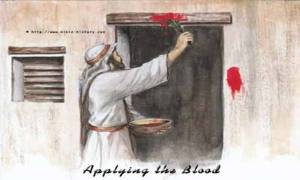 Now imagine if Joe and his wife Sarah had skipped church to go fishing or shopping or whatever. Moses and Aaron had instructed everyone on what to do. They weren’t at the meeting. They got back into town and didn’t know what all the buzz was about. They heard snippets of lamb and blood, but they thought that sounded absurd. They started talking to their friends and got them questioning what Moses said. Don’t you think that is a bit extreme? To waste a perfectly good lamb like that? Blood on my new door post? Why I’ll never be able to get that off! Why I just spent $500 on a new door! Before long a whole group of people had decided to ignore Moses and Aaron. So they lightly regarded the words of Moses and influenced other people to do the same. Honor leads us to value church leaders, and give weight to what they tell us. Dishonor leads us to scorn and devalue what church leaders tell us. To treat it like some teenagers treat the words of their parents.
 And Pharaoh rose up in the night, he and all his servants and all the Egyptians. And there was a great cry in Egypt, for there was not a house where someone was not dead. (Exo 12:30)
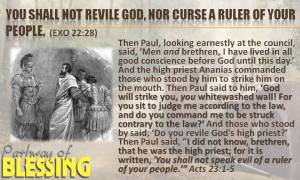 Honor for church leaders is critical for your lives? Why? Perhaps we can glimpse the ways of God by reading Acts 23:1-5. Paul demonstrates the importance of Honoring Church Leaders. When he was commanded to be slapped by some old guy, he hurled a stern verbal insult at him. Then someone whispered in his ear that the old guy was Ananias, the High Priest! He quickly apologized, quoting Exodus 22:28 “You shall not revile God, nor curse a ruler of your people.”
  Paul wrote to obey your leaders, for they watch over your souls. The Gospel of Christ is inexplicably tied to the preaching of His Word. If you do not honor the messenger, you dishonor the Word. God honors his servants, for they follow Christ, and He honors His Son.
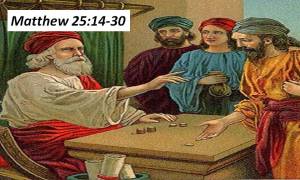 Jesus told a parable of the ruler who gave talents to his servants, and then went away. One servant said he feared the master, so he went and hid his talent.
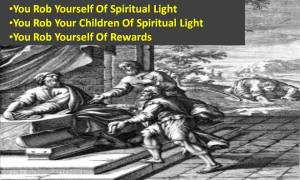 When you fail to honor the requests of your church leaders, you rob yourself of these benefits:
 The Pastor, the Sunday school teachers, are entrusting you with wealth in the form of spiritual truth. To honor them means to grow in the truth they teach, to honor their teaching. The benefit is eternal. When you fail to honor them, you will walk in darkness.
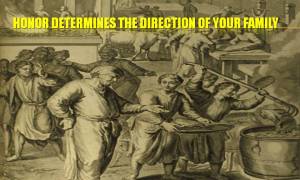 Honor Determines the Direction of Your Family
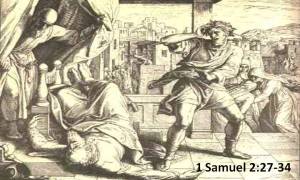 Those who Honor God, He will honor. Those who despise me shall be lightly esteemed. Your children will not honor you, God will not honor you. Sure enough, his sons were slain, and when Eli heard the news, He keeled over and broke his neck and died.
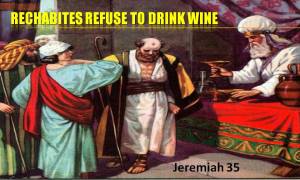 Have you heard of the Rechabites? Read about them in Jeremiah 35.
 Through it all my Dad kept faithfully serving, never got involved in the rumors, never showed any dishonor toward Bill or the organization. I couldn’t believe it. I remember one day going in to my dad’s office and saying, Dad, how can you continue to serve Bill the way you do?
 During a recession, it seems there is a cloud that obscures the future, and that is the case in this recession. Gloom and Doom is the theme in the news each and every day. Everyone seems to have their own idea of what America should do. The problem with this particular recession is that it is so bad, so deep. Economists admit they don’t know what to do, because this particular type of recession has never happened before. Thankfully, we have new leadership. and our new leader has a vision which he believes is right for this particular time in America.
  Obama believes that only the U.S. Government can bring victory against the economic enemies that threaten America’s way of life. He is taking his vision into uncharted waters, and sink or swim, he will try to get passed the largest government economic stimulus package in history. I pray that it will succeed. But I think in the long run, it will result in further economic and political turmoil.
 I went to a workshop on the “Vision of a Leader” yesterday. It was very good, and centered upon Nehemiah and how he received his vision to rebuild the temple. One point of the session was that visions must be identifiable. You must be able to see the result, or else it is to vague and nebulous. In Nehemiah’s case, the vision was easy to see. Everyone gets excited about building things. New
  I don’t think pastors that are filled with the Spirit and following closely after God lack for vision. What they do lack is how to get fleshly people with fleshly focus to see that God speaks to them and God expects them to follow Kingdom thinking and living too. Unfortunately there is no blast from the Holy Spirit that immediately ignites the minds of fleshly followers. A Pastor soon realizes that even his deacons and “entrenched” members sometimes follow a fleshly agenda. He will become frustrated unless he learns how to preach and teach to first of all restore to God His proper place in the church and in his people’s hearts. And then he must learn to build a consensus of vision with his “key” people. In a small church, the “key” people are those that secretly control what suceeds or fails.
  Obama may learn the hard way that Congress, even a Democratic one, will seek to control his vision. Small churches often do the same thing to Pastors. This is how America works, and someday Christ will have to rule with a rod of iron, because men’s hearts are sinful and wicked. A wise Pastor or leader must realize this when seeking to accomplish his “Vision”. Even Nehemiah had to think like a wily fox to get his people to follow his vision. Let’s pray that Congress and our churches “have a Mind to work”. With churches I pray they put on the mind of Christ. He had to lay aside all His ‘earmarks’ in order to accomplish God’s Vision. May His mind be the mind of America.


 Loving the Word with the MudPreacher