Posts Tagged ‘Christ’


Advice to a New Pastor of a small town Church

1. Spend an hour a day doing nothing but considering what the Lord wants to do in your life right now. Anchor your thoughts with a section of Scripture or with a relevant Biblical concept or even a problem you are facing. Take the time to lift Him up and consider what He is doing or wants to do. Make it your time where you are centering your life and duties upon Him. Develop an inward core that centers itself upon God.

„ 2. Realize that your ministry to your family is more important than the ministry itself. Your ministry will grow from your ministry to your family.

„ 3. Learn to be content with the people and building God provides for you. Give thanks for them every day. Express thanks and appreciation publicly and constantly.

4. Realize you will always be an outsider to the community. Just accept it. But counter that with your insider status to the power of God. Manifest a supernatural life and they will desire to be an insider with God like you. When they know the power and reality of your faith in God, they will want that ‘insider’ faith as well.

„ 5. Look for someone to mentor/disciple. Make this a priority. Hopefully it is someone in the church, but be open to men outside the church.

„ 6. If there are leaders, let them know your expectations about discipling them.  Hopefully they will agree. If not, don’t push it the first year, but try to draw them in as you share discipleship successes with those whom you are able to disciple. If they still resist after a year, go through Titus and Timothy with them. If they still refuse, have the courageous conversation of asking them to resign.

7. Don’t be afraid to make a change in something your first year. You will discover that some are wanting you make a change.

Will Willimon reports in his post, “Non-synoptic church leadership in church” that he was given the following advice as a young pastor which he now shares with others,

“I am sure someone has told you that you shouldn’t change anything when you go to a new church for at least a year,” he said to me.  Indeed, someone had told me just that. “Well, forget it!  Don’t change anything in a new church unless you become convinced that it needs changing! Change anything you think that needs changing and anything you think you can change without the laity killing you.  Lots of churches are filled with laity who are languishing there, desperate for a pastor to go ahead and change something for the better.  Lots of times we pastors blame our cowardice, or our lack of vision, on the laity, saying that we want to change something, but we can’t because of the laity.  We ought to just go ahead and change something and then see what the consequences are.”

8. Learn everyone’s name (first and last name) including the kids. Make a personal photo directory or flash cards if you need to. Learn all the names of the leaders or “gate-keepers” in town. Invite the bank president or mayor out to lunch and find out who the community leaders are.

„9. Discover who the “gate keeper’s” of you community are. Get to know them, and look for ways to make the power of Christ known.

10. Schedule as many meals and coffees with people as possible. Go to their workplaces and pick them up and take them to a place that they normally go to lunch. (This is tough on a minimal salary)

11.„ Ask these kind of questions to ask when you meet with people (don’t try to evangelize them the first time you meet):

a. Where did you grow up? Where have you lived?

b. What is your job? Help me understand what you do and what kind of pressures you have. Is it a great job or just so-so? Why? How is your relationship with your boss? If the boss, what kind of struggles do you have with your employees?

c. What is your church background? Why did you come to our church? (of if they don’t come to church-what is your attitude toward church in general)

d. At some point tell them you would like to say a little prayer for them, but you wonder if there is anything else you could pray about? (In other words, you will know enough already to be able to pray for them). Do a quick prayer for them.

People will be surprised at how interesting and good it is to meet the pastor and you will not feel pressured to ‘convert’ them or get into church politics until you get to know people. The people are more important than the church. When you get to know people, you will understand where they are coming from. Try to understand their passion. Then followup your visit with prayer for turning their passions into a relationship with Jesus Christ. He will guide you in how to reach them or grow them.

12. Don’t make fun of their rural lifestyle, don’t use big words, don’t be condescending. Be genuinely interested in their lives, their problems and their needs. Be willing to go the extra mile in helping them out. The sooner they trust your intentions the sooner they will trust your ministry.

13. Normally pastoring is 1/3 preaching (study, prep, reading), 1/3 administration (meetings, email, phone calls, mail, chaos), and 1/3 pastoral care (meeting with people).  But for you it will be ½ pastoral care and the other two ¼ each. You will have to initiate and be intentional to meet with anyone. Very few will reach out to you.

14. Force your wife to meet folks by inviting people to dinner. Your kids may embarrass you, but the other couple or family will get to see you as you really are. They don’t want fake. They want real.

15. Get to know the history of the church and who used to go there and what happened.

16. Look at the church constitution and see what the purpose of the church is. Make sure your leadership accepts that purpose and wants to work toward its fulfillment. If not, either the purpose or the leadership needs to change. Design projects to involve the leadership in the fulfillment of the church purpose.

17. „A small church is not leadership driven. Small churches are “interwoven” meaning that the people have strong relationships based on blood or long friendships. They will tend to take the church very personally. They will see it as “their” church. You may want to make some changes or start certain programs, but while they may say “that’s a good idea, Pastor,” they will be looking to see what the church ‘patriarch’s’ are thinking. If you do not when the true leaders over, you will never get the support or participation you need.

The following letter was written by Mrs. Floyd K. Chapman, who lives in a small [pop. 1,064] Midwestern town. Her letter was written in response to an article about the suspicions some folks have of their pastors.

The folks in a small town don’t really care to hear what some author says. They only want to be convinced of your sincerity. Few of the common people read as much as we’d like to think. Many I know read only the following: the headlines, daily funnies, lost and found items; local items. Also they read some farm magazine, after a fashion–then they turn on TV. This is truth, whether we want to admit it or not.

On Sunday they go to church–they like to hear about Jesus, because he loved them enough to put up with their failings. They are not especially interested in economics, except as it affects them directly, or in politics, except in presidential years. But they respect freedom beyond words. They despise anything that makes them lose their self respect and much talk to the contrary they fear the creeping socialism that has made so many dependent upon the monthly government check that puts the bread in their mouths.

They know that they are not learned or smart and they fear people who are, unless they love them. Love is something one feels and if one loves he overlooks so much.

Can you take the big truth, the fact that too many of our ministers do not like people. They love subject matter, but are not sympathetic with the daily problems and weaknesses of the common man. This is not a weakness confined to our denomination.

Too many think they know it all–and do not give the other fellow credit for any knowledge. For instance, a pastor in our community a few years ago attempted to tell one of our more successful farmers of the superiority of horsepower. If it was or was not superior was not the point: the farmer was operating a large farm successfully and happily with his modern machinery. The minister should have been more tactful. If he knew nothing about farming he should have kept still or asked questions.

Sir, I am only a small-town woman, but I am sincere when I say there are a few qualifications a minister must have. Without them, regardless of denomination, he will be accused of everything under the sun–including communism.

1. He must have had a sincere Christian experience and must sincerely love the Lord and His work.

2. He must have had a certain amount of training in Bible, organization and method.

3. He must be willing to work–not too good to use his hands at times–and not too proud to ask help if he needs it.

4. He must really like people–more than books, more than organization, more than position.

5. He must walk ahead leading the people gently as a shepherd, and not try to drive them with a whip. 


Pearls are unlike any other jewel. Pearls are the only jewel coming from “living” creation. They are produced by “life”, a life which has reacted to and overcome the working of death. Only when the oyster is wounded does it secretly, in the depths of the sea, produce its pearl. I believe God chose carefully the building materials of Heaven. Revelations 21:21 says that the gates of New Jerusalem are twelve pearls. Each gate was made from one giant pearl.

Entering the New Jerusalem through a giant pearl pictures the passage from death to life. It pictures the debt of gratitude we owe to all those Christians who were wounded, many mortally, and through their testimony we pass from death to life. Their life, though despised by the world, gives us life. As Paul wrote, we are all members of His body,

Ephesians 4:15-16 Rather, speaking the truth in love, we are to grow up in every way into him who is the head, into Christ, from whom the whole body, joined and held together by every joint with which it is equipped, when each part is working properly, makes the body grow so that it builds itself up in love.

Love is the power that strengthens and builds the joints and the body of Christ. Love built upon the wounding of Christ, and the fellowship of His sufferings continues the flow of Love which His body needs to grow and thrive. There is no Pearl without a wounding. There is no Pearl from a comfortable oyster. The church will never know the beauty and power  of Christ’s Love​ without pain, trials and hardship. There will be no Pearl necklace adorning a “comfortable” church.

Through the wounding of Christ, His Life was released to us His body. Through the miracle of Christ’s resurrection, a glorious church continues to be empowered by His Love.​ We are to be a pearl of great value, adorning the New Jerusalem! This Pearl is so valuable, that we are to sell everything so that we may obtain it. Yet this Pearl cannot come forth without a wounding. As Christ was wounded for our transgressions and now is exalted in Glory, so too we must accept the wounding of the Cross, dying to our flesh, so that we might share in His Glory!

Healthy school lunches are causing a lot of grumbling among teenagers. Mrs. Obama is the target of a great deal of criticism for setting new Federal Standards which limit calories and protein and carbohydrates.  

“We hear them complaining around 1:30 or 2:00 that they are already hungry,” said Linda O’Connor, a high school English teacher at Wallace County High School in Sharon Springs, Kansas. “It’s all the students, literally all the students… you can set your watch to it.”

The USDA has responded to criticism by recommending the students eat a “snack” in the afternoon (see the article here).

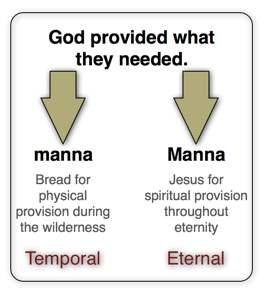
Funny, but this is nothing new. I know of a large group of Jews who complained to God Himself about their hunger. God responded with “Manna from Heaven”.  Heavenly food, the food of angels, and still the people complained. They just did not get it. They were clueless to what God was giving them. I fear that many Christians are even more clueless to what God has given them in a book we call the Bible.

Jesus made a statement that His listeners found incredulous. Even His disciples thought He was being a bit ‘crazy’. Yet what Jesus said is the key to understanding the Power of the Word of God! 

So Jesus said to them, “Truly, truly, I say to you, unless you eat the flesh of the Son of Man and drink his blood, you have no life in you. Whoever feeds on my flesh and drinks my blood has eternal life, and I will raise him up on the last day. For my flesh is true food, and my blood is true drink. Whoever feeds on my flesh and drinks my blood abides in me, and I in him. As the living Father sent me, and I live because of the Father, so whoever feeds on me, he also will live because of me. This is the bread that came down from heaven, not like the bread the fathers ate and died. Whoever feeds on this bread will live forever.” John 6:53-58

When the disciples heard Jesus say this, they said “This is a hard saying, who can listen to it?” And Jesus, hearing the internal grumblings of their heart replied, “Do you take offense at this?” Then he amazed them a bit more by asking, “What if you were to see me ascending to where I was before?” In other words, if your eyes were to be opened to see Jesus as Lord of heaven, and yes, Lord of Life, would my words be easier to accept and understand?

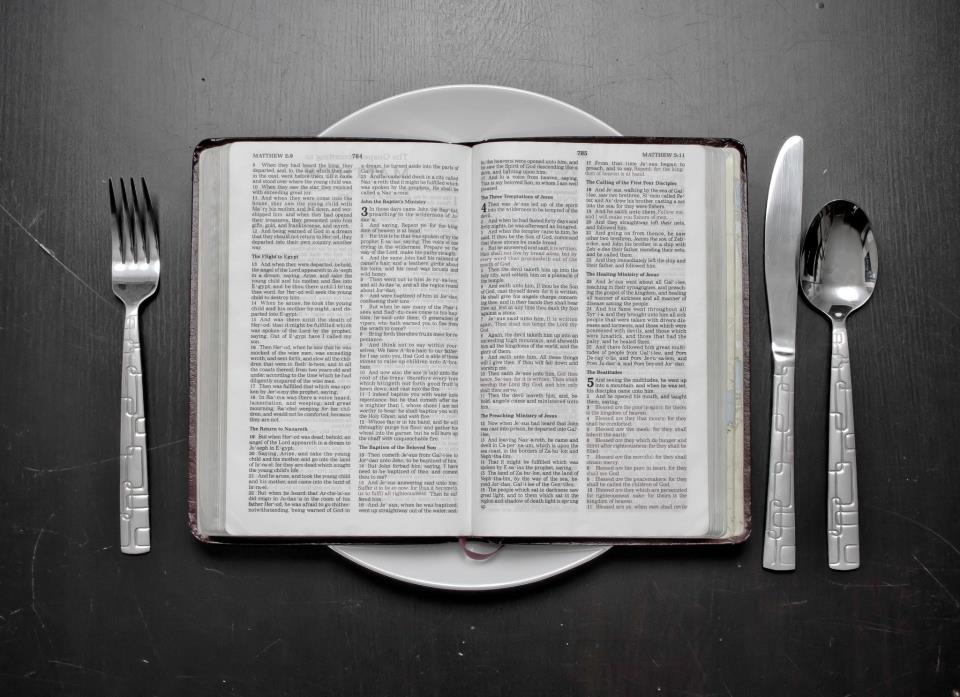
As a Pastor I know that most Christians do not grasp the power of the Word of God. They do not depend upon the Word of Life to live their lives. They may know a few common verses, and may even read it now and then, but the Word of God is not the staple of their life, something which they cannot live without. On the contrary, the Word of God is strange and hard to understand to most “Christians.” Yet, we are to see the Word of God as the very source of our life.

This is what Jesus said in John 6, that the Word of Christ must become your life, so much so that you must feast upon it every day. If the Word of God becomes your means of life, you will live indeed! The Words of Christ and His presence are to be as the manna which fell from heaven and provided sustenance for the Israelites for 40 years!

This is what God meant when He spoke to Moses about the manna. He told Moses and the people, “in the morning you shall see the glory of the LORD, because he has heard your grumbling against the LORD. For what are we, that you grumble against us?” (Exodus 16:7)

God’s answer to grumbling was to show His glory. Jesus answer to grumbling was to ask them to see His glory. The Glory of God was the manna. The Glory of Christ was His Word! The manna was a type of the Word of Christ!

When the Jews saw it, they said “What is it?” When the disciples heard Jesus, they said, “What is this, who can listen to it?”

A casual glance at manna said it was nothing special and not very appetizing. A casual glance at the Word of God says it is nothing special, and not very appetizing, especially the way Jesus described it. Yet both are the glory of God!

We must chose to eat it and to live from it. Regardless of what it looks like or how it may seem, the WORD is life! We must make a decision to make it our life, our sustenance! If we do, we will see the GLORY of God!

God says, See, I have set before you this day life on the one hand and death on the other. Therefore, choose life!” (Deuteronomy 30:19). We can choose to value the Word above all else, or we can relegate it to an afterthought, something insignificant as far as our living is concerned. We must make the choice as to whether we gather it for our sustenance each morning.

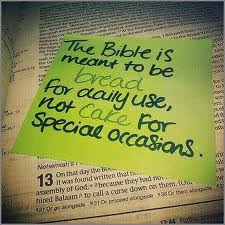
Give us this day our daily bread

This is what Jesus meant when he taught  His disciples to pray. He told them to ask the Father to “give us this day our daily bread!” (Matthew 6:11) Jesus was not talking about physical bread, but the Bread of Life which is His Word! How do I know this? Look at what He said just a few verses later:

Matthew 6:31-33 Therefore do not be anxious, saying, ‘What shall we eat?’ or ‘What shall we drink?’ or ‘What shall we wear?’ For the Gentiles seek after all these things, and your heavenly Father knows that you need them all. But seek first the kingdom of God and his righteousness, and all these things will be added to you.

Why should we pray for our food each day when Jesus tells us not to be anxious about it? On the contrary, Jesus says to seek FIRST the Kingdom of God and His righteousness! The foundation of Kingdom Life is the Word of God! If you want to be a good citizen of the Kingdom of God, you must live by His Word! I will be so bold as to state that you cannot be a citizen of God’s Kingdom if you ignore the Word of God!

If you want to experience His life…

Jesus told the people that if they want to experience life, they must eat His flesh…“whoever feeds on me, he also will live because of me…” Jesus described himself as the “bread of life”. Bread is used in the Bible as that which is taken into the body and provides nourishment. Two types of bread are found in the Bible, leavened and unleavened. Leaven consistently pictures the corruption of sin (see 1 Corinthians 5:8).

Two Types of Bread

A Christian must chose the bread he takes into his life. The unleavened bread which is sinless and pure, or that which is leavened, corrupt and defiled. The leavened bread comes in a wide variety, ranging from sinful and unhealthy to evil and downright life destroying

The manna which displayed the glory of God was symbolic of Jesus Christ, the “Bread of Life” (John 6:49-51). The Israelites had to respond correctly to this ‘gift’ from God to receive proper nourishment. They were to gather early before the sun became hot and it melted away, or they would go hungry that day, and perhaps another day if it was the day before the Sabbath.

Jesus teaches His disciples to pray early every day, asking the Heavenly Father to send the unleavened, sinless bread of Life to dwell with them. Without the indwelling of Christ through the Holy Spirit, there is no spiritual life in us (John 6:53, 55-58)

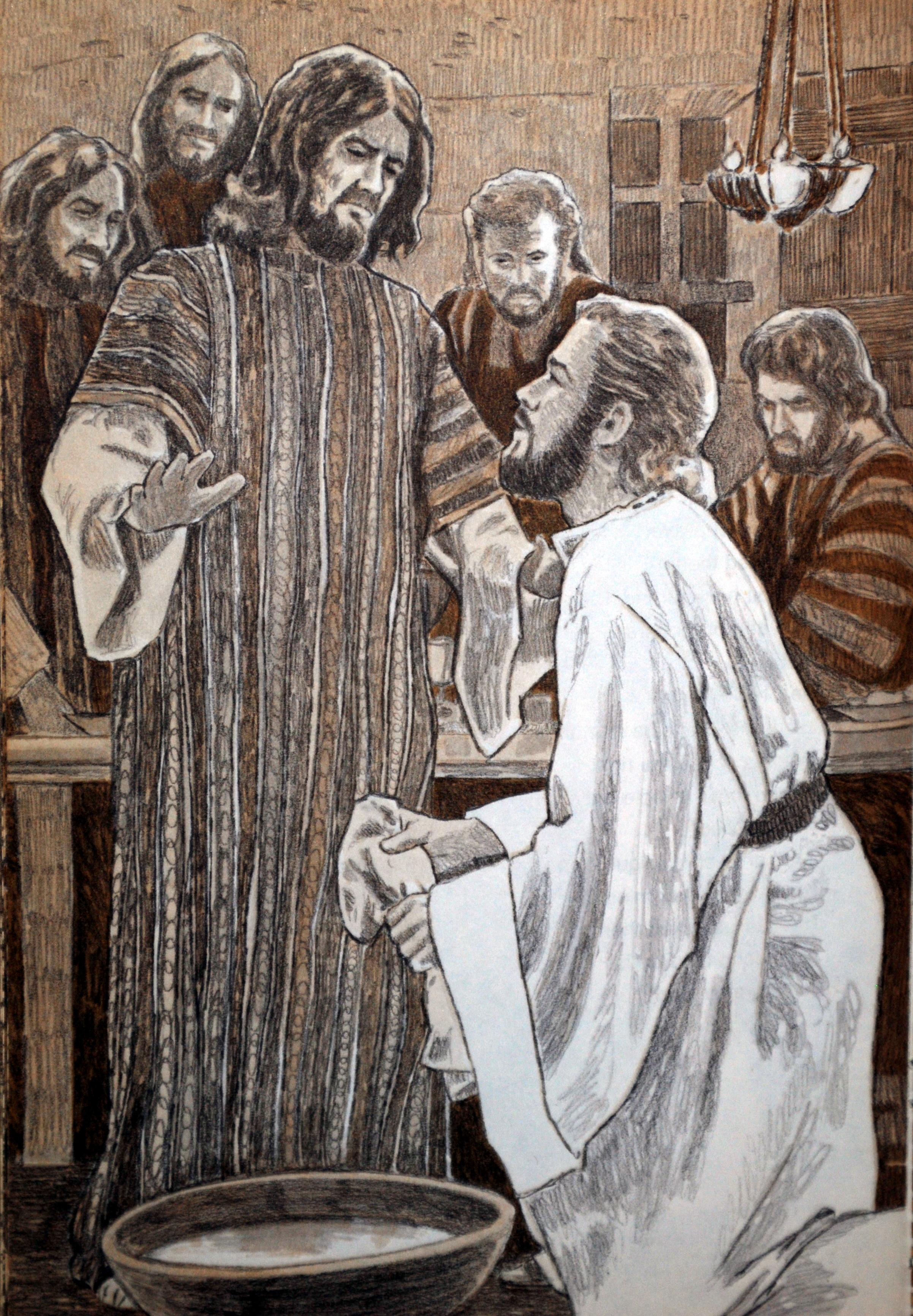
Why do we need to ask this of God every day? Isn’t the indwelling a permanent, point in time occurrence? Yes, but His Life can be blocked by our love of the world, love of sin and assorted other selfish reasons. Jesus told Peter that, even though he was clean all over at one point, he still needed his feet washed every day, of Peter could have no part in Jesus…

Peter said to him, “You shall never wash my feet.” Jesus answered him, “If I do not wash you, you have no share with me.” John 13:8.

While it is true that we are indwelt with the Holy Spirit, He must be invited into our lives each day. He never leads without an invitation. God never takes control of our lives against our will. God wants us to choose willingly to believe and obey Him and seek a relationship with Him.

If we do not chose each day to actively pursue God by partaking of His Word, we will slowly drift away from Him.

Therefore we must pay much closer attention to what we have heard, lest we drift away from it. (Hebrews 2:1)

We are easily and soon distracted by the cares of this world. Our eyes quickly fall from Him to the glitter all around us. We are easily distracted. This is why God often gets our attention through trials and other circumstances.

However, God may not always strive with us if we continually fall away, smitten by our love affair with the world.

You adulterous people! Do you not know that friendship with the world is enmity with God? Therefore whoever wishes to be a friend of the world makes himself an enemy of God. (James 4:4)

Without the strength and power of the Word of God, we will soon find ourselves overcome by the wilderness of the world. We will join the fallen Hebrews. If Jesus realized that “I can of myself do nothing (John 5:30), what chance do we have to overcome this world in our own strength?

Jesus exhorts us to seek His Bread each and every day! Feast on it daily and enjoy His LIFE!


“But without faith it is impossible to please Him.” (Hebrews 11:6)

Faith is an absolute requirement for coming to God, for pleasing Him. What sort of faith allows us to please Him?

We quote Hebrews 11:1 as a general definition of faith, but Romans 4:3 sheds more pertinent light on what sort of faith it takes to please God.

Romans 4:3 “What does scripture say? ‘Abraham took God at his word, and that act of faith was accepted as putting him into a right relationship with God'” (The New Testament: A Translation by William Barclay).

Abraham’s “act of faith” was to believe the words of God. Simply, faith is believing what God says. That belief, that faith, is what pleases God, putting us in a position to have a right relationship with Him. Even in our human relationships, trust in what a person says is foundational.

Trust is never simply an intellectual agreement. It is visceral and intangible and always affects our emotions and actions. This is why it is so devastating when a spouse discovers the other has been unfaithful. That trust which had enveloped his or her soul has been destroyed. That trust which gave him or her life had suddenly been exposed to be based on a lie.

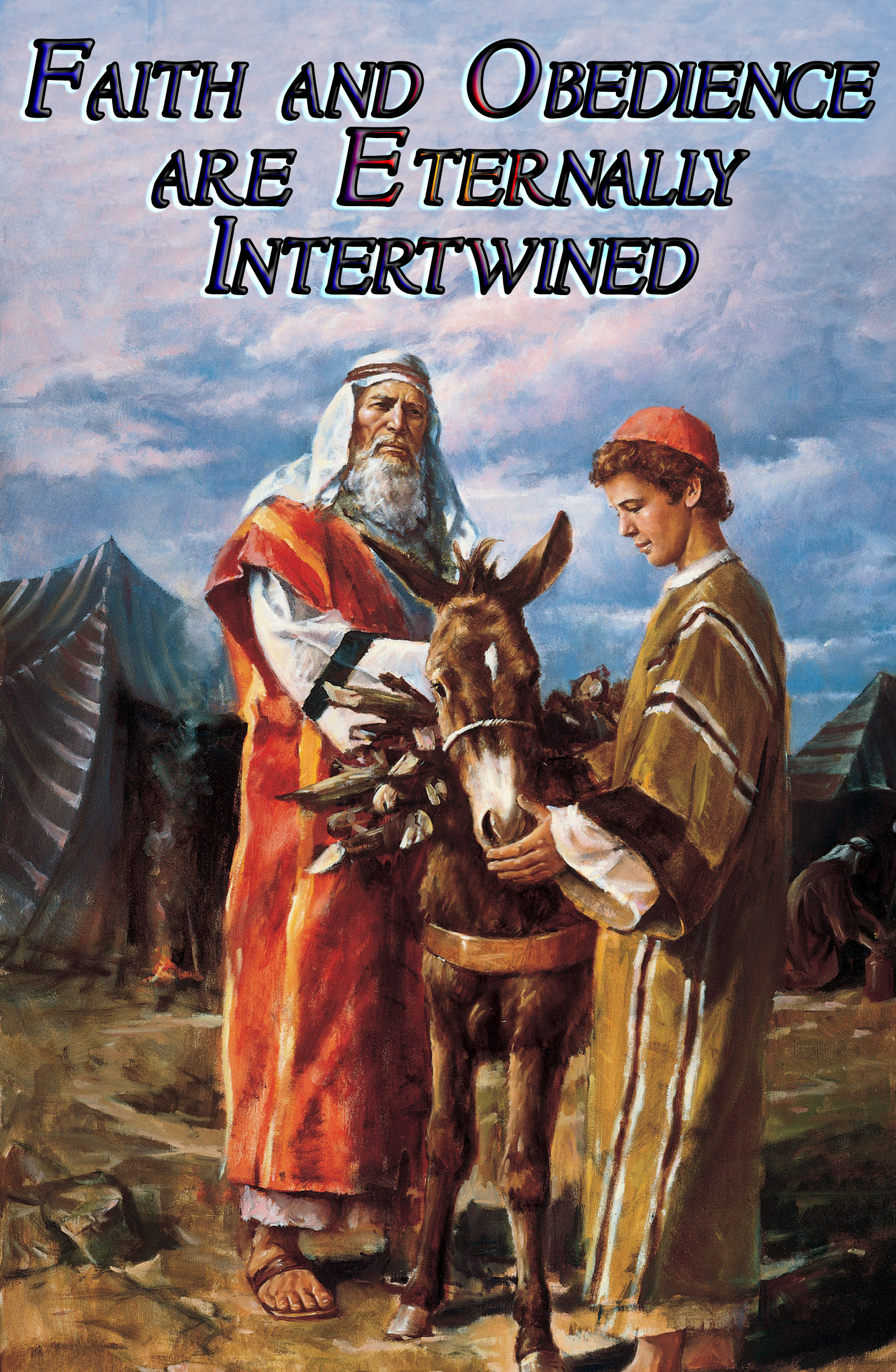
Abraham shows us that this belief, this faith is a deep conviction which resides in our core being, effecting our will and our mind, and even our emotions. His great love for his only son was laid aside to show his trust in this great invisible God. His core trust and faith resulted in obedient action. This is why James declared that faith that does not result in works is not true faith at all, for it is useless for LIFE!

(Jas 2:20) Do you want to be shown, you foolish person, that faith apart from works is useless?

Adam and Eve were forced from the Garden because their trust and faith in God had been shallow, and void of works that demonstrated their trust in His Word. They decided to live by sight when they chose to disobey and eat the fruit. Their action demonstrated a faith that was not pleasing to God. They believed in God, certainly, just as Satan and his minions. However, when it came to trusting His WORDS and acting upon them, their faith fell short of pleasing God. In fact, their “faith” resulted in their death!

Adam and Eve became the first example of man choosing to walk by sight rather than by faith. Mankind has continued in the footsteps of the first Adam, proving that Adam and Eve’s faithlessness was not an aberration, but a trait inherent in every human heart.

Failure to trust the Word of God, failure to walk by faith resulted in a barrier between themselves and fellowship with God. That broken trust ruined their relationship just as it does a marriage.

Satan is the foremost example of faithlessness (faith that does not please God). Satan believes God exists, but his faith is dead because it does not lead to right actions.

James 2:19-20, from the New Living Translation (NLT), forcefully points out the futility and foolishness of Satan’s faith: “Do you still think it’s enough just to believe that there is one God? Well, even the demons believe this, and they tremble in terror! Fool! When will you ever learn that faith that does not result in good deeds is useless?”

“Pleasing Faith” Believes and Obeys the Word of God

When confronted with the choice to eat or not eat the fruit, what evidence did Adam and Eve have? All they had were the words of God. Notice the classic definition of faith found in Hebrews 11:1: “Now faith is the substance of things hoped for, the evidence of things not seen.” What is the “evidence of things not seen?” God’s words. The rest of the chapter provides examples of men and women who followed God based solely on His Words to them.

Hebrews 11:36-38 list various trials that they went through for their faith. Notice verse 39: “And all these, having obtained a good testimony through faith, did not receive the promise.” Even though they did not receive the promise of God, they still believed Him, followed Him, and gave their life for Him, trusting that the sovereign God could and would keep His promises even beyond the grave.

Consider closely Abraham’s decision to sacrifice his son, Isaac. When Abraham raised the knife to sacrifice his son, the only evidence things would work out was the word of an unseen God. Abraham could believe God—take Him at His word—or believe all the evidence he could see that the son of promise would die before God fulfilled His promises. Abraham could not “see” what God was going to do. As far as Abraham was concerned, Isaac was dead. The only “evidence” he had that it all would work out was God’s words—the promises God made to him.

God also needs evidence.

God wanted to know what was in Abraham’s heart. (Genesis 22:12) God said “Now I know what is in your heart.” He knew and recorded for all eternity the “evidence” that Abraham walked by faith, not by sight. Therefore, Abraham became the “Father of Faith” for all who would please God must have faith to believe that He is!

To walk requires action and effort. So even the phrase “walk by faith” demonstrates that living faith requires action and effort. As Hebrews 11:6 declares, “Pleasing Faith” believes that God rewards those who DILIGENTLY seek Him. Our evidence is God’s words. God’s evidence is our actions.

We are just like Abraham. So says Galatians 3:6: “You have exactly the same experience as Abraham. Abraham took God at his word, and that act of faith was accepted as putting him into a right relationship with God” (William Barclay). Just as Abraham had to choose between believing God and believing the circumstances he could see, God also has to put us into exactly the same position. He must find out what is the true intent of our hearts—the depth of our faith. God needs to “know” that we will trust Him, no matter what.

“Pleasing Faith’s” Source

Where do we get this “pleasing” faith? Ephesians 2:8 answers: “For by grace you have been saved through faith, and that not of yourselves; it is the gift of God.” We cannot work it up—that would be our effort, and Romans 8:8 says that we can never please God in our flesh. Further prove this faith comes from God is the correct application of Galatians 2:20:

(Gal 2:20) I am crucified with Christ: nevertheless I live; yet not I, but Christ liveth in me: and the life which I now live in the flesh I live by the faith of the Son of God, who loved me, and gave himself for me.

Paul exchanged his life for Christ’s life. Paul was dead, and Christ lived through him. This life of faith was only possible through the faith of Christ! Christ’s faith was Paul’s faith! This is truly an exchanged life!

Consider when God first started working on us. One year we were clueless, the next year things were making sense. We read the Bible and understood it, but more importantly, we believed it. Where did that belief come from? It was, as Ephesians 2:8 says, a gift from God. The real miracle is not that we understood, but rather that we now believed those words we understood. And this happened only because God made it possible.

What was the evidence that we believed those words? We began living by them. Our new works and actions were the evidence of our faith. Just like Abraham, our actions showed our desire to begin a right relationship with God motivated by His gift of faith. “Don’t you remember that our ancestor Abraham was declared right with God because of what he did when he offered his son Isaac on the altar? You see, he was trusting God so much that he was willing to do whatever God told him to do. His faith was made complete by what he did—by his actions” (James 2:21-22 NLT).

Are you willing to believe and obey God’s Word?

To test our faith, God’s pattern is to bring us to a point—a brick wall or a Red Sea—that seemingly allows no escape. That is where He can find out what is truly in our hearts—hearts of belief or evil unbelief.

(Heb 3:12)  Take care, brothers, lest there be in any of you an evil, unbelieving heart, leading you to fall away from the living God.

Paul had this experience and recorded it for us in II Corinthians 1:8-10:

We should like you, our brothers, to know something of the trouble we went through in Asia. At that time we were completely overwhelmed, the burden was more than we could bear, in fact we told ourselves that this was the end. Yet we believe now that we had this sense of impending disaster that we might learn to trust, not in ourselves, but in God who can raise the dead. It was God who preserved us from such deadly perils, and it is he who still preserves us. (Phillips translation)

Even though all human hope was lost, God came to the rescue to teach Paul—and us through Paul—that God can be trusted.

“I am God! I can be trusted. . . . I alone am the God who can be trusted” [Isaiah 65:16 (CEV)].

What areas of your life are not “pleasing” to God? What areas of your life are being lived by sight? Is your faith pleasing to God, or is it lifeless?


The Biblical Process of Discipleship

Peter was no stranger to failure and success in his discipleship journey.  As a result of the lessons he learned, he is able to describe for us the discipleship journey we will encounter.  Disciples become partakers of the divine nature of Christ through the Word (precious promises). Through the power of the Word we escape the corruption that is in the world because of sinful desire (the desire for things apart from God). To enjoy this “divine nature” (Paul calls it the ‘fullness of Christ’) we must diligently pursue the seven stages of discipleship that Peter lists. We must diligently seek to “ADD” these things to our life.  He concludes in verse 8, “For if these things are yours and abound, you will be neither barren nor unfruitful in the knowledge of our Lord Jesus Christ.” The end result of being a disciple is abounding in Jesus Christ and abounding in the fruit that knowing and abiding in Him brings!

Seven Stages of Discipleship – II Peter 1: 4-8

Step One: Repentance & Faith
John 1; Luke 3
New Life in Christ becomes reality through conversion wrought by Holy Spirit through faith – FAITH
Step Two: Enlightenment & Guidance
John 2-5
Once that change becomes reality, the disciple begins learning how to “put on Jesus Christ” – VIRTUE
Step Three: Growth in Christ
Luke 4-6
 
The disciple grows more and more into the fullness that God has for him in Jesus Christ.  – KNOWLEDGE
Step Four: Ministry Development
Luke 6-9
 
The inward transformation of Christ’s Word begins to become an outward reality of righteousness that results in ministry to others. – SELF-CONTROL
Step Five: Testing
John 6-8 (Understand how God uses ‘death of a vision)
Ministry will always involve “fiery trials” (I Peter 4:12) These build endurance and work to reveal the power and glory of Christ in your life. (Rom 5:2-3) – STEADFASTNESS
Step Six: Ministry in the Power of Christ
Luke 10-19, John 9-12
The disciple ministers with a greater awareness of the power of the Holy Spirit, whether as a leader or a worker. The ministry is of and through Christ, not the disciple’s natural abilities. – GODLINESS
Step Seven: Fruit through the Fullness of Christ
Luke 20-22, Acts 2,10, John 15
 
The Word continues to manifest the fullness of Christ, resulting in greater love for those around him, and a heart for the needs of the world. Other disciple’s are birthed and the Word continues to profit as God pleases. – LOVE

Seven Stages Explained 

A.  Stage One – Repentance and Faith in Christ

Brings new (changed) life through the regeneration of the Holy Spirit

1)   Grief over our sins against God brings repentance unto salvation. 2 Corinthians 7:10

2)   Repentance produces a change which results in turning toward God Acts 26:20

3)    Repentance has two facets.

  • „ From God. The work of ‘regeneration’ which results in our inner man becoming alive to God and our ‘old man’ or nature being put to death. 2 Corinthians 5:17-18, Titus 3:5, Eph 2:4-5
  • „ From Man. Our response to the conviction of the Holy Spirit which produces inner change and keeps us growing in Christ.

4)    Those unwilling to change or submit to the Holy Spirit cannot be discipled.

5)    Baptism is a revealer of one’s willingness to repent before the Lord. Acts 2:37-38

B.    Stage Two – Enlightenment & Guidance

Learning of the One who gave me new life. Matthew 11:28-30

1)    The Christian Life is meant to be an “exchanged life.”[1]

What Do We Exchange?

What we give up

What we get in return

Our sin

2 Cor. 5:21

Christ’s Righteousness

Wrath of God

Rom. 5:1

Peace with God

Condemnation (Hell)

Eph. 2:6,19

Father’s House (Heaven)

Death

Gal. 2:20

Life

The Old Man

2 Cor. 5:17

The New Man

Law

Rom. 7:4-6

Grace

Our weakness

1 Cor. 12:9-10

His Strength

Our Impurity

Heb. 10:21-22

His purity

External morality

Eph. 1:4

Holiness of God

Self strength

Is. 40:31

God’s Power

Tribulation

Eph. 2:14

Peace

Defeat

1 Cor. 15:57

Victory

Sorrow

John 15:11

Joy[2]

2)    We are to put on Jesus Christ. Romans 13:14, Galatians 3:27

3)    We are seated with Christ, which is to say we rest upon Christ. Ephesians 2:6

4)    Disciples learn to live every aspect of their lives in the faith of Jesus Christ. Galatians 2:20

5)    Disciples can derail growth in Christ by acting or trying in the flesh. Romans 8:4-8

C.    Step Three: Growth in Christ

Participating with Christ to build His Body

1)    The whole body is built up as we grow in Christ.

Ephesians 4:14-16 so that we may no longer be children, tossed to and fro by the waves and carried about by every wind of doctrine, by human cunning, by craftiness in deceitful schemes. Rather, speaking the truth in love, we are to grow up in every way into him who is the head, into Christ, from whom the whole body, joined and held together by every joint with which it is equipped, when each part is working properly, makes the body grow so that it builds itself up in love.

2)    As you grow in Christ, so will your desire to participate in the ministry to His body-the church.

3)    Jesus was always giving His disciples an opportunity to get involved in ministry to others. (The feeding of the 5,000 & 4,000, the sending forth into the towns to preach the Kingdom of God, his very call in Matthew 4:19)

4)    The Life of Christ in us is not to be a Lake (because it becomes the Dead Sea). It is to be a River, flowing from Christ through us to the thirsty.

John 7:37-38 On the last day of the feast, the great day, Jesus stood up and cried out, “If anyone thirsts, let him come to me and drink. Whoever believes in me, as the Scripture has said, ‘Out of his heart will flow rivers of living water.’ ”

5)    Growth in Christ involves Character building, being conformed to Jesus Christ.

Romans 8:29 For whom he did foreknow, he also did predestinate to be conformed to the image of his Son, that he might be the firstborn among many brethren.

Ephesians 2:10 For we are his workmanship, created in Christ Jesus unto good works, which God hath before ordained that we should walk in them.

D.   Step Four: Ministry Development

The Righteousness of Christ manifests itself outwardly in ministry to those around you.

Philippians 1:9-11 And it is my prayer that your love may abound more and more, with knowledge and all discernment, so that you may approve what is excellent, and so be pure and blameless for the day of Christ, filled with the fruit of righteousness that comes through Jesus Christ, to the glory and praise of God.

The need for the “Exchanged Life” will be apparent as you minister, for regardless of the capacity in which you serve, the work must be of God!

1 Corinthians 3:6-9 I planted, Apollos watered, but God gave the growth. So neither he who plants nor he who waters is anything, but only God who gives the growth. He who plants and he who waters are one, and each will receive his wages according to his labor. For we are God’s fellow workers. You are God’s field, God’s building.

1)    Who makes a good partner in the ministry of the Gospel?

  • One who follows Christ – Matthew 4:19
  • One who learns of Christ – Matthew 11:28
  • One who knows the power of the Cross in their life – 1 Cor 1:17-18
  • One who in weakness depends totally upon Christ – 1 Cor 1:26-29
  • One who knows intimately Jesus Christ and Him crucified – 1 Cor 2:1-2
  • One who glories in his weakness so that he can know the grace and power of Christ – 2 Cor 12:9
2 Cor 12:9 But he said to me, “My grace is sufficient for you, for my power is made perfect in weakness.” Therefore I will boast all the more gladly of my weaknesses, so that the power of Christ may rest upon me.

2)    Who makes a bad partner in the ministry of the Gospel?

  • One who puts his confidence in his flesh (talents, abilities) – Phil 3:3
  • One who sets his mind on fleshly things – Romans 8:7,8
  • One who cannot control his tongue – James 3:5-6
  • One who does not submit to authority – 1 Peter 2:13
  • One who holds a high opinion of himself (pride) – Romans 12:3
  • One who has bitterness – Hebrews 12:15
  • One who has temporal values – 1 John 2:15, 1 Cor 10:7
  • One who has moral impurity – Hebrews 12:16, 1 Cor 10:8
  • One who has broken relationships due to lack of love for others – 1 John 4:19-21

E.    Step Five: Testing

Learning to depend upon Christ

Jesus said “many are called, but few are chosen” (Matt 22:14). The chosen picture those followers who have the favor of God because they have responded to His discipline. Between the calling and chosen status (being favored as a son), there is always discipline. That discipline takes the form of testing and trials. You must expect it, you must endure it if you are to be “chosen.” Even Paul remarked on many who had turned back from the Lord, because their love for this world weakened their resolve to endure.

Hebrews 12:5-7 And have you forgotten the exhortation that addresses you as sons? “My son, do not regard lightly the discipline of the Lord, nor be weary when reproved by him. For the Lord disciplines the one he loves, and chastises every son whom he receives.” It is for discipline that you have to endure. God is treating you as sons.

1)    Expect your resolve to follow Christ to be tested and tried.

1 Peter 4:12-14 Beloved, do not be surprised at the fiery trial when it comes upon you to test you, as though something strange were happening to you. But rejoice insofar as you share Christ’s sufferings, that you may also rejoice and be glad when his glory is revealed. If you are insulted for the name of Christ, you are blessed, because the Spirit of glory and of God rests upon you.

2)    Understand trials and tests prove the genuineness of your faith and result in Christ being glorified.

1 Peter 1:6-7 In this you rejoice, though now for a little while, if necessary, you have been grieved by various trials, so that the tested genuineness of your faith—more precious than gold that perishes though it is tested by fire—may be found to result in praise and glory and honor at the revelation of Jesus Christ.

3)    Learn to welcome trials as close friends. (Count it all joy)

James 1:2 When all kinds of trials and temptations crowd into your lives my brothers, don’t resent them as intruders, but welcome them as friends! Realize that they come to test your faith and to produce in you the quality of endurance. But let the process go on until that endurance is fully developed, and you will find you have become men of mature character with the right sort of independence. (Phillips translation)

4)    Understand that when God is working supernaturally, He works “death of a vision” in our life.

Death of a Vision

This means he will give us a “vision” of what He wants us to do, but due to events, that vision seems to die. This is how God works:

  • „  Abraham – Promised to be a great nation, then spent 25 years waiting for a son, then asked to sacrifice his son.
  • „  Joseph – Dreamed of being great, then 13 years in Egypt as a slave, much of it in jail.
  • „  Moses – Wanted to free his people, then 40 years in hiding
  • „  David – Anointed the future king of Israel, then 10 years on the run from Saul
  • „  Paul – Called to be a messenger to the Gentiles, then spent years in obscurity in Arabia
  • „  The Apostles – believed Jesus was establishing a Kingdom, but that dies with Him on the Cross.

F.    Step Six: Ministry in the Power of Christ

Learning that all ministry is of Him, through Him and for Him

1)    Jesus did not minister in power until He endured testing

Luke 4:1-2 And Jesus, full of the Holy Spirit, returned from the Jordan and was led by the Spirit in the wilderness for forty days, being tempted by the devil… Luke 4:14 And Jesus returned in the power of the Spirit to Galilee

2)    Ministry must be done in the Power of Christ, and not in the power of the flesh.

1 Thessalonians 1:5 because our gospel came to you not only in word, but also in power and in the Holy Spirit and with full conviction. You know what kind of men we proved to be among you for your sake.

3)    Faith is never to be in man, but in the Power of God

1 Corinthians 2:3-5 And I was with you in weakness and in fear and much trembling, and my speech and my message were not in plausible words of wisdom, but in demonstration of the Spirit and of power, that your faith might not rest in the wisdom of men but in the power of God.

4)    Anyone who ministers is only a conduit for the power of God

2 Corinthians 4:7 But we have this treasure in earthen vessels, that the Excellency of the power may be of God, and not of us.

G.   Step Seven: Fruit through the Fullness of Christ

Learning that bearing Fruit is His responsibility, not mine

1)    Bearing Fruit is a natural process of abiding on the Vine

John 15:4-5 Abide in me, and I in you. As the branch cannot bear fruit by itself, unless it abides in the vine, neither can you, unless you abide in me. I am the vine; you are the branches. Whoever abides in me and I in him, he it is that bears much fruit, for apart from me you can do nothing.

2)    Discipleship is all about Fruit from the Fullness of Christ

Philippians 1:9-11 And it is my prayer that your love may abound more and more, with knowledge and all discernment, so that you may approve what is excellent, and so be pure and blameless for the day of Christ, filled with the fruit of righteousness that comes through Jesus Christ, to the glory and praise of God.

3)    The Purpose of the Gospel within us is FRUIT and GROWTH

Colossians 1:5-6 Of this you have heard before in the word of the truth, the gospel, which has come to you, as indeed in the whole world it is bearing fruit and growing—as it also does among you, since the day you heard it and understood the grace of God in truth,


[1] the exchanged life is Christ living His life through us, rather than us trying to make life work through our own efforts and resources. It is made possible by the believer’s union with Christ in His death, burial and resurrection (Romans 6-8)