Posts Tagged ‘Christ’


“Though” and “through” differ only by one small letter—the letter “r.” In American Sign Language, “r” is made by crossing the middle finger over the index finger. But crossed fingers have a history as sign language that far predates ASL. In the first centuries of the Church, when Christianity was illegal and Christians were vigorously persecuted, believers found ways to communicate their faith in subtle ways. Accompanying a greeting or farewell, crossed fingers were a code sign, identifying Christians to one another as “people of the cross.” The crossed fingers were a mute symbol for the cross of Christ and the redemption Christ’s death on that cross brought to all people. Today, crossed fingers mean something very different. When placed behind one’s back, they mean that one does not mean what one is saying. When held in one’s lap, they mean one is hoping something will or will not happen. Russ Chiodo, Director of Emergency Services for Beaver County, PA, was the person in charge of picking up the body parts from the 132 people who died on the ill-fated USAir Flight 427 that crashed on its way from Chicago to Pittsburgh. When asked what it was like to bag body parts with no human faces left, Chiodo confessed to the sight that affected him the most. “The thing I’m not going to be able to forget for a long time is finding a hand with its fingers crossed—as if for luck.”

Isn’t it ironic that the gesture of crossed fingers, first instituted by the early church as a symbol of the Cross of Christ and a certainty of the promises of God in Jesus, has digressed to represent the exact opposite…mere luck. In the completed work of Christ on our behalf we have the 100% absolute assurance of our salvation and the absolute guarantee of an inheritance “incorruptible and undefiled, reserved in heaven for us” (1 Peter 1:4). Luck has absolutely NOTHING to do with it.

The Cross in Genesis 1-11

Understand that Jesus was in the world from the Creation! This study will confirm that Jesus has been the way of Salvation from the very beginning, through the “Principle of the Cross!” A Principle that mankind for the most part rejected, just as they rejected Jesus in the flesh.
John 1:1-5 In the beginning was the Word, and the Word was with God, and the Word was God. He was in the beginning with God. All things were made through him, and without him was not anything made that was made. In him was life, and the life was the light of men. The light shines in the darkness, and the darkness has not overcome it.

John 1:9-18 The true light, which enlightens everyone, was coming into the world. He was in the world, and the world was made through him, yet the world did not know him. He came to his own, and his own people did not receive him. But to all who did receive him, who believed in his name, he gave the right to become children of God, who were born, not of blood nor of the will of the flesh nor of the will of man, but of God. And the Word became flesh and dwelt among us, and we have seen his glory, glory as of the only Son from the Father, full of grace and truth…And from his fullness we have all received, grace upon grace.

Jesus Christ is the Son of God, and He is the Word of God. He has been in the world since He created it. Yet the world did not know Him. But all who received Him, who believed in His name, He gave the power and authority to become children of God. The Word became flesh, and we beheld His Glory. As we read last week, His Glory began at the Cross. At the Cross we see the Word of God full of Grace and truth. Because of the Cross we receive grace upon grace.

In 1 Corinthians 1, the Cross is described as a dividing point, a stumbling block, and a point of folly. So too is the Word of God.

Hebrews 4:11-13 Let us therefore strive to enter that rest, so that no one may fall by the same sort of disobedience. For the word of God is living and active, sharper than any two-edged sword, piercing to the division of soul and of spirit, of joints and of marrow, and discerning the thoughts and intentions of the heart. And no creature is hidden from his sight, but all are naked and exposed to the eyes of him to whom we must give account.

The Word of God is a sharp two-edged sword. It reveals the thoughts and intents of our wicked and deceitful hearts. No one can be hidden from the Word, for it exposes us to the one to whom we must give account.
Just as the Cross was lifted up above this world, so the Word of God is lifted up above mankind, and the Word of God will be our judge. The Word of God will judge believers and unbelievers alike.

The Word of God separates unbelieving men from God. The Word of God separates unbelieving Christians from resting in God. That is why Christians are encouraged to strive to enter the rest of God through the Word of God, because it is living and active, able to cut away the dross of the world and leave that which is pure before God.

A.W. Tozer: “Our uncrucified flesh will rob us of purity of heart, Christ-likeness of character, spiritual insight, and fruitfulness; and more than all, it will hide from us the vision of God’s face, that vision which has been the light of the earth and will be the completeness of heaven.”

The Word of God has this power the same way that Jesus Christ had the power to bring sinful men to Holy God, through the Cross! In fact, it is because of the Cross that we have the Word of God! As W. A. Criswell famously said, “throughout the Bible there runs a Scarlet Thread of Redemption!”

Because of the Cross…We Have the Word

As we look at all we have “Because of the Cross,” we need to remember three Principles of the Cross:

1. The Cross is the Wisdom & Power of God.

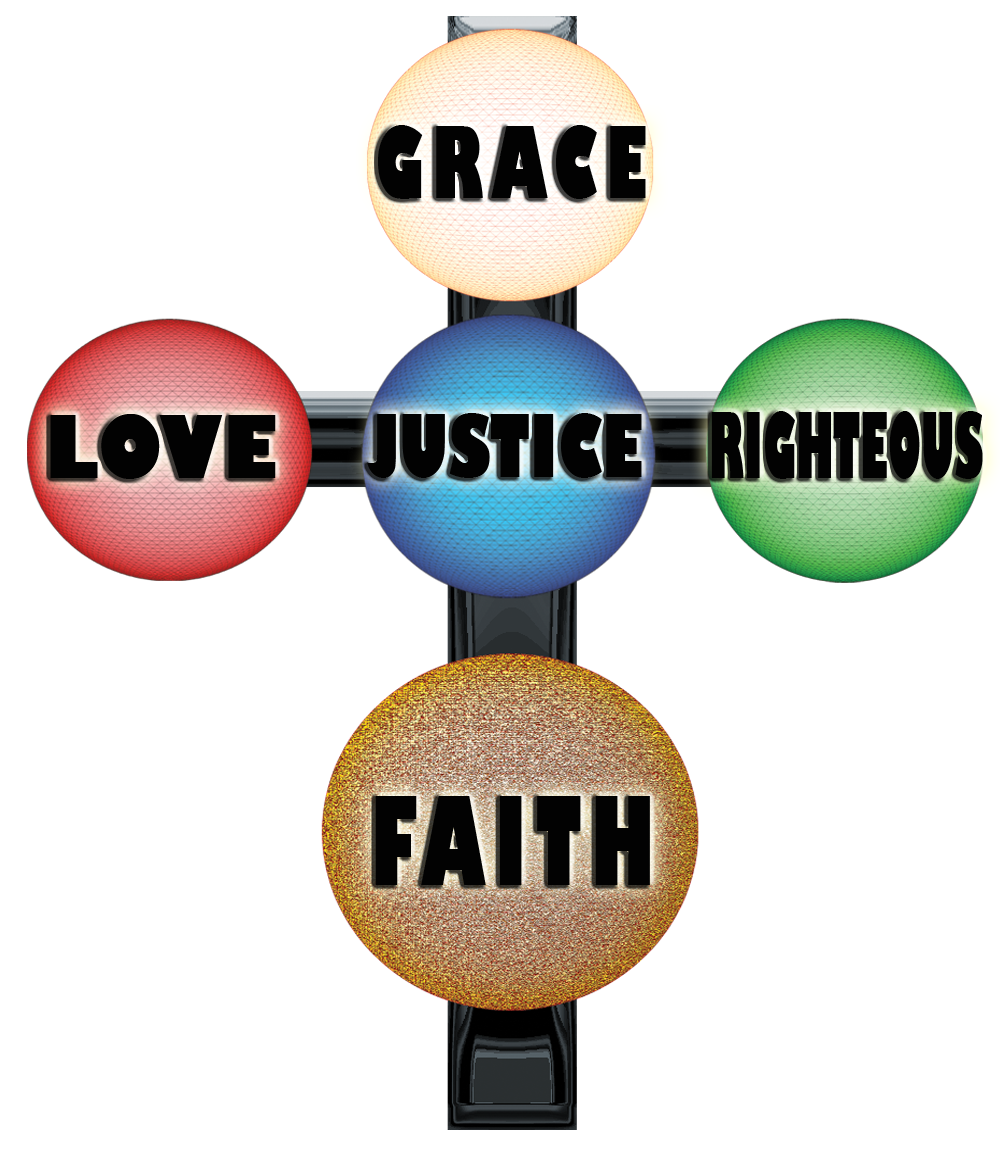
    • The Cross reveals the Heart of God, His delight in mercy, justice and righteousness.

2. The Cross is opposed to the wisdom and power of man.

    • The cross requires humility. The cross strips man of all rights and powers. The Cross reveals the foolishness of man’s attempts at standing and self-righteousness.

A.W. Tozer: “The man who is crucified is facing only one direction… He [cannot] look back. The crucified man on the cross is looking only one direction and that is the direction of God, and Christ and the Holy Ghost… The man on the cross… has no further plans of his own… Somebody else made his plans for him, and when they nailed him up there all his plans disappeared… When you go out to die on the cross, you bid good-bye–you are not going back!

We want to be saved but we insist Christ do all the dying. No cross for us, no dethronement, no dying. We remain king within the little kingdom of Mansoul and wear our tinsel crown with all the pride of a Caesar; but we doom ourselves to shadows and weakness and spiritual sterility.”

3. The Cross is the Perfect Blood Sacrifice required by God

    • God declared that life is in the blood. To bring life to ‘dead in sin’ mankind, a perfect blood sacrifice had to be made.

A.W. Tozer: “The old cross is a symbol of death. God salvages the individual by liquidating him and then raising him again in newness of life. God offers life, but not an improved old life. The life He offers is life out of death. It always stands at the far side of the cross.”

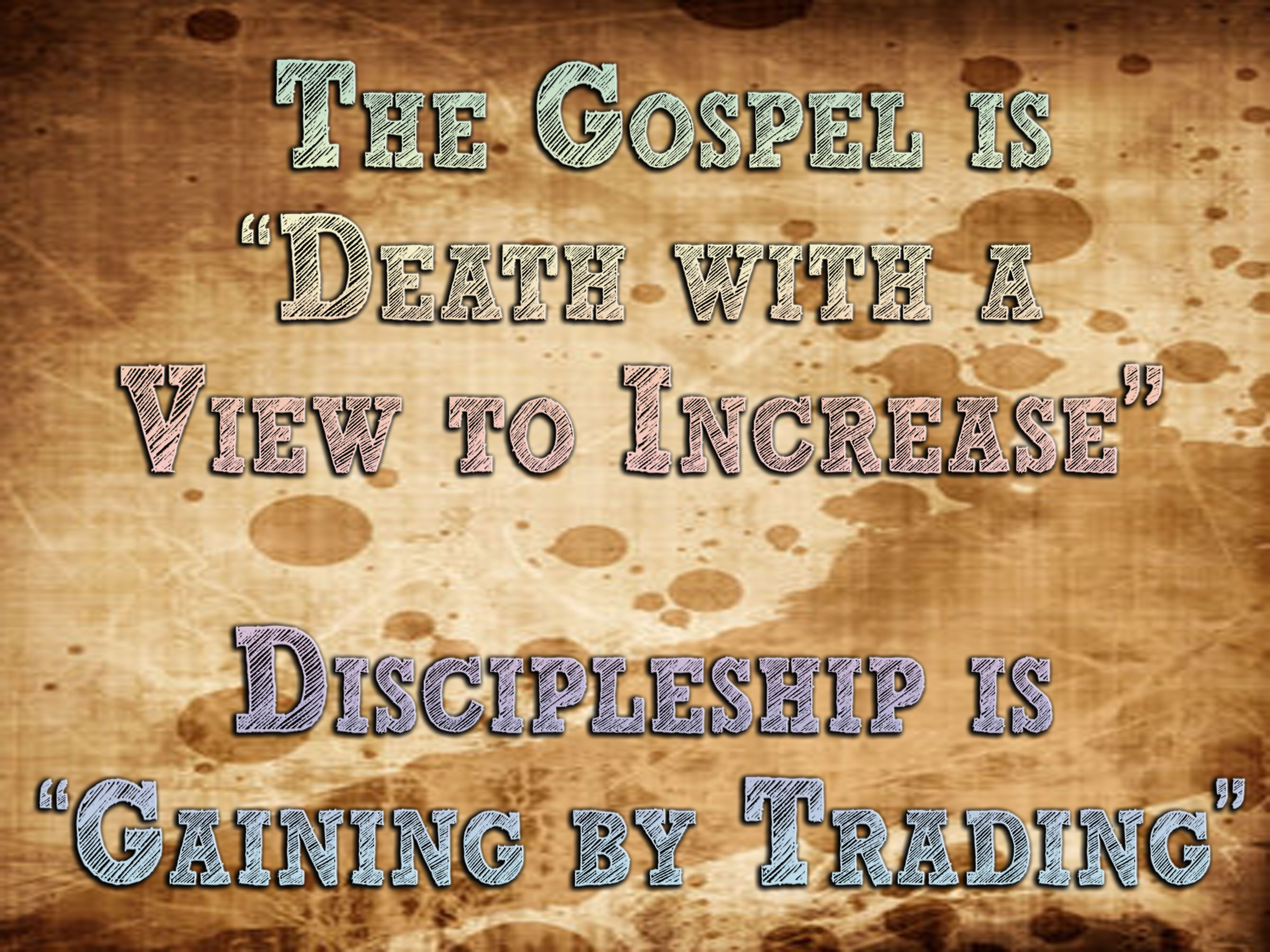
We will see the Principle of the Cross throughout the Old Testament. The Principle that death leads to resurrection. The principle of “death with a view to increase” that characterizes the Gospel.

First death, then life. Death [leads to] resurrection. When we consent to death, then the life of Jesus can flow unhindered from us. It is never the other way. We cannot claim resurrection life first, and then by means of that put the flesh to death. We must first bow to the cross, and then God will effect the resurrection. (Ray Steadman)

With these three Principles in mind, let us see that “Because of the Cross…we have the Word of God!

In the Garden

Genesis 3:6-7 So when the woman saw that the tree was good for food, and that it was a delight to the eyes, and that the tree was to be desired to make one wise, she took of its fruit and ate, and she also gave some to her husband who was with her, and he ate. Then the eyes of both were opened, and they knew that they were naked. And they sewed fig leaves together and made themselves loincloths.
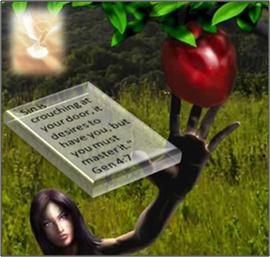
Something happened to Adam and Eve when they disobeyed God. Their eyes were opened and they could see their shame. Therefore, in their wisdom, they made some clothing out of fig leaves sewn together.

This is what I think happened. Psalm 104 1-2 says that God is clothed in splendor and majesty, covering himself with light as a garment. Adam and Eve, created in the image of God, were clothed in light. When they sinned, the light was gone, and they felt the shame of their sin. They attempted to cover up their shame. This is man’s wisdom. No repentance, simply cover it up, cope with it, pull yourself up by the bootstraps and move on.

Here is where we see the Cross first lifted up.
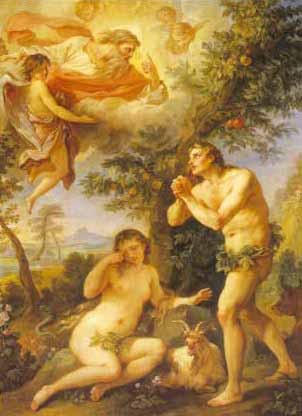
God calls out to Adam and says, “where are you?”

Adam says:

Genesis 3:10-13 And he said, “I heard the sound of you in the garden, and I was afraid, because I was naked, and I hid myself.” He said, “Who told you that you were naked? Have you eaten of the tree of which I commanded you not to eat?” The man said, “The woman whom you gave to be with me, she gave me fruit of the tree, and I ate.” Then the LORD God said to the woman, “What is this that you have done?” The woman said, “The serpent deceived me, and I ate.”

Sin has entered into the hearts of Adam and Eve. Instead of open fellowship with God, they feared Him and even hid from Him. Instead of repentance and return to God, they blame someone else.

God’s response is to place a curse upon man and woman and even the serpent.

But God’s solution to sin was the Principle of the Cross.

Genesis 3:21 And the LORD God made for Adam and for his wife garments of skins and clothed them.

Here we see the first sacrifice for sin. Adam and Eve had to watch as God took one of those peaceful animals that they cared for, and kill it. They had to watch blood flow for the first time. Can you imagine how they felt? An innocent animal had to die because they disobeyed. They had to wear that animal’s skin. It was a constant reminder of God’s plan. Sin is always answered with sacrifice. Moreover, Sacrifice always results in Grace.

  • God covered them in Grace. (His provision allowed them to live)
  • God expelled them in Grace. (He did not want them to live in sin forever)

God must have instructed them in the Way of the Cross and the need for blood sacrifice to keep their relationship with God.

When they had children, they taught them about the need for an acceptable sacrifice unto God.

Cain

In Genesis 4, Cain, the oldest, brought a sacrifice from the fruit of the ground. He decided there was no need for a blood sacrifice.

Abel brought the firstborn of his flock. God accepted Abel’s offering, but disregarded Cain’s. Cain became angry.

Genesis 4:6-7 The LORD said to Cain, “Why are you angry, and why has your face fallen? If you do well, will you not be accepted? And if you do not do well, sin is crouching at the door. Its desire is for you, but you must rule over it.”

The purport of the divine rebuke to Cain was this, “Why art thou angry, as if unjustly treated? If thou doest well (that is, wert innocent and sinless) a thank offering would have been accepted as a token of thy dependence as a creature. But as thou doest not well (that is, art a sinner), a sin offering is necessary, by bringing which thou wouldest have met with acceptance and retained the honors of thy birthright.” This language implies that previous instructions had been given as to the mode of worship; Abel offered through faith (Heb 11:4).[1]
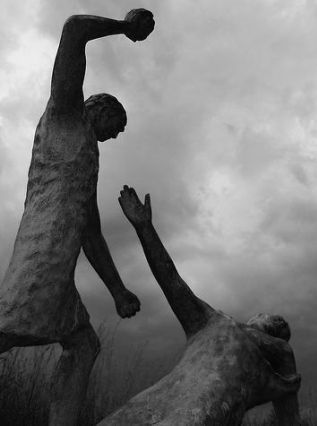
Therefore, Cain, instead of humbling himself to God and offering a sacrifice for his sin, reacted in pride and offered what he thought was appropriate. He used his wisdom instead of God’s instruction. God rejected the sacrifice, for there was no provision for sin.

God would have accepted his offering if it had been accompanied with a blood sacrifice. But without blood, there is no remission of sins. Without the cross, we have no standing before God. God disregards us because of our sin.

Cain’s pride led to greater anger. Instead of offering a blood sacrifice to God, he shed the innocent blood of his brother. The Bible says, “Cain rose up against his brother.”

Instead of humbling himself before God in the shadow of the Cross, Cain rose up in pride and arrogance and murdered his righteous brother. Pride is always the enemy of the Cross.

Jude speaks of people that follow the “way of Cain”

Jude 1:10-11 But these people blaspheme all that they do not understand, and they are destroyed by all that they, like unreasoning animals, understand instinctively. Woe to them! For they walked in the way of Cain and abandoned themselves for the sake of gain to Balaam’s error and perished in Korah’s rebellion.

The way of Cain applies to all those who approach God in man’s wisdom and man’s pride. The way of Cain denies the mercy of God found through blood atonement.

We can see this in the lineage of Cain-for it is the glorification of the flesh and all that man can do.

Look at the ability and pride of Cain:

  • Genesis 4:17, he is a builder of cities.
  • Genesis 4:21, he is the father of music.
  • Genesis 4:22, he is the father of craftsmen in brass and in iron.

As W. A. CRISWELL says:

Civilization without God is the line and the seed of Cain. It is the story of Sodom; it is the story of Gomorrah; it is the story of Babylon; it is the story of every great city and every great civilization that leaves God out of it. That is the story of Cain. It is the glorification of what man can do apart from God.

Seth

Therefore, Cain continued to multiply the kingdom of man. The Kingdom of man is represented by the line of Cain. The kingdom of man is represented by the mark upon his forehead. The kingdom of man was corrupting God’s kingdom. So God appointed a man, Seth.

Finally, after 130 years, Seth was born to Adam, a son in his own likeness, a son that God had appointed. Seth had a son Enosh, and at that time people began to call upon the Name of the Lord. (Gen 4:26)

Perhaps the Kingdom of God could be built now. But no, sin was at work.

Genesis 6:1-4 When man began to multiply on the face of the land and daughters were born to them, the sons of God saw that the daughters of man were attractive. And they took as their wives any they chose. Then the LORD said, “My Spirit shall not abide in man forever, for he is flesh: his days shall be 120 years.” The Nephilim were on the earth in those days, and also afterward, when the sons of God came in to the daughters of man and they bore children to them. These were the mighty men who were of old, the men of renown.
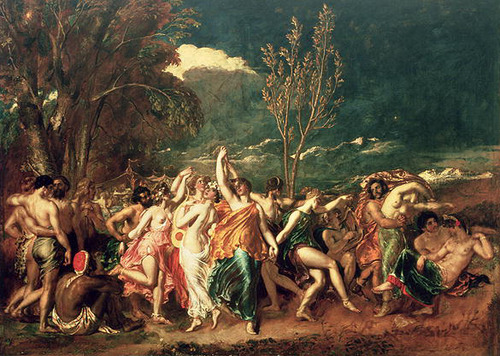
The sons of God (Seth’s line) started marrying the daughters of man. (I know most people think Angels intermarried, but Jesus made it clear that Angels’ can’t reproduce). I believe that the Godly children of Seth who were to raise up God’s Kingdom design intermarried with the fleshly Kingdom of Man line of Cain. This produced mighty men, men whose pride and abilities knew no bounds. The Lord saw that the wickedness of man was great in the earth, and that every intention of the thoughts of his heart was only evil continually. Instead of humble men offering themselves to God, proud and arrogant men walked in the “Way of Cain.” The pride and arrogance of man was opposed to humility and sacrifice before God. They denied and even rebelled against the Principle of the Cross.
Therefore, God was grieved, for He was not able to practice mercy, justice and righteousness because of the sinfulness of man. But “Noah found grace in the eyes of the Lord.” Noah alone was following the principle of the Cross. (Gen 6:8)

Noah and his family alone survived the worldwide flood that God sent upon sinful man. Through the flood, God reformed His creation, and brought forth a family that would follow the principle of the Cross.

1 Peter 3:18-20 For Christ also died for sins once for all, the just for the unjust, so that He might bring us to God, having been put to death in the flesh, but made alive in the spirit; in which also He went and made proclamation to the spirits now in prison, who once were disobedient, when the patience of God kept waiting in the days of Noah, during the construction of the ark, in which a few, that is, eight persons, were brought safely through the water.

Noah preached the principle of the Cross, but man in his wisdom refused the message of the Cross.
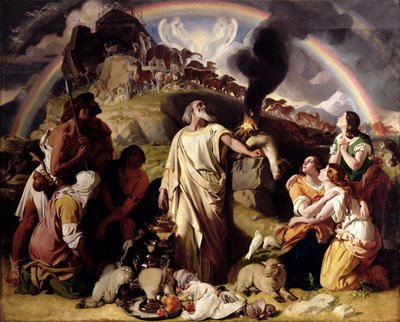
He preached through Noah “when once the longsuffering of God waited in the days of Noah.” For 120 years, Noah had preached the Word of God. He saved his family but no one else. It was the Spirit of Christ who spoke through Noah in Noah’s day. In Christ’s day, those who rejected Noah’s message were in prison. The thought is that Christ’s death meant nothing to them just as it means nothing to a great many people today who, as a result, will also come into judgment.[2]

After the flood is over and the ground has dried, God opens the Ark and Noah and his family walks upon the cleansed Earth. Noah immediately builds an altar and offers sacrifices of all the clean animals and birds on the ark. This is the first time the word “altar[3]” is used in the Bible—Genesis 8:20.

3mizbēaḥ: A masculine noun meaning the altar, the place of sacrifice. It is a noun formed from the verb zāb̠aḥ, which means to slaughter an animal, usually for a sacrifice.

This is the principle of the Cross. It is the picture of redemption. The blood is poured out upon the altar and the animal is consumed in a fire unto the Lord.

Genesis 8:21-22 And when the LORD smelled the pleasing aroma, the LORD said in his heart, “I will never again curse the ground because of man, for the intention of man’s heart is evil from his youth. Neither will I ever again strike down every living creature as I have done. While the earth remains, seedtime and harvest, cold and heat, summer and winter, day and night, shall not cease.”

God’s creation was restored through the principle of the Cross. The wisdom of God had prevailed over the wisdom of man. Man had survived the flood through the provision of God. Man was now offering the right offering to God in humility and praise. The burnt offering signified that this was a complete offering to God!

Nimrod

Now it does not take long to see man’s pride rear its ugly head in God’s renewed creation.

Genesis 10:8-10 Cush fathered Nimrod; he was the first on earth to be a mighty man. He was a mighty hunter before the LORD. Therefore, it is said, “Like Nimrod a mighty hunter before the LORD.” The beginning of his kingdom was Babel, Erech, Accad, and Calneh, in the land of Shinar.
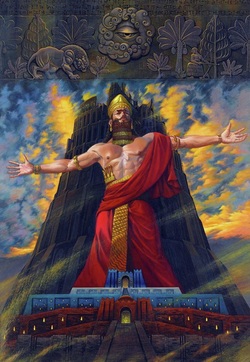
Nimrod’s Kingdom was not built on the principle of the Cross, but on rebellion and pride. In fact, the idea that Nimrod was not a mighty hunter before the Lord, but rather a mighty hunter AGAINST the Lord.

(Adam Clarke) His name Nimrod comes from ‏מרד‎, marad, “he rebelled”; and the Targum, on 1 Chronicles 1:10, says: Nimrod began to be a mighty man in sin, a murderer of innocent men, and a rebel before the Lord. The Jerusalem Targum says: “He was mighty in hunting (or in prey) and in sin before God, for he was a hunter of the children of men in their languages; and he said unto them, Depart from the religion of Shem, and cleave to the institutes of Nimrod.” The Syriac calls him a warlike giant. The word ‏ציד‎  tsayid, which we render hunter, signifies prey; and is applied in the Scriptures to the hunting of men by persecution, oppression, and tyranny. Hence it is likely that Nimrod, having acquired power, used it in tyranny and oppression; and by rapine and violence founded that domination which was the first distinguished by the name of a kingdom on the face of the earth[4]
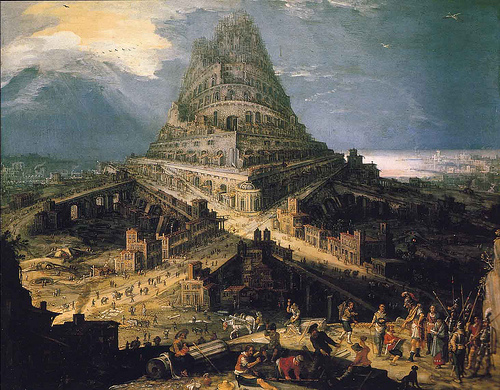
Nimrod was building a kingdom opposed to the Lord, opposed to the principles of the Cross. This kingdom was all about man, and what man could do. It was a kingdom built on the foundation of Cain, a Kingdom that did not need God, did not need to sacrifice to Him.

Genesis 11:4-6 Then they said, “Come, let us build ourselves a city and a tower with its top in the heavens, and let us make a name for ourselves, lest we be dispersed over the face of the whole earth.” And the LORD came down to see the city and the tower, which the children of man had built. And the LORD said, “Behold, they are one people, and they have all one language, and this is only the beginning of what they will do. And nothing that they propose to do will now be impossible for them.

God saw that man could do anything and the wisdom of man was united against the wisdom of God. Therefore, God did a “BLAH” thing. People started speaking “blah blah blah.” Once again God had displayed His power and wisdom to man. Once again, man ignored Him.

As we continue with the next phase of God’s redemptive plan, we will see a man called out of idolatry and man-worship. We will see a man whose very life was lived in the shadow of the cross.

The principle of the Cross is the thread that runs throughout the Bible.
  1. The Cross is the Wisdom and Power of God
  2. The Cross is opposed to the wisdom and power of Man
  3. The Cross is the perfect Blood Sacrifice

We have seen that God’s plan for this world and for us His creation has always been fellowship and life. Yet that must be done in humility and holiness. When sin entered this world, it made us men that rebel against God’s ways. We are inclined to stray, to be independent, to seek our own welfare. Humility, dependence, repentance are foreign to our nature. Therefore, we rebel against the Cross. We refuse to sacrifice to God in His way. We want to maintain control. Therefore, we deny the power and wisdom of God.

Without Christ, our lives are a sequence of “blah blah blah” to God. We are ants scrambling over the excrement of our pride and arrogance. All this can be changed by submitting to the Cross.


[1] Robert Jamieson, A.R. Fausset, David Brown, A Commentary: Critical, Experimental, and Practical on the Old and New Testaments, (Toledo, OH: Jerome B. Names & Co., 1884), WORDsearch CROSS e-book, Under: “GENESIS”.

[2] J. Vernon McGee, Thru The Bible with J. Vernon McGee, (Nashville, TN: Thomas Nelson, 1983), WORDsearch CROSS e-book, Under: “Chapter 3”.

[3] Warren Baker and Eugene Carpenter, The Complete Word Study Dictionary – Old Testament, (Chattanooga, TN: AMG Publishers, 2003), WORDsearch CROSS e-book, Under: “mizbēah.”

[4] . Adam Clarke, A Commentary and Critical Notes, (New York: Abingdon-Cokesbury Press, 1826), WORDsearch CROSS e-book, Under: “Genesis 10”.


The Crucifixion in Excruciating Detail

1 Corinthians 1:18-25 For the word of the cross is folly to those who are perishing, but to us who are being saved it is the power of God. For it is written, “I will destroy the wisdom of the wise, and the discernment of the discerning I will thwart.” Where is the one who is wise? Where is the scribe? Where is the debater of this age? Has not God made foolish the wisdom of the world? For since, in the wisdom of God, the world did not know God through wisdom, it pleased God through the folly of what we preach to save those who believe. For Jews demand signs and Greeks seek wisdom, but we preach Christ crucified, a stumbling block to Jews and folly to Gentiles, but to those who are called, both Jews and Greeks, Christ the power of God and the wisdom of God. For the foolishness of God is wiser than men, and the weakness of God is stronger than men.

To ask a Gentile to believe in a Savior who had been crucified was absolute foolishness at the time of Paul. Crucifixion was considered so obscene that no one spoke of it. If a relative had been crucified for his crimes, you would be too ashamed to mention it. A Crucified Savior was unheard of! It was foolishness to the “wisdom” of the Gentiles. It was a stumbling block to the Jews, who looked for a Kingly Messiah, not a Crucified commoner.

Death was designed for maximum pain with minimal blood loss, thereby extending the pain and suffering by days. Crucifixion was, in every sense of the word, excruciating (Latin, excruciatus, or “out of the cross”). In order to understand the obscenity and shame of the crucifixion, and to know the depths of the Love of our Savior,  we need to understand the horrors to which our Savior willingly submitted Himself.

The Scourging

Preparations for Jesus’ scourging were carried out at Caesar’s orders. The prisoner was stripped of His clothing and His hands tied to a post above His head. The Roman legionnaire stepped forward with the flagrum, or flagellum, in his hand. This was a short whip consisting of several heavy, leather thongs with two small balls of lead attached near the ends of each. The heavy whip was brought down with full force again and again across Jesus’ shoulders, back, and legs. At first the weighted thongs cut through the skin only. Then, as the blows continued, they cut deeper into the subcutaneous tissues, producing first an oozing of blood from the capillaries and veins of the skin and finally spurting arterial bleeding from vessels in the underlying muscles.

The small balls of lead first produced large deep bruises that were broken open by subsequent blows. Finally, the skin of the back was hanging in long ribbons, and the entire area was an unrecognizable mass of torn, bleeding tissue. When it was determined by the centurion in charge that the prisoner was near death, the beating was finally stopped.

The Humiliation

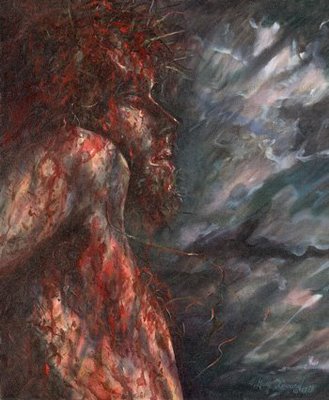
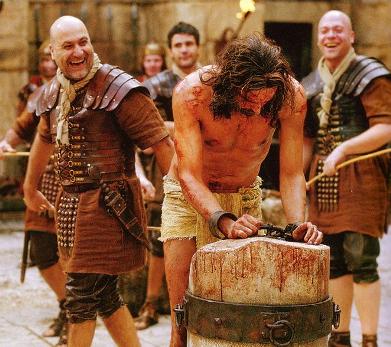
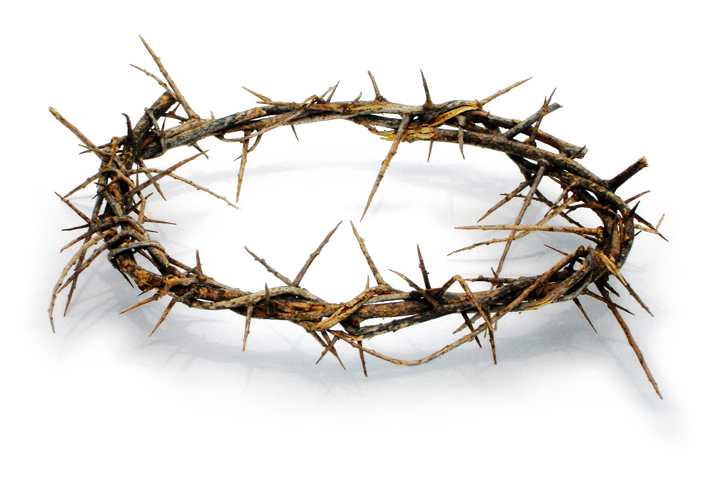
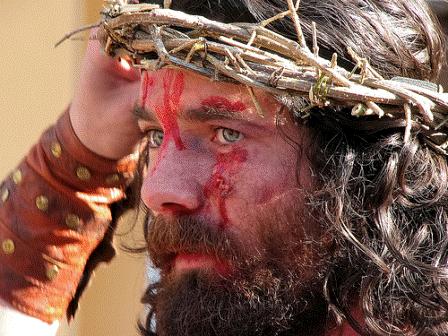
The half-fainting Jesus was then untied and allowed to slump to the stone pavement, wet with his own blood. The Roman soldiers saw a great joke in this provincial Jew claiming to be a king. They threw a robe across His shoulders and placed a stick in His hand for a scepter. They still needed a crown to make their travesty complete. Small flexible branches covered with long thorns, commonly used for kindling fires in the charcoal braziers in the courtyard, were plaited into the shape of a crude crown. The crown was pressed into his scalp and again there was copious bleeding as the thorns pierced the very vascular tissue. After mocking Him and striking Him across the face, the soldiers took the stick from His hand and struck Him across the head, driving the thorns deeper into His scalp. Finally, they tired of their sadistic sport and tore the robe from His back. The robe had already become adherent to the clots of blood and serum in the wounds, and its removal, just as in the careless removal of a surgical bandage, caused excruciating pain. The wounds again began to bleed.

Jesus had not drank since the night before, so the combination of the beatings, the crown of thorns, and the scourging would have set into motion an irreversible process of severe dehydration and cardio respiratory failure. All of this was done so that the prophecies would be fulfilled:

  • I can count all my bones: they look and stare upon me. Psalm 22:17
  • I gave my back to those who strike, and my cheeks to those who pull out the beard; I hid not my face from disgrace and spitting. Isaiah 50:6
  • As many were astonished at you— his appearance was so marred, beyond human semblance, and his form beyond that of the children of mankind. Isaiah 52:14
  • Surely he has borne our griefs and carried our sorrows; yet we esteemed him stricken, smitten by God, and afflicted. But he was wounded for our transgressions; he was crushed for our iniquities; upon him was the chastisement that brought us peace, and with his stripes we are healed. Isaiah 53:4-5

Behold the Man!

The Crown of Thorns and the Robe

The significance of the scarlet robe and crown of thorns is to emphasize Jesus’ taking the sins of the world upon His body. The Bible describes sin by the color of scarlet and that thorns first appeared after the fall, as a sign of the curse. Thus, the articles that He wore are symbols to show that Jesus took on the sins (and the curse) of the world upon Himself.

  • Genesis 3:17-18: “Cursed is the ground because of you; through painful toil you will eat of it all the days of your life. It will produce thorns and thistles for you, and you will eat the plants of the field.
  • “Isaiah 1:18 “Come now, let us reason together,” says the LORD.”Though your sins are like scarlet, they shall be as white as snow; though they are red as crimson, they shall be like wool.”  

Crucifixion

Crucifixion was invented by the Persians approximately 300-400 B.C. It was “perfected” by the Romans in the first century B.C. It is arguably the most painful death ever invented by man and is where we get our term “excruciating.” It was reserved primarily for the most vicious of criminals, as well as conquered foes.

Victims of crucifixion were typically stripped naked and their clothing divided by the Roman guards. In Jesus’ case this was done in fulfillment of Psalm 22:18, “They divide My garments among them, and for My clothing they cast lots.”

It was customary for the condemned man to carry his own cross from the flogging post to the site of crucifixion outside the city walls. He was usually naked, unless this was prohibited by local customs. Since the weight of the entire cross was probably well over 300 lb., only the crossbar was carried. The heavy patibulum of the cross, (weighing 75 to 125 lb.) was placed across the nape of the victim’s neck and balanced along both shoulders. Usually, the outstretched arms were tied to the crossbar. The procession of the condemned Christ, two thieves, and the execution detail of Roman soldiers headed by a centurion began its slow journey along the route which we know today as the Via Dolorosa.

In spite of Jesus’ efforts to walk erect, the weight of the heavy wooden beam, together with the shock produced by copious loss of blood, was too much. He stumbled and fell. The rough wood of the beam gouged into the lacerated skin and muscles of the shoulders. He tried to rise, but human muscles had been pushed beyond their endurance. The centurion, anxious to proceed with the crucifixion, selected a stalwart North African onlooker, Simon of Cyrene, to carry the cross. Jesus followed, still bleeding and sweating the cold, clammy sweat of shock. The 650-yard journey from the Fortress Antonia to Golgotha was finally completed.

Outside the city walls were permanently located the heavy upright wooden stipes, on which the patibulum would be secured. At the site of execution, by law, the victim was given a bitter drink of wine mixed with myrrh (gall) as a mild analgesic. Even though Jesus was severely dehydrated through blood and fluid loss, He refused this drink. He chose to face death in full control of His senses. Edersheim writes:

“It was a merciful Jewish practice to give to those led to execution a draught of strong wine mixed with myrrh so as to deaden consciousness” (Mass Sem 2.9; Bemid. R. 10). The draught was offered to Jesus when He reached Golgotha. But having tasted it….He would not drink it. ….He would meet Death, even in his sternest and fiercest mood, and conquer by submitting to the full…. (p.880).

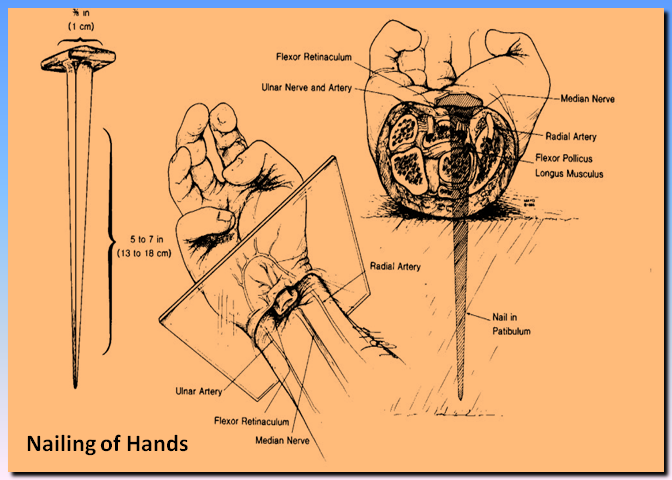
Jesus refused this drink. The criminal was then thrown to the ground on his back, with his arms outstretched along the patibulum. The hands could be nailed or tied to the crossbar, but nailing apparently was preferred by the Romans. The archaeological remains of a crucified body, found in an ossuary near Jerusalem and dating from the time of Christ, indicate that the nails were tapered iron spikes approximately 5 to 7 in (13 to 18 cm) long with a square shaft 3/8 in (1 cm) across. Furthermore, ossuary findings and the Shroud of Turin have documented that the nails commonly were driven through the wrists rather than the palms.

After both arms were fixed to the crossbar, the patibulum and the victim, together, were lifted onto the stipes. On the low cross, four soldiers could accomplish this relatively easily. However, on the tall cross, the soldiers used either wooden forks or ladders.

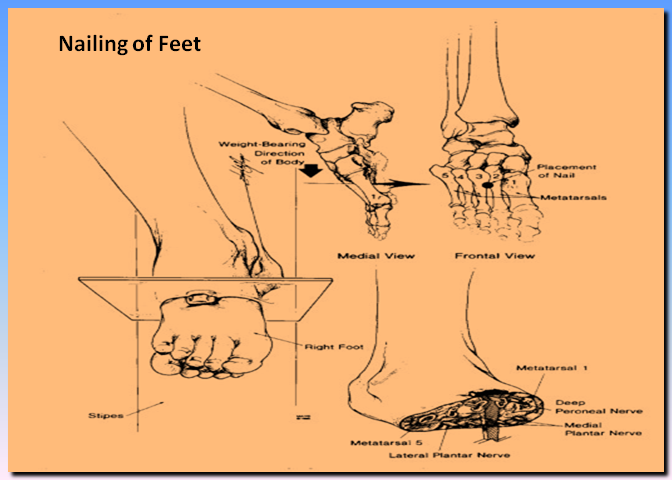
Next, the feet were fixed to the cross, either by nails or ropes. Ossuary findings and the Shroud of Turin suggest that nailing was the preferred Roman practice. Although the feet could be fixed to the sides of the stipes or to a wooden footrest, they usually were nailed directly to the front of the stipes. To accomplish this, flexion of the knees may have been quite prominent, and the bent legs may have been rotated laterally. The left foot was pressed backward against the right foot. With both feet extended, toes down, a nail was driven through the arch of each, leaving the knees moderately flexed. The victim was now crucified.

When the nailing was completed, the titulus was attached to the cross, by nails or cords, just above the victim’s head. The soldiers and the civilian crowd often taunted and jeered the condemned man, and the soldiers customarily divided up his clothes among themselves.

To add to the horror, insects would light upon or burrow into the open wounds or the eyes, ears, and nose of the dying and helpless victim, and birds of prey would tear at these sites. Moreover, it was customary to leave the corpse on the cross to be devoured by predatory animals. However, by Roman law, the family of the condemned could take the body for burial, after obtaining permission from the Roman judge.

Since no one was intended to survive crucifixions the body was not released to the family until the soldiers were sure that the victim was dead. By custom, one of the Roman guards would pierce the body with a sword or lance. Traditionally, this was a spear wound to the heart through the right side of the chest — a fatal wound probably taught to most Roman soldiers. The Shroud of Turin documents this form of injury. Moreover, the standard infantry spear, which was 5 to 6 ft long, could easily have reached the chest of a man crucified on the customary low cross.”

On the Cross

As Jesus slowly sagged down with more weight on the nails in the wrists, excruciating, fiery pain shot along the fingers and up the arms to explode in the brain. The nails in the wrists were putting pressure on the median nerve, large nerve trunks which traverse the mid-wrist and hand. As He pushed himself upward to avoid this stretching torment, He placed His full weight on the nail through His feet. Again there was searing agony as the nail tore through the nerves between the metatarsal bones of His feet.

At this point, another phenomenon occurred. As the arms fatigued, great waves of cramps swept over the muscles, knotting them in deep relentless, throbbing pain. With these cramps came the inability to push Himself upward. Hanging by the arm, the pectoral muscles, the large muscles of the chest, were paralyzed and the intercostal muscles, the small muscles between the ribs, were unable to act. Air could be drawn into the lungs, but could not be exhaled. Jesus fought to raise Himself in order to get even one short breath. Finally, the carbon dioxide level increased in the lungs and in the blood stream, and the cramps partially subsided.

Forces of Darkness

While He was on the cross, darkness covered the land (noon to three p.m.). Jesus, in Luke 22:53, associates those who arrested Him with the power of darkness. Where were the evil forces while Jesus was on the cross? The verses below from Psalm 22 seem out of place when first read. There seems to be no mention of “bulls” and “lions” around the cross. The verses, however, have a deeper meaning. Bashan was an area to the east of the Jordan River which was famous for its fertility. There cattle were raised which grew to enormous sizes. The people there worshipped demon spirits (associated with Baal) within the cattle.1 Pet 5:8 describes Satan as “a roaring lion…seeking those who he may devour” These verses are thus suggestive of the spiritual activity of Satan and his demons, celebrating as Jesus was suffering on the cross.

Psalm 22:12-13: “Many bulls surround me; strong bulls of Bashan encircle me. Roaring lions tearing their prey open their mouths wide against me.”

Medical Aspects of Crucifixion

After forced to carry his cross to the site, the victim was then placed on his back, arms stretched out and nailed to the cross bar. The nails, which were generally about 7-9 inches long, were placed between the bones of the forearm (the radius and ulna) and the small bones of the hands (the carpal bones).

The placement of the nail at this point had several effects. First it ensured that the victim would indeed hang there until dead. Secondly, a nail placed at this point would sever the largest nerve in the hand called the median nerve.

The severing of this nerve is a medical catastrophe. In addition to severe burning pain the destruction of this nerve causes permanent paralysis of the hand. Furthermore, by nailing the victim at this point in the wrist, there would be minimal bleeding and there would be no bones broken! Thus scriptures were fulfilled:

  • He keepeth all his bones: not one of them is broken. Psalm 34:20

The positioning of the feet is probably the most critical part of the mechanics of crucifixion. First the knees were flexed about 45 degrees and the feet were flexed (bent downward) an additional 45 degrees until they were parallel the vertical pole. An iron nail about 7-9 inches long was driven through the feet between the 2nd and 3rd metatarsal bones. In this position the nail would sever the dorsal pedal artery of the foot, but the resultant bleeding would be insufficient to cause death.

The scourging prior to crucifixion served to weaken the condemned man and, if blood loss was considerable, to produce orthostatic hypotension[1] and even hypovolemic[2] shock. When the victim was thrown to the ground on his back, in preparation for transfixion of the hands, his scourging wounds most likely would become torn open again and contaminated with dirt. Furthermore, with each respiration, the painful scourging wounds would be scraped against the rough wood of the stipes. As a result, blood loss from the back probably would continue throughout the crucifixion ordeal.

With arms outstretched but not taut, the wrists were nailed to the patibulum. It has been shown that the ligaments and bones of the wrist can support the weight of a body hanging from them, but the palms cannot. Accordingly, the iron spikes probably were driven between the radius and the carpals or between the two rows of carpal bones, either proximal to or through the strong band like flexor retinaculum and the various intercarpal ligaments. Although a nail in either location in the wrist might pass between the bony elements and thereby produce no fractures, the likelihood of painful periosteal injury would seem great. Furthermore, the driven nail would crush or sever the rather large median nerve. The stimulated nerve would produce excruciating bolts of fiery pain in both arms. Although the severed median nerve would result in paralysis of a portion of the hand, ischemic contracture and impalement of various ligaments by the iron spike might produce a claw like grasp.

Most commonly, the feet were fixed to the front of the stipes by means of an iron spike driven through the first or second inter metatarsal space, just distal to the tarsometatarsal joint. It is likely that the deep peroneal nerve and branches of the medial and lateral plantar nerves would have been injured by the nails. Although scourging may have resulted in considerable blood loss, crucifixion per se was a relatively bloodless procedure, since no major arteries, other than perhaps the deep plantar arch, pass through the favored anatomic sites of transfixion.

Tetanic Spasm

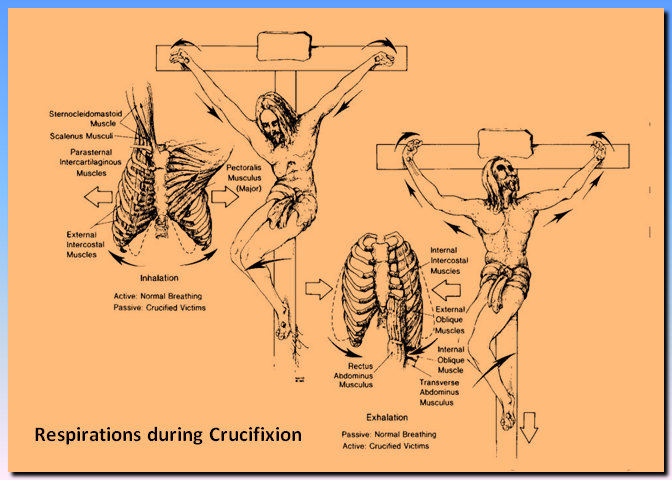
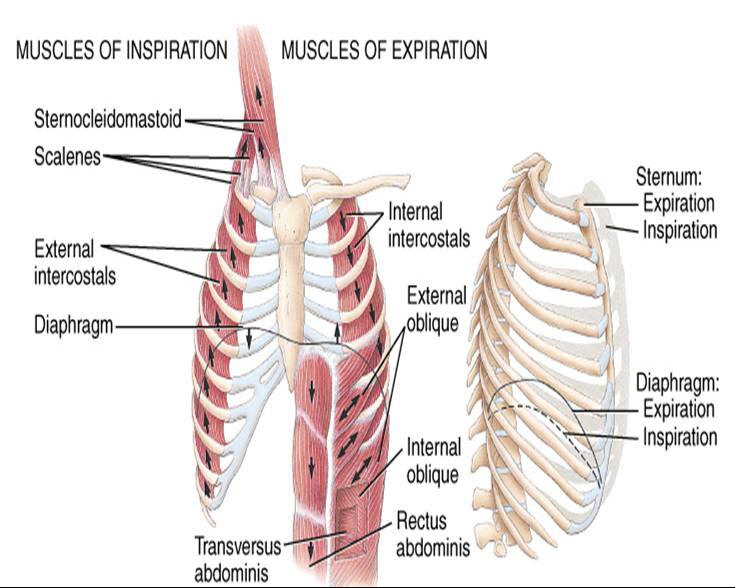
The major effect of crucifixion, beyond the excruciating pain, was a marked interference with normal respiration, particularly exhalation. The weight of the body, pulling down on the outstretched arms and shoulders, would tend to fix the intercostal[3] muscles in an inhalation state and thereby hinder passive exhalation.  Accordingly, exhalation was primarily diaphragmatic, and breathing was shallow. It is likely that this form of respiration would not suffice and that hypercapnia[4] would soon result. The onset of muscle cramps or tetanic spasms[5], due to fatigue and hypercapnia, would hinder respiration even further.

The resulting position on the cross sets up a horrific sequence of events which results in a slow, painful death. Having been pinned to the cross, the victim now has an impossible position to maintain.

With the knees flexed at about 45 degrees, the victim must bear his weight with the muscles of the thigh. However, this is an almost impossible task-try to stand with your knees flexed at 45 degrees for 5 minutes. As the strength of the legs gives out, the weight of the body must now be borne by the arms and shoulders. The result is that within a few minutes of being placed on the cross, the shoulders will become dislocated. Minutes later the elbows and wrists become dislocated. The result of these dislocations is that the arms are as much as 6-9 inches longer than normal.

With the arms dislocated, considerable body weight is transferred to the chest, causing the rib cage to be elevated in a state of perpetual inhalation. Consequently, in order to exhale the victim must push down on his feet to allow the rib muscles to relax. The problem is that the victim cannot push very long because the legs are extremely fatigued. As time goes on, the victim is less and less able to bear weight on the legs, causing further dislocation of the arms and further rising of the chest wall, making breathing more and more difficult.

  • …all my bones are out of joint; my heart is like wax; it is melted within my breast; Psalm 22:14

The result of this process is a series of catastrophic physiological effects. Because the victim cannot maintain adequate ventilation of the lungs, the blood oxygen level begins to diminish and the blood carbon dioxide (CO2) level begins to rise. This process sets up a vicious cycle of increasing oxygen demand-which cannot be met-followed by an ever increasing heart rate. The rising CO2 level stimulates the heart to beat faster in order to increase the delivery of oxygen and the removal of CO2. Due to the shallow breathing, the victim’s lungs begin to collapse in small areas, causing hypoxia and hypercapnia. A respiratory acidosis[6], with lack of compensation by the kidneys due to the loss of blood from the numerous beatings, resulted in an increased strain on the heart, which beats faster to compensate. After several hours the heart begins to fail, the lungs collapse and fill up with fluid, which further decreases oxygen delivery to the tissues. The blood loss and hyperventilation combines to cause severe dehydration. Over a period of several hours the combination of collapsing lungs, a failing heart, dehydration, and the inability to get adequate oxygen supplies to the tissues cause the eventual death of the victim. The victim, in effect, cannot breath properly and slowly suffocates to death. In cases of severe cardiac stress, such as crucifixion, a victim’s heart can even burst. This process is called “Cardiac Rupture.”

The actual cause of death by crucifixion was multifactorial and varied somewhat with each case, but the two most prominent causes probably were hypovolemic shock and exhaustion asphyxia. Other possible contributing factors included dehydration, stress-induced arrhythmias, and congestive heart failure with the rapid accumulation of pericardial and perhaps pleural effusions. Crucifracture (breaking the legs below the knees), if performed, led to death from asphyxia within minutes.

His Last Words

Spasmodically, Jesus was able to push Himself upward to exhale and bring in life-giving oxygen. It was undoubtedly during these periods that He uttered the seven short sentences that are recorded.

He suffered hours of limitless pain, cycles of twisting, joint-rending cramps, intermittent partial asphyxiation, and searing pain as tissue was torn from His lacerated back from His movement up and down against the rough timbers of the cross. Then another agony began: a deep crushing pain in the chest as the pericardium, the sac surrounding the heart, slowly filled with serum and began to compress the heart.

The prophecy in Psalm 22:14 was being fulfilled: “I am poured out like water, and all my bones are out of joint, my heart is like wax; it is melted in the midst of my bowels.”

The end was rapidly approaching. The loss of tissue fluids had reached a critical level; the compressed heart was struggling to pump heavy, thick, sluggish blood to the tissues, and the tortured lungs were making a frantic effort to inhale small gulps of air. The markedly dehydrated tissues sent their flood of stimuli to the brain. Jesus gasped His fifth cry: “I thirst.” Again we read in the prophetic psalm: “My strength is dried up like a potsherd; my tongue cleaveth to my jaws; and thou has brought me into the dust of death” (Psalm 22:15 KJV).

Jesus was offered a second drink, which He accepted. It is ‘pocsa’, a sour wine popular at that time. Jesus accepted this drink because of two important images. The drink was given on the “stalk of a hyssop plant”. Remember that these events occurred at the Feast of the Passover. During this feast, hyssop was used to apply the blood of the Passover lamb to the wooden doorposts of the Jews. It is interesting the end of this hyssop stalk pointed to the blood of the Perfect Lamb which was applied to the wooden cross for the salvation of all mankind.

In addition, the wine vinegar is a product of fermentation, which is made from grape juice and yeast. The word literally means “that which is soured” and is related to the Hebrew term for “that which is leavened”. (Holmans) Yeast or leaven, is a Biblical symbol of sin. When Jesus took this drink, (i.e. a drink which was “leavened”) it is thus symbolic of His taking the sins of the world into His body.

After this last drink, His body was now in extremis, and He could feel the chill of death creeping through His tissues. This realization brought forth His sixth word, possibly little more than a tortured whisper: “It is finished.” His mission of atonement had been completed. Finally, He could allow His body to die. With one last surge of strength, He once again pressed His torn feet against the nail, straightened His legs, took a deeper breath, and uttered His seventh and last cry: “Father, into Your hands I commit My spirit.”

While the crucifixion is horrible to our physical senses, we will never understand the spiritual agony of Hell that Jesus experienced for us upon the cross. There is no graphic display that can impress upon our senses the wrath of God upon Jesus Christ. He drank of God’s Wrath against our sin! Wrath that was meant for us, to be experienced in an eternity of Hell, Jesus experienced in a moment. God experienced Hell for you and me! That is love that cannot be defined, only experienced! Do you know His Love? Has He changed your life?

This is a Compilation from the following Sources:

Dr. C Truman David, “The Crucifixion”,, New Wine Magazine, April 1982. Originally published in Arizona Medicine, March 1965, Arizona Medical Association.

The Agony of Love by Dr. Mark Eastman

http://www.frugalsites.net/jesus/crucifixion.htm

Medical Aspects of the Crucifixion of Jesus Christ, Compiled by David Terasaka, M.D. ©1996.


[1] Orthostatic hypotension is a form of hypotension in which a person’s blood pressure suddenly falls when standing up or stretching. The symptom is caused by blood pooling in the lower extremities upon a change in body position. It is quite common and can occur briefly in anyone, although it is particularly prevalent among the elderly, and those with low blood pressure.

[2] Hypovolemic shock refers to a medical or surgical condition in which rapid fluid loss results in multiple organ failure due to inadequate circulating volume and subsequent inadequate perfusion.

[3] Intercostal muscles are several groups of muscles that run between the ribs, and help form and move the chest wall. The intercostal muscles are mainly involved in the mechanical aspect of breathing. These muscles help expand and shrink the size of the chest cavity when you breathe.

[4] Hypercapnia (or hypercarbia) is generally defined as an abnormally high level of carbon dioxide (e.g., more than 45 mm Hg) in the arterial blood.
[5] a state of sustained muscular contraction without periods of relaxation caused by repetitive stimulation of the motor nerve trunk at frequencies so high that individual muscle twitches are fused and cannot be distinguished from one another

[6] Respiratory acidosis develops when there is too much carbon dioxide (an acid) in the body. This type of acidosis is usually caused when the body is unable to remove enough carbon dioxide through breathing.

My Daddy taught me not to waste. He would yell at us to close the door, turn out the lights, clean my plate. He so impressed that quality upon me that I echoed his words to my children. Something about waste bothers us. We would never volunteer to pay $100 for a McDonald’s Happy Meal. No, that would be a waste!

To understand the radical work of the Gospel, we must understand that the Gospel runs counter to everything that man is taught. The Gospel is opposed to every rational thing that we teach our children. The core concept that is most repulsive to us is seen in John 12. But before we dwell upon the Gospel and “waste”, I want us to see what other things can block the power of the Gospel from our lives. This will lead us into a deeper understanding of the power of the Gospel for our everyday lives. This will open the Gospel to us and it will drive our discipleship.

The Gospel is “Death with a view to increase”. Discipleship is “gaining by trading”. Fruitfulness is the result of living the Gospel. We are not talking of your own fruitfulness, like looking at your garden and admiring your green thumb. We are speaking of fruit that comes from gaining the life of Jesus Christ. Fruit comes from Him and our willingness to give everything to Him.

John 12:24 Truly, truly, I say to you, unless a grain of wheat falls into the earth and dies, it remains alone; but if it dies, it bears much fruit.

A grain of wheat has life in it, but it abides alone. It has the power to impart life to others, but to do so it must be buried in death.

2 Corinthians 4:11-12 For we who live are always being given over to death for Jesus’ sake, so that the life of Jesus also may be manifested in our mortal flesh. So death is at work in us, but life in you.

Is Life at work in You? Are you experiencing the Life that is in Jesus Christ? Do you ache when you spend a day without a word from Him? Do you miss not spending time in prayer and fellowship with Him? If His life is at work in you, you know it. If it is not, perhaps you have become hardened to the Gospel. Perhaps you will see yourself in John 12, and God will speak to you this morning, calling you to repent, calling you to waste your life for the sake of Jesus Christ.

John 12 is a chapter about Life and Death, Light and Darkness, Man’s Wisdom vs. God’s Wisdom. At the beginning we see Lazarus who came back to life from the dead. He is the testimony of what a Christian is to be. In the middle we see people who want to see Jesus, but they are blind, their hearts are darkened. At the end we see a lonely Jesus talking to a group of people who just don’t get Him:

John 12:44-50 And Jesus cried out and said, “Whoever believes in me, believes not in me but in him who sent me. And whoever sees me sees him who sent me. I have come into the world as light, so that whoever believes in me may not remain in darkness. If anyone hears my words and does not keep them, I do not judge him; for I did not come to judge the world but to save the world. The one who rejects me and does not receive my words has a judge; the word that I have spoken will judge him on the last day. For I have not spoken on my own authority, but the Father who sent me has himself given me a commandment—what to say and what to speak. And I know that his commandment is eternal life. What I say, therefore, I say as the Father has told me.”

There is light in the words of Christ. There is Life in the Words of Christ. But our hearts are easily hardened to the power of Christ and His Gospel. Our eyes are easily dulled to witness the power of the Gospel.

Let’s see how our hearts can become hard, and our eyes become dull:

There are three people seen in John 12. There are the Disciples, who supposedly follow Jesus. There are the Greeks who want to see Jesus. There are the Pharisees who despise Jesus. Finally, there is a solitary woman named Mary, and our attention will be drawn to her in a moment.

1. The Greeks

Now among those who went up to worship at the feast were some Greeks. So these came to Philip, who was from Bethsaida in Galilee, and asked him, “Sir, we wish to see Jesus.” Philip went and told Andrew; Andrew and Philip went and told Jesus. And Jesus answered them, “The hour has come for the Son of Man to be glorified. Truly, truly, I say to you, unless a grain of wheat falls into the earth and dies, it remains alone; but if it dies, it bears much fruit. Whoever loves his life loses it, and whoever hates his life in this world will keep it for eternal life. If anyone serves me, he must follow me; and where I am, there will my servant be also. If anyone serves me, the Father will honor him. (Joh 12:20-26)

The Greeks wanted to see Jesus. They made a big deal about seeing him. As if they were important and were worth an audience with Him. The fact that they used intermediaries to see Jesus indicates they were men of station and means. In the oriental world important people would always use intermediary agents. As important men they would never go directly to Jesus. They required an introduction.

  • Man’s Status is not an element of the Gospel.
  • Only Dying Slaves have Status with God

Jesus answered Philip and Andrew’s request by referring to His approaching Glory.

John 12:23 And Jesus answered them, “The hour has come for the Son of Man to be glorified.”

His glory is not based upon His status or rank, but simply upon His death. Jesus answered their request with a grain of wheat, and how it must die to bear fruit. If anyone wants to see Jesus, they must hate their life and their status, and follow Him as a slave, a person with no status.

God will honor all those who hate this life and follow Jesus as a slave.

2. The Pharisees & the Crowd

One more time Jesus speaks of glory.

“Now is my soul troubled. And what shall I say? ‘Father, save me from this hour’? But for this purpose I have come to this hour. Father, glorify your name.” Then a voice came from heaven: “I have glorified it, and I will glorify it again.” (Joh 12:27-28)

And the crowd heard the voice of God. Jesus said further, When I am lifted up from the earth, I will draw all people to myself.”

But the people didn’t understand. They said the Law teaches that Christ will abide forever. How could the Son of Man die? Their eyes were blind to Jesus. Their hearts were hardened to Jesus being the Messiah. The Pharisees and the crowd could not see Jesus as Lord because they were too focused on their standing, and what they thought should be the standing of the Messiah.

The word spoken by the prophet Isaiah might be fulfilled: “Lord, who has believed what he heard from us, and to whom has the arm of the Lord been revealed?” Therefore they could not believe. For again Isaiah said, “He has blinded their eyes and hardened their heart, lest they see with their eyes, and understand with their heart, and turn, and I would heal them.” Isaiah said these things because he saw his glory and spoke of him. Nevertheless, many even of the authorities believed in him, but for fear of the Pharisees they did not confess it, so that they would not be put out of the synagogue; for they loved the glory that comes from man more than the glory that comes from God. (Joh 12:38-50)

The Pharisees could not see the Glory of God because they loved the glory of man. They put their own concepts of standing and status before God’s. They could not see the glory of God hanging on the cross. It was a foreign concept to them. It kept their eyes blind and their hearts hard.

Do you seek man’s glory? Do you like the admiration of men? Does it bother you when men think bad of you, or look down on you?

Is standing important to you? Do position, influence and power matter to you? If you answered even a tiny ‘yes’ to any of those things, you might not understand the Gospel. Your eyes might be blind to the power of the Gospel. Your heart might be hardened to the power of the Gospel.

But the real test of whether the Gospel is impacting your life is in the third group, the Disciples.

3.  The Disciples

Money and things can harden our heart to the message of the Gospel.

Mark 14:4-9 There were some who said to themselves indignantly, “Why was the ointment wasted like that? For this ointment could have been sold for more than three hundred denarii and given to the poor.” And they scolded her. But Jesus said, “Leave her alone. Why do you trouble her? She has done a beautiful thing to me. For you always have the poor with you, and whenever you want, you can do good for them. But you will not always have me. She has done what she could; she has anointed my body beforehand for burial. And truly, I say to you, wherever the gospel is proclaimed in the whole world, what she has done will be told in memory of her.”

To show you how hard hearts can get over money, look what Mark records as happening next:

Mark 14:10-11 Then Judas Iscariot, who was one of the twelve, went to the chief priests in order to betray him to them. And when they heard it, they were glad and promised to give him money. And he sought an opportunity to betray him.

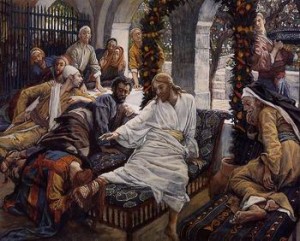
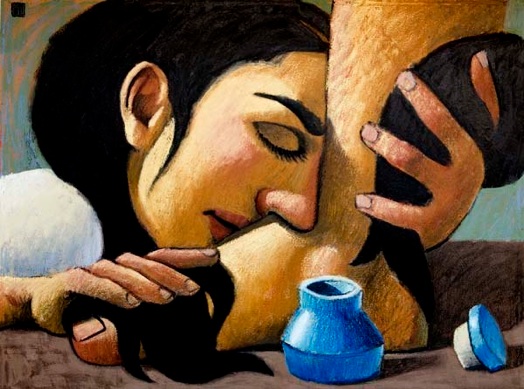
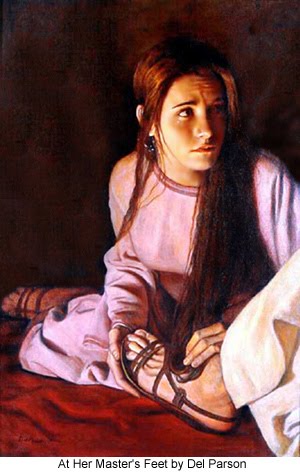
Jesus is being honored because He brought Life to a dead man. He raised a dead man to life. Not a sick man, not a comatose man, but a dead rotting in the ground, stinking to high heaven man. Jesus had brought life to a dead man, and all the disciples could worry about was how wasteful this woman was. A woman (Mary) took an alabaster flask of spikenard and used it to anoint the head and feet of Jesus. She even used her hair to wipe his feet. The disciples reacted indignantly, especially Judas. They said this is such a waste, it should have been sold for a year’s worth of wages and given to the poor.

The Gospel is Never “Rational”

What she did was so unusual, that most ‘normal, rational Christians’ would find it a waste. They shake their heads and turn the judgmental faucet on. Jesus reacted with some stern comments. His comments will shed some insight into the Gospel that you and I believe in. I want to unwrap His comments so we can learn the power of the Gospel in our everyday lives.

Why was the ointment wasted like that? Why this Waste?

Waste-apóleia; gen. apōleías, fem. noun from apóllumi , to destroy fully. Used trans. the losing or loss (Matt. 26:8), intrans. perdition, ruin. In the NT, apóleia refers to the state after death wherein exclusion from salvation is a realized fact, wherein  .[1]

In 1 Tim. 6:9 the words ólethros and apóleia occur together referring to those who determine to be rich. In this instance, ólethros refers to the actual physical death of those who desire to be rich by any means such as Judas, Ananias and Sapphira. Apóleia, on the other hand, refers to separation from God Himself in fulfillment of our Savior’s warnings that the rich enter the kingdom of heaven with difficulty (Matt. 19:23, 24; Mark 10:25). [2]

Jesus responds to His blind and hardened disciples:

1. Leave her alone

Jesus issued a stern rebuke to His disciples. Give it up guys! Stop it! You are so wrong Guys. You just don’t get it! Jesus wanted his men to see something amazing about the Gospel. It is a foundational principle of God’s character revealed in the Gospel. It is a principle which must be applied to our life if we are to experience the power of Jesus Christ.

Sometimes we are quick to judge someone, especially because of something they do that seems to be stupid or dumb. God often has a lesson for us to see and understand. God’s ways are not our ways, and we must learn to see God in those moments that seem such a waste.

Have you ever said something or thought something about what someone has done and you say, I know I should say this, or I don’t mean any disrespect… Jesus is telling you to “Leave Her Alone”

2. Why do you trouble her. (Cause her pain)

The disciples probably thought they were something else. They had already argued about who was going to sit at the right hand of Christ. So they thought they were entitled to look down their noses at this poor unfortunate woman.

Jesus said stop causing her pain. Spiritual pride gets in the way of the work of the Spirit. It can cause pain in the body. The idea of this Greek word for cause  is ‘minister’.

  • The disciples were ministering pain to the body.

The Gospel is about Honoring Jesus Christ through your life. You can touch and encourage people and other disciples. You can strengthen others with your words and your actions. But when you allow things to darken your eyes, you can say and do things that bring pain to the body, to other believers. You cause pain to Jesus Christ. He says, why do you trouble her.

3. She has done a beautiful thing to me

Mark 14:6 καλὸν kalon ἔργον ergon  ἠργάσατο ērgasato ἐν en ἐμοί. emoi –A GOOD WORK SHE HAS PERFORMED ON ME

expresses beauty as a harmonious completeness, balance, proportion. Good as to effect or influence, useful, profitable, equivalent to hálas, salt[3]

We are to be salt to this world and to each other. And if we do it to honor Christ, the world will say that is so wasteful.

Here was a woman who wasted her beauty on the beauty of Jesus Christ. Her future as a wife and mother was bound up in that alabaster jar. It was her dowry given for marriage. She considered honoring Jesus so important that she poured out her beauty, her future, her everything upon his dirty feet, his dirty hair.

To give your life to Jesus Christ as a living sacrifice. To give Him your future, your reputation, your desires, and your dreams is a beautiful thing to God. It is considered your obligation as a follower of Jesus Christ. But if you want to do something really beautiful to Jesus, you must waste something. You must do something so ‘irrational’ that even disciples will say, “what a waste.”

4. She did what she could.

This single woman, who a few days before had been scolding Jesus for not coming sooner to heal sick Lazarus. She even blamed Jesus for his death. Now she was so touched by His compassion and love, that she was willing to give Him her future. Here was her dowry, reserved for the day of her betrothal, and now she was willingly pouring it upon her Savior.

She did it willingly, sacrificially, but most importantly, she did it! There was no delay, no hesitation, no doubt. If she had waited but a week, Jesus would have been dead.

Parents, Grandparents, are you doing anything wasteful for your family. Are you doing anything wasteful for God? What you can do should always be a waste. We do not limit our discipleship by what is rational or even prudent. We do what we can. We waste our lives, our possessions for the sake of the gospel.

5. She demonstrated the Gospel.

How did a foolish, wasteful act by an obviously desperate single woman display the Gospel? Why was this seemingly foolish act so important that Jesus said it would be told alongside the Gospel for the rest of time? The Gospel will be proclaimed throughout eternity.

  • She died to her future.
  • She broke the bottle of her substance
  • She poured out her life to be united with Jesus
  • A sweet fragrance covered the Savior and filled the room.

What is waste?

Waste means giving more than necessary. If something costs a dollar and you pay $5, it is a waste. If a pint will be enough to paint, a gallon would be a waste. Waste means you give something too much for something too little. If someone is receiving more than he is worth, that is a waste.

But the action of Mary would go wherever the Gospel is preached. Why? Christ wants all those who respond to the Gospel to waste themselves on Him.

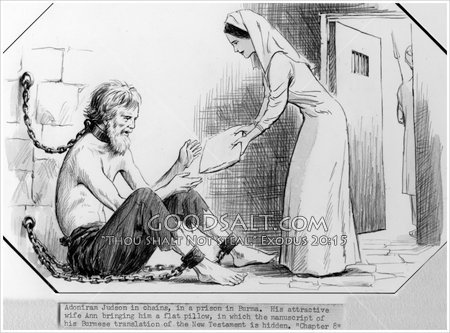
Adoniram Judson

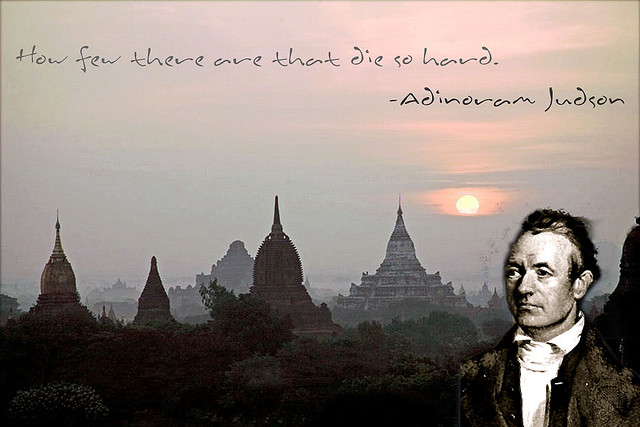
Adoniram Judson labored in Burma in the early 1800’s. He was bright, ambitious, and could have been very successful in his life. Instead, he chose to be a missionary for Jesus Christ.

Life in Burma was beyond hard. This was a ‘hard’ mission field. It was six years before his first convert. The hardships he and his family experienced were deadly.

Adoniram buried two young wives and six young children, victims of the diseases and rigors of Burma. He was imprisoned to the point of starvation and death. He was tortured mercilessly. He labored long hours suffering from fever, headaches, poor eyesight, all due to the conditions he lived in. He had only one furlough in 38 years. After being imprisoned for 17 months, and upon being released experiencing the death of his wife and infant, and hearing of the death of his father, he even suffered a crisis of despair and lost faith.

“God is to me the Great Unknown. I believe in him, but I find him not.[4]

He even dug a grave in the tiger infested jungle and for 30 days would retreat there and contemplate his wasted life. He despaired to the point of desiring death. As God and some Burmese worked to pull him out of his despair, his faith slowly returned. The next year (1831) saw a miraculous outpouring of God’s Holy Spirit as hundred turned to Christ.

  • It took Judson 12 years to make 18 converts.

When Judson began his mission in Burma, he set a goal of translating the Bible and founding a church of 100 members before his death. When he died, he left the Bible, 100 churches, and over 8,000 believers.

Adoniram Judson “hated his life in this world” and was a “seed that fell into the ground and died.” In his sufferings “he filled up what was lacking in Christ’s afflictions” in unreached Burma. Therefore his life bore much fruit and he lives to enjoy it today and forever. He would, no doubt, say: It was worth it.

In the world’s view, giving yourself to Christ and serving as a Pastor or a Missionary is a waste of ability. If someone of great natural ability surrenders that to serve the Lord, his friends will say “such a waste”.

Are you experiencing the power of the Gospel? Are you more in love with Jesus today than last year, or even 20 years ago? Would He say you have done a beautiful thing for Him? Would He say you have done what you could?

What are you willing to waste for the sake of Jesus Christ?

Don’t let your love of money harden you. Don’t let your love of status or reputation blind you. Don’t let men influence you as to what is proper. Do you want to see the glory of Jesus Christ? Do you want to hear Him say, “You did what you could”? Then ask Him what you can waste for Him.

John 12:36 While you have the light, believe in the light, that you may become sons of light.” 


[1] Spiros Zodhiates, The Complete Word Study Dictionary – New Testament, (Chattanooga, TN: AMG Publishers, 1993), WORDsearch CROSS e-book, 246.
[2] Spiros Zodhiates, The Complete Word Study Dictionary – New Testament, (Chattanooga, TN: AMG Publishers, 1993), WORDsearch CROSS e-book, 246.
[3] Spiros Zodhiates, The Complete Word Study Dictionary – New Testament, (Chattanooga, TN: AMG Publishers, 1993), WORDsearch CROSS e-book, 814.
[4] Anderson, To the Golden Shore, 398-399.

Quit hanging on to the handrails . . . Let go. Surrender. Go for the ride of your life. Do it every day. (Melody Beattie, “Finding Your Way Home”)

Sometimes it is great fun to go for the ride of your life, such as skydiving, bungee-jumping or zip-lining. The thrill is exhilarating. There is a ride that is much more important, much more exhilarating, but much too frightening for most. It is the RIDE FOR YOUR LIFE! Your very life depends upon it. It is the Gospel ride, the ride that depends entirely on an invisible Savior. Let’s discover the Gospel and see that it truly is the “RIDE FOR YOUR LIFE.”

WHAT IS THE GOSPEL?

Matthew – the Gospel of the Kingdom. (Matthew 4:23 And he went throughout all Galilee, teaching in their synagogues and proclaiming the gospel of the kingdom and healing every disease and every affliction among the people.)

 Mark – the Gospel of God. (Mark 1:14-15 Now after John was arrested, Jesus came into Galilee, proclaiming the gospel of God, and saying, “The time is fulfilled, and the kingdom of God is at hand; repent and believe in the gospel.”)

 Luke – the Good News of the Kingdom of God. Luke 8:1 Soon afterward he went on through cities and villages, proclaiming and bringing the good news of the kingdom of God. And the twelve were with him,

 Philip – the Good News of the Kingdom of God and the Name of Jesus. Acts 8:12 But when they believed Philip as he preached good news about the kingdom of God and the name of Jesus Christ, they were baptized, both men and women.

 Peter – the Good News of Peace through Jesus Christ.  Acts 10:36 As for the word that he sent to Israel, preaching good news of peace through Jesus Christ (He is Lord of all)

 Paul – the Gospel of the Grace of God.  Acts 20:24 But I do not account my life of any value nor as precious to myself, if only I may finish my course and the ministry that I received from the Lord Jesus, to testify to the gospel of the grace of God.

The Gospel – Good News that Brings a Reward

Gospel: εὐαγγέλιον, (euangelion) originally denoted a reward for good tidings; later, the idea of reward dropped, and the word stood for “the good news” itself.(1)

2 Samuel 18:19-22 Then Ahimaaz the son of Zadok said, “Let me run and carry news to the king that the LORD has delivered him from the hand of his enemies.” And Joab said to him, “You are not to carry news today. You may carry news another day, but today you shall carry no news, because the king’s son is dead.” Then Joab said to the Cushite, “Go, tell the king what you have seen.” The Cushite bowed before Joab, and ran. Then Ahimaaz the son of Zadok said again to Joab, “Come what may, let me also run after the Cushite.” And Joab said, “Why will you run, my son, seeing that you will have no reward for the news?

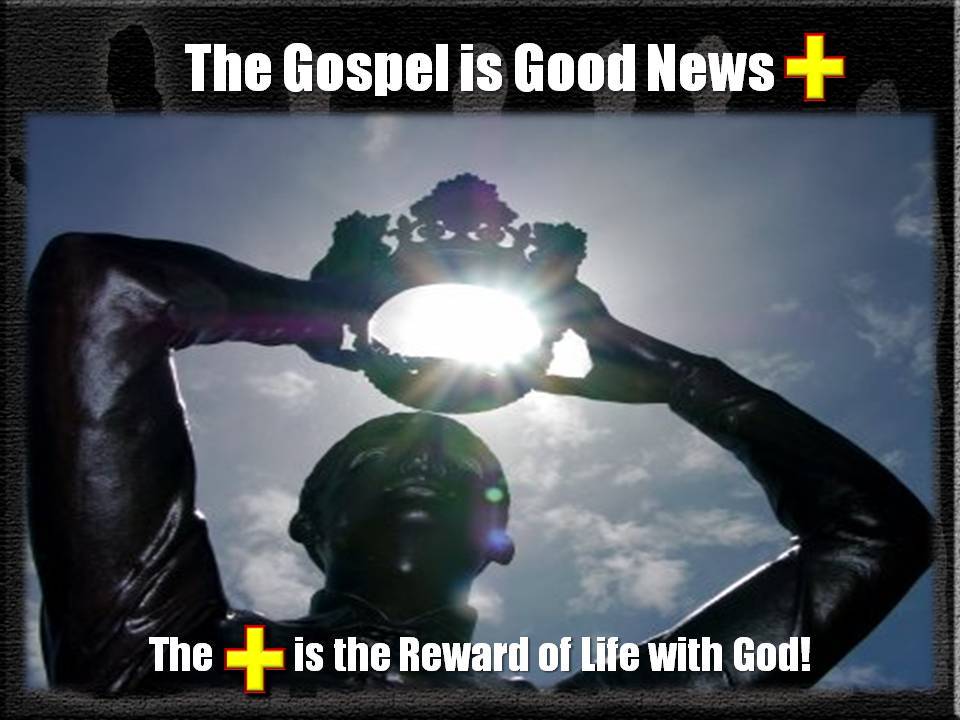
The Gospel is the good news (+ )!The Plus is the Reward of Life with God!
God promises this reward. In fact, we must believe in His reward if we are to please God!

  • Heb 11:6 – You must believe that God is a rewarder of those that earnestly seek Him
  • Heb 12:1 – Jesus endured the shame and suffering of the cross for the reward (joy) that was set before Him

PAUL EXPLAINS THE GOSPEL

1 Corinthians 15:1-6 Now I would remind you, brothers, of the gospel I preached to you, which you received, in which you stand, and by which you are being saved, if you hold fast to the word I preached to you— unless you believed in vain. For I delivered to you as of first importance what I also received: that Christ died for our sins in accordance with the Scriptures, that he was buried, that he was raised on the third day in accordance with the Scriptures, and that he appeared to Cephas, then to the twelve. Then he appeared to more than five hundred brothers at one time, most of whom are still alive, though some have fallen asleep. Then he appeared to James, then to all the apostles. Last of all, as to one untimely born, he appeared also to me.

A. The SCOPE of the Gospel

1. The Plan 1 Corinthians 15:3 … that Christ died for our sins according to the Scriptures (mentioned twice).

2. Event in History 1 Corinthians 15:4-6 that he was buried, that he was raised on the third day according to the Scriptures, and that he appeared to Peter, and then to the Twelve. After that, he appeared to more than five hundred of the brothers at the same time…

3. Achievement (between the Father and the Son) Philippians 2:8-11 And being found in human form, he humbled himself by becoming obedient to the point of death, even death on a cross. Therefore God has highly exalted him and bestowed on him the name that is above every name, so that at the name of Jesus every knee should bow, in heaven and on earth and under the earth, and every tongue confess that Jesus Christ is Lord, to the glory of God the Father.

4. Free Offer Romans 3:21-26 But now the righteousness of God has been manifested apart from the law, although the Law and the Prophets bear witness to it— the righteousness of God through faith in Jesus Christ for all who believe. For there is no distinction: for all have sinned and fall short of the glory of God, and are justified by his grace as a gift, through the redemption that is in Christ Jesus, whom God put forward as a propitiation by his blood, to be received by faith. This was to show God’s righteousness, because in his divine forbearance he had passed over former sins. It was to show his righteousness at the present time, so that he might be just and the justifier of the one who has faith in Jesus. Romans 6:23 For the wages of sin is death, but the free gift of God is eternal life in Christ Jesus our Lord.

5. Application of the Achievement by Faith (forgiveness, justification, life). Ephesians 2:8-9 For by grace you have been saved through faith. And this is not your own doing; it is the gift of God, not a result of works, so that no one may boast. Romans 5:17 For if, because of one man’s trespass, death reigned through that one man, much more will those who receive the abundance of grace and the free gift of righteousness reign in life through the one man Jesus Christ.

The application is not the end. Forgiveness and freedom from guilt is great, but God’s purpose does not end with our being born again. The Gospel is given simply for us, it is given to accomplish the Purpose and Pleasure of God. THE GOSPEL …

6. Brings us to God 1 Peter 3:18 For Christ also suffered once for sins, the righteous for the unrighteous, that he might bring us to God, being put to death in the flesh but made alive in the spirit, Ephesians 2:12-13 remember that you were at that time separated from Christ, alienated from the commonwealth of Israel and strangers to the covenants of promise, having no hope and without God in the world. But now in Christ Jesus you who once were far off have been brought near by the blood of Christ. Ephesians 2:16 and might reconcile us both to God in one body through the cross, thereby killing the hostility.

Finally, the Gospel accomplishes what God is all about…

7. Accomplishes the Purpose and Pleasure of God Ephesians 1:9-10 Having made known unto us the mystery of his will, according to his good pleasure which he hath purposed in himself: That in the dispensation of the fulness of times he might gather together in one all things in Christ, both which are in heaven, and which are on earth; even in him…

B. The SIGHT of the Gospel

The Gospel Achieves the Purpose and Pleasure of God

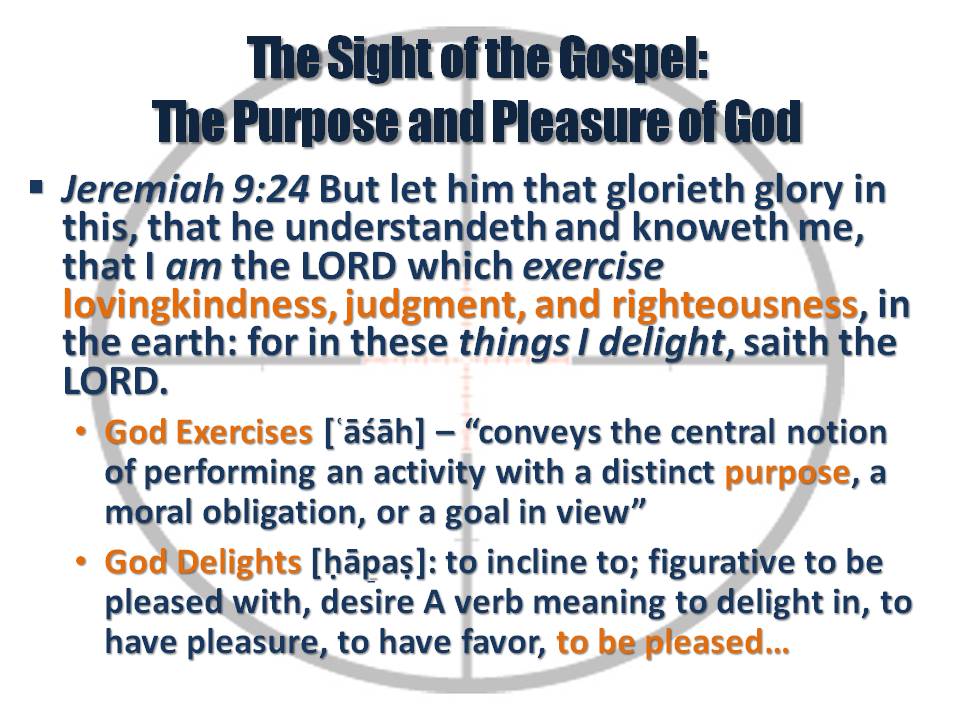
Jeremiah 9:24 But let him that glorieth glory in this, that he understandeth and knoweth me, that I am the LORD which exercise lovingkindness, judgment, and righteousness, in the earth: for in these things I delight, saith the LORD.

  1.  God Exercises [ʿāśāh] – “conveys the central notion of performing an activity with a distinct purpose, a moral obligation, or a goal in view”(2)
  2. God Delights [ āp a ]: to incline to; figurative to be pleased with, desire(3); A verb meaning to delight in, to have pleasure, to have favor, to be pleased(4)

The Gospel Accomplishes the Purpose and Pleasure of God.

We see this in 1 COR 15:1: “the gospel I preached to you, which you received, in which you stand, and by which you are being saved…”

  • You receive the unfailing love of God (hesed)
  • You stand in the Justice of God secured on the Cross (mishpat)
  • You are continually being saved through the Righteousness of Christ (tsedaqah)

(For definition of hesed, mishpat and tsedaqah and an understanding of their importance in discipleship…)

David made a decision to seek the Heart of God. In His seeking he discovered the ways of God, that those ways are always working to accomplish hesed, mishpat and tsedaqah. David grew as a man of God when he reacted the right way to what God was trying to accomplish in his life. God worked in David’s life these three things: hesed, mishpat and tsedaqah.

C. The SUCCESS of the Gospel

Provides the Vehicle and the Highway

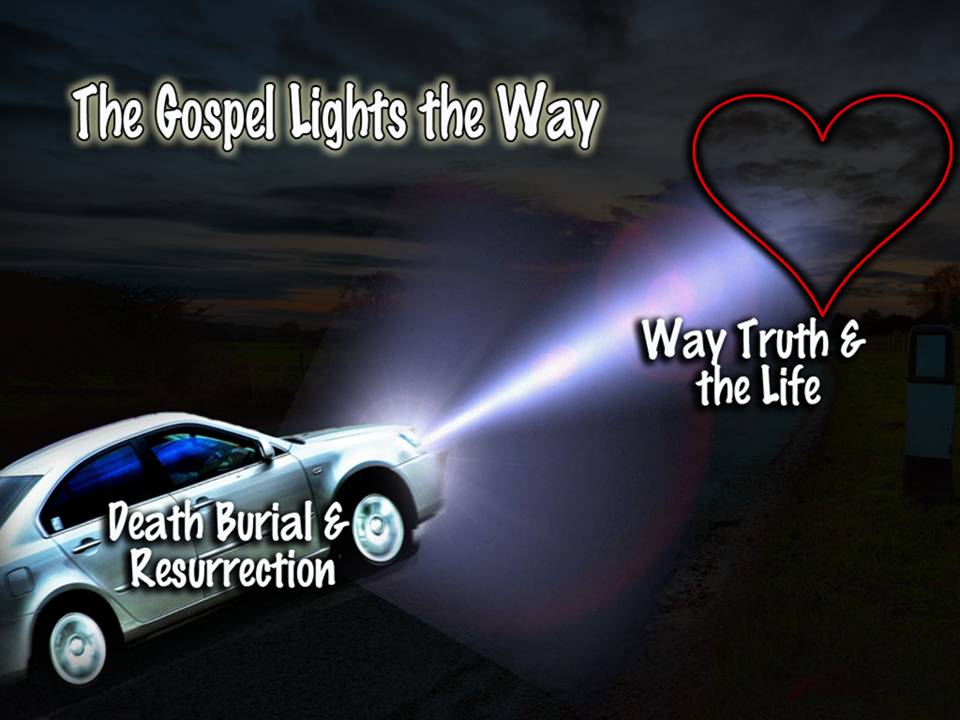
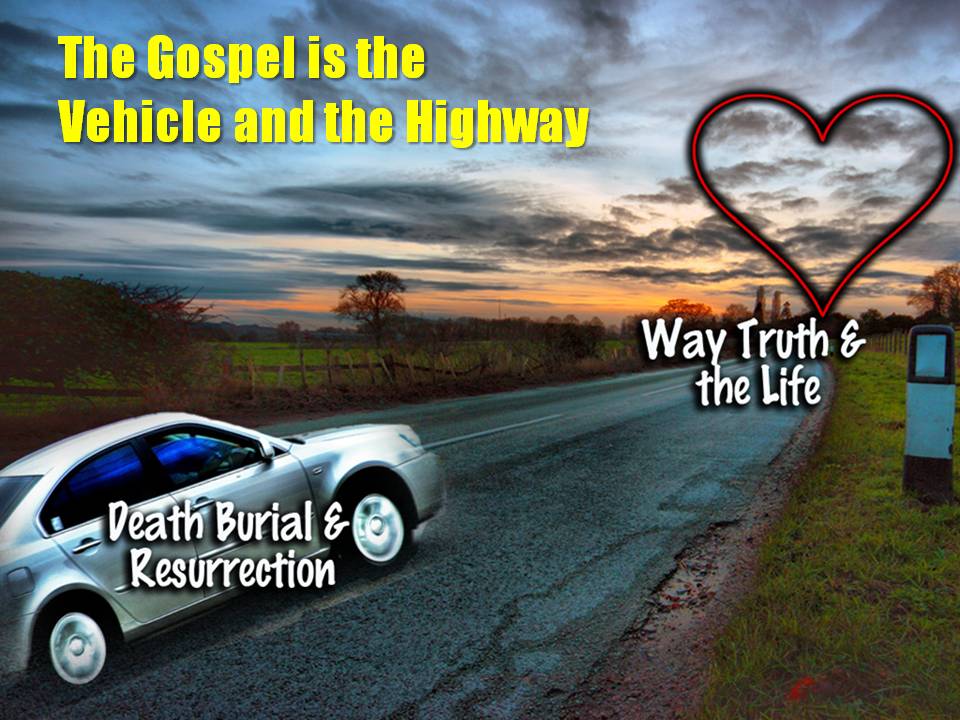
It is important that we see the Gospel as a driving force in our life. The Gospel is much more than a story that you believe in when you are a child and then forget about when you are older. The Gospel is the driving purpose and pleasure of God that is to be with us at Work, at Rest, at family gatherings, at the movies, at the restaurant, when we are dealing with pressures, dealing with physical problems. The Gospel is to be on our minds and in our hearts! The Gospel is the core belief of a child of God. It is the Vehicle that God has provided for us to bring peace, hope, faith, love, justice, righteousness and grace. It is the vehicle that will bring us to Him!

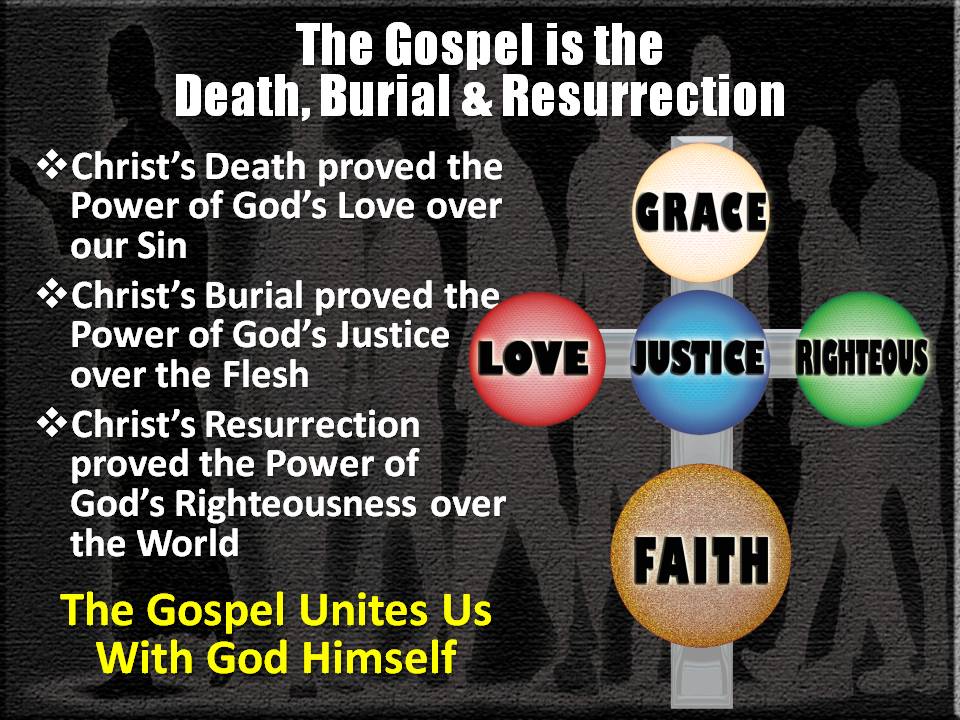
1.  The Gospel is the Death Burial & Resurrection (Vehicle)

a) Christ’s Death proved the Power of God’s Love over our Sin
b) Christ’s Burial proved the Power of God’s Justice over the Flesh
c) Christ’s Resurrection proved the Power of God’s Righteousness over the World

The Gospel Unites Us With God Himself

Not only is the Gospel the vehicle that we are to ride in, it provides the way, the roadway, the highway for our journey.

2. The Gospel is the Way, the Truth and the Life (Highway)

a) The Way to hesed (God’s Steadfast Love)
b) The Truth of mishpat (God’s Justice)
c) The Life of tsedaqah (God’s Righteousness)

The Gospel Unites Us With the Heart Of God – It is according to His Purpose & Pleasure

THERE IS NO OTHER WAY TO GOD

Jesus said I am the Way, the Truth and the Life. To know the way we have to by faith receive the mercy and unfailing love of Jesus Christ. Then we stand in the Truth of Jesus Words, the mishpat. Then we have Life as we abide in the Righteousness (tsedaqah) of Jesus Christ.

So the Elements of Discipleship which we found operating in David as he sought after the Heart of God are here in the Gospel.

3. The Gospel Lights the Way

a) The Gospel is the Lamp shining in a dark place. It that shines in your heart… 2 Peter 1:19 And we have something more sure, the prophetic word, to which you will do well to pay attention as to a lamp shining in a dark place, until the day dawns and the morning star rises in your hearts,

b) The Gospel is the Light of the Knowledge of the Glory of God in the face of Jesus Christ… 2 Corinthians 4:4-6 In their case the god of this world has blinded the minds of the unbelievers, to keep them from seeing the light of the gospel of the glory of Christ, who is the image of God. For what we proclaim is not ourselves, but Jesus Christ as Lord, with ourselves as your servants for Jesus’ sake. For God, who said, “Let light shine out of darkness,” has shone in our hearts to give the light of the knowledge of the glory of God in the face of Jesus Christ.

4. The Gospel Reaches the Destination – the Heart of God is revealed and made available to us in the Gospel.

The Gospel accomplishes the Purpose and Pleasure of God, and therefore is the means of developing us into Disciples of Jesus Christ. This is the basis for Gospel Driven Discipleship.

Gospel driven discipleship realizes the Power of the Gospel to transform our lives, and propel us to the Heart of God. Gospel Driven Discipleship realizes that Discipleship is not about your own abilities or efforts, but it is about relying on the Power of Jesus Christ! You must be willing to give up everything or the Gospel will have no power in your life! It will cause the car to slow down and lose power, even stall out.

POP THE HOOD – TAKE A LOOK AT THE ENGINE of the GOSPEL!

My brother Mike bought a Mercedes that cost $197,000. He took me for a ride, but I said it didn’t seem that much better than my Mercedes that cost $60,000. But all he had to do was push the accelerator down. That car literally took off like a rocket. Not a hurky jerky rocket, but a smooth take your breath away rocket. The engine was a V12 that could rocket to 60 mph in 4.4 seconds. With his car, the engine was the star! And so it is with the Gospel of Jesus Christ. Lets pop the hood and see what drives the Gospel.

I Corinthians 15: Now I would remind you, brothers, of the gospel I preached to you, which you received, in which you stand, and by which you are being saved, if you hold fast to the word I preached to you— unless you believed in vain. For I delivered to you as of first importance what I also received: that Christ died for our sins in accordance with the Scriptures, that he was buried, that he was raised on the third day in accordance with the Scriptures,

A. The Love of the Gospel is Incomprehensible

Christ died for our Sins…Mercy and Love Incomprehensible. The Gospel is the visible expression of the unfailing love and mercy of Holy God for sinful man. God literally died and experienced the wrath of hell that we deserved because of our sin and disobedience. His love drove Him to pursue us by going to the cross, humbling himself to a horrible death, and drinking the wrath of God against sin.

While Jesus pleased His Father, and satisfied the demands of His justice and righteousness, we must receive this love by faith. We must humble ourselves before God and confess our sin and disobedience. We must need the salvation Jesus has provided. We must accept this gift as the perfect and total sacrifice for our sins. There cannot be one iota of dependence upon self for salvation. It is either all of Christ or it has no power to Bring us to God!

As Paul writes, we receive this loving gift bought with the Holy blood of God’s Son. His love is what we rest upon. There is no looking over your shoulder, no wondering why He is doing this to you, no thinking you have to do something to make Him love you. His love comes from the strength of His Name and His character. It does not depend upon how lovely you are. His love is steadfast, strong, unfailing, based upon His death for you. His love is incomprehensible. His desire is to bring you to Him. His desire is to live in your everyday life.
When the Light of the Gospel applies the Mercy of God to our heart, we are born again. Then the Word of God is applied to our soul and our lives are justified before God. We are made right with God through the application of His justice. Then daily we must lean entirely upon the Word of God for our righteousness, for our victory over this world. It can never be anything of our flesh, or it was belief (eike) without purpose. It was in vain.

Counterfeit Salvation is dependent upon self, upon the strength of your will and your flesh. It is false salvation based upon your interests and concerns. It is a false hope that somehow you can please God enough to allow you into His heaven. It is a belief that sets its eyes on yourself, and not on the Purpose and Pleasure of God alone. That belief is counterfeit, it is vanity and you will spend eternity in Hell. That is the belief that is in vain that Paul talks about.

B. The Truth of the Gospel is Impenetrable

Christ died for our sins in accordance with the Scriptures, that he was buried, that he was raised on the third day in accordance with the Scriptures

  • Jesus acted according to the Truth of God’s Word.
  • Jesus died for our sins-the visible expression of the hesed of God.
  • Jesus body was buried-the justice of God was applied to this world through the broken body of His Son.

His body was anointed before His death… Mark 14:8-9 She has done what she could; she has anointed my body beforehand for burial. And truly, I say to you, wherever the gospel is proclaimed in the whole world, what she has done will be told in memory of her.”

We often ignore the burial, and jump to the resurrection. But the burial was dealing with the body, with this flesh. Sin had corrupted this world, our flesh, and Jesus needed to bring Justice to this corrupt world. He had to make it right so that God could once again say “it is good!” The preparation and burial of His body was significant in that it represented the application of mishpat to this world.

God’s Word is triumphant over this flesh-power over sin, over addiction, over disease!

  • The Truth of the Gospel has application for every area of our lives.

Jesus rose again in victory over sin and Satan and the grave. That victory can be experienced by us each and every day of our lives. That victory came because of His righteousness. His righteousness can be ours. His victory can be ours!

C. The Victory of the Gospel is Inexplicable

that he appeared to Cephas, then to the twelve. Then he appeared to more than five hundred brothers at one time, most of whom are still alive, though some have fallen asleep. Then he appeared to James, then to all the apostles. Last of all, as to one untimely born, he appeared also to me.

His righteousness is ours because of the Victory of the Gospel. All it takes is seeing Jesus for who He really is, our Savior, our Lord, our God!

  • The Gospel transformed a cowardly fisherman into a mighty voice for God.
  • The Gospel transformed a cheating tax collector into a mighty witness to those he had cheated.
  • The Gospel transformed a hateful murderer into a witness before Kings.

The Gospel of Jesus Christ is so powerful, that to know and experience the Gospel, all you must do is see and recognize Jesus as the Christ for who He truly is.

You can know all the verses we talked about today. You can go to church, you can give money. You may have been raised in a Christian home. You may have done tremendous things on His behalf. The question is this: Has Jesus appeared to you? Has the Light of the Gospel shone in your heart? Has the light of the Gospel shone you your sin, your disobedience. Has the light of the Gospel shown you the steadfast love of God?

THE LIGHT OF THE GOSPEL HAS POWER TO TRANSFORM

Charles Bradlaugh, a famous Atheist and contemporary with Charles Darwin, once challenged the Rev. H.P. Hughes to a debate. The preacher, who was head of a rescue mission in London, England, accepted the challenge with the condition that he could bring with him 100 men and women who would tell what had happened in their lives since trusting Christ as their Savior. They would be people who once lived in deep sin, some having come from poverty-stricken homes caused by the vices of their parents. Hughes said they would not only tell of their conversion, but would submit to cross-examination by any who doubted their stories. Furthermore, the minister invited his opponent to bring a group of non-believers who could tell how they were helped by their lack of faith. When the appointed day arrived, the preacher came, accompanied by 100 transformed persons. But Bradlaugh never showed up. The result? The meeting turned into a testimony time and many sinners who had gathered to hear the scheduled debate were converted.

I love this Quote about the Gospel:

A.B. Simpson is reported to have said that the gospel “Tells rebellious men that God is reconciled, that justice is satisfied, that sin has been atoned for, that the judgment of the guilty may be revoked, the condemnation of the sinner cancelled, the curse of the Law blotted out, the gates of hell closed, the portals of heaven opened wide, the power of sin subdued, the guilty conscience healed, the broken heart comforted, the sorrow and misery of the Fall undone. (5)

Will you let the Light shine in your life?

A couple who took their son, 11, and daughter, 7, to Carlsbad Caverns. As always, when the tour reached the deepest point in the cavern, the guide turned off all the lights to dramatize how completely dark and silent it is below the earth’s surface. The little girl, suddenly enveloped in utter darkness, was frightened and began to cry. Immediately was heard the voice of her brother: “Don’t cry. Somebody here knows how to turn on the lights.”(6)

In a real sense, that is the message of the gospel: light is available, even when darkness seems overwhelming. Everyday God shines the Light of the Gospel upon your life. The light is on, but you will not see it if your focus is upon yourself. Focus upon Jesus Christ. You can say yes to the light this very day. If you have backslidden away from the light you can get back to God by simply getting in the car and clinging to the wonderful power of the Gospel. What are your sights set upon.

What are you counting on for success in your life? What are you counting on to take you to God?

(1) William E. Vine, Vine’s Expository Dictionary of Old Testament and New Testament Words, (Nashville, TN: Thomas Nelson, 1940), WORDsearch CROSS e-book, Under: “Gospel”.
(2) Warren Baker and Eugene Carpenter, The Complete Word Study Dictionary – Old Testament, (Chattanooga, TN: AMG Publishers, 2003), WORDsearch CROSS e-book, Under: “ʿāśāh“.
(3) James Strong, Strong’s Talking Greek & Hebrew Dictionary, (Austin, TX: WORDsearch Corp., 2007), WORDsearch CROSS e-book, Under: “2654”.
(4) Warren Baker and Eugene Carpenter, The Complete Word Study Dictionary – Old Testament, (Chattanooga, TN: AMG Publishers, 2003), WORDsearch CROSS e-book, 364.
(5) M. Cocoris, Evangelism, A Biblical Approach, Moody, 1984, p. 29
(6) Bob Woods, Pulpit Digest


The First Century Church Experienced the Power of Grace and Touched the World with the Power of the Gospel of Jesus Christ. They did so because they were not ashamed of the Cross of Jesus Christ. They were not ashamed of following a God who had been cursed on the unspeakable Cross of Crucifixion. They were not ashamed because they were LIVING PROOF of the Power of the Cross over the corruption of the flesh. Jesus Christ was not only Savior of their Souls, He was the Savior of their LIVING! 

Church must emphasize a 24/7 devoted living in Christ and His commands, not just a segregated devotional (quiet) time.

Church must emphasize a 24/7 praying life not just a prayer time.

Church must direct Disciples how to bring their spiritual existence into touch with the physical reality of living.

Church must lead Disciples to put into daily practice what Christ commanded and taught.

Church is a Community of Love in Christ centered around a Grace Missional purpose to bring the lost and hurting into the reality and power of Christ.

Church builds Disciples not motivated by guilt but empowered by forgiveness and redemption.

Church builds Disciples who Share Christ with friends and neighbors because they Love and Trust Jesus Christ.

Church builds Disciples who Give because they Love and Trust.

Church is Powerful to the Community when it is a Powerful Community of Love that empowers people to Break Bad Habits (Spirit conquers Flesh).

Church is Powerful as Disciples grow past guilt to productive change built upon Confession and Abandonment to Jesus Christ.

Church preaches Repentance to Abandon the fleshly world and live in the Spirit of Grace

Church leads Disciples to Abandon themselves to God’s Grace and God’s responsibilities for them.

Church leads Disciples to Greater and Growing Trust in God, because mistrust leads to sin.

Church leads Disciples to the Dominion of God’s Kingdom over their own Kingdoms.

Church that Grows and Develops Disciples will constantly Apply the Truth of Redemption to the Disciple’s Life.

Church will constantly strive to bring ALL lives into Christ’s Life.

Church will Grow from a Growing Relationship with Christ’s Life.

  • Church can change if there is a goal that can be accomplished with specific steps of action.
  • That goal is to build Disciples who experience and share the Reality and Power of Christ’s Life in their daily living.