


 “The epistle to the Romans is the true masterpiece of the New Testament and the very purest gospel, which is well worth and deserving that a Christian man should not only learn it by heart, word for word, but also that he should daily deal with it as the daily bread of men’s souls. It can never be too much or too well read or studied, and the more it is handled the more precious it becomes, and the better it tastes” (Martin Luther).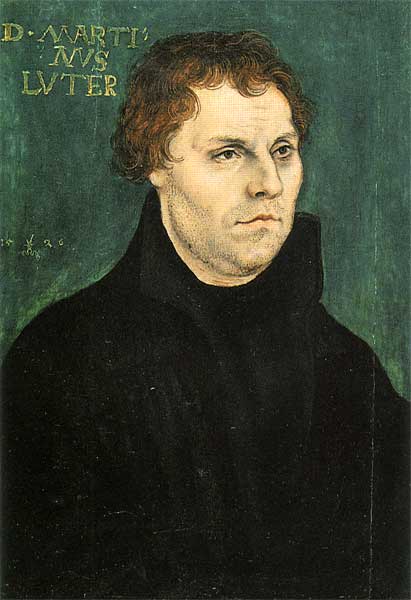
Paul wrote this letter about 56 A. D. when he was in the city of Corinth, before his trip to Jerusalem. Written to a church he hoped to visit soon. Paul had not yet visited the church in Rome. He wanted to go there and he prayed that God would make this visit possible (Rom. 1:10-12; 15:23-24). This makes the letter to the Romans unique. Most of Paul’s other letters were written to churches where he had personally ministered. But here was a church (the church at Rome) where Paul had not been and where Paul had not taught.
So the Book of Romans was preparation for when Paul would arrive in Rome.
Here in the book of Romans Paul gives a doctrinal preview of the content of his teaching ministry. What Paul unfolds in these 16 chapters is nothing less than a doctrinal masterpiece.
- What is being a Christian all about?
- What are the central truths of Christianity?
- What is the gospel really?
- What formed the foundation of Apostle Paul’s preaching wherever he went?
Influence of Romans
To find the answer to all these questions we turn to the greatest doctrinal book in the New Testament — the epistle of Paul to the Romans.
A group of scholars once made a list of the fifteen greatest books, books that were great based upon their beneficial influence upon humanity. Included in this list were John Wesley’sJournal, Luther’s 95 Theses, Augustine’s City of God and John Bunyan‘s Pilgrim’s Progress.
- As his Journal reveals, Wesley was an unsaved preacher until he read the book of Romans and understood God’s way of salvation.
- Luther, a Catholic monk, was greatly influenced by Romans 1:17, “The just shall live by faith,” which opened his eyes to the truth of justification by faith.
- Augustine’s City of God was founded on his study of the Book of Romans.
- Bunyan’s Pilgrim’s Progress was written after reading the Book of Romans in prison. It became the best selling book of all time, next to the Bible.
Among the greatest books of the world, four which come near the top of the list were all directly influenced by the Book of Romans.
Has the Book of Romans changed your life? When was the last time you read through Romans?
Although Paul knows many of the people to whom he is writing, he did not found the church, and he has never been to Rome. So he has some work to do in the first 17 verses to introduce himself and his agenda. The “gospel” ties together Romans 1:1-17, and, indeed, the entire letter. In the introduction, Paul features both the content and the power of the gospel that unites Jewish and Gentile believers in Rome.
The object of the apostle in writing to this church was to explain to them the great doctrines of the gospel. His epistle was a “word in season.” Himself deeply impressed with a sense of the value of the doctrines of salvation, he opens up in a clear and connected form the whole system of the gospel in its relation both to Jew and Gentile.
Preparation for the Journey
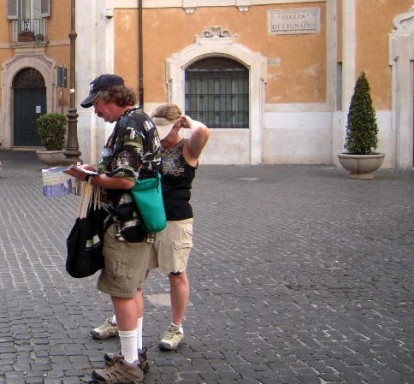 Whenever I take a trip, I like to prepare myself so I can make the most of my time in the place I’m going. There are three things which you should study about your destination if you are to get the most of your time there:
- The Personality (of the people)
- The Places (what should we see)
- The Pillars (make it a desirable destination)
I. THE PERSONALITY OF ROMANS
The following terms must be understood if we are to understand the personality of Romans. Paul’s approach to these terms are nothing short of foundational to understanding the true Gospel of Jesus Christ. I am certain that most of us do not understand these terms the way Paul wants us to.
A. The LAW – 78x in 51 verses
- For it is not the hearers of the law who are righteous before God, but the doers of the law who will be justified. Romans 2:13 (ESV)
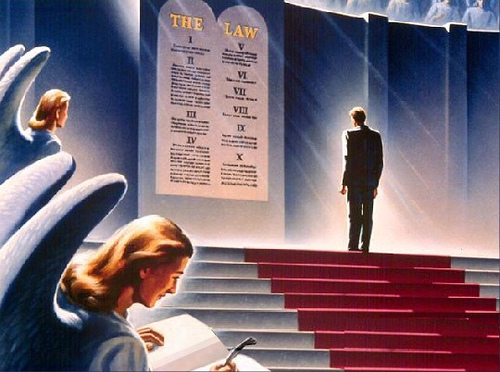 The Law is not to be understood in terms of “Thou shall and thou shall not’s“. We commonly think that laws are obeyed and satisfied by works, whether your heart is in it or not. But God’s Law makes its demands not on your works but on the depths of your heart and does not let the heart rest content in works.
God calls all of us liars in Ps 116:11, because none of us keep the law from the depths of our heart. We all have an aversion to good and a craving for that which is forbidden. If our heart does not freely desire righteousness, our heart has not set itself on God’s Law. Regardless of outward good works, the appearance of an honorable life, our heart is sinful and deserving of the wrath of Righteous Holy God.
Romans Two is pointed at the Jews, who are proud of their outward holiness. But Paul says that they are all sinners, and that only does of the law are justified in the sight of God. He reveals that no matter their outward obedience, there is none that truly obey. On the contrary, he says to them, “You teach that one should not commit adultery, and you commit adultery. You judge another in a certain matter and condemn yourselves in that same matter, because you do the very same thing that you judged in another.”
- You who boast in the law dishonor God by breaking the law. Romans 2:23 (ESV)
It is as if he were saying, “Outwardly you live quite properly in the works of the law and judge those who do not live the same way; you know how to teach everybody. You see the speck in another’s eye but do not notice the beam in your own.”
You keep the Law (selfish motivations) outwardly out of fear of punishment or love of reward. You do everything as though you are chained-without free desire and love of the Law. If the Law did not exist you would be relieved, you would rejoice. In fact, Paul says (in Romans 5) that the Law causes sin to increase. This is because a person becomes more and more and enemy of the Law the more it demands of him what he can’t possibly do.
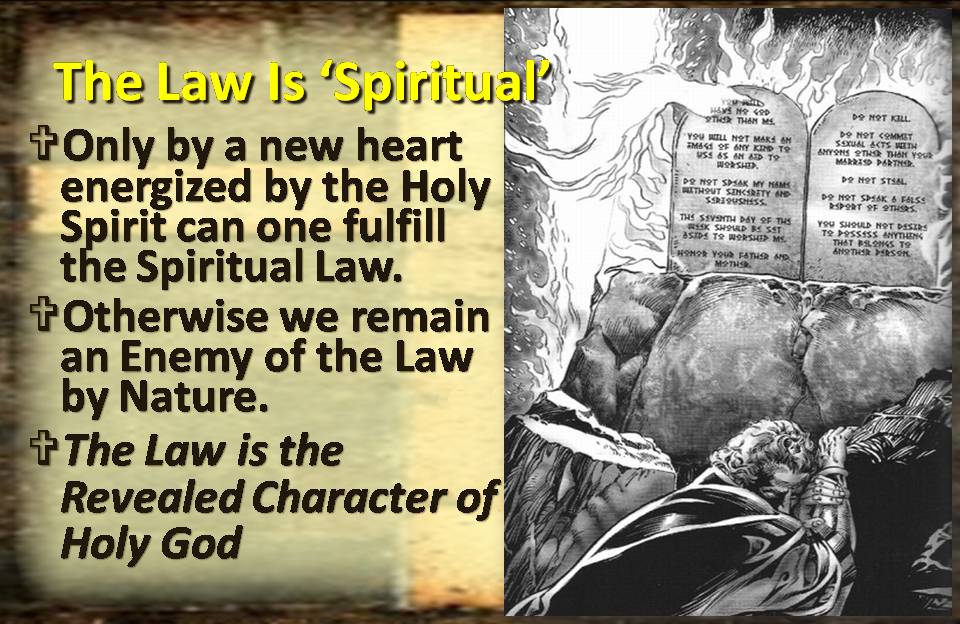 In Romans Seven, Paul says the Law is “spiritual”. What he means is that it were physical, it could be satisfied by your works. Since it is spiritual, no one can satisfy the law unless everything you do springs from the depths of your heart. But no one can have such a heart except the Spirit of God, who gives us a New Heart which has a heartfelt longing for the law and does everything not through fear or coercion, but from a new free and willing heart!
Only by a new heart energized by the Holy Spirit can one fulfill the Spiritual Law. Otherwise we remain an enemy of the Law by nature.
You must get used to the idea that it is one thing to do the works of the law and quite another to fulfill it. The works of the law are everything that a person does or can do of his own free will and by his own powers to obey the law. But because in doing such works the heart abhors the law and yet is forced to obey it, the works are a total loss and are completely useless.
That is what St. Paul means in chapter 3 when he says, “No human being is justified before God through the works of the law.”
Fulfilling the Law of God
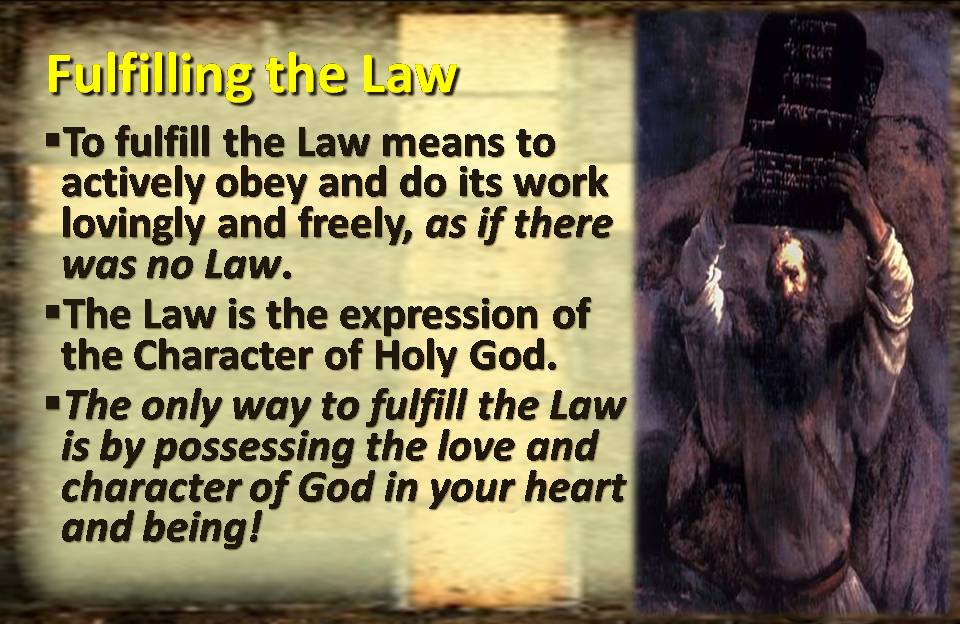 To fulfill the Law means to actively obey and do its work lovingly and freely, as if there was no Law. The Law is the expression of the character of God. The only way to fulfill the Law is through possessing the love and character of God in your heart and being!
Paul says that only the Holy Spirit can fill us with this Divine Love: “God’s love has been poured into our hearts through the Holy Spirit who has been given to us”. Romans 5:5 (ESV) But the Spirit is given only in, with, and through faith in Jesus Christ, as Paul says in his introduction to Romans. For in it the righteousness of God is revealed from faith for faith, as it is written, “The righteous shall live by faith.” Romans 1:17 (ESV)
Faith alone makes the Love and Righteousness of God reality in our hearts. Faith alone fulfills the righteousness of the Law. Good works that proceed from faith alone are the only works that satisfy the demands of the Law.
The Law as Paul sees it: The Law is Spiritual – the revealed Character of Holy God.
B. SINS and SIN – 48x – 41 verses
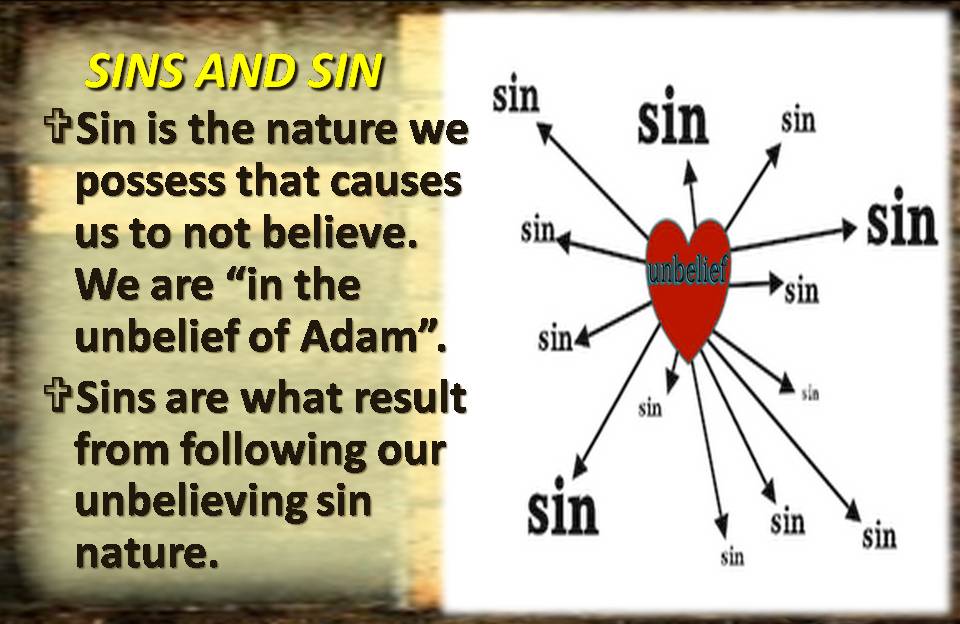 In Romans Paul deals with our sins, and then he deals with our sin. Sins refers to the external works of the body and soul. Sins of omission and commission. Sin refers to those forces within us that move us to do the sins. Sin is from the depth of our wicked heart with all its powers and inclinations.
The root and source of our sins is the sin nature that comes with being “in (the unbelief) of Adam”. The Holy Spirit and the Scriptures see into the heart, to the root source of sins, and that is our sin nature, which is founded in unbelief in the depth of the heart.
Just as faith alone makes us just and brings the Spirit and the desire to do good external works, so it is only unbelief which sins and exalts the flesh and brings desire to do evil external works.
That’s what happened to Adam and Eve in Paradise (cf. Genesis 3). That is why unbelief is called sin by Christ, as he says in John, chapter 16, “The Spirit will judge the world because of sin, because it does not believe in me.”
- Sin is the nature we possess that causes us to not believe.
- Sins are what result as a result of our unbelieving sin nature.
In Romans, Paul will show us how God can deal with our sins, and also our sin!
C. Grace and Gifts – 21x – 18 verses
- and are justified by his grace as a gift, through the redemption that is in Christ Jesus, Romans 3:24 (ESV)
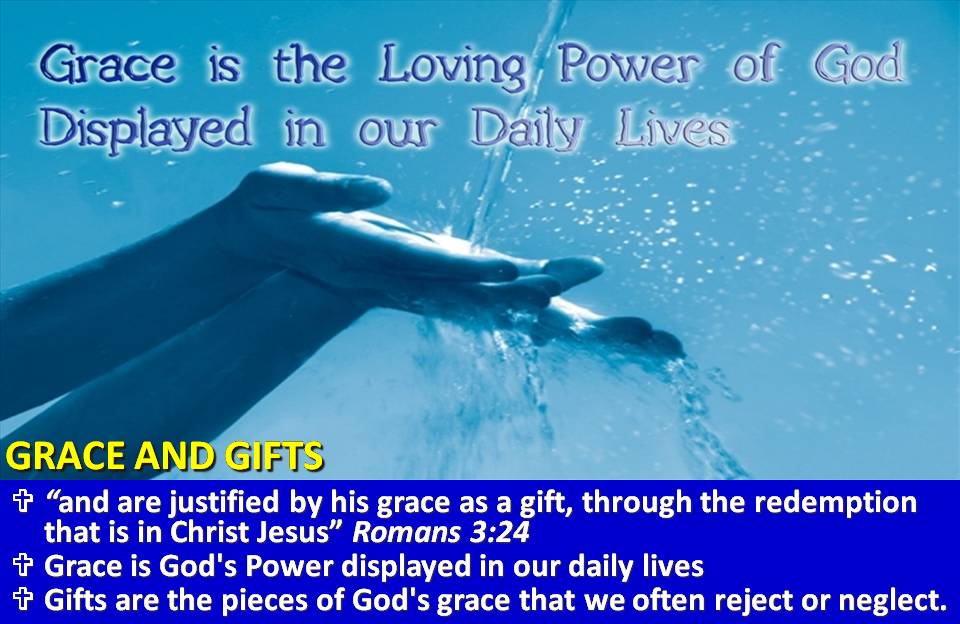 Grace is the active force in our lives which makes us completely just before God. God’s grace is not divided into bits and pieces, as are the gifts, but grace takes us up completely into God’s favor for the sake of Christ, our intercessor and mediator, so that the gifts may begin their work in us.
By this, we understand chapter 7, where Paul portrays himself as still a sinner, while in chapter 8 he says that, because of the incomplete gifts and because of the Spirit, there is nothing damnable in those who are in Christ. Because our flesh has not been killed, we are still sinners, but because we believe in Christ and have the beginnings of the Spirit, God so shows us his favor and mercy, that he neither notices nor judges such sins.
God’s grace allows Him to deal with us according to our position in Christ until our flesh is completely redeemed.
- Grace is the Loving Power of God displayed in our daily lives
- Gifts are the pieces of God’s grace that we often reject or neglect, and can lead us to miss or refuse God’s Grace.
D. FAITH – 40x – 35 verses
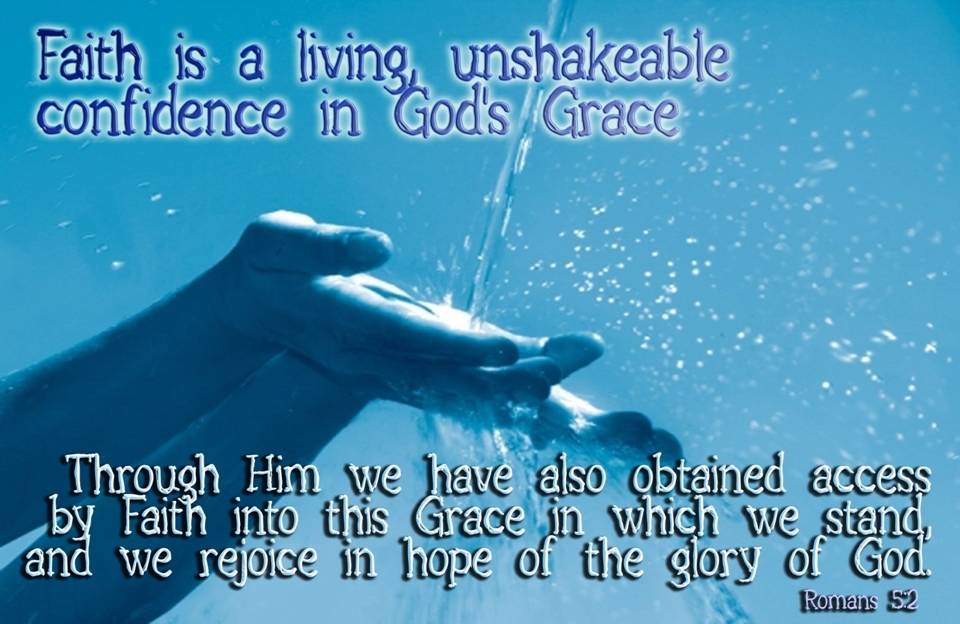
- Through him we have also obtained access by faith into this grace in which we stand, and we rejoice in hope of the glory of God. Romans 5:2 (ESV)
 Faith is not that human illusion and dream that some people think it is. When they hear and talk a lot about faith and yet see that no moral improvement and no good works result from it, they fall into error and say, “Faith is not enough. You must do works if you want to be virtuous and get to heaven.” The result is that, when they hear the Gospel, they stumble and make for themselves with their own powers a concept in their hearts which says, “I believe.” This concept they hold to be true faith. But since it is a human fabrication and thought and not an experience of the heart, it accomplishes nothing, and there follows no improvement.
Faith is a work of God in us, which changes us and brings us to birth anew from God (cf. John 1). It kills the old Adam, makes us completely different people in heart, mind, senses, and all our powers, and brings the Holy Spirit with it. Faith places us IN CHRIST. Faith keeps us abiding in Christ. We live the exchanged life by THE FAITH of the Son of God, who loved me and gave himself for me.
“What a living, creative, active powerful thing is faith! It is impossible that faith ever stop doing good. Faith doesn’t ask whether good works are to be done, but, before it is asked, it has done them. It is always active. Whoever doesn’t do such works is without faith; he gropes and searches about him for faith and good works but doesn’t know what faith or good works are. Even so, he chatters on with a great many words about faith and good works.” Martin Luther
- Faith is the living, unshakeable confidence in God’s grace.
This kind of trust in and knowledge of God’s grace makes a person joyful, confident, and happy with regard to God and all that He does. Through faith, a person will do good to everyone without coercion, willingly and happily; he will serve everyone, suffer everything for the love and praise of God, who has shown him such grace. It is as impossible to separate works from faith.
Through faith a person becomes sinless and eager for God’s commands. Thus he gives God the honor due him and pays him what he owes him.
Faith comes only through the word of God, the Gospel, that preaches Christ: how he is both Son of God and man, how he died and rose for our sake. Paul says all this in chapters 3, 4 and 10.
That is why faith alone makes someone just and fulfills the law; faith in God’s promises sees the Power of the Holy Spirit in our daily lives. Faith opens our will and want to to do those ‘good works’ which God designed us for. Then good works proceed from faith itself. That is what Paul means in chapter 3 when, after he has thrown out the works of the law, he sounds as though the wants to abolish the law by faith. No, he says, we uphold the law through faith, i.e. we fulfill it through faith.
For we hold that one is justified by faith apart from works of the law. Or is God the God of Jews only? Is he not the God of Gentiles also? Yes, of Gentiles also, since God is one—who will justify the circumcised by faith and the uncircumcised through faith. Do we then overthrow the law by this faith? By no means! On the contrary, we uphold the law. Romans 3:28-31 (ESV)
- Faith makes the Vitality and Power of God real in our daily living.
E. FLESH (CARNAL) 23x – 19 verses and SPIRITUAL (SPIRIT)
- For I know that nothing good dwells in me, that is, in my flesh. For I have the desire to do what is right, but not the ability to carry it out. Romans 7:18 (ESV)
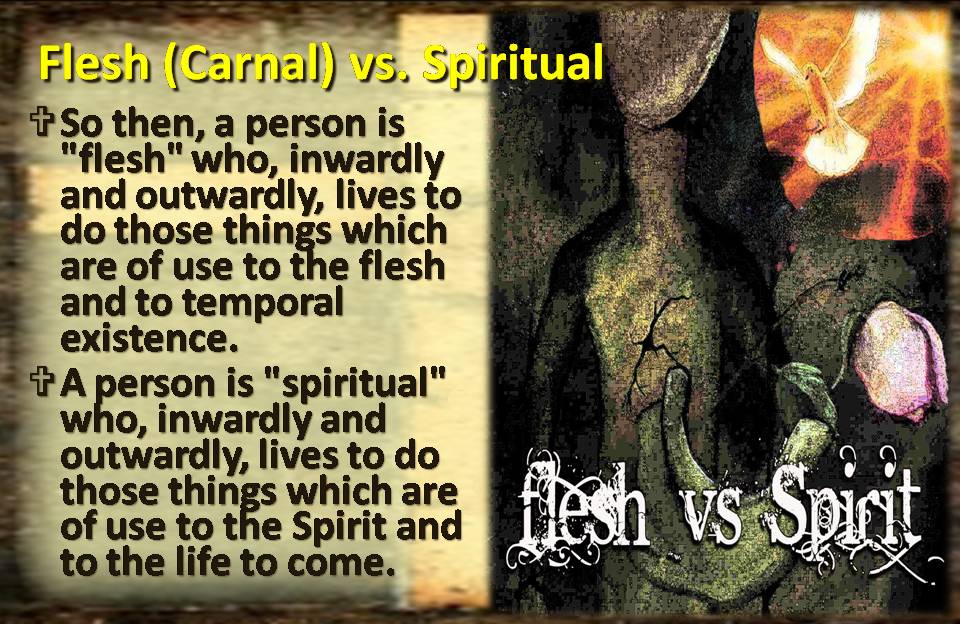 You must not understand flesh here as denoting only immorality or spirit as denoting only the inner heart. In Romans, Paul not only calls every human being ‘flesh’ but also everthing done by human beings in their own strength or in their own devices “fleshly”. Those living in the flesh can be sinners as well as saints. Anything done apart from the Spirit of God is walking in the flesh and not the Spirit. In Romans 8, Paul says that, through the flesh, the law is weakened. He says this, not of the immoral, but of all sins, most of all of unbelief, which is the most spiritual of sins. Unbelief destroys the SPIRITUAL life of any believer.
- But now we are delivered from the law, that being dead wherein we were held; that we should serve in newness of spirit, and not in the oldness of the letter. Romans 7:6 (KJV)
I have come to the conclusion that a true Jew is not the man who is merely a Jew outwardly, and a real circumcision is not just a matter of the body. The true Jew is one who belongs to God in heart, a man  whose circumcision is not just an outward physical affair but is a God-made sign upon the heart and soul, and results in a life lived not for the approval of man, but for the approval of God. Romans 2:28 (Phillips NT)
A person is spiritual who has been born of the Holy Spirit, and lives in and by the Spirit. Outward righteousness is a result of the inward spirit of God producing the life and character of God.
- So then, a person is “flesh” who, inwardly and outwardly, lives only to do those things which are of use to the flesh and to temporal existence.
- A person is “spirit” who, inwardly and outwardly, lives only to do those things which are of use to the spirit and to the life to come.
F. Unbelief and Belief
 The very foundation of sin coming upon man was unbelief. Adam and Eve believed the deception rather than the Word of God. If they had only believed what God had said, they would have lived in eternal bliss.
Jesus defined sin as unbelief. God defined sin as going your own way. It is unbelief that leads us to go our own way. Unbelief in Romans reaches far beyond simple belief in Jesus as your Savior. Essential for being born again, yes, but belief is essential for your very LIFE as a son of God. Your belief in the Word of God is foundational to your LIFE here and now and for all eternity.
Now if we have died with Christ, we believe that we will also live with him. We know that Christ, being raised from the dead, will never die again; death no longer has dominion over him. For the death he died he died to sin, once for all, but the life he lives he lives to God. So you also must consider yourselves dead to sin and alive to God in Christ Jesus. Romans 6:8-11 (ESV)
Paul uses Old Testament illustrations to convey the Truth of Romans. He points out Abraham, who did not stumble at the promises of God by unbelief. His belief is what made him righteous before God. His believing the promises of God is what gave him LIFE here on earth and in all eternity.
He staggered not at the promise of God through unbelief; but was strong in faith, giving glory to God; And being fully persuaded that, what he had promised, he was able also to perform. And therefore it was imputed to him for righteousness. Romans 4:20-22 (KJV)
In Romans, Paul lays out the truth of the gospel of Christ, and that truth doesn’t end at the cross, it goes through the cross to affect not only our sins, but our sin nature. We are made righteous by our belief in the promises of God. That belief does not stop at the cross. It does not stop at being born again. Belief in the Promises of God’s Word is to be a daily thing whereby we are made righteous every day. We are given LIFE every day. Not life in the flesh, but life in the Holy Spirit of God!
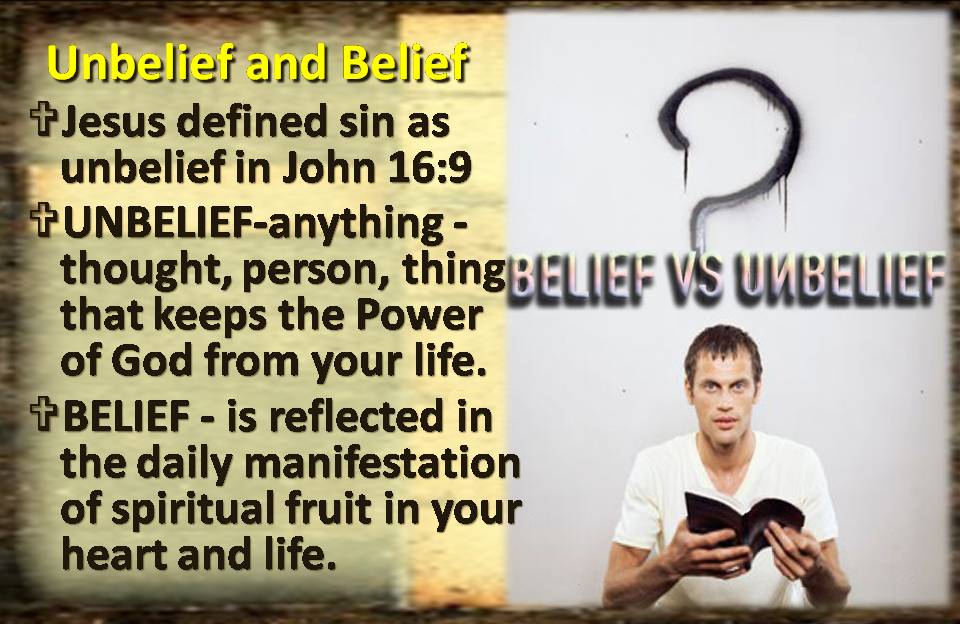
- UNBELIEF-anything -thought, person, thing that keeps the Power of God from your life.
- BELIEF – is reflected in the daily manifestation of fruit in your heart and life.
Summary of the Personality of Romans
Romans is the richest possible teaching about what a Christian should know: the meaning of law, Gospel, sin, punishment, grace, faith, justice, Christ, God, good works, love, hope and the power of the cross. We learn how we are to act toward everyone, toward the saints and the sinners, toward the strong and the weak, friend and foe, and toward ourselves. Paul bases everything firmly on Scripture and proves his points with examples from his own experience and from the Prophets, so that nothing more could be desired. Therefore it seems that Paul, in writing this letter, wanted to compose a summary of the whole of Christian and evangelical teaching which would also be an introduction to the whole Old Testament. Whoever takes this letter to heart possesses the light and power of the Old Testament. Therefore each and every Christian should make this letter the habitual and constant object of his study.
II. THE PLACES OF ROMANS
1. The Gospel of Salvation
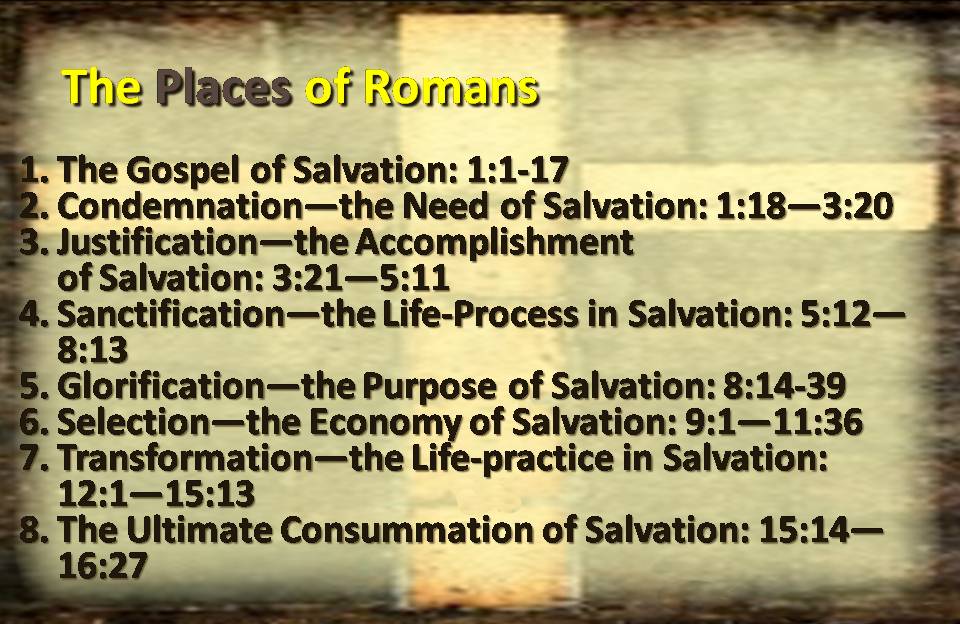 The introduction (1:1-17) delineates the theme of the book of Romans, which is the gospel of God. This is the content of the introduction. Our next tour will explore this Gospel which was so important to Paul.
- Paul, a servant of Christ Jesus, called to be an apostle, set apart for the gospel of God, which he promised beforehand through his prophets in the holy Scriptures, concerning his Son, who was descended from David according to the flesh and was declared to be the Son of God in power according to the Spirit of holiness by his resurrection from the dead, Jesus Christ our Lord, through whom we have received grace and apostleship to bring about the obedience of faith for the sake of his name among all the nations, including you who are called to belong to Jesus Christ, Romans 1:1-6 (ESV)
- Now to him who is able to strengthen you according to my gospel and the preaching of Jesus Christ, according to the revelation of the mystery that was kept secret for long ages but has now been disclosed and through the prophetic writings has been made known to all nations, according to the command of the eternal God, to bring about the obedience of faith— to the only wise God be glory forevermore through Jesus Christ! Amen. Romans 16:25-27 (ESV)
2. Condemnation—the Need of Salvation
Following the introduction, we have the section on condemnation (1:18—3:20) that unveils to us the need of God’s salvation. We all are hopeless and helpless cases and are under God’s condemnation. We need God’s salvation.
3. Justification—The Accomplishment of Salvation
The third section, justification (3:21—5:11), reveals the accomplishment of God’s salvation. Related to this matter of justification we have three other items—propitiation, redemption, and reconciliation. We will cover these terms when we come to chapter 3. At this point I will only say a brief word. God’s justification depends upon the redemption of Christ. Without the redemption of Christ, God has no way to justify sinners. Therefore, justification depends upon redemption, and redemption has one major aspect—propitiation. Propitiation is the major structure of redemption. Propitiation is the major part of the redemption of Christ because, as sinners, we owed God a great deal. We were held by God to pay this debt, and this caused a tremendous problem. That problem has been resolved by Christ as our propitiatory sacrifice. Since this propitiation has solved our problems with God, we have been redeemed. Based upon the redemption of Christ, God can easily and lawfully justify us. Thus, justification depends upon redemption, and the major part of redemption is propitiation. What, then, is reconciliation? Reconciliation is the issue of justification. God’s justification issues in reconciliation. All of this has been accomplished. Hallelujah! Although you may not be clear about all of these words at present, you can say to the Lord, “Lord, I don’t understand all these terms, but I praise You that everything has been accomplished.”
Justification brings us to God. In fact, it not only brings us to God, but also into God. Therefore, we may have the full enjoyment of God. The King James Version says, “We joy in God” (Rom. 5:11). We not only joy in God; we enjoy God. God is our enjoyment. This is justification.
4. Sanctification—the Life-process in Salvation
Following this, we have sanctification (5:12—8:13). How great it is to be in God and to enjoy God! After being justified, we need to be sanctified.
 What does it mean to be sanctified? We use the illustration of tea. If we put tea into a glass of plain water, the water will be “teaified.” At best, we are plain water, although we are actually not plain, but dirty. Even if we are plain water, we lack the tea flavor, the tea essence, and the tea color. We need the tea to come into our very being. Christ Himself is the heavenly tea. Christ is in us. Hallelujah!
God is progressively revealed throughout the book of Romans:
- In chapter 1 He is God in CREATION,
- In chapter 3 God in REDEMPTION,
- In chapter 4 God in JUSTIFICATION,
- In chapter 5 God in RECONCILIATION,
- In chapter 6 God in IDENTIFICATION.
- In chapter 8 God in US.
Christ is in us (Rom. 8:10)! He is no longer merely in creation, redemption, justification, reconciliation, and identification, but He is now within us, in our spirit. Christ is in us doing a transforming and sanctifying work, just as the tea, when put into the water, works the element of tea into it. Eventually, the water will be wholly “teaified.” It will have the appearance, the flavor, and the taste of real tea. If I serve you some of this beverage, I will be serving you tea, not plain water.
- Have you been JUSTIFIED?
You should all reply, “Hallelujah! We have been justified because Christ has accomplished redemption. God has reconciled us and we are now enjoying Him.”
- Have you been SANCTIFIED?
If some of you married men claim to be sanctified, what would your wives say? “He may be justified, but it is doubtful he is sanctified.” Or you might say”maybe a little bit… or maybe he is improved, but I do not think he is sanctified yet.” I am not talking about being improved, but being sanctified—that is to have the very character of Christ worked into our very being, just as the essence, flavor, and color of the tea are worked into the water. This is sanctification. And every born again Christian should learn that he indeed is sanctified.
5. Glorification—the Purpose of Salvation
 The next section in the book of Romans is GLORIFICATION (Rom. 8:14-39), unveiling the purpose of God’s salvation. Following sanctification, there is the need of glorification. Our body needs to be glorified. Although a brother may be quite saintly, his body needs to be glorified because of its physical defects and limitations. When the Lord Jesus comes, we will be glorified. Presently, I must wear thick, peculiar eyeglasses, but when the Lord comes I will be glorified. We shall not only be justified and sanctified; we shall be glorified, that is, our body shall be redeemed. Glorification is the full redemption of our body.
This glorification reveals the purpose of God’s salvation. The purpose of God’s salvation is to produce many brothers to Christ. Originally, Christ was the only begotten Son of God. Now the only begotten Son has become the firstborn Son. We ourselves will be processed into the many brothers of Christ and the many sons of God. He is the firstborn Son, and we, the many sons, are His many brothers. This is the purpose of God’s salvation.
6. Selection—the Economy of Salvation
After glorification, we come to selection which reveals the economy of salvation (Rom. 9:1—11:36). God has a purpose and an economy. His economy is for the fulfillment of His purpose. God is very wise and He arranges everything for the fulfillment of His purpose. He knows what He is doing. He knows who are His chosen people and He knows when His chosen people should be called. In relation to God, selection is for the accomplishment of His purpose; in relation to us, selection is our destiny.
7. Transformation—the Life-practice in Salvation
After this, we have the section on transformation, unfolding the life-practice in salvation (Rom. 12:1—15:13). In this section we see the life-practice of all that has been produced by the life-process. Whatever is produced in the section on sanctification is practiced in the section on transformation. Eventually, sanctification becomes transformation. In one sense, we are in sanctification; in another sense, we are also in transformation. We are in the process of life and in the practice of life that we may have the Body life with a proper private life. Every aspect of the proper Christian life and church life is included in this section on transformation. While we are being sanctified, we are also being transformed from one form into another form and from one shape into another shape. Praise the Lord! We are all under the life-process of sanctification for the life-practice of transformation.
8. Conclusion—the Ultimate Consummation of Salvation
The last section of the book of Romans is the conclusion, indicating the ultimate consummation of salvation (Rom. 15:14—16:27). The ultimate consummation of God’s salvation is the churches—not just the Body, but the local churches as the expressions of the Body. Hallelujah! The book of Romans begins with the Gospel of God and concludes with the local churches. In Romans, we do not have the local church in doctrine but the local churches in practice.
III. THE PILLARS OF ROMANS
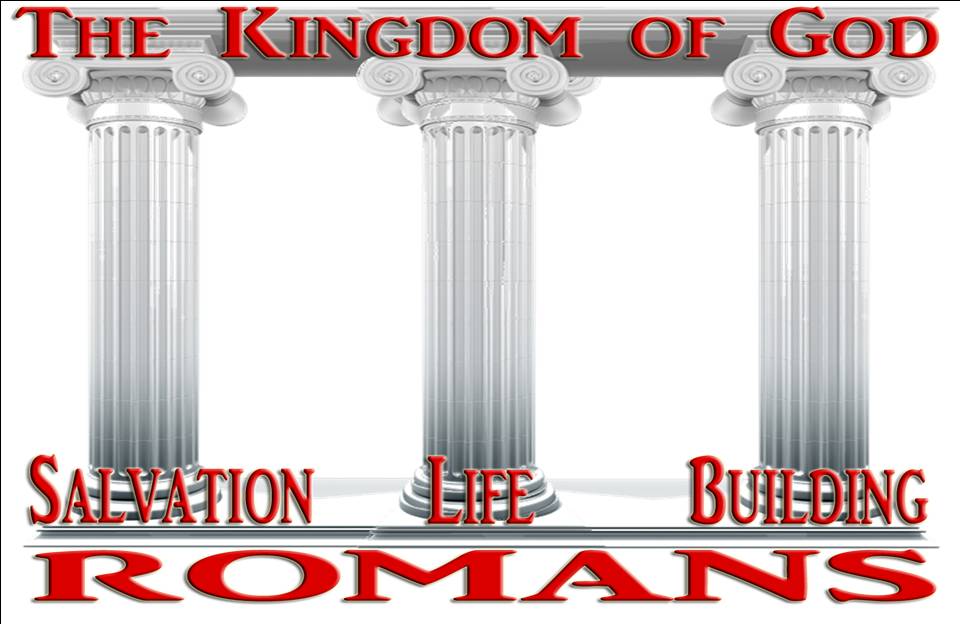 The major structures of the book of Romans are three— salvation, life, and building.
A. Salvation
The first major structure of Romans is salvation, revealed in 1:1—5:11 and 9:1—11:36. Salvation includes propitiation, redemption, justification, reconciliation, selection, and predestination. In eternity past God predestinated us. Then He called us, redeemed us, justified us, and reconciled us to Himself. Thus, we have full salvation.
We need to differentiate between redemption and salvation. Redemption is what Christ accomplished in the eyes of God. Salvation is what God has wrought upon us based upon the redemption of Christ. Redemption is objective, and salvation is subjective. When redemption becomes our experience, it becomes salvation.
B. Life
Salvation is for the life unfolded in 5:12—8:39. In this section the word life is used at least seven times and, according to chapter 8, this life is four-fold. This Eternal Life or Life with God, begins not when we die but when we are born again!
C. Building
In the last part of Romans, 12:1—16:27, we have the building, the Body with all of its expressions in the local churches. Salvation is for life, and life is for building. Thus, the three major structures of Romans are salvation, life, and building.
Finally:
Why is our Tour through Romans called Journey Through the Cross?
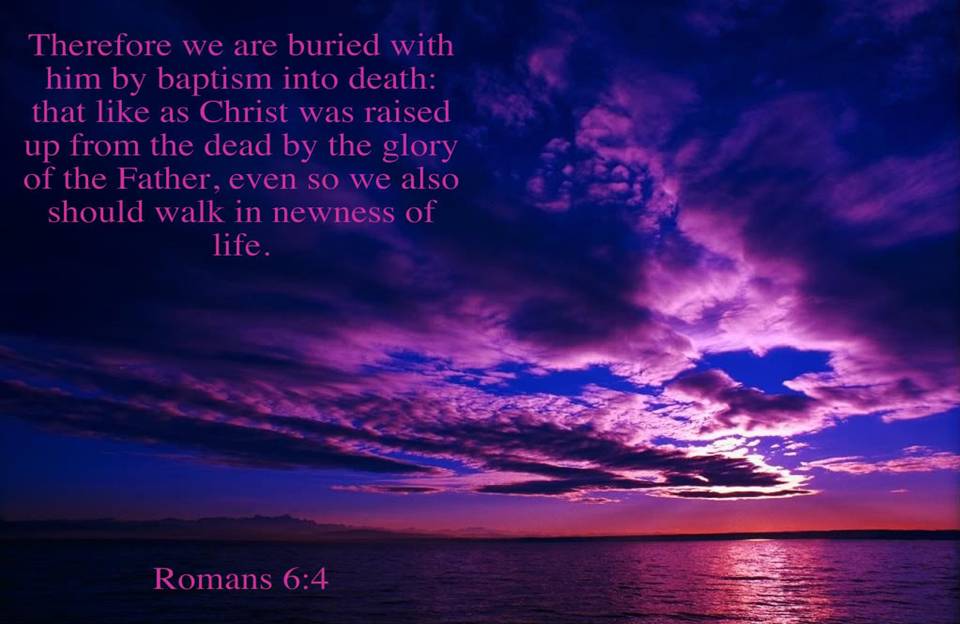 Paul is all about this New Life that is the result of the Power of the Gospel of Christ.
For if you live according to the flesh you will die, but if by the Spirit you put to death the deeds of the body, you will live. For all who are led by the Spirit of God are sons of God. For you did not receive the spirit of slavery to fall back into fear, but you have received the Spirit of adoption as sons, by whom we cry, “Abba! Father!” Romans 8:13-15 (ESV)
Such is the Power of this New Life we have through the Gospel of Christ that Paul makes this BOLD declaration:
For I am not ashamed of the gospel, for it is the power of God for salvation to everyone who believes, to the Jew first and also to the Greek. For in it the righteousness of God is revealed from faith for faith, as it is written, “The righteous shall live by faith.” Romans 1:16-17 (ESV)
 He boldly declares the power of the Cross of the Gospel in Romans 6. The Truth of Romans 6 is only experienced as we Journey Through the Cross:
We were buried therefore with him by baptism into death, in order that, just as Christ was raised from the dead by the glory of the Father, we too might walk in newness of life. For if we have been united with him in a death like his, we shall certainly be united with him in a resurrection like his. We know that our old self was crucified with him in order that the body of sin might be brought to nothing, so that we would no longer be enslaved to sin. Romans 6:4-6 (ESV)
Our Journey through the Cross is a Journey into the New Life that is in Jesus Christ

 Then drew near unto him all the publicans and sinners for to hear him. And the Pharisees and scribes murmured, saying, This man receiveth sinners, and eateth with them. And he spake this parable unto them, saying, What man of you, having an hundred sheep, if he lose one of them, doth not leave the ninety and nine in the wilderness, and go after that which is lost, until he find it? And when he hath found it, he layeth it on his shoulders, rejoicing. And when he cometh home, he calleth together his friends and neighbours, saying unto them, Rejoice with me; for I have found my sheep which was lost. I say unto you, that likewise joy shall be in heaven over one sinner that repenteth, more than over ninety and nine just persons, which need no repentance. Either what woman having ten pieces of silver, if she lose one piece, doth not light a candle, and sweep the house, and seek diligently till she find it? And when she hath found it, she calleth her friends and her neighbours together, saying, Rejoice with me; for I have found the piece which I had lost. Likewise, I say unto you, there is joy in the presence of the angels of God over one sinner that repenteth. Luke 15:1-10
 Jesus is declaring to the religious establishment that He is creating a New Community of People. A Community of People bonded together by the experience of Death & Life. To Understand this New Community, we will look closely at the first two parables. In the next four weeks following we will examine the Parable of the Lost Sons.
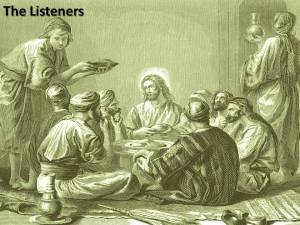 There are two groups of people around Jesus—“tax collectors and ‘sinners’”, and “Pharisees and the teachers of the law.” The ‘religious’ group is especially offended that Jesus eats with sinners. In the Middle East an offer of a meal is an offer of Friendship. It is an offer of Community. Table fellowship was considered a sign of acceptance and friendship. How, they thought, can he be so open to them? Doesn’t he realize that they are the “bad people”— who are the real trouble with the world? (And, therefore, that we are the “good guys”?)
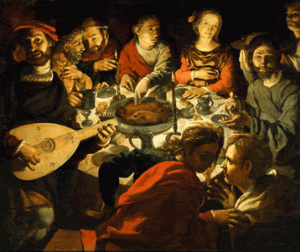 Jesus does not give a direct, compact answer. Instead, he responds with three stories or parables.It is important to realize that these parables were not spoken in a vacuum. The purpose of all three parables was to challenge the “Religious Peoples Point of View” of what Jesus was wanting to do.
 Jesus uses these “Lost” things to teach us religious types what He is all about. Why He came to this planet, and what He is accomplishing. The impact of these parables is lost on us because we do not look at them from a Middle Eastern viewpoint.
 A Sheep is a stupid animal. It loses its direction constantly, in a way a cat or dog never does. Even when you find a lost sheep, the sheep will rush to and fro, but will not follow you home like a dog or cat might. So when you find it, you must seize it, throw it to the ground, tie its feet together and carry it over your shoulders.A sheep is a stupid animal that is completely helpless when lost. We need to view sheep like these people did.
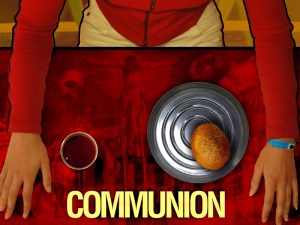 In liturgical churches sometimes the Pastor will administer the Lord’s Supper by saying this:
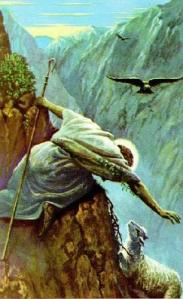 We all need to be rescued. We can contribute nothing to our salvation. The shepherd has to walk the sheep all the way home. We are utterly lost in sin. We must be saved totally by the grace of God.
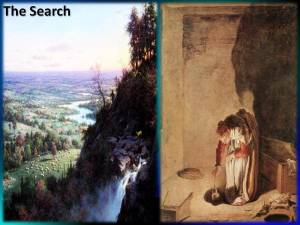 Jesus is friends with those who need rescuing. The community of Jesus is with the broken, the lost, the sinners, the failures of society. Jesus is building a faith community with these people in it. Normally these people are excluded-they can’t be included.
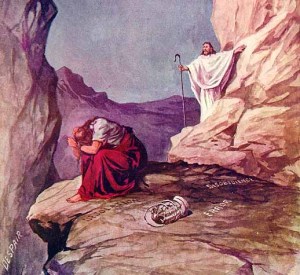 The answer is that usually, in varying degrees, it is all of the above.
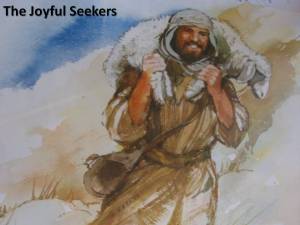 Jesus confronts their categories about salvation. He reveals that He comes from a community in heaven that is this way. “I come from a community in heaven that celebrates sinners saved by grace” It does not celebrate righteous people who don’t realize their lostness. I am creating a community like this here.
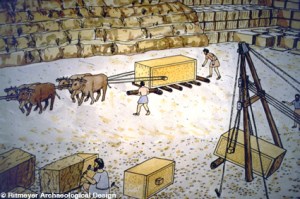 This is the Community of “1 Kings 6”. When building the Temple, the Quarry masons worked so well preparing the monstrous stones for the Temple that on the Temple Mount the stones needed no further hammering, the stones fit together perfectly. So the temple went up in silence-no need for hammering, no need for mortar!
 Jesus desires to do two things with His Church:

 Eventually, he received her to himself as his wife. He had begun building their dream home and was not finished, so he moved her from her father’s house into a nice apartment. He often traveled between their home he was building and their apartment, but he or his groomsmen were never too far to assist her in any and every need.

 Our Christian walk and life must be ENTIRELY from and by God! We can not live the righteous Christian life by our own effort. The faith life is lived by resting in Divine Revelation and relying on Divine Empowering.

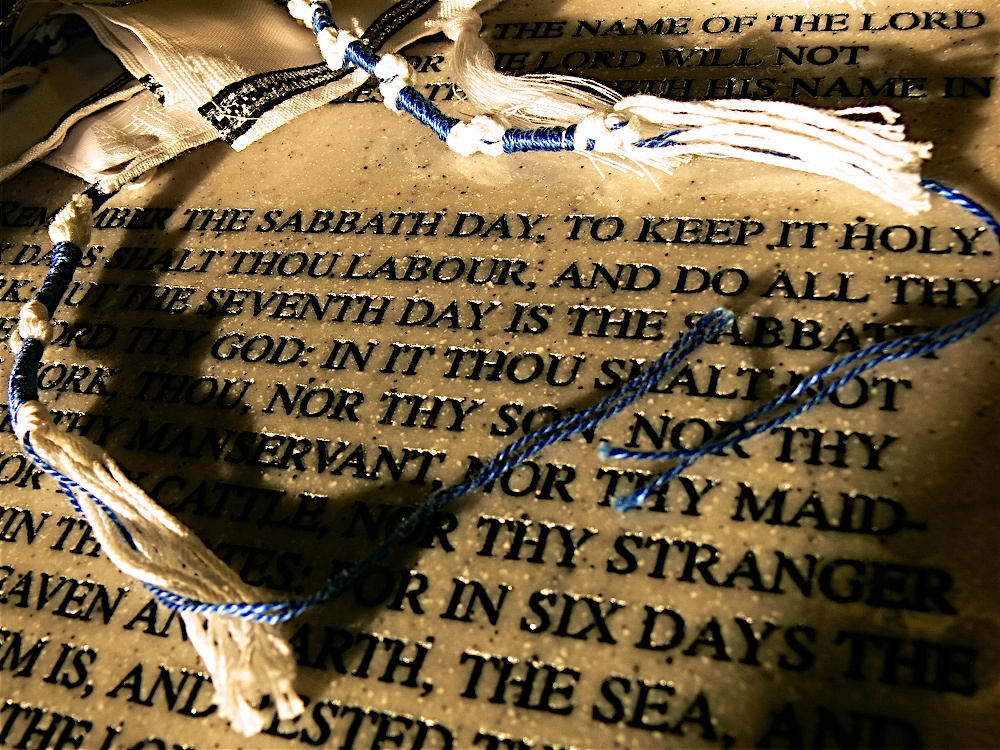


 Loving the Word with the MudPreacher