Posts Tagged ‘Christianity’


“Though” and “through” differ only by one small letter—the letter “r.” In American Sign Language, “r” is made by crossing the middle finger over the index finger. But crossed fingers have a history as sign language that far predates ASL. In the first centuries of the Church, when Christianity was illegal and Christians were vigorously persecuted, believers found ways to communicate their faith in subtle ways. Accompanying a greeting or farewell, crossed fingers were a code sign, identifying Christians to one another as “people of the cross.” The crossed fingers were a mute symbol for the cross of Christ and the redemption Christ’s death on that cross brought to all people. Today, crossed fingers mean something very different. When placed behind one’s back, they mean that one does not mean what one is saying. When held in one’s lap, they mean one is hoping something will or will not happen. Russ Chiodo, Director of Emergency Services for Beaver County, PA, was the person in charge of picking up the body parts from the 132 people who died on the ill-fated USAir Flight 427 that crashed on its way from Chicago to Pittsburgh. When asked what it was like to bag body parts with no human faces left, Chiodo confessed to the sight that affected him the most. “The thing I’m not going to be able to forget for a long time is finding a hand with its fingers crossed—as if for luck.”

Isn’t it ironic that the gesture of crossed fingers, first instituted by the early church as a symbol of the Cross of Christ and a certainty of the promises of God in Jesus, has digressed to represent the exact opposite…mere luck. In the completed work of Christ on our behalf we have the 100% absolute assurance of our salvation and the absolute guarantee of an inheritance “incorruptible and undefiled, reserved in heaven for us” (1 Peter 1:4). Luck has absolutely NOTHING to do with it.

The Cross in Genesis 1-11

Understand that Jesus was in the world from the Creation! This study will confirm that Jesus has been the way of Salvation from the very beginning, through the “Principle of the Cross!” A Principle that mankind for the most part rejected, just as they rejected Jesus in the flesh.
John 1:1-5 In the beginning was the Word, and the Word was with God, and the Word was God. He was in the beginning with God. All things were made through him, and without him was not anything made that was made. In him was life, and the life was the light of men. The light shines in the darkness, and the darkness has not overcome it.

John 1:9-18 The true light, which enlightens everyone, was coming into the world. He was in the world, and the world was made through him, yet the world did not know him. He came to his own, and his own people did not receive him. But to all who did receive him, who believed in his name, he gave the right to become children of God, who were born, not of blood nor of the will of the flesh nor of the will of man, but of God. And the Word became flesh and dwelt among us, and we have seen his glory, glory as of the only Son from the Father, full of grace and truth…And from his fullness we have all received, grace upon grace.

Jesus Christ is the Son of God, and He is the Word of God. He has been in the world since He created it. Yet the world did not know Him. But all who received Him, who believed in His name, He gave the power and authority to become children of God. The Word became flesh, and we beheld His Glory. As we read last week, His Glory began at the Cross. At the Cross we see the Word of God full of Grace and truth. Because of the Cross we receive grace upon grace.

In 1 Corinthians 1, the Cross is described as a dividing point, a stumbling block, and a point of folly. So too is the Word of God.

Hebrews 4:11-13 Let us therefore strive to enter that rest, so that no one may fall by the same sort of disobedience. For the word of God is living and active, sharper than any two-edged sword, piercing to the division of soul and of spirit, of joints and of marrow, and discerning the thoughts and intentions of the heart. And no creature is hidden from his sight, but all are naked and exposed to the eyes of him to whom we must give account.

The Word of God is a sharp two-edged sword. It reveals the thoughts and intents of our wicked and deceitful hearts. No one can be hidden from the Word, for it exposes us to the one to whom we must give account.
Just as the Cross was lifted up above this world, so the Word of God is lifted up above mankind, and the Word of God will be our judge. The Word of God will judge believers and unbelievers alike.

The Word of God separates unbelieving men from God. The Word of God separates unbelieving Christians from resting in God. That is why Christians are encouraged to strive to enter the rest of God through the Word of God, because it is living and active, able to cut away the dross of the world and leave that which is pure before God.

A.W. Tozer: “Our uncrucified flesh will rob us of purity of heart, Christ-likeness of character, spiritual insight, and fruitfulness; and more than all, it will hide from us the vision of God’s face, that vision which has been the light of the earth and will be the completeness of heaven.”

The Word of God has this power the same way that Jesus Christ had the power to bring sinful men to Holy God, through the Cross! In fact, it is because of the Cross that we have the Word of God! As W. A. Criswell famously said, “throughout the Bible there runs a Scarlet Thread of Redemption!”

Because of the Cross…We Have the Word

As we look at all we have “Because of the Cross,” we need to remember three Principles of the Cross:

1. The Cross is the Wisdom & Power of God.

    • The Cross reveals the Heart of God, His delight in mercy, justice and righteousness.

2. The Cross is opposed to the wisdom and power of man.

    • The cross requires humility. The cross strips man of all rights and powers. The Cross reveals the foolishness of man’s attempts at standing and self-righteousness.

A.W. Tozer: “The man who is crucified is facing only one direction… He [cannot] look back. The crucified man on the cross is looking only one direction and that is the direction of God, and Christ and the Holy Ghost… The man on the cross… has no further plans of his own… Somebody else made his plans for him, and when they nailed him up there all his plans disappeared… When you go out to die on the cross, you bid good-bye–you are not going back!

We want to be saved but we insist Christ do all the dying. No cross for us, no dethronement, no dying. We remain king within the little kingdom of Mansoul and wear our tinsel crown with all the pride of a Caesar; but we doom ourselves to shadows and weakness and spiritual sterility.”

3. The Cross is the Perfect Blood Sacrifice required by God

    • God declared that life is in the blood. To bring life to ‘dead in sin’ mankind, a perfect blood sacrifice had to be made.

A.W. Tozer: “The old cross is a symbol of death. God salvages the individual by liquidating him and then raising him again in newness of life. God offers life, but not an improved old life. The life He offers is life out of death. It always stands at the far side of the cross.”

We will see the Principle of the Cross throughout the Old Testament. The Principle that death leads to resurrection. The principle of “death with a view to increase” that characterizes the Gospel.

First death, then life. Death [leads to] resurrection. When we consent to death, then the life of Jesus can flow unhindered from us. It is never the other way. We cannot claim resurrection life first, and then by means of that put the flesh to death. We must first bow to the cross, and then God will effect the resurrection. (Ray Steadman)

With these three Principles in mind, let us see that “Because of the Cross…we have the Word of God!

In the Garden

Genesis 3:6-7 So when the woman saw that the tree was good for food, and that it was a delight to the eyes, and that the tree was to be desired to make one wise, she took of its fruit and ate, and she also gave some to her husband who was with her, and he ate. Then the eyes of both were opened, and they knew that they were naked. And they sewed fig leaves together and made themselves loincloths.
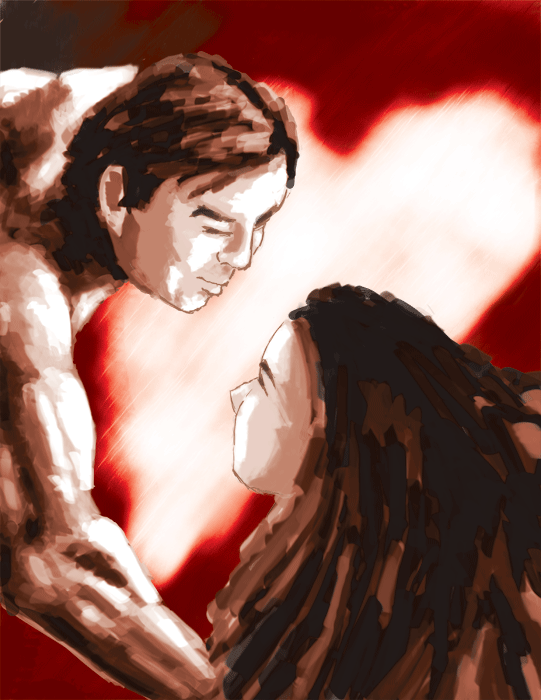
Something happened to Adam and Eve when they disobeyed God. Their eyes were opened and they could see their shame. Therefore, in their wisdom, they made some clothing out of fig leaves sewn together.

This is what I think happened. Psalm 104 1-2 says that God is clothed in splendor and majesty, covering himself with light as a garment. Adam and Eve, created in the image of God, were clothed in light. When they sinned, the light was gone, and they felt the shame of their sin. They attempted to cover up their shame. This is man’s wisdom. No repentance, simply cover it up, cope with it, pull yourself up by the bootstraps and move on.

Here is where we see the Cross first lifted up.
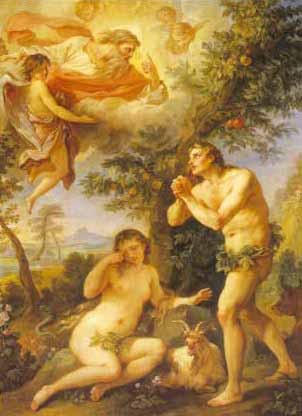
God calls out to Adam and says, “where are you?”

Adam says:

Genesis 3:10-13 And he said, “I heard the sound of you in the garden, and I was afraid, because I was naked, and I hid myself.” He said, “Who told you that you were naked? Have you eaten of the tree of which I commanded you not to eat?” The man said, “The woman whom you gave to be with me, she gave me fruit of the tree, and I ate.” Then the LORD God said to the woman, “What is this that you have done?” The woman said, “The serpent deceived me, and I ate.”

Sin has entered into the hearts of Adam and Eve. Instead of open fellowship with God, they feared Him and even hid from Him. Instead of repentance and return to God, they blame someone else.

God’s response is to place a curse upon man and woman and even the serpent.

But God’s solution to sin was the Principle of the Cross.

Genesis 3:21 And the LORD God made for Adam and for his wife garments of skins and clothed them.

Here we see the first sacrifice for sin. Adam and Eve had to watch as God took one of those peaceful animals that they cared for, and kill it. They had to watch blood flow for the first time. Can you imagine how they felt? An innocent animal had to die because they disobeyed. They had to wear that animal’s skin. It was a constant reminder of God’s plan. Sin is always answered with sacrifice. Moreover, Sacrifice always results in Grace.

  • God covered them in Grace. (His provision allowed them to live)
  • God expelled them in Grace. (He did not want them to live in sin forever)

God must have instructed them in the Way of the Cross and the need for blood sacrifice to keep their relationship with God.

When they had children, they taught them about the need for an acceptable sacrifice unto God.

Cain

In Genesis 4, Cain, the oldest, brought a sacrifice from the fruit of the ground. He decided there was no need for a blood sacrifice.

Abel brought the firstborn of his flock. God accepted Abel’s offering, but disregarded Cain’s. Cain became angry.

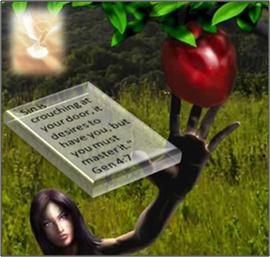
Genesis 4:6-7 The LORD said to Cain, “Why are you angry, and why has your face fallen? If you do well, will you not be accepted? And if you do not do well, sin is crouching at the door. Its desire is for you, but you must rule over it.”

The purport of the divine rebuke to Cain was this, “Why art thou angry, as if unjustly treated? If thou doest well (that is, wert innocent and sinless) a thank offering would have been accepted as a token of thy dependence as a creature. But as thou doest not well (that is, art a sinner), a sin offering is necessary, by bringing which thou wouldest have met with acceptance and retained the honors of thy birthright.” This language implies that previous instructions had been given as to the mode of worship; Abel offered through faith (Heb 11:4).[1]
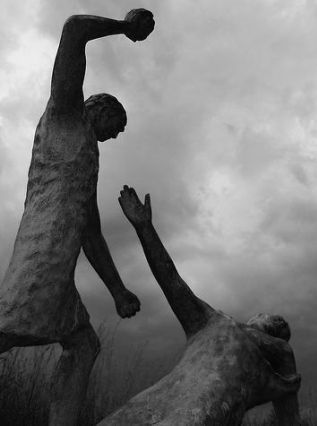
Therefore, Cain, instead of humbling himself to God and offering a sacrifice for his sin, reacted in pride and offered what he thought was appropriate. He used his wisdom instead of God’s instruction. God rejected the sacrifice, for there was no provision for sin.

God would have accepted his offering if it had been accompanied with a blood sacrifice. But without blood, there is no remission of sins. Without the cross, we have no standing before God. God disregards us because of our sin.

Cain’s pride led to greater anger. Instead of offering a blood sacrifice to God, he shed the innocent blood of his brother. The Bible says, “Cain rose up against his brother.”

Instead of humbling himself before God in the shadow of the Cross, Cain rose up in pride and arrogance and murdered his righteous brother. Pride is always the enemy of the Cross.

Jude speaks of people that follow the “way of Cain”

Jude 1:10-11 But these people blaspheme all that they do not understand, and they are destroyed by all that they, like unreasoning animals, understand instinctively. Woe to them! For they walked in the way of Cain and abandoned themselves for the sake of gain to Balaam’s error and perished in Korah’s rebellion.

The way of Cain applies to all those who approach God in man’s wisdom and man’s pride. The way of Cain denies the mercy of God found through blood atonement.

We can see this in the lineage of Cain-for it is the glorification of the flesh and all that man can do.

Look at the ability and pride of Cain:

  • Genesis 4:17, he is a builder of cities.
  • Genesis 4:21, he is the father of music.
  • Genesis 4:22, he is the father of craftsmen in brass and in iron.

As W. A. CRISWELL says:

Civilization without God is the line and the seed of Cain. It is the story of Sodom; it is the story of Gomorrah; it is the story of Babylon; it is the story of every great city and every great civilization that leaves God out of it. That is the story of Cain. It is the glorification of what man can do apart from God.

Seth

Therefore, Cain continued to multiply the kingdom of man. The Kingdom of man is represented by the line of Cain. The kingdom of man is represented by the mark upon his forehead. The kingdom of man was corrupting God’s kingdom. So God appointed a man, Seth.

Finally, after 130 years, Seth was born to Adam, a son in his own likeness, a son that God had appointed. Seth had a son Enosh, and at that time people began to call upon the Name of the Lord. (Gen 4:26)

Perhaps the Kingdom of God could be built now. But no, sin was at work.

Genesis 6:1-4 When man began to multiply on the face of the land and daughters were born to them, the sons of God saw that the daughters of man were attractive. And they took as their wives any they chose. Then the LORD said, “My Spirit shall not abide in man forever, for he is flesh: his days shall be 120 years.” The Nephilim were on the earth in those days, and also afterward, when the sons of God came in to the daughters of man and they bore children to them. These were the mighty men who were of old, the men of renown.
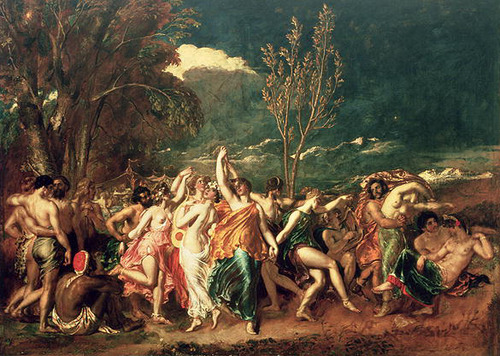
The sons of God (Seth’s line) started marrying the daughters of man. (I know most people think Angels intermarried, but Jesus made it clear that Angels’ can’t reproduce). I believe that the Godly children of Seth who were to raise up God’s Kingdom design intermarried with the fleshly Kingdom of Man line of Cain. This produced mighty men, men whose pride and abilities knew no bounds. The Lord saw that the wickedness of man was great in the earth, and that every intention of the thoughts of his heart was only evil continually. Instead of humble men offering themselves to God, proud and arrogant men walked in the “Way of Cain.” The pride and arrogance of man was opposed to humility and sacrifice before God. They denied and even rebelled against the Principle of the Cross.

Therefore, God was grieved, for He was not able to practice mercy, justice and righteousness because of the sinfulness of man. But “Noah found grace in the eyes of the Lord.” Noah alone was following the principle of the Cross. (Gen 6:8)

Noah and his family alone survived the worldwide flood that God sent upon sinful man. Through the flood, God reformed His creation, and brought forth a family that would follow the principle of the Cross.

1 Peter 3:18-20 For Christ also died for sins once for all, the just for the unjust, so that He might bring us to God, having been put to death in the flesh, but made alive in the spirit; in which also He went and made proclamation to the spirits now in prison, who once were disobedient, when the patience of God kept waiting in the days of Noah, during the construction of the ark, in which a few, that is, eight persons, were brought safely through the water.

Noah preached the principle of the Cross, but man in his wisdom refused the message of the Cross.
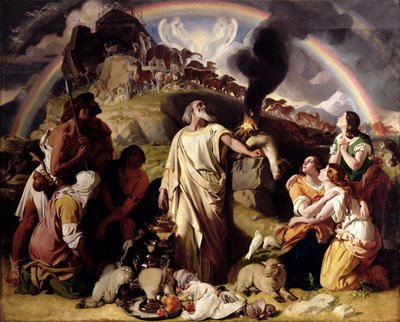
He preached through Noah “when once the longsuffering of God waited in the days of Noah.” For 120 years, Noah had preached the Word of God. He saved his family but no one else. It was the Spirit of Christ who spoke through Noah in Noah’s day. In Christ’s day, those who rejected Noah’s message were in prison. The thought is that Christ’s death meant nothing to them just as it means nothing to a great many people today who, as a result, will also come into judgment.[2]

After the flood is over and the ground has dried, God opens the Ark and Noah and his family walks upon the cleansed Earth. Noah immediately builds an altar and offers sacrifices of all the clean animals and birds on the ark. This is the first time the word “altar[3]” is used in the Bible—Genesis 8:20.

3mizbēaḥ: A masculine noun meaning the altar, the place of sacrifice. It is a noun formed from the verb zāb̠aḥ, which means to slaughter an animal, usually for a sacrifice.

This is the principle of the Cross. It is the picture of redemption. The blood is poured out upon the altar and the animal is consumed in a fire unto the Lord.

Genesis 8:21-22 And when the LORD smelled the pleasing aroma, the LORD said in his heart, “I will never again curse the ground because of man, for the intention of man’s heart is evil from his youth. Neither will I ever again strike down every living creature as I have done. While the earth remains, seedtime and harvest, cold and heat, summer and winter, day and night, shall not cease.”

God’s creation was restored through the principle of the Cross. The wisdom of God had prevailed over the wisdom of man. Man had survived the flood through the provision of God. Man was now offering the right offering to God in humility and praise. The burnt offering signified that this was a complete offering to God!

Nimrod

Now it does not take long to see man’s pride rear its ugly head in God’s renewed creation.

Genesis 10:8-10 Cush fathered Nimrod; he was the first on earth to be a mighty man. He was a mighty hunter before the LORD. Therefore, it is said, “Like Nimrod a mighty hunter before the LORD.” The beginning of his kingdom was Babel, Erech, Accad, and Calneh, in the land of Shinar.
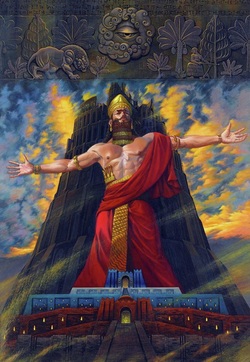
Nimrod’s Kingdom was not built on the principle of the Cross, but on rebellion and pride. In fact, the idea that Nimrod was not a mighty hunter before the Lord, but rather a mighty hunter AGAINST the Lord.

(Adam Clarke) His name Nimrod comes from ‏מרד‎, marad, “he rebelled”; and the Targum, on 1 Chronicles 1:10, says: Nimrod began to be a mighty man in sin, a murderer of innocent men, and a rebel before the Lord. The Jerusalem Targum says: “He was mighty in hunting (or in prey) and in sin before God, for he was a hunter of the children of men in their languages; and he said unto them, Depart from the religion of Shem, and cleave to the institutes of Nimrod.” The Syriac calls him a warlike giant. The word ‏ציד‎  tsayid, which we render hunter, signifies prey; and is applied in the Scriptures to the hunting of men by persecution, oppression, and tyranny. Hence it is likely that Nimrod, having acquired power, used it in tyranny and oppression; and by rapine and violence founded that domination which was the first distinguished by the name of a kingdom on the face of the earth[4]
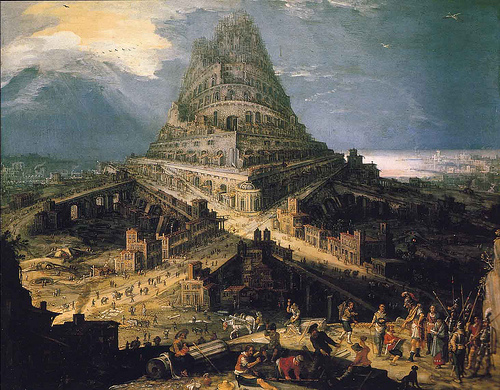
Nimrod was building a kingdom opposed to the Lord, opposed to the principles of the Cross. This kingdom was all about man, and what man could do. It was a kingdom built on the foundation of Cain, a Kingdom that did not need God, did not need to sacrifice to Him.

Genesis 11:4-6 Then they said, “Come, let us build ourselves a city and a tower with its top in the heavens, and let us make a name for ourselves, lest we be dispersed over the face of the whole earth.” And the LORD came down to see the city and the tower, which the children of man had built. And the LORD said, “Behold, they are one people, and they have all one language, and this is only the beginning of what they will do. And nothing that they propose to do will now be impossible for them.

God saw that man could do anything and the wisdom of man was united against the wisdom of God. Therefore, God did a “BLAH” thing. People started speaking “blah blah blah.” Once again God had displayed His power and wisdom to man. Once again, man ignored Him.

As we continue with the next phase of God’s redemptive plan, we will see a man called out of idolatry and man-worship. We will see a man whose very life was lived in the shadow of the cross.

The principle of the Cross is the thread that runs throughout the Bible.
  1. The Cross is the Wisdom and Power of God
  2. The Cross is opposed to the wisdom and power of Man
  3. The Cross is the perfect Blood Sacrifice

We have seen that God’s plan for this world and for us His creation has always been fellowship and life. Yet that must be done in humility and holiness. When sin entered this world, it made us men that rebel against God’s ways. We are inclined to stray, to be independent, to seek our own welfare. Humility, dependence, repentance are foreign to our nature. Therefore, we rebel against the Cross. We refuse to sacrifice to God in His way. We want to maintain control. Therefore, we deny the power and wisdom of God.

Without Christ, our lives are a sequence of “blah blah blah” to God. We are ants scrambling over the excrement of our pride and arrogance. All this can be changed by submitting to the Cross.


[1] Robert Jamieson, A.R. Fausset, David Brown, A Commentary: Critical, Experimental, and Practical on the Old and New Testaments, (Toledo, OH: Jerome B. Names & Co., 1884), WORDsearch CROSS e-book, Under: “GENESIS”.

[2] J. Vernon McGee, Thru The Bible with J. Vernon McGee, (Nashville, TN: Thomas Nelson, 1983), WORDsearch CROSS e-book, Under: “Chapter 3”.

[3] Warren Baker and Eugene Carpenter, The Complete Word Study Dictionary – Old Testament, (Chattanooga, TN: AMG Publishers, 2003), WORDsearch CROSS e-book, Under: “mizbēah.”

[4] . Adam Clarke, A Commentary and Critical Notes, (New York: Abingdon-Cokesbury Press, 1826), WORDsearch CROSS e-book, Under: “Genesis 10”.


And I am sure of this, that he who began a good work in you will bring it to completion at the day of Jesus Christ. Philippians 1:6

Rejoice in the Lord always; again I will say, Rejoice. Philippians 4:4 

I’ve always wondered why Paul would move around so much. The longest he ever stayed in one city was Ephesus (36 months) and Corinth (18 months). Sometimes he stayed only a few weeks. Yet everywhere he went a church began. He and Barbabus were in Antioch of Pisidia for only a couple weeks when they were driven out by persecution. Did the new converts whine about them leaving so soon? Did they bemoan the fact that they would have no ‘Pastor’ to watch over them and teach them? No. Acts 13:52 says, “the disciples were filled with joy and with the Holy Spirit”.

A decision to be a follower of Jesus Christ was different in Paul’s day. When you gave your life to Christ it was life-changing because it immediately affected your life. The Gentiles were so heathen and vile, the Jews so blind, that a Christian’s changed life would stick out. There was the danger of persecution, of rejection from your family. A decision to come to Christ was not a casual thing. You made the choice and your life was changed. You needed the help of other Christians. You prayed together, you studied the Scriptures together. Churches formed as a means of support and encouragement for Christians facing difficult and even hostile situations.

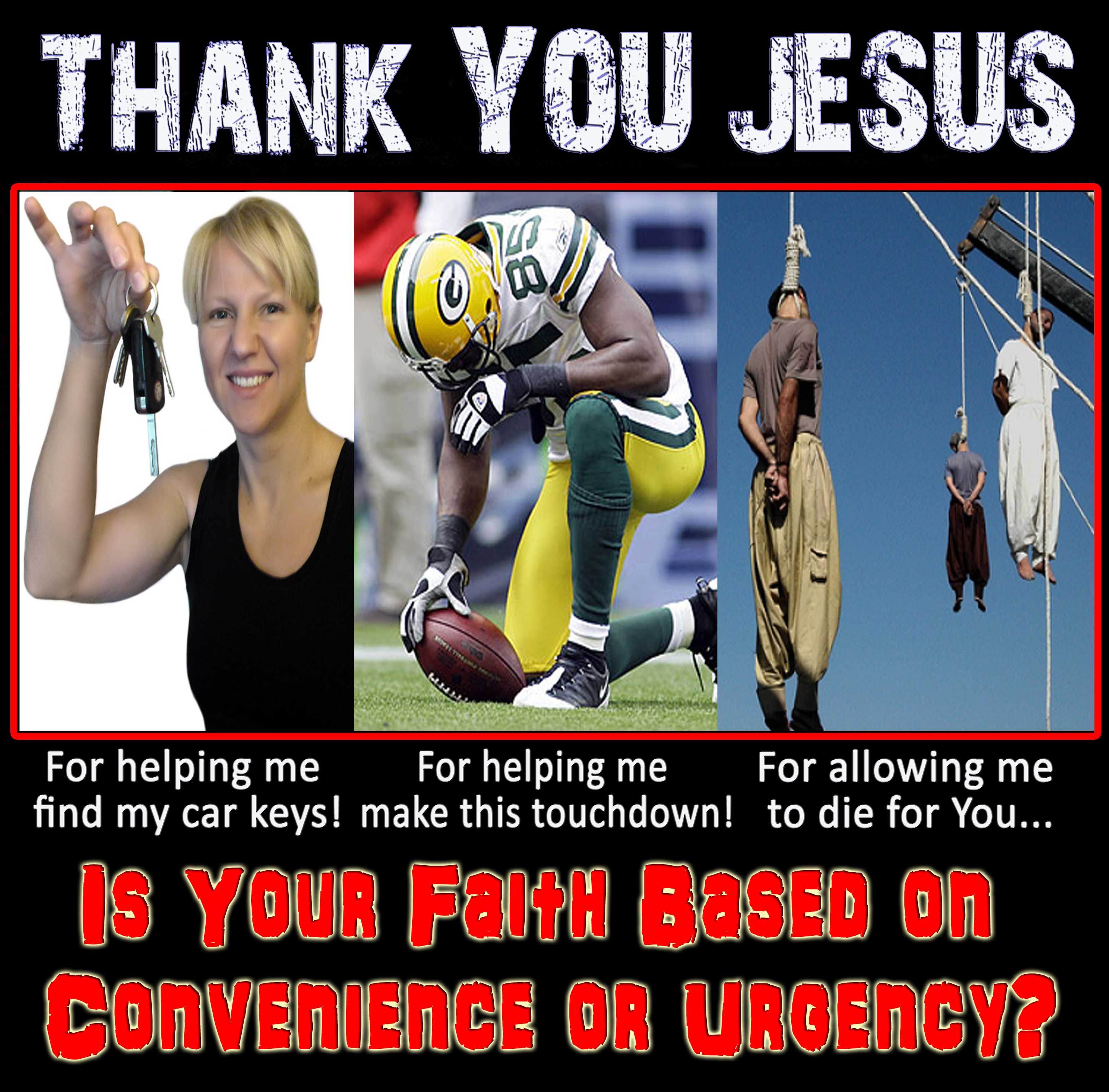
In countries where Christianity is the ‘de facto’ religion, a decision to follow Christ can be motivated by self. In modern Christian America, we want our children to make a decision to trust Christ as their Savior because we can’t bear the thought of them going to Hell. But once they accept Christ, He fades into the background of activities at school. Church becomes an occasional thing, and there is no serious searching of the Scriptures at home. No wonder that 90% of our children head off to college and leave the church entirely. A decision to follow Christ is more a ‘convenience’ issue rather than one which dramatically impacts our life.

In America, there is no urgency to being a Christian. We have become cultural Christians, because there is no need to hold fast to the Gospel of Jesus Christ in order to survive in a hostile environment. Christianity is socially acceptable. Lack of hostility towards Christianity breeds an environment of apathy toward the Power of Jesus Christ. It seems that the only time we seek the power of Jesus is when we face some personal situation like loss of a job or a bad diagnosis.

We live lives that are pretty OK. There is no overwhelming need for the power and protection of Jesus that the first century converts experienced.

Where the Word of God is flourishing and Christians growing today is in hostile environments such as China and Muslim countries. Imagine, the church flourishes in hostile environments. Could that be an indication the Power of God is needed to grow the church?

In Paul’s day, being a Christian meant being a disciple. It meant giving everything up. It meant losing family, friends and possessions. It meant the threat of losing your life. We have lost that perspective in Culturally Christian Bible Belt America.

The Gospel has power for our lives, but it is conditional.

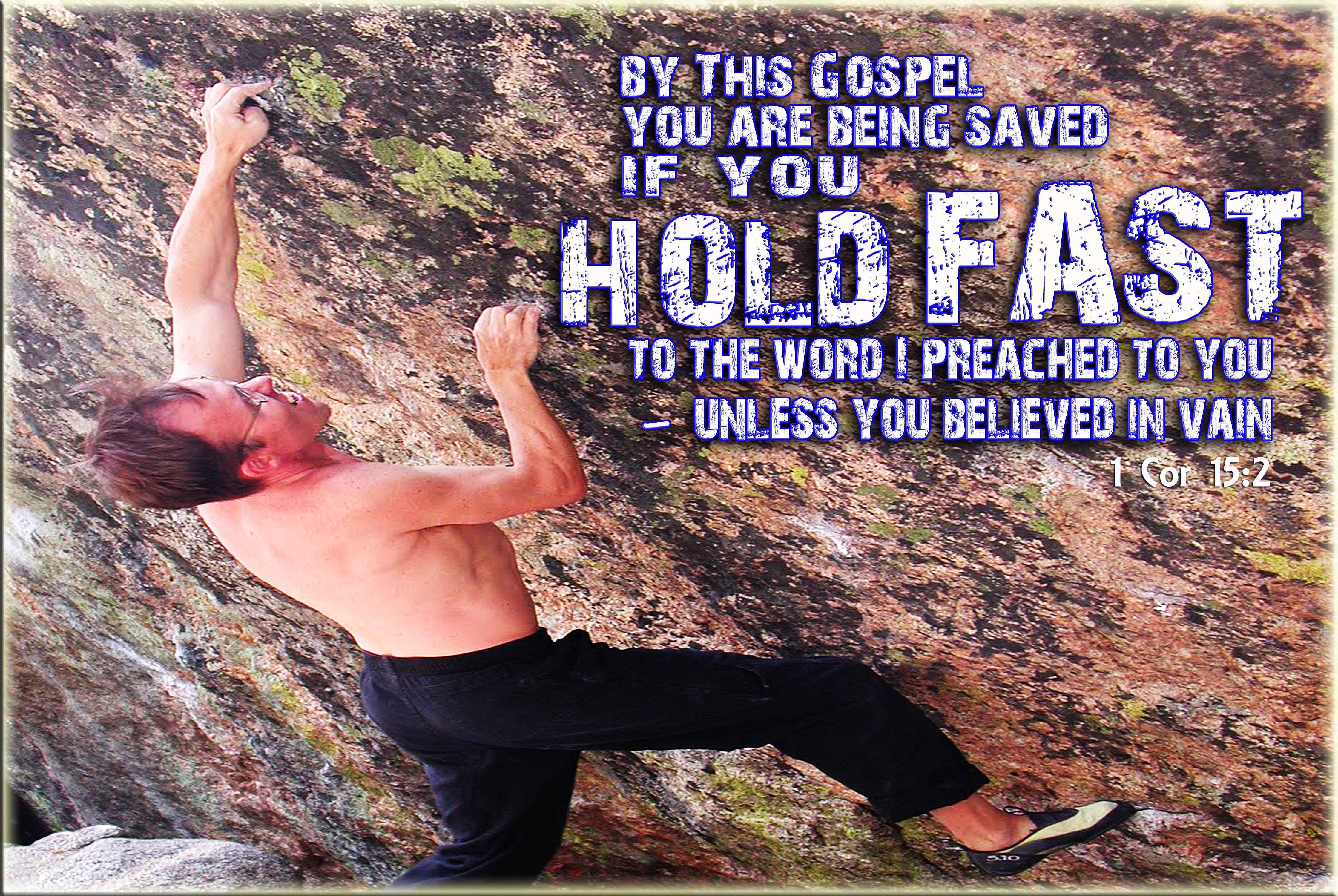
1 Corinthians 15:1-2 Now I would remind you, brothers, of the gospel I preached to you, which you received, in which you stand, and by which you are being saved, if you hold fast to the word I preached to you— unless you believed in vain.

“You are being saved” pictures an ongoing process whereby you are the recipient of God’s salvation. You are the one being acted upon. But you can block the power of the Gospel by failing to take hold of the Word. Κατέχω (Katecho) doesn’t mean to take hold of something in a casual way. It means to take hold of something as if you were making it your own, (to hold fast, keep secure, keep firm possession of). Like holding on to a bar of gold. You clutch it close to you, you make it yours, and no one is going to pry it from your hands.

Jesus explained in the parable of the soils and the seeds:

As for that in the good soil, they are those who, hearing the word, hold it fast in an honest and good heart, and bear fruit with patience. Luke 8:15

When you give your life to Jesus knowing that you could lose your life, you take hold of His Word as though your life depends upon it!

If you are not holding fast to the Gospel, the chances are that your belief in Christ had a selfish motivation, and was for your personal benefit, and not because you needed Jesus, and needed His life to be yours. If you have not been holding fast to the Gospel of Christ, if you have failed to make it your life, perhaps you should “examine yourselves, to see whether you are in the faith”.

Examine yourselves, to see whether you are in the faith. Test yourselves. Or do you not realize this about yourselves, that Jesus Christ is in you?—unless indeed you fail to meet the test! 2 Corinthians 13:5 

Paul was confident that God would finish the work that he started. He knew the power of the Gospel of Jesus Christ! It is the Power of God, power that keeps us because we hold fast to the Gospel. Not because it is convenient, but because it is a necessity to live! Paul left town rejoicing, becasue he left behind a group of believers who NEEDED Jesus to live! And Jesus never forsakes His own!


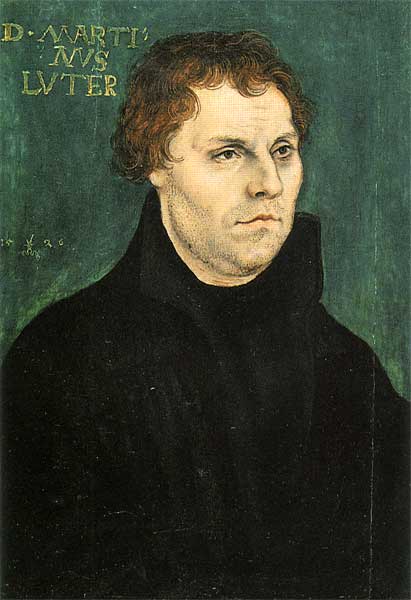
“The epistle to the Romans is the true masterpiece of the New Testament and the very purest gospel, which is well worth and deserving that a Christian man should not only learn it by heart, word for word, but also that he should daily deal with it as the daily bread of men’s souls. It can never be too much or too well read or studied, and the more it is handled the more precious it becomes, and the better it tastes” (Martin Luther).

Paul wrote this letter about 56 A. D. when he was in the city of Corinth, before his trip to Jerusalem. Written to a church he hoped to visit soon. Paul had not yet visited the church in Rome. He wanted to go there and he prayed that God would make this visit possible (Rom. 1:10-12; 15:23-24). This makes the letter to the Romans unique. Most of Paul’s other letters were written to churches where he had personally ministered. But here was a church (the church at Rome) where Paul had not been and where Paul had not taught.

So the Book of Romans was preparation for when Paul would arrive in Rome.

Here in the book of Romans Paul gives a doctrinal preview of the content of his teaching ministry. What Paul unfolds in these 16 chapters is nothing less than a doctrinal masterpiece.

  • What is being a Christian all about?
  • What are the central truths of Christianity?
  • What is the gospel really?
  • What formed the foundation of Apostle Paul’s preaching wherever he went?

Influence of Romans

To find the answer to all these questions we turn to the greatest doctrinal book in the New Testament — the epistle of Paul to the Romans.

A group of scholars once made a list of the fifteen greatest books, books that were great based upon their beneficial influence upon humanity. Included in this list were John Wesley’sJournal, Luther’s 95 Theses, Augustine’s City of God and John Bunyan‘s Pilgrim’s Progress.

  • As his Journal reveals, Wesley was an unsaved preacher until he read the book of Romans and understood God’s way of salvation.
  • Luther, a Catholic monk, was greatly influenced by Romans 1:17, “The just shall live by faith,” which opened his eyes to the truth of justification by faith.
  • Augustine’s City of God was founded on his study of the Book of Romans.
  • Bunyan’s Pilgrim’s Progress was written after reading the Book of Romans in prison.  It became the best selling book of all time, next to the Bible.

Among the greatest books of the world, four which come near the top of the list were all directly influenced by the Book of Romans.

Has the Book of Romans changed your life? When was the last time you read through Romans?

Although Paul knows many of the people to whom he is writing, he did not found the church, and he has never been to Rome. So he has some work to do in the first 17 verses to introduce himself and his agenda. The “gospel” ties together Romans 1:1-17, and, indeed, the entire letter. In the introduction, Paul features both the content and the power of the gospel that unites Jewish and Gentile believers in Rome.

The object of the apostle in writing to this church was to explain to them the great doctrines of the gospel. His epistle was a “word in season.” Himself deeply impressed with a sense of the value of the doctrines of salvation, he opens up in a clear and connected form the whole system of the gospel in its relation both to Jew and Gentile.

Preparation for the Journey

Whenever I take a trip, I like to prepare myself so I can make the most of my time in the place I’m going. There are three things which you should study about your destination if you are to get the most of your time there:

  1. The Personality (of the people)
  2. The Places (what should we see)
  3. The Pillars (make it a desirable destination)

I. THE PERSONALITY OF ROMANS

The following terms must be understood if we are to understand the personality of Romans. Paul’s approach to these terms are nothing short of foundational to understanding the true Gospel of Jesus Christ. I am certain that most of us do not understand these terms the way Paul wants us to.

A. The LAW –  78x in 51 verses

  • For it is not the hearers of the law who are righteous before God, but the doers of the law who will be justified. Romans 2:13 (ESV)

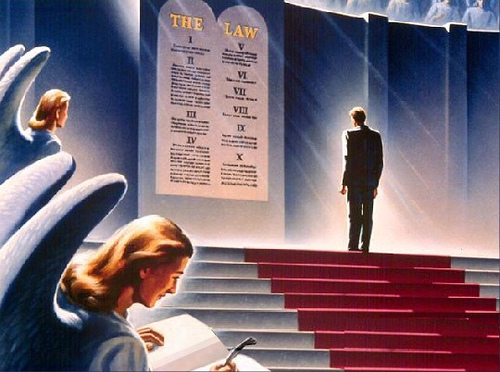
The Law is not to be understood in terms of  “Thou shall and thou shall not’s“. We commonly think that laws are obeyed and satisfied by works, whether your heart is in it or not. But God’s Law makes its demands not on your works but on the depths of your heart and does not let the heart rest content in works.

God calls all of us liars in Ps 116:11, because none of us keep the law from the depths of our heart. We all have an aversion to good and a craving for that which is forbidden. If our heart does not freely desire righteousness, our heart has not set itself on God’s Law. Regardless of outward good works, the appearance of an honorable life, our heart is sinful and deserving of the wrath of Righteous Holy God.

Romans  Two is pointed at the Jews, who are proud of their outward holiness. But Paul says that they are all sinners, and that only does of the law are justified in the sight of God. He reveals that no matter their outward obedience, there is none that truly obey. On the contrary, he says to them, “You teach that one should not commit adultery, and you commit adultery. You judge another in a certain matter and condemn yourselves in that same matter, because you do the very same thing that you judged in another.”

  • You who boast in the law dishonor God by breaking the law. Romans 2:23 (ESV)

It is as if he were saying, “Outwardly you live quite properly in the works of the law and judge those who do not live the same way; you know how to teach everybody. You see the speck in another’s eye but do not notice the beam in your own.”

You keep the Law (selfish motivations) outwardly out of fear of punishment or love of reward. You do everything as though you are chained-without free desire and love of the Law. If the Law did not exist you would be relieved, you would rejoice. In fact, Paul says (in Romans 5) that the Law causes sin to increase. This is because a person becomes more and more and enemy of the Law the more it demands of him what he can’t possibly do.

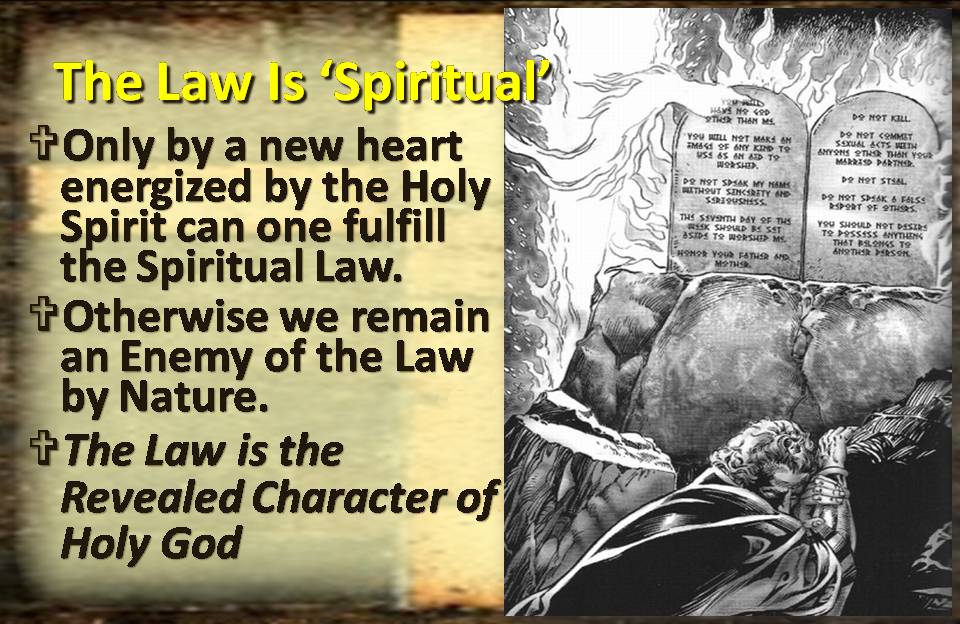
In Romans Seven, Paul says the Law is “spiritual”. What he means is that it were physical, it could be satisfied by your works. Since it is spiritual, no one can satisfy the law unless everything you do springs from the depths of your heart. But no one can have such a heart except the Spirit of God, who gives us a New Heart which has a heartfelt longing for the law and does everything not through fear or coercion, but from a new free and willing heart!

Only by a new heart energized by the Holy Spirit can one fulfill the Spiritual Law. Otherwise we remain an enemy of the Law by nature.

You must get used to the idea that it is one thing to do the works of the law and quite another to fulfill it. The works of the law are everything that a person does or can do of his own free will and by his own powers to obey the law. But because in doing such works the heart abhors the law and yet is forced to obey it, the works are a total loss and are completely useless.

That is what St. Paul means in chapter 3 when he says, “No human being is justified before God through the works of the law.”

Fulfilling the Law of God

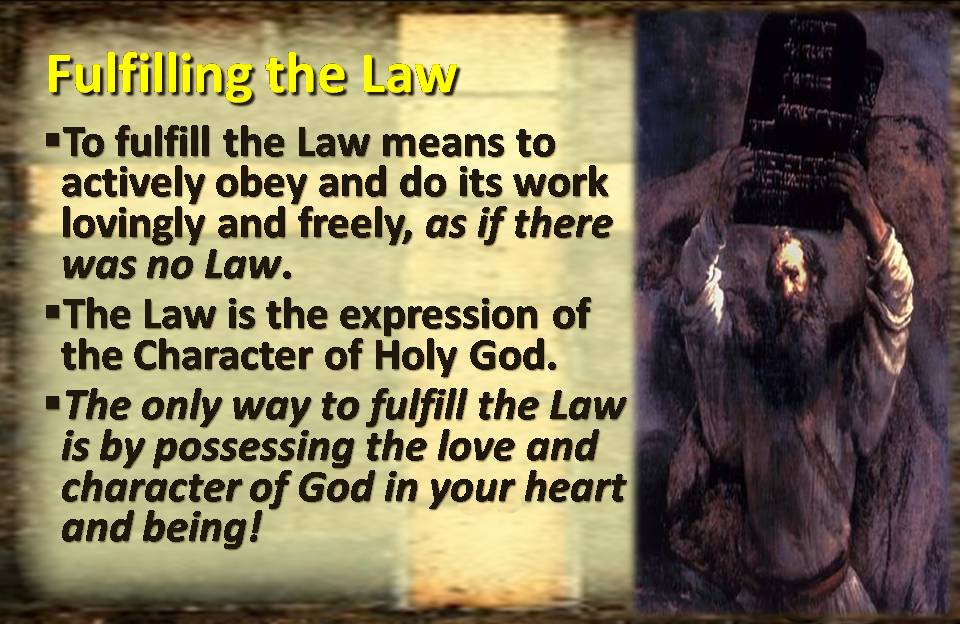
To fulfill the Law means to actively obey and do its work lovingly and freely, as if there was no Law. The Law is the expression of the character of God. The only way to fulfill the Law is through possessing the love and character of God in your heart and being!

Paul says that only the Holy Spirit can fill us with this Divine Love: “God’s love has been poured into our hearts through the Holy Spirit who has been given to us”. Romans 5:5 (ESV)  But the Spirit is given only in, with, and through faith in Jesus Christ, as Paul says in his introduction to Romans. For in it the righteousness of God is revealed from faith for faith, as it is written, “The righteous shall live by faith.” Romans 1:17 (ESV)

Faith alone makes the Love and Righteousness of God reality in our hearts. Faith alone fulfills the righteousness of the Law. Good works that proceed from faith alone are the only works that satisfy the demands of the Law.

The Law as Paul sees it: The Law is Spiritual – the revealed Character of Holy God.

B. SINS and SIN  – 48x – 41 verses

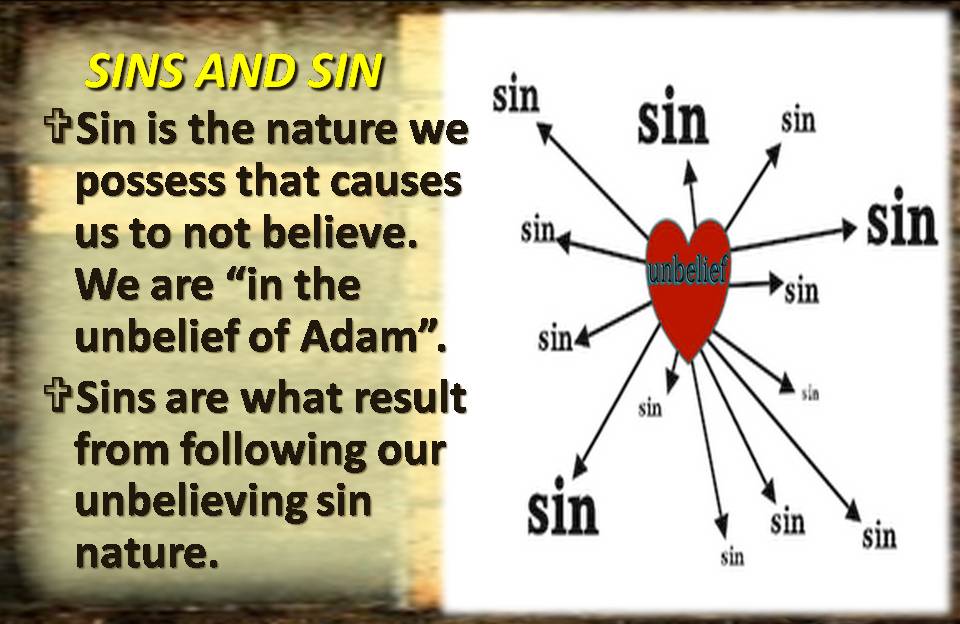
In Romans Paul deals with our sins, and then he deals with our sin. Sins refers to the external works of the body and soul. Sins of omission and commission. Sin refers to those forces within us that move us to do the sins. Sin is from the depth of our wicked heart with all its powers and inclinations.

The root and source of our sins is the sin nature that comes with being “in (the unbelief) of Adam”. The Holy Spirit and the Scriptures see into the heart, to the root source of sins, and that is our sin nature, which is founded in unbelief in the depth of the heart.

Just as faith alone makes us just and brings the Spirit and the desire to do good external works, so it is only unbelief which sins and exalts the flesh and brings desire to do evil external works.

That’s what happened to Adam and Eve in Paradise (cf. Genesis 3). That is why unbelief is called sin by Christ, as he says in John, chapter 16, “The Spirit will judge the world because of sin, because it does not believe in me.”

  • Sin is the nature we possess that causes us to not believe.
  • Sins are what result as a result of our unbelieving sin nature.

In Romans, Paul will show us how God can deal with our sins, and also our sin!

C. Grace and Gifts – 21x – 18 verses

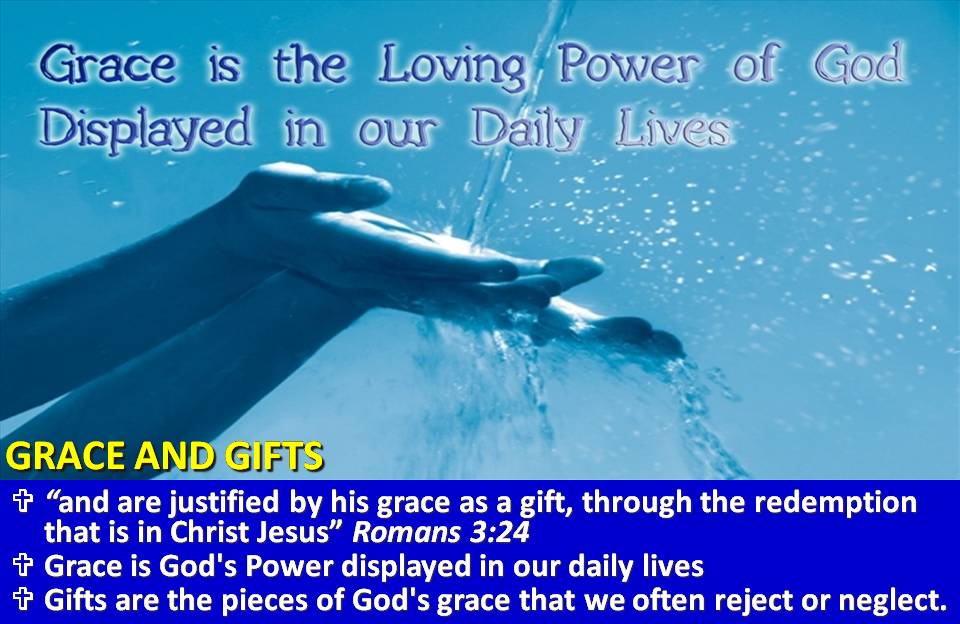
  • and are justified by his grace as a gift, through the redemption that is in Christ Jesus, Romans 3:24 (ESV)

Grace is the active force in our lives which makes us completely just before God. God’s grace is not divided into bits and pieces, as are the gifts, but grace takes us up completely into God’s favor for the sake of Christ, our intercessor and mediator, so that the gifts may begin their work in us.

By this, we understand chapter 7, where Paul portrays himself as still a sinner, while in chapter 8 he says that, because of the incomplete gifts and because of the Spirit, there is nothing damnable in those who are in Christ. Because our flesh has not been killed, we are still sinners, but because we believe in Christ and have the beginnings of the Spirit, God so shows us his favor and mercy, that he neither notices nor judges such sins.

God’s grace allows Him to deal with us according to our position in Christ until our flesh is completely redeemed.

  • Grace is the Loving Power of God displayed in our daily lives
  • Gifts are the pieces of God’s grace that we often reject or neglect, and can lead us to miss or refuse God’s Grace.

D. FAITH – 40x – 35 verses

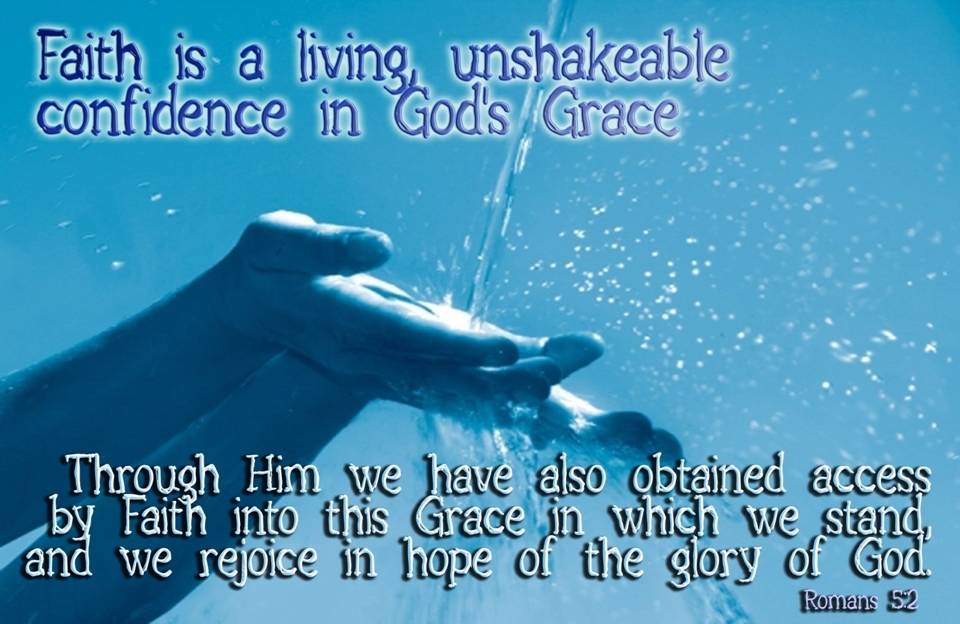
  • Through him we have also obtained access by faith into this grace in which we stand, and we rejoice in hope of the glory of God. Romans 5:2 (ESV)

Faith is not that human illusion and dream that some people think it is. When they hear and talk a lot about faith and yet see that no moral improvement and no good works result from it, they fall into error and say, “Faith is not enough. You must do works if you want to be virtuous and get to heaven.” The result is that, when they hear the Gospel, they stumble and make for themselves with their own powers a concept in their hearts which says, “I believe.” This concept they hold to be true faith. But since it is a human fabrication and thought and not an experience of the heart, it accomplishes nothing, and there follows no improvement.

Faith is a work of God in us, which changes us and brings us to birth anew from God (cf. John 1). It kills the old Adam, makes us completely different people in heart, mind, senses, and all our powers, and brings the Holy Spirit with it. Faith places us IN CHRIST. Faith keeps us abiding in Christ. We live the exchanged life by THE FAITH of the Son of God, who loved me and gave himself for me.

“What a living, creative, active powerful thing is faith! It is impossible that faith ever stop doing good. Faith doesn’t ask whether good works are to be done, but, before it is asked, it has done them. It is always active. Whoever doesn’t do such works is without faith; he gropes and searches about him for faith and good works but doesn’t know what faith or good works are. Even so, he chatters on with a great many words about faith and good works.” Martin Luther

  • Faith is the living, unshakeable confidence in God’s grace.

This kind of trust in and knowledge of God’s grace makes a person joyful, confident, and happy with regard to God and all that He does. Through faith, a person will do good to everyone without coercion, willingly and happily; he will serve everyone, suffer everything for the love and praise of God, who has shown him such grace. It is as impossible to separate works from faith.

Through faith a person becomes sinless and eager for God’s commands. Thus he gives God the honor due him and pays him what he owes him.

Faith comes only through the word of God, the Gospel, that preaches Christ: how he is both Son of God and man, how he died and rose for our sake. Paul says all this in chapters 3, 4 and 10.

That is why faith alone makes someone just and fulfills the law; faith in God’s promises sees the Power of the Holy Spirit in our daily lives. Faith opens our will and want to to do those ‘good works’ which God designed us for. Then good works proceed from faith itself. That is what Paul means in chapter 3 when, after he has thrown out the works of the law, he sounds as though the wants to abolish the law by faith. No, he says, we uphold the law through faith, i.e. we fulfill it through faith.

For we hold that one is justified by faith apart from works of the law. Or is God the God of Jews only? Is he not the God of Gentiles also? Yes, of Gentiles also, since God is one—who will justify the circumcised by faith and the uncircumcised through faith. Do we then overthrow the law by this faith? By no means! On the contrary, we uphold the law. Romans 3:28-31 (ESV)

  • Faith makes the Vitality and Power of God real in our daily living.

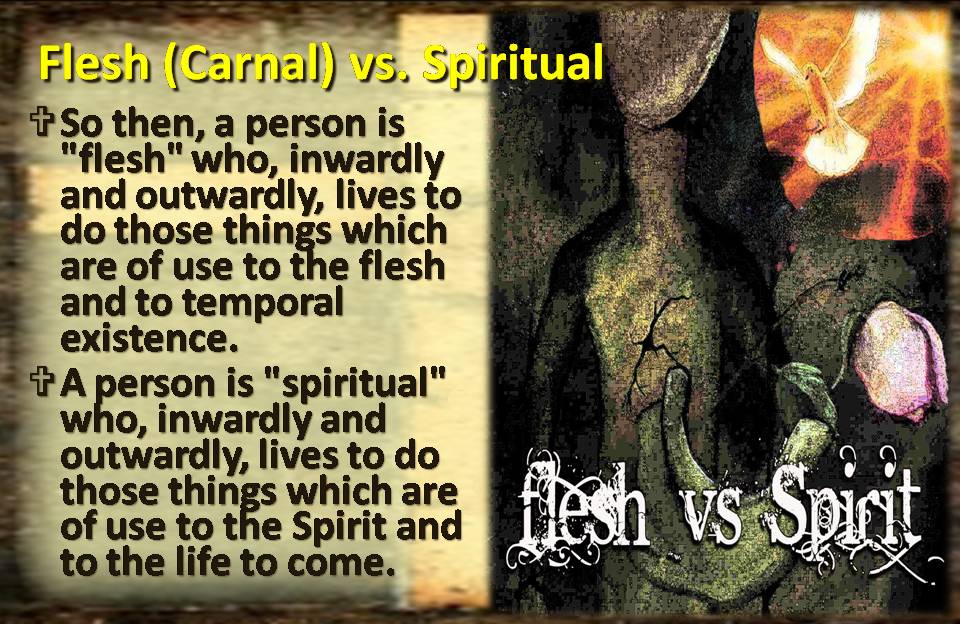
E. FLESH (CARNAL) 23x – 19 verses and SPIRITUAL (SPIRIT)

  • For I know that nothing good dwells in me, that is, in my flesh. For I have the desire to do what is right, but not the ability to carry it out. Romans 7:18 (ESV)

You must not understand flesh here as denoting only immorality or spirit as denoting only the inner heart. In Romans, Paul not only calls every human being ‘flesh’ but also everthing done by human beings in their own strength or in their own devices “fleshly”. Those living in the flesh can be sinners as well as saints. Anything done apart from the Spirit of God is walking in the flesh and not the Spirit. In Romans 8, Paul says that, through the flesh, the law is weakened. He says this, not of the immoral, but of all sins, most of all of unbelief, which is the most spiritual of sins. Unbelief destroys the SPIRITUAL life of any believer.

  • But now we are delivered from the law, that being dead wherein we were held; that we should serve in newness of spirit, and not in the oldness of the letter. Romans 7:6 (KJV)

I have come to the conclusion that a true Jew is not the man who is merely a Jew outwardly, and a real circumcision is not just a matter of the body. The true Jew is one who belongs to God in heart, a man whose circumcision is not just an outward physical affair but is a God-made sign upon the heart and soul, and results in a life lived not for the approval of man, but for the approval of God. Romans 2:28 (Phillips NT)

A person is spiritual who has been born of the Holy Spirit, and lives in and by the Spirit. Outward righteousness is a result of the inward spirit of God producing the life and character of God.

  • So then, a person is “flesh” who, inwardly and outwardly, lives only to do those things which are of use to the flesh and to temporal existence.
  • A person is “spirit” who, inwardly and outwardly, lives only to do those things which are of use to the spirit and to the life to come.

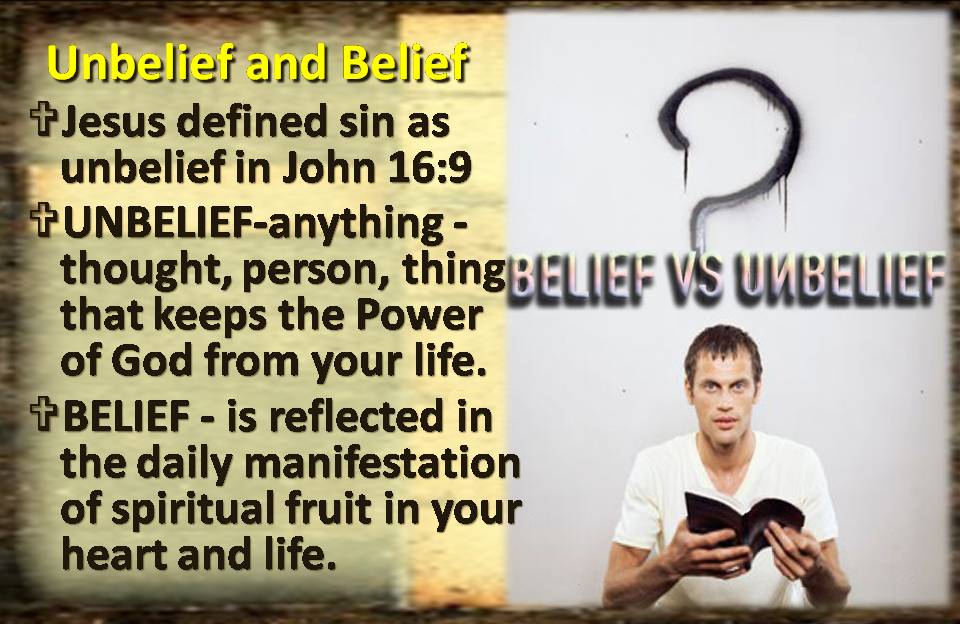
F. Unbelief and Belief

The very foundation of sin coming upon man was unbelief. Adam and Eve believed the deception rather than the Word of God. If they had only believed what God had said, they would have lived in eternal bliss.

Jesus defined sin as unbelief. God defined sin as going your own way. It is unbelief that leads us to go our own way. Unbelief in Romans reaches far beyond simple belief in Jesus as your Savior. Essential for being born again, yes,  but belief is essential for your very LIFE as a son of God. Your belief in the Word of God is foundational to your LIFE here and now and for all eternity.

Now if we have died with Christ, we believe that we will also live with him. We know that Christ, being raised from the dead, will never die again; death no longer has dominion over him. For the death he died he died to sin, once for all, but the life he lives he lives to God. So you also must consider yourselves dead to sin and alive to God in Christ Jesus. Romans 6:8-11 (ESV)

Paul uses Old Testament illustrations to convey the Truth of Romans. He points out Abraham, who did not stumble at the promises of God by unbelief. His belief is what made him righteous before God. His believing the promises of God is what gave him LIFE here on earth and in all eternity.

He staggered not at the promise of God through unbelief; but was strong in faith, giving glory to God; And being fully persuaded that, what he had promised, he was able also to perform. And therefore it was imputed to him for righteousness. Romans 4:20-22 (KJV)

In Romans, Paul lays out the truth of the gospel of Christ, and that truth doesn’t end at the cross, it goes through the cross to affect not only our sins, but our sin nature. We are made righteous by our belief in the promises of God. That belief does not stop at the cross. It does not stop at being born again. Belief in the Promises of God’s Word is to be a daily thing whereby we are made righteous every day. We are given LIFE every day. Not life in the flesh, but life in the Holy Spirit of God!

  • UNBELIEF-anything -thought, person, thing that keeps the Power of God from your life.
  • BELIEF – is reflected in the daily manifestation of fruit in your heart and life.

Summary of the Personality of Romans

Romans is the richest possible teaching about what a Christian should know: the meaning of law, Gospel, sin, punishment, grace, faith, justice, Christ, God, good works, love, hope and the power of the cross. We learn how we are to act toward everyone, toward the saints and the sinners, toward the strong and the weak, friend and foe, and toward ourselves. Paul bases everything firmly on Scripture and proves his points with examples from his own experience and from the Prophets, so that nothing more could be desired. Therefore it seems that Paul, in writing this letter, wanted to compose a summary of the whole of Christian and evangelical teaching which would also be an introduction to the whole Old Testament. Whoever takes this letter to heart possesses the light and power of the Old Testament. Therefore each and every Christian should make this letter the habitual and constant object of his study.

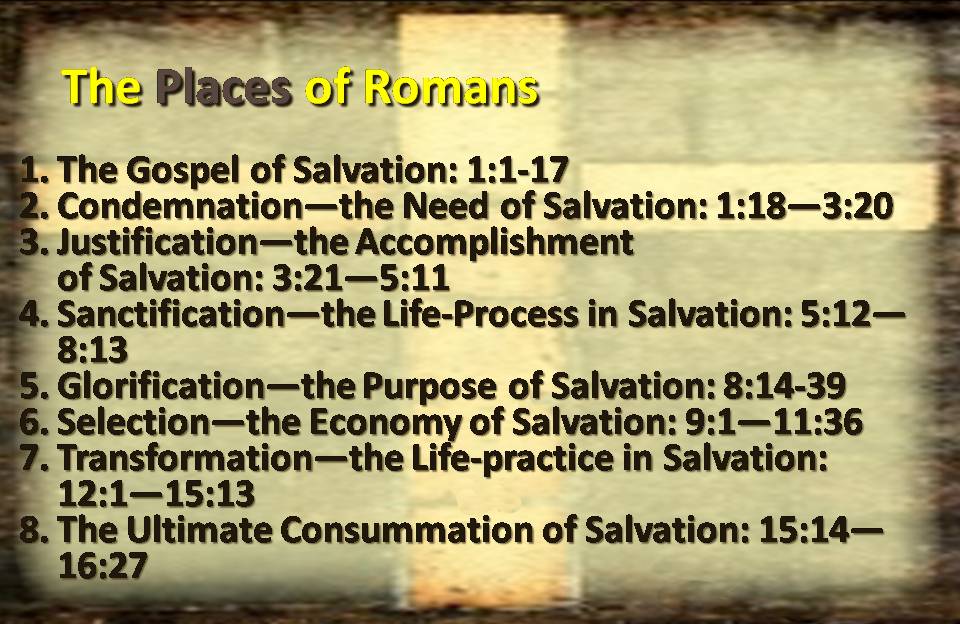
II. THE PLACES OF ROMANS

1. The Gospel of Salvation

The introduction (1:1-17) delineates the theme of the book of Romans, which is the gospel of God. This is the content of the introduction. Our next tour will explore this Gospel which was so important to Paul.

  • Paul, a servant of Christ Jesus, called to be an apostle, set apart for the gospel of God, which he promised beforehand through his prophets in the holy Scriptures, concerning his Son, who was descended from David according to the flesh and was declared to be the Son of God in power according to the Spirit of holiness by his resurrection from the dead, Jesus Christ our Lord, through whom we have received grace and apostleship to bring about the obedience of faith for the sake of his name among all the nations, including you who are called to belong to Jesus Christ, Romans 1:1-6 (ESV)
  • Now to him who is able to strengthen you according to my gospel and the preaching of Jesus Christ, according to the revelation of the mystery that was kept secret for long ages but has now been disclosed and through the prophetic writings has been made known to all nations, according to the command of the eternal God, to bring about the obedience of faith— to the only wise God be glory forevermore through Jesus Christ! Amen. Romans 16:25-27 (ESV)

2. Condemnation—the Need of Salvation

Following the introduction, we have the section on condemnation (1:18—3:20) that unveils to us the need of God’s salvation. We all are hopeless and helpless cases and are under God’s condemnation. We need God’s salvation.

3. Justification—The Accomplishment of Salvation

The third section, justification (3:21—5:11), reveals the accomplishment of God’s salvation. Related to this matter of justification we have three other items—propitiation, redemption, and reconciliation. We will cover these terms when we come to chapter 3. At this point I will only say a brief word. God’s justification depends upon the redemption of Christ. Without the redemption of Christ, God has no way to justify sinners. Therefore, justification depends upon redemption, and redemption has one major aspect—propitiation. Propitiation is the major structure of redemption. Propitiation is the major part of the redemption of Christ because, as sinners, we owed God a great deal. We were held by God to pay this debt, and this caused a tremendous problem. That problem has been resolved by Christ as our propitiatory sacrifice. Since this propitiation has solved our problems with God, we have been redeemed. Based upon the redemption of Christ, God can easily and lawfully justify us. Thus, justification depends upon redemption, and the major part of redemption is propitiation. What, then, is reconciliation? Reconciliation is the issue of justification. God’s justification issues in reconciliation. All of this has been accomplished. Hallelujah! Although you may not be clear about all of these words at present, you can say to the Lord, “Lord, I don’t understand all these terms, but I praise You that everything has been accomplished.”

Justification brings us to God. In fact, it not only brings us to God, but also into God. Therefore, we may have the full enjoyment of God. The King James Version says, “We joy in God” (Rom. 5:11). We not only joy in God; we enjoy God. God is our enjoyment. This is justification.

4. Sanctification—the Life-process in Salvation

Following this, we have sanctification (5:12—8:13). How great it is to be in God and to enjoy God!  After being justified, we need to be sanctified.

What does it mean to be sanctified? We use the illustration of tea. If we put tea into a glass of plain water, the water will be “teaified.” At best, we are plain water, although we are actually not plain, but dirty. Even if we are plain water, we lack the tea flavor, the tea essence, and the tea color. We need the tea to come into our very being. Christ Himself is the heavenly tea. Christ is in us. Hallelujah!

God is progressively revealed throughout the book of Romans:

  • In chapter 1 He is God in CREATION,
  • In chapter 3 God in REDEMPTION,
  • In chapter 4 God in JUSTIFICATION,
  • In chapter 5 God in RECONCILIATION,
  • In chapter 6 God in IDENTIFICATION.
  • In chapter 8 God in US.

Christ is in us (Rom. 8:10)! He is no longer merely in creation, redemption, justification, reconciliation, and identification, but He is now within us, in our spirit. Christ is in us doing a transforming and sanctifying work, just as the tea, when put into the water, works the element of tea into it. Eventually, the water will be wholly “teaified.” It will have the appearance, the flavor, and the taste of real tea. If I serve you some of this beverage, I will be serving you tea, not plain water.

  • Have you been JUSTIFIED?

You should all reply, “Hallelujah! We have been justified because Christ has accomplished redemption. God has reconciled us and we are now enjoying Him.”

  • Have you been SANCTIFIED?

If some of you married men claim to be sanctified, what would your wives say? “He may be justified, but it is doubtful he is sanctified.” Or you might say”maybe a little bit… or maybe he is improved, but I do not think he is sanctified yet.” I am not talking about being improved, but being sanctified—that is to have the very character of Christ worked into our very being, just as the essence, flavor, and color of the tea are worked into the water. This is sanctification. And every born again Christian should learn that he indeed is sanctified.

5. Glorification—the Purpose of Salvation

The next section in the book of Romans is GLORIFICATION (Rom. 8:14-39), unveiling the purpose of God’s salvation. Following sanctification, there is the need of glorification. Our body needs to be glorified. Although a brother may be quite saintly, his body needs to be glorified because of its physical defects and limitations. When the Lord Jesus comes, we will be glorified. Presently, I must wear thick, peculiar eyeglasses, but when the Lord comes I will be glorified. We shall not only be justified and sanctified; we shall be glorified, that is, our body shall be redeemed. Glorification is the full redemption of our body.

This glorification reveals the purpose of God’s salvation. The purpose of God’s salvation is to produce many brothers to Christ. Originally, Christ was the only begotten Son of God. Now the only begotten Son has become the firstborn Son. We ourselves will be processed into the many brothers of Christ and the many sons of God. He is the firstborn Son, and we, the many sons, are His many brothers. This is the purpose of God’s salvation.

6. Selection—the Economy of Salvation

After glorification, we come to selection which reveals the economy of salvation (Rom. 9:1—11:36). God has a purpose and an economy. His economy is for the fulfillment of His purpose. God is very wise and He arranges everything for the fulfillment of His purpose. He knows what He is doing. He knows who are His chosen people and He knows when His chosen people should be called. In relation to God, selection is for the accomplishment of His purpose; in relation to us, selection is our destiny.

7. Transformation—the Life-practice in Salvation

After this, we have the section on transformation, unfolding the life-practice in salvation (Rom. 12:1—15:13). In this section we see the life-practice of all that has been produced by the life-process. Whatever is produced in the section on sanctification is practiced in the section on transformation. Eventually, sanctification becomes transformation. In one sense, we are in sanctification; in another sense, we are also in transformation. We are in the process of life and in the practice of life that we may have the Body life with a proper private life. Every aspect of the proper Christian life and church life is included in this section on transformation. While we are being sanctified, we are also being transformed from one form into another form and from one shape into another shape. Praise the Lord! We are all under the life-process of sanctification for the life-practice of transformation.

8. Conclusion—the Ultimate Consummation of Salvation

The last section of the book of Romans is the conclusion, indicating the ultimate consummation of salvation (Rom. 15:14—16:27). The ultimate consummation of God’s salvation is the churches—not just the Body, but the local churches as the expressions of the Body. Hallelujah! The book of Romans begins with the Gospel of God and concludes with the local churches. In Romans, we do not have the local church in doctrine but the local churches in practice.

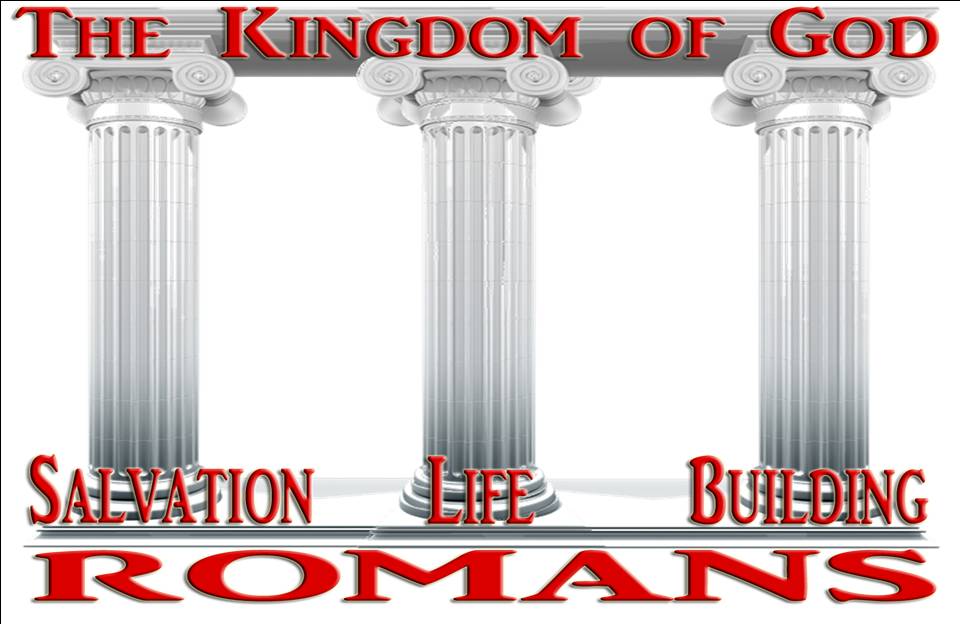
III. THE PILLARS OF ROMANS

The major structures of the book of Romans are three— salvation, life, and building.

A. Salvation

The first major structure of Romans is salvation, revealed in 1:1—5:11 and 9:1—11:36. Salvation includes propitiation, redemption, justification, reconciliation, selection, and predestination. In eternity past God predestinated us. Then He called us, redeemed us, justified us, and reconciled us to Himself. Thus, we have full salvation.

We need to differentiate between redemption and salvation. Redemption is what Christ accomplished in the eyes of God. Salvation is what God has wrought upon us based upon the redemption of Christ. Redemption is objective, and salvation is subjective. When redemption becomes our experience, it becomes salvation.

B. Life

Salvation is for the life unfolded in 5:12—8:39. In this section the word life is used at least seven times and, according to chapter 8, this life is four-fold. This Eternal Life or Life with God, begins not when we die but when we are born again!

C. Building

In the last part of Romans, 12:1—16:27, we have the building, the Body with all of its expressions in the local churches. Salvation is for life, and life is for building. Thus, the three major structures of Romans are salvation, life, and building.

Finally:

Why is our Tour through Romans called Journey Through the Cross?

Paul is all about this New Life that is the result of the Power of the Gospel of Christ.

For if you live according to the flesh you will die, but if by the Spirit you put to death the deeds of the body, you will live. For all who are led by the Spirit of God are sons of God. For you did not receive the spirit of slavery to fall back into fear, but you have received the Spirit of adoption as sons, by whom we cry, “Abba! Father!” Romans 8:13-15 (ESV)

Such is the Power of this New Life we have through the Gospel of Christ that Paul makes this BOLD declaration:

For I am not ashamed of the gospel, for it is the power of God for salvation to everyone who believes, to the Jew first and also to the Greek. For in it the righteousness of God is revealed from faith for faith, as it is written, “The righteous shall live by faith.” Romans 1:16-17 (ESV)

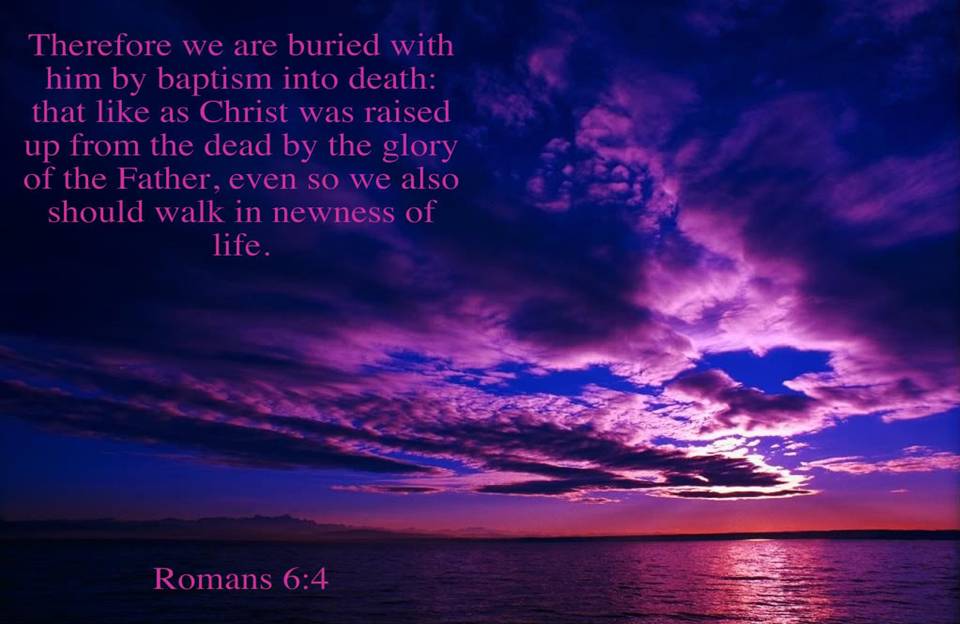
He boldly declares the power of the Cross of the Gospel in Romans 6. The Truth of Romans 6 is only experienced as we Journey Through the Cross:

We were buried therefore with him by baptism into death, in order that, just as Christ was raised from the dead by the glory of the Father, we too might walk in newness of life. For if we have been united with him in a death like his, we shall certainly be united with him in a resurrection like his. We know that our old self was crucified with him in order that the body of sin might be brought to nothing, so that we would no longer be enslaved to sin. Romans 6:4-6 (ESV)

Our Journey through the Cross is a Journey into the New Life that is in Jesus Christ